Billings - Scenic View

Billings

The Magic City

Photo: Quintin Soloviev / Wikimedia Commons (CC BY 4.0)
Billings is the largest city in Montana with 117,116 residents, serving as the economic and medical hub of the northern Great Plains from its seat in Yellowstone County. Whether you're considering a move or planning a visit, this guide covers everything you need to know — from housing costs and job opportunities to world-class fishing and a weekend itinerary for first-time visitors.

Known as "The Magic City" for its rapid growth after the Northern Pacific Railroad arrived in 1882, Billings sits on the Yellowstone River beneath dramatic sandstone cliffs called the Rimrocks. The city is the regional center for healthcare, energy, agriculture, and finance across eastern Montana, Wyoming, and the Dakotas. With 39 recreation sites within 30 miles — including 8 fishing access sites on the Yellowstone and Bighorn rivers, Pictograph Cave State Park with 4,500-year-old rock art, and the gateway to the Beartooth Highway and Yellowstone National Park — Billings pairs big-city amenities with genuine outdoor access.

Below you'll find a complete profile including cost of living data, school information, climate details, and housing market trends. For deeper coverage, explore our dedicated guides.

See lodging options in Billings

Quick Facts
Population
117,116
County
Yellowstone County
Region
Eastern Montana
Elevation
3,123 ft
Top Industry
Education & Healthcare
Nearest Hospital
Billings Clinic (in town)
Zip Code
59101
Area Code
406
Time Zone
Mountain Time (MT)
Industry: Census ACS 5-Year 2019–2023 · Hospital: MT DPHHS 2024
Current Weather
Loading current weather...
Airport Distances

Nearest Major Airports

✈️ Billings (BIL)
5 miles
~18m drive
✈️ Bozeman (BZN)
154 miles
~2h 48m drive
✈️ West Yellowstone (WYS)
178 miles
~3h 13m drive

Map & Nearby

Explore Billings on the interactive map with 3 nearby towns and 24 highlighted recreation sites. Use the zoom controls or select a recreation item to focus it on the map.

Open Area in Google Maps
Loading map...
Outdoor Recreation Near Billings

Outdoor Recreation Near Billings

Jump to map →
8/10
Excellent
49 sites within 30 mi
10 categories

Distances are straight-line estimates. Driving distances may be longer. Data: OpenStreetMap contributors & editorial research.

History & Heritage

History & Heritage

Billings, Montana, often called the "Magic City" due to its rapid growth after its founding in March 1882 as a railroad town by the Northern Pacific Railroad, boasts a rich and layered history. The city is named after Frederick H. Billings, a former president of the railroad. The region's human history dates back over 13,000 years—Pictograph Cave State Park holds over 100 pictographs and artifacts from Archaic and Woodland periods. The Crow (Apsáalooke) maintained semi-nomadic villages here before treaty cessions in the 1860s. William Clark led a detachment down the Yellowstone in 1806 and inscribed his signature at Pompeys Pillar on July 25—one of the few physical remnants of the expedition. Coulson (1877) preceded Billings as a steamboat landing but was bypassed when the railroad chose a site two miles west. The Billings Sugar Factory (1906) marked key industrial development; the Cat Creek (1920) and Kevin-Sunburst (1922) oil fields drew refining investment. Today Billings serves a regional trade area exceeding 500,000 people, with three major refineries (Par Montana, Phillips 66, Cenex in Laurel) and healthcare (Billings Clinic, St. Vincent) as major employers.


Official historic markers tied to Billings in our statewide dataset. Expand the list to read inscriptions and follow links to full pages or deep reads where available. Browse Yellowstone County on the map · History trails

Historic markers in Billings (116)tap to expand
1040 North 31 Street

Dubbed one of Billings’ “pioneer building contractors,” Emanuel Lindstrom waited until age thirty-eight to marry twenty-two-year-old Radina Holen, a fellow immigrant from Norway. In 1913, the Lindstroms moved into this Prairie style residence, where they raised three children. The two-story American Foursquare home features restrained geometric ornamentation, a hipped roof with extended eaves and a central attic dormer, and a wraparound front porch, enclosed sometime after 1958. Between 1912 and 1923, the Lindstroms added a two-car garage, a reflection of the growing importance of automobiles to North Elevation homeowners. Home prices suffered during the Great Depression and the residence, valued at $10,000 in 1930, was worth only $6,500 in 1940. Benjamin Harwood purchased the residence from the Lindstroms in 1937, just a year after Benjamin was first elected district judge. A dedicated jurist, Ben was also interested in aviation. A World War I pilot wounded in France, he was instrumental in developing the Billings airport as chairman of the airport commission. He and his wife Nina lived here until 1971.

Erected by

Montana Historical Society.

Architecture
1102 North 31 Street

Noted Billings architect J. G. Link designed this two-story residence circa 1921. It is one of only four architect-designed homes in the North Elevation Historic District. A classic American Foursquare, or “Prairie Box,” the house features a symmetrical façade, low-hipped roof, wide overhanging eaves, a full-width, hipped-roof porch, and horizontal accents. The walls are clad in stucco, a fashionable and modern material in the 1920s. Many Prairie Box designs incorporated secondary details from other styles. Link used blonde brick to create quoins (corner accents) and the home originally featured a tile roof, details common to the Italian Renaissance and Mission styles respectively. A tuck-under garage accessed from the back of the house answered the needs of the modern age while maintaining a front façade that complemented the block’s other homes. Attorney Manton Lamb and his wife Opal, an active club woman, purchased the house by 1921. Opal sold the home in 1949. The longest resident was avid gardener Edith Yapuncich, who lived here with husband John, a chemist, and their nine children. Edith was in residence from 1955 to 2003.

Erected by Montana Historical Society.

1109 North 31 Street

Built in 1915 at the height of Craftsman style popularity, this two-story home features the style’s characteristic exposed rafter tails and inviting front porch. Less typical is the way the porch extended over the driveway to create a sheltered place to park. The home also had a one-car garage facing the alley, a common amenity in Billings’ first automobile suburb. William and Olive Ladd and their two children lived here by 1917. A grain broker who advertised that he would “pay the high dollar” for carload lots of “wheat, beans, and hay,” William participated in Billings’ booming commodities market. In the 1920s, building and loan manager Joseph McMahon and his wife Catherine purchased the home, where they lived with their seven children. The McMahons were committed and active Catholics. Catherine helped organize fundraisers for Catholic orphanages and St. Vincent’s Orthopedic Hospital, while Joseph was a state-wide leader with the Knights of Columbus. Their fashionable home bustled with social activities—from bridge parties to progressive dinners. In the early 1940s, this was the childhood home of John Bohlinger,

Montana’s twenty-ninth lieutenant governor.

Erected by Montana Historical Society.

1109 North 32 Street

Lawyer Arthur J. Cunningham and his wife Edna built this remarkably well-reserved Craftsman style bungalow in 1915 for $3,300. The house retains nearly all its original materials, including the narrow wood clapboard siding and wide wood trim, open front porch with tapered porch columns, and irregular-pattern wood shingles in the gable ends. Cunningham was a bankruptcy lawyer with the firm of Cunningham and Waldo. In 1922, he ran unsuccessfully as a Republican candidate for state representative. By 1925, the Cunningham family had moved on and John and Jennie Bridenbaugh occupied the home. Jennie was a nurse and, with John, raised five children here, including one adopted daughter. Jennie was active in the Methodist Church and many public health charities and was state president of the American Association of University Women. In 1952, she was selected and Montana Mother of the Year. John was a radiologist who introduced the then newfangled practice of x-ray diagnosis and radiation therapy to Billings. His practice with partner Dr. Arthur J. Movies prospered and in 1939 became the Billings Clinic.

Erected by

Montana Historical Society.

1110 North 31 Street

A near twin to a home designed by renowned architect Percy Bentley in La Crosse, Wisconsin, this two-story Prairie style residence was built circa 1912 for Louis and Sarah Dousman. The Dousmans had close connections to La Crosse, where Sarah was raised. Louis was from nearby Prairie Du Chien, the grandson of fur trade magnate L. H. Dousman. The couple moved to Billings on the advice of Sarah’s father, who had investments here. Louis began his career with the Billings Land and Irrigation Company. He later operated the Montana Mortgage Company and invested heavily in real estate. Like other Prairie style homes, this residence features a low-hipped roof, extended eaves, a one-story porch with large square supports, and a wide central chimney. Distinguishing features include the row of second-story casement windows, distinctively patterned siding, and the unusual stair hall set at a forty- five-degree angle to the rest of the house. Louis died in 1955, and a year later Sarah sold the home to Mary Sullivan and her husband, Dr. Paul Sullivan, a surgeon who practiced at the nearby Saint Vincent Hospital.

Erected by

Montana Historical Society.

1111 North 31 Street

The full-width front porch, low-pitched roof with wide overhangs, and prominent corbelled (stepped) brick chimney are key elements of this 1913 Craftsman bungalow. Multi-pane sidelights flanking the door match the transom atop the main window and dormer windows, unifying the façade. In the 1910s, middle-class families like that of real estate agent J. O. Terrell and wife Prudence sought out the North Elevation neighborhood for its modern homes, parklike setting, fenced backyards, and one-car garages. The Terrells lived here from 1913 to 1926. By the 1950s, the neighborhood attracted young families just starting out. In 1951, Bob and Hattie Martin purchased this house for $18,000 calling 1111 home for over fifty years. Bob was a traveling salesman and Hattie raised four children and worked as a school nurse. When her children went to college, she went too, earning her nursing degree at Montana State University-Bozeman in 1970. Hattie became county director of nurses, local Red Cross director, volunteered for a month in 1975 at Camp Pendleton nursing Vietnamese and Cambodian refugees, and helped establish the Yellowstone County Adult Resource

Alliance.

Erected by Montana Historical Society.

1111 North 32 Street

Built c. 1916, this one-and-one-half-story bungalow still looks much as it did when card parties and club luncheons filled its owners’ social calendars. As is typical with the Craftsman style, knee braces ornament wide overhanging eaves, and a low-pitched shed dormer efficiently expands the home’s livability. Wooden lap siding clads the exterior, and removable glass storm windows enclose the front porch, just as they would have in the winter of 1917. That year, insurance company manager Daniel Hynds, his wife Kathleen, and their thirty-year-old son Harry, a traveling salesman, made 1111 North 32 Street their home. Billings banker Fred Marble and wife Lillian purchased the bungalow in the late 1920s. Like other North Elevation residents, their names appeared frequently in the newspaper’s social pages. Walter Foster, the superintendent of a meat packing company, purchased the home in 1936. His wife Louie May continued the familiar social whirl, hosting bridge parties, the Congregational Woman’s Society, and other familiar functions.

Erected by Montana Historical Society.

1115 North 31 Street

The prominent brick chimney that dominates the façade of this one-story clapboard home pays homage to the Tudor style. The open front porch, wide overhanging eaves, and exposed roof beams are common Craftsman style features. Frieda Kohn lived here in 1920 with her husband Jerome, a cigar salesman who believed “in going after business rather than waiting for business to come to him.” That year Jerome sold enough subscriptions to the Billings Gazette to win $300 in gold. Had he won the grand prize, a Hudson sedan, he would have had to park it on the street. Unlike most of its neighbors, the house did not have a garage until after 1958. Optometrist Albert Hoose and his wife Alise owned the residence in the 1930s, but the home’s longest occupants were Norman and Julia Bell. The couple moved here as newlyweds in 1939. An oral surgeon in practice with his father, Norman grew up down the street at 1023. Norman died in 1987; Julia, who owned a knitting store, remained in residence until her death in 2001.

Erected by Montana Historical Society.

1119 North 31 Street

Simplicity, honesty, functionality, and efficiency were the architectural watchwords of the 1910s. Craftsman style bungalows like this one embodied the era’s minimalist aesthetic, and the style took the nation—and Billings—by storm. Characteristic of the Craftsman style, this circa 1915 home features a low-pitched roof pierced by a large dormer, leaded glass windows, and exposed rafter tails. More unique is the home’s side-gable orientation and vertical siding. The residence’s first occupant was Leslie Miller, the manager of Russell Milling Company. In 1919, Rockwood and Elizabeth Brown purchased the home, where they raised their four children. A few years later, they planted a blue spruce in the front yard, where it still stood in 2018. In 1946, on a trip to Seattle, Rockwood saw an outdoor brick fireplace with built-in oven and grill. On his return, he had a similar one constructed in the backyard. A prominent Billings attorney, Rockwood served on the State Highway Commission, the State Water Conservation Board, and the City Park Commission. Although Rockwood died in 1956, Elizabeth lived here until her death at the age of 103 in 1989.

Erected by Montana Historical Society.

1123 North 31 Street

The first owner of this one-and-one-half-story home, Matthew Barry, owned the Barry Motor Company, a car garage and “livery”—or rental service. Perhaps that’s why he built a garage (recently replaced) to match the home. Both house and garage had decorative braces, exposed rafter tails, and clapboard siding, all Craftsman style elements. The home’s interior features a built-in china hutch; built-in cabinetry epitomized the Craftsman style ideal of efficiency and simplicity. Barry lived here only briefly; in 1918, Florence and Edwin Sackett rented the home, purchasing it in 1923. Apparently, the family did not share Barry’s love of automobiles; their daughter remembered growing up without a car during the Great Depression. After working as the city clerk and recorder, Edwin joined the First Federal Savings and Loan in 1929, where he made his career, retiring as president in 1964. Active in the Episcopal church, the Kiwanis Club, the BPOE, and the PEO, the Sacketts transformed this house into a home, raising two daughters and hosting cut-throat card parties. They lived here until their deaths, Edwin in 1978 and Florence in 1991.

Erected by Montana Historical Society.

Industry
1125 North 31 Street

This classic example of an American Foursquare house with Prairie style details was completed by 1916 when photographer Frank Crosby was hired to capture the fashionable new North Elevation subdivision. The term Foursquare describes the house’s floorplan, which featured a central hall and four equal-size rooms on each floor. The house’s graceful curvilinear rafter tails supporting the wide overhangs and its full-width front porch are its strongest Prairie style elements. While most of the houses in the neighborhood were built with open front porches, 1125’s porch was originally screened. Tailor Frank Burns and his wife Annie, an organist, lived here a short time, followed in 1925 by pharmacist Frank V. Patterson and his wife, Minnie. Frank and Minnie lived here for twenty years and ran two locations of the Patterson Pharmacy, one in the Hart-Albin building and one on Minnesota Avenue. Frank served three terms on the Montana Board of Pharmacy, which was created by the legislature in 1905 to regulate the profession. Socially, he was active in the Knights of Columbus, while Minnie was a member of the Rebekah Lodge.

Erected by

Montana Historical Society.

Architecture
1131 North 32 Street

Wayne and Ethel Gordon's 1939 home is one of two Cape Cod style homes in the North Elevation Historic District. The steep side-gable roof, gabled dormers, and elegant front door entablature are key stylistic elements. After completing medical school and then teaching at the University of Chicago, Dr. Wayne Gordon became one of the first internist at Deaconess Hospital (now Billings Clinic) in 1936. Wayne was Deaconess chief of staff for many years and organized annual conferences as governor of the American College of Physicians Wyoming/Montana chapter. He and his wife Ethel raised two boys here and were active members of the community and the First Baptist Church. Ethel was president of the Montana Baptist Women's Society, and board vice-president of the Billings YWCA. In 1957, Ethel and Wayne founded the Friendship House, a charity serving minority children and families that still thrives today. Their son Roger and family moved into the home in 1959 when Wayne became professor of medicine, and Ethel , supervisor of photography, at Christian Medical College in Vellore, India. The house remained in the Gordon family until 1980.

Erected by

Montana Historical Society.

1143 North 31 Street

pedimented entryway and multi-pane transom window are among the Greek Revival style elements that decorate this side-gable brick home, built c. 1932 for Julius and Anna Clavadetscher. A talented cellist, Julius played with the Minneapolis Symphony before moving to Billings in 1917, where he joined a musical ensemble that accompanied silent pictures at the Strand Theater. In addition to working as a union musician, he founded and directed the Ladies Ensemble in 1926 and taught thousands of Billings students as the longtime junior high and high school music teacher. Starting in 1929, he also directed the Rotary Boys Band, without whom, a 1940 newspaper article declared, “no public parade in Billings is complete.” Anna, who lived here until her death in 1954, was prominent in Yellowstone County Democratic circles. She served as vice chair of the county central committee, congressional committeewoman from the second district, president of the Democratic Women’s Club, and delegate to the 1949 presidential inauguration of Harry Truman. All of the Clavadetscher children played music; Carl followed his mother into politics, serving as Billings mayor from 1959 to 1962.

Erected by Montana Historical Society.

1145 North 32 Street

Civil engineer Bill Lowe designed and built this house for his family circa 1940. The modest-looking home has several features more typically found in high-style homes. These include the clay tile roof, decorative chimney caps, and a bow window, placed to take advantage of the corner lot. The multi-pane casement windows echo the windows of its grander architect-designed neighbors. Bill and Connie Lowe lived here until 1951 except during Bill’s twenty-two months in the Navy during World War II. On the family’s return to Billings, Connie resumed her role as a society hostess and active church and club woman. Although she had an education degree, she never taught as the school district did not hire married women. Bill became a principal in the construction firm responsible for many projects at MSU-Billings (then called Eastern Montana College), including Cisel, Apsaruke, and Rimrock Halls and the Physical Education Building. When the family outgrew this one-story home, the Lowes found another corner lot on which to build, where they constructed a larger, two-story home based on the same design.

Erected by

Montana Historical Society.

1147 North 31 Street

Rapid changes in technology, industry, and social customs marked the Jazz Age of the 1920s. In the face of short skirts and speakeasies, many Americans longed for a supposedly simpler past. The Tudor style’s story-book charm and emblematic decorative half-timbering, prominent chimney, steeply pitched gable roofs, and multi-paned windows appealed to this nostalgia. While the exterior design reflected suburbanites’ ambivalence toward modernity, the homes themselves offered all the modern conveniences. The style was popular nationwide in the 1920s but is rare in the North Elevation neighborhood. By 1930, the one-story stucco and brick cottage was home to Henry and Mabel Coleman and their two children. A prominent Billings attorney, Henry arrived in Billings as a young lawyer in 1909 and dedicated himself to his adopted community as an avid booster, serving as an active Rotarian, alderman, and president of the Billings Commercial Club. Mabel was gifted golfer and bridge champion. The Colemans lived here until their deaths, Henry’s in 1962 and Mabel’s in 1969.

Erected by Montana Historical Society.

901 North 32 Street

The Prairie style is well represented in this two-story America Fou1915. A low hipped roof, extended eaves with exposed rafter tails, symmetrical façade, and lap siding emphasize horizonal lines. These architectural features especially distinguish the historic district. David and Madge Brumbaugh moved to Billings in 1915 and for the next forty years made their home here. David was agent and chief inspector for the Western Weighing and Inspection Bureau. The Brumbaughs were exceptionally active in their adopted community. A veteran of the Spanish American War, David served as commander of the local United Spanish War Veterans group. He also served in the Montana House of Representatives, on the Billings City Council and local school board, was active in fraternal organizations, and was a reader in the Christian Science church. Madge ran a popular neighborhood grocery on 9th Avenue adjacent to the home. She also was very active in auxiliary and community organizations. The Brumbaughs passed away within several months of each other in 1955.

Erected by Montana Historical Society.

Actor Bill Hart Visits Montana Avenue - 1927

The famous cowboy movie star William S. Hart and his horse Fritz, are immortalized in the local statue "Range Rider of the Yellowstone." The statue, overlooking the city of Billings from atop the rimrocks, was dedicated on July 4, 1927, with Hart's friends, woolgrower Charlie Blair and former Indian agent Guil Reynolds, in attendance. A native of New York, Hart went west to Hollywood and starred in 65 silent films, the last being "Tumbleweeds" in 1925. When he died in 1946, he left his Hollywood mansion as a museum of western art and Hollywood memorabilia.

Erected by Downtown Billings Starts Here. (Marker Number 40.)

culture
All We Need is Some Water

The Northern Pacific Railway created Billings, but irrigation made the land productive. The use of the Yellowstone River for irrigation allows for the production of alfalfa, sugar beets, pinto beans, and corn. It also provides water for trees and parklands.

The first irrigation ditch in this area was the "Big Ditch." Its intake of water from the Yellowstone River begins near Park City and ends at 19th Street West within Billings' city limits. The Billings Bench Water Association (BBWA) canal, the largest irrigation ditch, flows north of downtown, going through a 500-foot tunnel through the Rimrocks, feeding Lake Elmo, terminating at Shepard. The Huntley Irrigation Project was established by the United States Bureau of Reclamation in 1907 and water the land around Worden, Ballantine, Pompeys Pillar, and Huntley. The story is splendidly told at the Huntley Project Museum of Irrigated Agriculture, northeast of Billings.

Along the Zimmerman TrailDeep Read

The original Zimmerman Trail was built during the summers of 1890 and 1891 by the brothers Joseph and Frank Zimmerman, born in Fellering, (Alsace-Lorraine) Germany. Joseph immigrated to the United States in 1872; two years later, upon enlisting in the U.S. Cavalry, his duty brought him to Montana. In 1874, Frank followed his brother to Montana where he worked for the railroad until 1883. Frank briefly returned to Alsace-Lorraine, then came back to the United States in 1885 to farm in Flint, Michigan. In 1883, after leaving the army, Joseph started a clothing store in Billings, just one mile west of Coulson.

Several years later, he bought three sections of land west of Billings and started a sheep feeding business. His ranch was located both on the bottom and the top of the rimrocks. Because it required a 32-mile round trip from his home to Boot Hill Cemetery and back to a natural spring on Alkali Creek, Joseph sought a shorter route to move his bands of sheep from his homestead to the spring located atop the rimrocks. In 1890, Joseph brought his brother Frank back to Montana to manage his ranch and to help build the original Zimmerman Trail. Both brothers lived out their lives in the Billings area.

The original Zimmerman Trail passed 2-1/2 miles north of present-day Highway 3 to the spring located on the forks of the North and South Alkali Creeks. A miner named Thompson did the blasting while the grading was done with a two-handled scraper that could hold only one yard of dirt. Still, with just the three men and two mules, the entire trail was completed by the end of the second summer.

In 1938, the Rotary, Kiwanis, and Lions service clubs, and a campaign committee headed by Mearl L. Fagg, Grover C. Cisel, Frank G. Connelly, and Chandler C. Cohagen, donated the $750 required to purchase the tract of land (Zimmerman Park) and the right-of-way for the road down the rimrocks known as the "Zimmerman Trail." These properties were subsequently deeded to Yellowstone County.

Although completed in 1891, the original Zimmerman Trail was never used by common stagecoach carriers of that era. It is speculated that the photograph shown below, which is the only known photograph of the original trail, is of dignitaries being given one of the few rides ever taken up the trail in a stagecoach.

A WPA allotment of $95,252 for equipment and labor was augmented by $23,388 from Yellowstone County for the construction and rerouting of the original Zimmerman Trail. This new trail would require over 150 men working nearly four months to complete the project. The current Zimmerman Trail was finally paved in the 1940s.

Erected 2005 by The Dedication and Support of Many.

parksTransportation
An Automobile at the Cigar Store

In the years leading up to Prohibition, more than a dozen local shops sold cigars and tobacco. In 1917, Billings claimed five cigar factories.

When Prohibition outlawed alcohol and shut down saloons, it indirectly undercut the tobacco industry which greatly relied on tavern sales.

Erected by Downtown Billings Starts Here. (Marker Number 32.)

Armour Cold Storage

Billings, located halfway between Minneapolis and Spokane, boasted railroads running in seven directions by 1916. Quantities of freight arrived each day from points east, and large warehouses lined the tracks, filled with goods awaiting resale. Billings supplied shopkeepers across eastern Montana and northern Wyoming, and in 1916 its annual wholesale grocery and produce business alone was estimated at $3 million. Among the businesses to use Billings as a distribution center was Armour and Company. The largest meatpacker in America by 1891, Chicago-based Armour revolutionized the business, establishing a “disassembly” line to expedite butchering. The ruthless employer and competitor also pioneered new uses for slaughter by-products and financed early experiments with refrigerated railcars so it could ship its products farther afield. By 1903, Armour had a cold storage warehouse next door; another small cold storage building owned by prominent Billings businessmen Christian and Peter Yegen occupied this prize corner lot. Sometime before 1918, Armour purchased this corner and built a state-of-the-art, two-story, cold-storage warehouse with a concrete refrigeration shaft and cold rooms on each level. Engineered to hold a large amount of weight, the building relied on massive posts and beams to support the open interior spaces that characterize warehouses. Capped by a flat roof, the brick building displays many elements typical to Western Commercial style warehouses including a raised foundation, minimal ornamentation, and regularly spaced windows. Converted to lofts and offices in 2001, the former warehouse still reflects its origins in the railroad and wholesaling economy of early twentieth-century Billings.

Erected by Montana Historical Society.

Arnold Graf House

When Evelyn and Arnold Graf purchased this property in 1938, the area was still predominantly wild, covered with native grasses and scrub cedar. The roads were mostly unpaved and hayfields and pastures lay to the north. Graf designed and built this house between 1939 and 1940, completing it in his spare time. The family of four lived in the basement while the upper floor was under construction. Arnold Graf had studied architecture in Chicago but the Great Depression interrupted his plans. Returning home to Hardin, Montana, he married and survived the 1930s working as a bricklayer on his own and with his father, cutting and laying the stone for the Big Horn County courthouse and other projects. Arnold Graf designed his eclectic Tudor Revival English Cottage style home to reflect traditional architectural elements, including a steep-sided roof and half-timbering. He added multi-colored bricks, marble surrounds at the vestibule openings, and stone window sills for visual appeal. Extensive use of glass blocks reveals Graf’s creativity in blending modern materials with traditional elements. Landscaping distinguished with extensive brick accents defines the home’s approach. Throughout the house, fine masonry showcases Graf’s skills and attention to detail. After World War II, Arnold Graf founded Graf Masonry. Prominent Billings architects and contractors quickly recognized his exceptional craftsmanship and integrity. During nearly thirty years in business, Graf’s name was synonymous with masonry buildings in Billings and surrounding areas. The house, under family ownership well into the twenty-first century, retains exceptional integrity. Viewed from the street, this charming and unique home delights the eye.

Erected by Montana Historical Society.

Architecture
Austin North House

Recognized by Landmarks, Inc.

June 26, 1979

Austin North Home

Allen B. LaMott Family

William R. Morrison Family

Russ B. Hart Family "The Castle"

J.G Link

C.S. Haire architects

1903

Erected by Landmarks, Inc.

Architecture
Babcock Theater

Constructed in 1907 during a period of robust city growth, the Babcock replaced the original Billings Opera House, which was destroyed in a catastrophic fire. Owners first planned a four-story commercial block, then a seven-story building, but only built the two-story base. The first floor features an L-shaped interior arcade, lit by a skylight. The theater and retail shops, some with pressed metal ceilings, opened onto the arcade until the 1923 remodel. Luxfer prism glass—in the arcade floor and in the Second Avenue sidewalk—let light into the basement bowling alley and other below-ground businesses. The second floor originally provided office space, most notably for the U.S. Land Office, which issued homestead patents. During the Great Depression Hyme Lipsker, who purchased the Babcock in 1924, hired architect J. G. Link to convert the offices into efficiency and one-bedroom apartments, many with Murphy beds. Tenants entered the apartments through a majestic lobby, with a crystal chandelier. Nevertheless, the theater was always the Babcock’s main attraction. The Babcock offered a venue for theatrical performances, orchestra concerts, vaudeville, and even boxing matches. As live theater gave way to silent films and then “talkies,” owners remodeled, in each instance installing the latest technology and adapting to current fashion. Top-of-the-line designers replaced the original Neo-classical elements with Spanish Colonial accents in 1920; Art Deco décor in 1935, after a catastrophic fire; and, finally, Streamline Modern design in 1955. Reflecting the philosophy that the “show begins at the sidewalk,” the entrance moved from the arcade to the street in 1927. The current, highly visible, “Skouros style” marquee and entryway, visible from blocks away, dates to 1955.

Erected by Montana Historical Society.

Battle of the Little BighornDeep Read

This famous battle pitted federal troops of the U.S. Army's 7th Cavalry, led by Lt. Colonel George Armstrong Custer, against Lakota (Sioux), Northern Cheyenne, and Arapaho warriors. Custer and his command of 259 men were soundly defeated. "Custer's Last Stand" became one of the country's most enduring legends.

The "Custer Battlefield," first preserved as a U.S. National Cemetery in 1879, was renamed Little Bighorn Battlefield National Monument in 1991. White marble and red speckled granite markers dot the hillsides and ravines where soldiers and warriors fell. Open year-round, the battleground is sixty miles southeast of Billings.

Military
Billings Chamber of Commerce Building

J. Collins West, Exalted Ruler of Lodge 394 of the Elks Club, planned this turn-of-the-century Italian Renaissance Revival style building as a lodge hall. Billings Elks members attending the St. Louis Exposition in 1904 purchased a bar for their proposed facility. Inlaid with bands of ebony and mother-of-pearl, the bar featured leaded, stained glass windows, beer steins, and walnut paneling. Murals, a thousand dollar tapestry, hanging lamps, and doorknobs embossed with the head of an elk complemented the fine interior furnishings. The foundation features sandstone excavated from the Heffner quarry. A round stone arch on a stone pedestal highlights the entryway. Giant order scrolled columns, the Renaissance roof cornice, and bowed iron balconies dominate the front façade. A three-day dedication celebration trumpeted the completion of the building in 1910, complete with a formal lodge dedication, gala balls, a reception, and street decorations. Financial difficulties immediately began to plague the group and in 1918 the Elks sold the building to the Billings-Midland Club, precursor to the Chamber of Commerce, who occupied the space until the 1960s. In 1971, a group of local businessmen announced that the structure would be razed and a parking lot built on the site. Two auctions occurred as a result, and many of the original interior decorations were sold. A group of concerned citizens, organized as the Save-the-Chamber- Committee, rescued the building from demolition. Demolition plans again surfaced in the early 1990s but investors opted to renovate the landmark and preserve the building.

Erected by Montana Historical Society.

Billings Clinic: Healthcare on the Frontier

In 1918, Doctors A.J. Movius and J.H. Bridenbaugh formed a medical partnership, establishing the Movius-Bridenbaugh Clinic, which later became Billings Clinic, on the top floor of the Hart Albin building in downtown. The Billings Clinic was a multi-specialty integrated care system that served patients from all around the region.

In 1927, Deaconess Hospital opened north of downtown Billing. Each of the 67 patient rooms were sunlit and cheerful and the "four story brick building was a striking example of modern Georgian architecture." With the expansion of the hospital grounds during the 1950s and 1960s, the organization was renamed the Deaconess Medical Center. In 1972, the hospital preformed Billings; first open-heart surgery.

In 1993, the Deaconess Medical Center and Billings Clinic merged to become an integrated health care organization named Deaconess Billings Clinic. In 2005, the organization changed its name to Billings Clinic. Billings Clinic serves as a not-for-profit health care organization, governed by the community, and is the area's largest employer.

Billings Implement Building

In 1906, the Northern Pacific Railroad moved its central railroad transfer point from Billings to Laurel. The move opened new tracts of land for development along the railroad right-of-way. These lots had the advantage of bordering both the tracks and Billings’ downtown commercial district. Thus, they were perfect for businesses dependent on large and frequent train deliveries, for example farm implement dealers or grocery wholesalers. Both types of businesses occupied this building, constructed circa 1915 by the Billings Implement Co. Like others on the block, this two-story brick structure presents two distinct appearances. Intended to serve as a warehouse, store, and office all in one, its design reflects its multiple purposes. The refined north face features a typical Western Commercial style facade. To the rear, the building presents its working face. A loading dock reveals the building’s function as a warehouse and its connection to the trains that delivered goods for resale. After sitting vacant for over ten years, both this building and the one next door were renovated to include residential lofts in 2004.

Erected by

Montana Historical Society.

Billings Old Town Historic District

Offering an eclectic architectural mix, Old Town tells the story of Billings’ growth. The Northern Pacific founded the community as a railroad hub in 1882, and by the end of 1883, some 400 canvas tents and crude buildings lined the streets. The 1882 McAdow building reflects this frontier phase, when merchants quickly assembled false-front buildings to mimic the architecture of more established communities. Frequent fires convinced developers to invest in masonry structures, including the circa 1893 Yukon Bar, one of Billings’ earliest brick buildings. The ornate Land L and Covington buildings (both constructed circa 1895) reflect the community’s stylistic aspirations. Built on the edge of “China Alley,” they also represent Billings’ small yet significant Chinese community, members of which owned both business blocks. Later the Covington block became one of two African American-owned buildings in Old Town, evidence of another of the city’s under-recognized populations. By 1900, the railroad had made Billings a prosperous, and permanent, trading center. The city’s commercial prominence expanded during the homesteading boom, and impressive structures, like the architect-designed Parmly Billings Memorial Library, constructed in 1901, announced the its new status. Large warehouses, built by both local investors and national chains, recall Billings’ importance as a wholesale distribution center. Cars began to transform this railroad district with the construction of the Sunset Garage in 1917. They also redirected development away from the railroad. Nevertheless, the district still saw several important projects after World War I, including the 1937 architect-designed Art Deco Service Candy Company and the 1939 Streamline Moderne style Community Gas and Oil Building.

Erected by Montana Historical Society.

ArchitectureSettlements
Billings Townsite Historic District

At the turn of the twentieth century, Billings was ready to shed its frontier image as a rough-and-tumble cowtown and emerge as a regional commercial center. Billings was already at the juncture of the Northern Pacific and the Chicago, Burlington, and Quincy railroads and soon the Great Northern extended its tracks to the growing city. Platted in 1882 and named for a former railroad president, Billings became the transportation hub of the northern plains. The earliest business district was here at the center of the townsite grid. Business activity gradually moved to the northwest as the area near the tracks gained new purpose by catering to travelers. Between 1900 and 1920, a dozen hotels and many attendant businesses crowded into the area. In 1911 a splendid depot, electric street lights, cement sidewalks, and brick-paved streets greeted visiting President Howard Taft who pronounced Billings "the center of the development of the arid west." Indeed, almost 10,000 homesteaders claimed land at the Billings land office between 1909 and 1914, and local hotels supported a daily transient population of at least l,000. Billings, nicknamed "Magic City" for its early rapid growth, continued to mature through the 1910s. The eventual demise of rail travel left its early-twentieth-century buildings vulnerable but thanks to early preservation efforts the district remains as an intact expression of turn-of-the-century commercial architecture. These buildings, along with the splendid depot and tracks which symbolize the town's "magical" beginnings, preside over what was once the heart of the townsite.

Erected by Montana Historical Society.

Billings: The Father and the Son

The town of Billings is named for Frederick Billings. He was a gold rush lawyer, railroad baron, and conservationist. Born and educated in Vermont, he arrived in California with his law degree during the 1849 gold rush. He was California's first Attorney General and he named the town of Berkeley after a favorite poet. His growing wealth allowed him to invest in railroads. He was president of the Northern Pacific Railway from 1879-1881. Today, the Billings' family mansion in Woodstock, Vermont is a National Park focused on conservation (Marsh-Billings-Rockefeller NHP). The family dairy farm, across the street, is a museum interpreting Vermont's rural heritage.

Frederick married Julia Parmly in 1862, and their first child, Parmly, was born in San Francisco. Parmly grew up in Vermont and enjoyed an affluent lifestyle. In 1884, Parmly was sent to live in the new town of Billings and wrote despairingly to his father, "Prospects in Billings look as bright as the bottom of a camp fry pan."

Parmly and his cousin, Edward Bailey, operated a ranch, worked on the Big Ditch irrigation project, ran a dry goods store, and opened the Bailey and

Billings Bank. Parmly died at age 25 from uremic poisoning.

Billings' Chinatown

Originally coming to Montana for the 1860s gold rush, the Chinese made up almost 10% of Montana's population during the 1870s. They were also two-thirds of the labor force for early railroad construction. After a rail line was completed, many of the Chinese laborers settled in mining camps and railroad towns such as Billings.

Located on the 2600 block of Minnesota Avenue was Billings' "China Alley". (sic) Chinese owned or work in laundries, restaurants, dry good stores, hotels, saloons, and gardens in this southside neighborhood. The Chinese community was well-known for their annual celebration of the Chinese New Year. Chinese-owned businesses would be decorated and firecrackers were heard throughout the night.

Yee Sam Lee was a leader of the Southside. Mr. Lee was proprietor of several businesses and served as a liaison between the Chinese and the Billings Police Department. The Billings Gazette even deemed him, "the Mayor of China Town." Still standing today is an anchor of the long gone China Alley, the Lee and Lee Building at 2624 Minnesota Avenue. Constructed in 1896, it was named after Yee Sam Lee and his brother and is on the National Register of Historic Places.

Billings' First Bank - 1883

The Stebbins, Post and Mind Bank opened its door on Minnesota Avenue in 1883. It served as Billings' only financial institution until 1886, when Edward Bailey and Parmly Billings established the town's second private bank across the tracks on Montana Avenue. The Stebbins, Post and Mind Bank was chartered as the First National Bank in 1884. The bank moved a year from its original frame building into a new permanent brick and stone building on the northwest corner of North 27th Street and Montana Avenue.

Erected by Downtown Billings Starts Here. (Marker Number 22.)

Billings' Humble Beginnings

Billings was founded as a railroad town in 1882. The first passenger depot was the Headquarters Hotel, located on what was then North 28th and Montana Ave. It served as the stopping point for passengers and freight. In 1891, the Headquarters Hotel burned down and the town quickly erected a second depot at the same location.

Mrs. E.B. Camp, the Mayor's wife, suggested renaming North 28th Street to North Broadway in the late 1880s to make the street sound more fitting of a depot location. The construction of the depots on North Broadway spurred civic and business development on the north side of the tracks that still continues today. By 1907, Billings was growing quickly and needed a larger depot to handle the increase in freight and passengers. They chose the lot between North 24th and 25th on Montana Avenue and the "Union Depot" was completed in 1909. The beautiful structure remains today and continues to serve the Billings community as a popular non-profit special events venue.

Black Gold

Soon after the first car arrived in Billings in 1904, the Montana and Wyoming Oil Company formed as a response to the growing need for fuel. John D. Losekamp, the first director, secured the lease of a major gas discovery on Edward Jones' farm near Byron, in the Big Hole Basin of northern Wyoming.

With the growth of oil operations, "Billings Beckons", a 1921 booster publication, stated the local Montana Refining Company "treat the oil" and refine petroleum, gasoline, kerosene, and asphalt in Billings.

Billings became a logical refinery city for the oil fields both of Montana and northern Wyoming. In the 19502, the oil boom in the Williston Basin of western North Dakota caused Billings to emerge as the petroleum center for the Northern Plains. The Williston Basin experienced a second boom with horizontal drilling beginning in the early 2000s, spurring Billings to once again re-emerge as the business center of oil and gas production. Three of the four oil refineries in the state of Montana are located in Yellowstone County; Philips 66, ExxonMobil, and Cenex Harvest States.

Boothill Cemetery

Named Boothill because so many of its occupants went to their deaths with their boots on, this cemetery was the burying ground for Coulson, Yellowstone River town existing from 1877-1885 on the edge of what was to be Billings. Most famous buried here was H.M. (Muggins) Taylor, scout who took news of Custer massacre June 25, 1876, from the battle area to Bozeman. Taylor, later a Deputy Sheriff, was gunned down in 1882 in Coulson's laundry as he attempted to stop the laundress' drunken husband from beating her.

cemeteriesSettlementsMilitary
Calamity Jane Visits Montana Avenue - 1894

Martha "Calamity Jane" Canary (1852-1903) of Deadwood fame lived in a cabin at Canyon Creek, west of Billings, during her visits to the Yellowstone Valley between stints in Buffalo Bill Cody's Wild West Show. A pistol packing, cross-dressing bullwhacker lauded for her horsemanship and courage, Calamity Jane was known to have frequented some of the rougher drinking establishments of Billings. She was also witness to the 1894 American Railway Union Strike.

Erected by Downtown Billings Starts Here. (Marker Number 12.)

Chief Plenty Coups Visits - circa 1921

Plenty Coups (1848-1932) became a chief of the Crow Tribe by the age of twenty-eight after attaining distinction as both a warrior and a visionary for his people. Plenty Coups, recognized as a leader in defending Crow ancestral lands and promoting education, was selected to represent all of the American Indian tribes at the dedication of the Tomb of the Unknown Soldier in 1921. His home in Pryor, Montana, is now a state park and museum.

Erected by Downtown Billings Starts Here. (Marker Number 13.)

Children of the Large-Beaked Bird

Joe Medicine Crow, a Crow historian, indicated the Crow (Apsalooke) Indians migrated west from what is now North and South Dakota, to the Yellowstone River Valley over 400 years age. Their migration was prior to the introduction of horses, guns, and contact with the white man and the devastating impact of smallpox.

According to Lawrence Flat Lip, a Crow oral historian, the Crow survived by relying on the visions and leadership of their prophets and chiefs. Chief Long Hair, born about 1730, prophesied the coming of a new civilization and told followers to accept the great changes to come. Bell Rock and Little Head, while fasting on the Rimrocks along the Yellowstone River, witnessed bright lights radiating into the night sky where the city of Billings now stands. Chief Plenty Coups foresaw the bison disappearing into the ground and being replaced by cattle. In the tradition of Crow leadership, these visions prepared the Crow for future changes and led them to maintain alliances that would best advance their interests. For example, in 1825, the Crow tribe and the United States entered into an agreement known as the Crow Friendship Treaty.

Today, the Crow Nation hosts the Annual Crow Fair every August at Crow Agency, fifty miles southeast from Billings.

Coal in the Treasure State

Red Lodge and Bearcreek, both south of Billings, prospered as coal mining towns in the first decades of the 20th century, with the focus on underground coal mining. By the 1930s, strip mining, located southeast of Billings, was producing most of Montana's coal.

Coal mining experienced shifts in the market, declining in the 1950s, and expanding again in the 1970s during the national energy crisis. Montana coal mines have become leaders in restoring land to its natural environment and back to its original use, winning state and national awards for the reclamation completed.

At the end of 2015, Montana held nearly one-fourth of the nation's demonstrated coal reserve base and was the sixth-largest coal-producing state. Most of the contemporary coal mining occurs in the Powder River Basin southeast of Billings.

Crystal Saloon

Billings rancher and businessman James R. Conway built this handsome, brick double-front store with an upstairs boardinghouse in 1900. Conway opened the Crystal Saloon in the west half and J.C. Staffek ran a cigar ship in the east half. The two businesses were among many saloons, cigar stores, and cafes located near the tracks that served railroad, warehouse, and factory workers as well as homesteaders, farmers, and ranchers passing through. While the first-floor façade has seen many alterations, the paired arched windows, rusticated stone sills, and dentil (tooth) pattern masonry on the second floor still reflect the Romanesque Revival style. During the early 1900s, this neighborhood hosted a large Asian immigrant community. The Shong Hoi Noodle Parlor opened here in 1914, and in 1919 Japanese immigrants George Taketa and Nabikichi Morimoto opened a cafe. The building's longest operating business, the Oasis Bar, served a rowdy crowd from 1954 to the early 2000s. Although this area suffered a bad reputation from the 1920s until the end of the twentieth century, revitalization efforts in the early 2000s preserved many buildings and attracted new businesses.

Erected by Montana Historical Society.

Electric Building

Billings was but a fledgling townsite along the Northern Pacific Railroad’s route when the Billings Water Company brought the first electrical current into the settlement in 1887. By 1908, Billings had the lead as a busy agricultural hub. Arrival of the Great Northern Railway and the Enlarged Homestead Act in 1909 brought Billings further to the forefront. At the heart of the dry-land farming movement and the homesteading boom, Billings was the sixth- fastest growing community in the nation. The city’s streetscape mirrored its importance as grand architecture replaced first-generation buildings. The Montana Power Company rivaled Billings’ most impressive architecture with the construction of this five-story landmark in 1914. A testament to the creativity and technical prowess of preeminent Montana architect John G. Link, the unique illuminated façade visually showcased the Montana Power Company and its essential presence in eastern Montana. Link’s design is a visually captivating and complicated expression of stylistic transition. A strong vertical emphasis and white terra cotta-faced surface foreshadow the 1920s Art Deco movement while engaged columns, Corinthian capitals, and gothic-arched cornice embellishments reflect classical revival ideals. An innovative indirect lighting system employed vertical panels of translucent milk glass. Strands of incandescent colored lights, dangled into 50-foot channels, lit the panels. Lights bouncing off the terra cotta facing made the façade appear to glow. Inside are high ceilings, a marbled stairwell, and period tile floors. This grand early Modern style building well reflects the fine talent of its architect and the economic prosperity of Montana’s homestead era.

Erected by Montana Historical Society.

Enjoying Our ParksDeep Read

Developing Our Quiet Spaces In the 1910s, Charles H. Ramsdell, a landscape architect from Minneapolis who designed plans for city park improvements, suggested that "interesting drives in and about these park lands would appeal to the automobile pleasure seeker... nor should the desires of those who would like picnic grounds be disregarded. Provision should be made for the quiet enjoyment of field lawns and woods as well." "Rimrock Park" (as a natural scenic drive) and "Pioneer Park" (as a flowering community garden spot) are legacies of Ramsdell's vision of quiet spaces. Improved playground and recreational facilities were emphasized for South and North Parks. By the 1920s, Rimrock Park was popular with hikers and those enjoying "outdoor luncheons" or a "sunrise breakfast."

Swords Rimrock Park and Black Otter Trail

George Swords deeded rim top land to Billings in the late 1920s and early 1930s, and the city changed the name of the park to "Swords Rimrock Park." The Works Progress Administration (WPA), a federal public works project during the Depression, started building a scenic loop drive on the east end of the park in 1936. When the road was finished in 1938, it was named in honor of the late Crow Indian Chief Black Otter. According to the Billings Commercial Club, Black Otter was killed in 1861 and laid to rest near the high point of the park, near the present location of Yellowstone Kelly's grave. Interestingly, there is no record of a Chief Black Otter in Crow oral traditions.

Today the remains of three observation platforms (locations that once had viewing telescopes) are visible along Black Otter Trail. They are similar to the rock road barriers depicted in the post card image.

Rimrocks National Monument

During the 1970s, there was interest in making rimrocks a National Monument, in part to prevent "encroaching urban blight and shortsighted commercialism" along the rimrocks. A bill to create the Rimrocks National Monument was introduced to the U.S. Senate by Montana Senators Lee Metcalf and Mike Mansfield, but it was rejected in 1971 because the area considered too developed.

" When you get as far west as Billings go slow. Take time for side trips. You are near the most marvelous scenes nature has placed on earth. Do not hurry by without seeing some of them, You can see nothing from a railroad train. You can see very little from an auto unless you take side trips. Take time to make diversions and see some of the wonders of Wonderland." -- The First Year Book of the Twin Cities- Aberdeen-Yellowstone Park Trail, 1915

Erected by Western Heritage Center.

Explorer, Guide, and Hunter

Born in 1849 in Geneva, New York, Luther Sage "Yellowstone Kelly was a trapper, hunter, and guide in Montana during the 1860s and 1870s. He also served as a military scout and hunter during the United States' campaign against the Indian tribes of the Northern Plains.

Always a restless spirit, Kelly accompanied military and scientific expeditions to Alaska and served as a Captain during the Philippine-American Insurrection. He also worked as the Indian Agent for the San Carlos Apache Reservation in Arizona. A friend of Teddy Roosevelt. Kelly was included in Roosevelt's "Tennis Cabinet." the president's informal sportsmen group.

Kelly asked to be buried in Montana, the site of his greatest adventures. He died on December 17, 1928 and was buried in Billings with full military honors in June, 1929. Yellowstone Kelly's grave and interpretive site are located in a stunning setting overlooking Billings in Swords Rimrock Park, east of the airport.

Fire House No. 2

Early Billings relied on the volunteers of the Maverick Hose Company to fight fires. Their equipment included two- wheeled hose carts, which the firefighters pulled by hand. In 1894, the company purchased its first team of fire horses and hired its first paid employee. The city soon added more paid men to the crew. The Mavericks operated from Billings’ combination city hall and firehouse after 1903. In 1910, voters passed a bond issue to build a second firehouse. This two-story brick building reflects the Prairie style with its horizontal emphasis; low-pitched roof; wide, overhanging eaves; band of narrow windows; and geometric ornamentation. The modern, forward-looking style was an appropriate choice for a firehouse designed specifically to accommodate the weight of the city’s new “triple combination fire automobile.” The fire company’s horse teams remained at city hall, along with the horse- drawn hook-and-ladder and hose wagons. Like most early twentieth-century fire stations, the new Fire House #2 combined several functions. It served as a civic symbol, a garage, and a residence. In 1911, the fire department had ten paid employees, assisted by twenty-five active volunteers. Four professionals and five volunteers lived here. The professional firefighters were on duty twenty-four hours a day, with only one day off a week. A familiar brass fire pole gave them quick access to the ground floor from their second-floor living quarters. In 1965, the city closed this firehouse, leasing the building to the Salvation Army. Renovations in 2004 carefully maintained the firehouse’s original character while converting the building to office space and apartments.

Erected by Montana Historical Society.

Frederick Billings

Founder City of Billings

Northern Pacific Railway President from 1879-1881

His foresight and keen business mind resulted in the establishment of Billings - The Magic City - where it is today.

This statue was presented to the City of Billings and Yellowstone County by the Exchange Club of Billings on July 19, 1982 during the City of Billings and Yellowstone County's Centennial Celebration.

It was relocated here in 1993.

Sculpted by Mike Casper

1900 Parmly Billings Memorial Library Constructed by Frederick Billings, Junior 1911 East Wing - Frederick Billing, Junior 1923 West Wing - Elizabeth Billings - Mrs. Mary Billings French 1971 Western Heritage Center established 1972 Parmly Billings Memorial Building listed on the National Register of Historic Places 1985-92 Restoration of the Parmly Billings Memorial Library Building - Mrs. Mary Alice Fortin - City of Billings Tax Increment Program - M.J. Murdock Charitable Trust - Yellowstone County - Montana Rail Link Inc.

1993 Front Stairway, Courtyard and Landscaping - Mr. & Mrs. Laurance Rockefeller

  • An Anonymous Billings Friend
Garfield School

Built in 1901, Billings’ fourth school had six classrooms and an auditorium. A third-floor gymnasium, the first in the city, was added a year later. By 1906, 340 children attended Garfield School. The homesteading boom, the growth of sugar manufacturing, and the first oil boom brought more people to Billings’ south side, and more students to Garfield. The 1920 addition, designed by Billings architect Chandler Cohagen, doubled the school’s size. Constructed at a cost of over $65,000, the two-story brick addition displays classical details. Strong horizontal lines define its symmetrical façade. Decorative terra cotta ornaments the central stepped parapet, and terra cotta scrollwork accents the entrances. Between 1923 and 1925, the Great Western Sugar Company paid half the expenses for the school’s special migrant workers program. The program offered classes specifically for migrant workers’ children during the weeks the children were not working in the fields. In 1934, the Works Progress Administration provided funds to further expand Garfield School. The Cohagen firm designed two wings for the 1921 addition, tripling the school’s size. While adding the wings, the district also removed the original third-floor gymnasium after deeming it structurally unsound. In 1948, the school district constructed a final two-story brick addition to accommodate 900 students in grades one through nine. Demolition of the original 1901 building occurred in 1981, but the 1920, 1934, and 1948 additions still look much as they did in 1950. Yellowstone Boys and Girls Ranch purchased the building in 2007 from School District #2.

Erected by Montana Historical Society.

Architectureeducation
George L. Tracy Building

In the 1910s, Billings promoted itself as the capital of the “Midland Empire.” That economic domain covered thirty thousand square miles and boasted hundreds of communities that relied on Billings for supplies. No wonder Helena-based distributor George L. Tracy Co. expanded into the Billings market, constructing this two-story warehouse in 1919. The building was designed for optimal efficiency. A rear loading dock bordered the tracks, and the building’s raised concrete foundation placed the structure on the same level as the railroad cars to ease unloading. Its side loading dock—part of a one-story addition constructed in 1923—was built to accommodate trucks, which played an increasingly important role in the distribution of goods. The front façade boasts decorative dentils and seven brick pilasters trimmed at the caps with sandstone darts. These pilasters likely cover structural columns of steel or concrete, masking twentieth-century technology with traditional masonry detailing. The Ryan Fruit Company leased the addition after 1925. A ghost sign on the building’s south wall still promotes a second fruit wholesaler that occupied the building in the 1940s.

Erected by Montana Historical Society.

Hazel Hunkins

Suffrage leader in National Woman’s party. Picketed White House 1917 for right to vote. Former home and family’s jewelry store located nearby.

Erected 2022 by William G. Pomeroy Foundation. (Marker Number 210.)

education
Houses of Ill Repute

Across the railroad tracks on Minnesota Avenue was Billings' primary prostitution area, known as the "Red Light District" or "Restricted District." Saloons and "female boarding houses" occupied four blocks east of South 27th in the early 1900s. Parlor houses, often run by recognizable madams, offered higher profits, protection from police harassment, and a more independent lifestyle. Lower paying customers often solicited sex at cribs and on the streets. Prostitutes often married several times, changed their names frequently and lived lives filled with violence, drugs, alcohol, and infectious diseases.

Local public ordinances prohibiting prostitution slowed the practice through steep fines, often filling the coffers of the city budget. With concern over the spread of venereal diseases among the soldiers during World War I and WW II, civic leaders became less tolerant and more punitive of the restricted district, but telephones and automobiles made the sex trade more mobile and discreet than ever.

How Billings Got Its News

In early Montana history, residents primarily received their news via the newspaper, personal letters, the gossip tree, and telegrams. After its founding in 1882, Billings had three main newspapers: the Billings Post, the Billings Herald, and the Billings Rustler. In May of 1885, these three newspapers combined to become the Billings Daily Gazette. Five hours after the editors moved their equipment into their new building, a fire burned down the entire block. It was reported all across Montana. During the fire, citizens were able to recover one small printing press, so it was used to print the first edition of the Billings Daily Gazette the next day.

The Billings Gazette grew into a statewide newspaper, and now covers more than 100,000 square miles in Montana and Wyoming. While larger (unburned) presses now produce more than 40,000 copies daily, BillingsGazette.com is also Montana's top-viewed website with more than 11 million visitors annually.

How the Railroad Shaped Our Town

The Northern Pacific Railroad Company was created by an Act of Congress and signed by President Lincoln on July 2, 1864. Along the developing tracks, new towns were spaced apart every 100-120 miles. In the Yellowstone River Valley, Glendive, Forsyth, Billings, and Livingston were creations of the railroad, Billings was established in 1882 and was named after Fredrick Billings, the Northern Pacific Railway president from 1879-1881.

Generous federal Railroad Acts granted railroads land in alternating sections along their routes. In Montana Territory the railroad was given odd numbered, checkerboard sections, stretching out forty miles off of track. In Billings, two of these odd numbered sections overlapped due to land survey adjustments. The railroad seized the opportunity to maximize development and placed the railroad through the center of these two sections. Montana Avenue, north of the tracks, and Minnesota Avenue, on the south. became the main thoroughfares of Billings.

The first railroad depot of Billings was on the north side of the tracks on Montana Avenue and North 28th Street (North Broadway). Civic buildings including the depot, the courthouse, city hall, the public library, and several prominent churches were constructed on the north side. The south side of the tracks became home to industrial development, the stock yards, red light district, China town, and several notorious saloons.

I.D. O'Donnell Home

Ignatius D. O’Donnell came to Montana Territory from Michigan in 1882 to seek his fortune. A pioneer in crop development and irrigation methods, O’Donnell came to be called the “Alfalfa King,” introducing both alfalfa and the sugar beet plant to the Yellowstone Valley. O’Donnell, his wife Louise, and family of six children moved into this spacious twelve-room home on New Year’s Day, 1905. The beautiful residence, designed by prominent Montana architects Link and Haire, was located on what was then the edge of town. A three-story octagonal turret, bay windows, narrow siding, stained glass, and diagonal window panes make the home a noteworthy example of Victorian period architecture. Within the home, floors and woodwork that retain their original finish and sliding pocket doors are a credit to the fine craftsmanship of builders Eames and Sawyer. In 1914, O’Donnell became supervisor of irrigation for the U.S. Reclamation Commission, which he helped organize, and in 1919 he was designated “Montana’s Best Farmer.” O’Donnell contributed to all facets of the early Billings community and when he died in 1948, his legacy extended from the irrigation canals and sugar beet industry to civic enterprises such as the county fair, public library, city parks, and Rocky Mountain College. Helene Wallis, O’Donnell’s eldest daughter, resided in the home from 1905 to 1988, raising her own family here. This exceptional, well-maintained residence remains in the O’Donnell family, its turn-of-the-twentieth-century appearance remarkably unchanged.

Erected by Montana Historical Society.

J.K. Ralston Cabin-Studio

This log cabin was built in 1946 by the renowned western artist. It served as his studio for 40 years, located 3 miles west of Billings along Grand Avenue, commercial growth gradually surrounded the cabin. In 1988 it was moved to the campus at Rocky Mountain College. The Western Heritage Center acquired the cabin in 2004 and relocated it to this location on Montana Avenue. The cabin is visible evidence of his life and represents a legacy of our history through art.

Erected 2005.

education
L and L Building

In 1884, two years after the Northern Pacific founded the town of Billings, a one-story wooden grocery store stood on this site. Twelve years later, the corner of Minnesota and Twenty-seventh boasted one of the South Side's first brick buildings. The exuberant sheet-metal cornice and cast-iron storefront, manufactured in Minneapolis, mark the building as a product of the railroad era. Such large architectural elements could only be shipped by train. Other architectural decoration includes rough-cut sandstone sills and segmented brick arches with sandstone keystones accenting the windows. As was typical of the era, the rear of the building and the east wall (designed to abut a neighboring building) are much plainer than the building's public faces. In 1896, Chinese immigrant Sam Lee purchased the two-story brick business block, where he opened a restaurant with his brother Yee. They called the restaurant L and L for Lee and Lee. By 1900, the Lees had converted the restaurant into a liquor and cigar store. Upstairs they offered "nicely furnished rooms," advertising their lodging house as "first class ... good as a bank." Residents of the integrated lodging house included both Lee brothers, four other Chinese men (two waiters, a dishwasher, and a cook), a white stockman from Texas, and a white waitress from California. Sam Lee owned several other buildings in the area, which became known as China Alley. During Prohibition, the alley became a center of bootlegging and gained a reputation for crime. However, tales of secret tunnels and opium dens may owe more to fantasy than reality.

Erected by Montana Historical Society.

Lewis and Clark Yellowstone River JourneyDeep Read

Captain Clark, of the Lewis and Clark Expedition, passed down the river opposite this point July 24, 1806.

Erected 1924 by Daughters of the American Revolution, Shining Mountain Chapter.

Exploration
Losekamp Block

John Losekamp brought boots and shoes to Billings by mule train in 1882, when a cluster of tents and a few log cabins defined the business district. The pioneer merchant purchased this lot around 1890, constructing a two- story brick business block by 1894. The building’s second story still looks much as it did originally. Its spirited design features a bracketed metal cornice, a decorative brick frieze with circular medallions and cream brick diamonds, raised brick accents, and embellished window heads. As Billings grew, so did Losekamp’s business, and in 1907, he advertised himself as a “men’s outfitter.” Known for his willingness to offer area cowboys credit, he sold “ranch supplies, clothing, trunks, shoes, valises.” An avid sportsman, Losekamp planted the first trout in Beartooth Lake, imported Chinese pheasants for bird hunting and, as state representative, supported enactment and enforcement of game laws. Almost entirely self-educated, he also helped pass the law establishing free county high schools. He generously supported higher education as well; when he died in 1913, he left a third of his estate to Billings

Polytechnic (later Rocky Mountain College.)

Erected by Montana Historical Society.

Luther Sage "Yellowstone" KellyDeep Read

Luther Sage Kelly, 1870s.

Witnessing a Changing West

Yellowstone Kelly guided and explored Montana for private commercial ventures and federal military reconnaissance. He was hired by then Colonel Nelson A. Miles as an Army scout during the Sioux War campaign, winter of 1876-1877, and the Nez Perce War of 1877.

Yellowstone Kelly was hired by Colonel Miles just three months after the Battle of the Little Bighorn, often referred to as Custer's Last Stand (June 25, 1876). Kelly scouted the Milk River country in northern Montana for signs of Sitting Bull's Hunkpapa Sioux. Later, Yellowstone Kelly scouted south of the Yellowstone River and fought at the Battle of Wolf Mountains. On January 8, 1877, during a snow storm with temperatures at ten below zero, Sioux and Northern Cheyenne fought Miles and U.S. Army forces to a draw, but the taxing mid-winter battle accelerated their eventual removal to reservations.

U.S. Army and Nez Perce forces engaged in several battles along the 1,200 mile trail stretching from Oregon to Idaho, through Wyoming, to Montana. Yellowstone Kelly and Nelson Mile's Cheyenne and Sioux scouts located the Nez Perce camp of Chief Joseph, White Bird and Looking Glass near the Bears Paw Mountains of north-central Montana on September 29, 1877. Kelly was witness to the final battle of the Nez Perce. General Oliver Howard, Colonel Nelson Miles and U.S. forces fought the Nez Perce during a five-day battle and siege. On October 5, 1877, after months of fighting and bloodshed, Chief Joseph of the Nez Perce surrendered.

Soldier and Adventurer

In 1865, Luther Sage Kelly enlisted as a Union soldier in the Civil War. After the war, and still a teenager, his regiment was re-assigned to military forts in Minnesota and Dakota Territory. When his enlistment ended he journeyed westward to Missouri River country. Often traveling alone, Kelly is described as a quiet unassuming man. Soldiers at Fort Keogh, near present-day Miles City, referred to him as "Kelly in Silent." He survived by cutting wood for steamboats, hunting bison and trapping wolves, all while getting acquainted with the people and places of the Yellowstone Valley and Missouri River region. Major George A. Forsyth enlisted Yellowstone Kelly to accompany steamboat pilot Grant Marsh, on the steamer Key West, to explore and scout the lower Yellowstone River in May, 1873.

Yellowstone Kelly meets Colonel Nelson Miles, 1876

"He came from the Valley of the Yellowstone entirely alone to my camp on the banks of that river, near the mouth of the Tongue River.

He had recently killed a large bear and cut off one of the huge paws, and upon this he inscribed his name and sent it to my tent, as he had no cards at the time! At that time he was young and strong, a fine horseman, as supple as a panther, with an eye like an eagle. His knowledge of that unmapped region was most valuable, and as a guide and leader of scouts and advance guard he was exceedingly useful."

General Nelson A. Miles, March 1, 1921

According to photographer L.A. Huffman, Yellowstone Kelly was an avid reader who did not smoke or drink. Huffman said Kelly was unassuming and "always a man of but few words." Huffman took this photo at Fort Keogh, near Miles City, about 1879. Kelly said he wanted a "nice picture for my mother," so he borrowed a Stetson hat, vest, and coat from Huffman.

Trappers and Traders

Trappers and traders were often employed as government hunters or interpreters. John George "Kootenai" 3. Soldier and Adventurer

Brown, Ed Lambert, and Luther S. "Yellowstone" Kelly each journeyed the upper Northern Plains in the early 1870s and found work at government forts.

Skilled Scout, Guide, and Hunter

Kelly was enlisted to explore travel routes from Fort Keogh, near present day Miles City, to the Black Hills of Dakota Territory, to confirm reports of miners trespassing on the Crow Reservation, and to determine the location of Bannock Indians in Yellowstone National Park. While in Yellowstone, Kelly aided the 1879 R.J. Reeves boundary survey and helped Park Superintendent Philetus Norris explore mountain passes and prospective roads in the park, including "Norris Pass.' between Old Faithful and Yellowstone Lake. Leaving Montana in 1880, Yellowstone Kelly became a government scout and hunter for the White River Cantonment (1880-1883) in western Colorado. He remarked at the closing of his years as an Army scout, "The present narrative properly ends with the termination of the happiest period of my life, as a plainsman and scout in the region of the Yellowstone."

Traveling in the Northern Plains, 1868-1869

Kelly experienced more hospitality that hostility while traveling among the people of the Northern Plains. Fluent in Plains Indian sign talk, Yellowstone Kelly ate meals, smoked tobacco, and camped with Chippewa, Mandan, Arikara, Gros Ventre, Assiniboine, Crow, and Metis, as well as French and English traders.

One violent encounter occurred delivering mail from Fort Buford to Fort Stevenson. Riding solo, Kelly was ambushed by two Oglala Sioux warriors. One shot made his horse plunge, knocking Kelley off of his ride. Kelly fired back and killed the first man. Although his knee was grazed by an arrow from the second warrior, Kelly killed the second man in the struggle.

The next day, some Gros Ventre, having heard of Kelly's exploit, christened him, Kelly "Little-Man-With-The-Strong (Big)-Heart."

Settling Down

Luther Sage "Yellowstone" Kelly journeyed back east several times. In 1885, he married Alice May Morrison of Detroit and they moved back to his ranch in northwest Colorado. By 1891 he was appointed Parachute, Colorado's first Justice of the Peace and Notary Public. When Kelly's ranch proved unprofitable, they moved to Chicago and then New York where Kelly secured work with the War Department. He visited with old friends, including Theodore Roosevelt, General Nelson Miles, and George Bird Grinnell, owner of Field and Stream magazine. Kelley was a member of President Theodore Roosevelt's famous "tennis cabinet." Members included loyal friends of Roosevelt with whom he rode horses, hunted, boxed, hiked, or enjoyed games of tennis.

Memory and Mourning

Along with Yellowstone Kelly's grave, the east end of Swords Rimrock Park was used for Crow (Apsáalooke) scaffold burials and the cemetery of Coulson, an early pioneer town. It is a place where memory and mourning are intertwined.

Yellowstone Kelly's gravesite essentially remained unchanged from 1929 until 2017. In 2014, concerted efforts by the Billings Chamber of Commerce, City of Billings, and numerous public supporters to provide a proper granite grave marker and interpretation of the site along Billings' Heritage Trail began.

Great Alaskan Adventures

After years of living and working for the War Department, Yellowstone Kelly eagerly accepted the opportunity to venture to Alaska in 1898 and 1899.

The Captain Edward F. Glenn Expedition, 1898

The 1898 Glenn Expedition was a U.S. military reconnaissance to Alaska for survey and mapping purposes. Yellowstone Kelly (left in photo was hired as a guide and interpreter. He was initially assigned to the Alaska Relief Expedition to help destitute miners. Kelly escorted Scandinavian Lapland herders with 539 reindeer and 500 tons of tundra moss from New York to Alaska. The relief expedition was canceled after the reindeer grew weak and many died. Kelly then spent four months sailing, surveying and scouting Alaska for potential trade routes.

The E.H. Harriman Alaska Expedition, 1899

Railroad baron and eastern industrialist Edward Harriman turned vacation plans into a full-scale scientific Alaskan adventure. Yellowstone Kelly (left in photo) was hired as a guide and packer. Naturalists John Muir, John Burroughs, William Healy Call, George Bird Grinnell, along with photographer Edward Curtis, also joined the expedition. The work of the researchers resulted in the discovery of a new glacier and a catalog of animal and plant specimens.

Veteran of the Philippine-American War

In 1899, at the close of the Spanish-American War, Congress authorized an increase in U.S. forces to address the rebellion in the Philippines. Luther S. Kelly was commissioned as a captain in the Army's 40th U.S. Volunteers and served overseas for four years. There he led troops in battle, commanded a military post and was ultimately appointed Treasurer of the Province of Surigao. President Theodore Roosevelt wrote at the close of Kelly's service, he "not only served with gallantry and success in engagements in the Philippines but also has shown a high order of ability as an administrator." Kelly returned to the United States in November, 1903. At his request, Kelly was discharged.

Indian Agent, Miner, and Fruit Farmer

In his mid-50s, Kelly moved to Arizona to become the Indian Agent for the San Carlos Indian Reservation. Arriving in 1904 at the home of the Apache, Luther and May Kelly lived there until 1909. After seven years at the gold mining camp of Lisa, Nevada, the Kellys relocated one last time.

They lived out their final years in Paradise, California, operating a small fruit orchard. There Yellowstone Kelly, ailing and growing blind, wrote his memoirs, concentrating on his years as a guide and scout. "Yellowstone Kelly: The Memoirs of Luther S. Kelly" was published in 1926 by Yale University, just two years before his death.

Erected by Yellowstone Kelly Interpretive Site.

McMullen Hall

With its four-story tower, strict symmetry, Gothic-arched front entry, decorative symbolic pendants, and tall narrow windows, McMullen Hall references the Collegiate Gothic style. First employed by Ivy League schools emulating the architecture of England’s Oxford and Cambridge, the prestigious style came to embody a reverence for learning. Designed by the Billings architectural firm McIver and Cohagen and built in 1935 of brick, cast stone, and concrete, McMullen Hall is distinctly more modern than earlier Collegiate Gothic style buildings. Its streamlined and simplified design relies more on formal massing than ornamentation. An additional modern element, the framed glass illuminated sphere topping the building, was initially required by Federal Aviation Administration to alert low-flying airplanes. The first building on the Billings campus, the hall is named for Dr. Lynn McMullen. Hired in 1927 as president (and the first employee) of Eastern Montana Normal School, McMullen worked for the college—later renamed Montana State University-Billings—until 1945. For its first eight years, EMNS held classes in various downtown buildings. In 1934, money for construction became available from the Public Works Administration, a New Deal program that funded large public projects to jumpstart the economy during the Great Depression. Frank Jacoby and Sons, of Helena, served as general contractors. The Hall originally housed all the college’s classrooms, a library and museum, and administrative offices; at the rear of the building was a combined auditorium and gymnasium (no longer extant). An anchor building for both the college and the community, McMullen Hall now serves as the university’s administration building.

Erected by Montana Historical Society.

Architecture
Mills Durant Star Building

National cigar and tobacco wholesaler Louis Cohn occupied this two-story brick building, constructed in 1919. Cohn was one of three wholesalers supplying Billings’ five cigar manufacturers with tobacco. In 1923, the building became home to Harry Gullard’s automobile dealership. One of several dealerships in downtown Billings, its presence testifies to the 1920s’ booming automobile business. Local entrepreneur J. J. Mills purchased the building in 1925. Mills opened his own dealership here, featuring the low-priced Star car, manufactured by Durant Motors. William Durant, the high-flying former CEO of General Motors, founded that company in 1921 after losing control of GM. Durant Motors was one of over forty U.S. automobile manufacturers in the 1920s. After Durant went bankrupt in the 1930s, the versatile Mills expanded into farm implements and wholesale groceries, using both this building and the one next door. The Billings Grocery Co., founded by Mills and later managed by his son, operated from this building into the 1980s.

Erected by Montana Historical Society.

Montana's 70 Million Year Old Beach

According to geologists, during much of the Cretaceous Period (144 to 65 million years ago), a large portion of Montana was covered by a shallow inland sea called the Western Interior Seaway. The rims towering above Billings are composed of a cemented layer of fine-grained sand and silty mud, known as Upper Cretaceous Eagle Sandstone. It was deposited 70 to 80 million years ago as shoreline and offshore bars of the great sea.

A number of local buildings and homes use the sandstone for foundations or exterior walls. The Parmly Billings Library, now the Western Heritage Center, and several buildings at Rock Mountain College were constructed using local sandstone. A returning visitor to Billings in 1926, amazed by the growth of the city commented, "the Rimrocks haven't changed much."

Moss Mansion

When Preston B. Moss built this red sandstone mansion in 1902-1903, it was some distance from the growing city of Billings. The 25-room structure was home to Mr. and Mrs. Moss, their six children, the grandparents, and a staff of three. Designed by New York architect R. J. Hardenburgh, whose works include the Waldorf Astoria and Plaza hotels, the residence was well constructed by local firm E. H. Gagnon and decorated by W. P. Nelson of Chicago, who designed some lighting fixtures still in use. Mahogany and walnut woodwork, an onyx fireplace, rose silk and gold leaf wall coverings, and stained glass windows are among the luxurious finishing touches. Because the home did not change hands, it appears nearly the same outside and inside as it did upon completion. When Preston Moss arrived in Billings in 1892, en route to Butte from Missouri, the town’s bustling activity made him decide to stay. He soon took control of the First National Bank of Billings and astutely considered the area’s future. The Silver Panic of 1893, when silver prices fell by half, found Moss’s bank invested primarily in sheep. Moss became one of Montana’s largest and most diversified investors, owning the Billings Gazette (1908-1914) and being instrumental in creation of the Huntley Irrigation Project. He built the original Northern Hotel here and rebuilt it following the 1940 fire.

Erected by Montana Historical Society.

Architecture
North Elevation Historic District

Austin and Hattie North established the North Elevation Subdivwalking distance of McKinley Elementary and Billings’ downtown, “the Elevation” was a commonsense extension for the Yellowstone River Valley’s fastest growing city. The Elevation Company, owned by the Norths promoted lots with panoramic views of the city and promises of living near “the best families in Billings.” Early promotional literature emphasized the subdivision’s walkability—including its concrete sidewalks—as well as a potential streetcar system that would link the neighborhood to downtown. By 1913, the neighborhood’s promoters had embraced the automobile, advertising the subdivision’s “fine auto drives” and its miles of “smooth graded roads.” With the construction of the “new” St. Vincent’s Hospital, Deaconess Hospital (now Billings Clinic), and Eastern Montana Normal School (now MSU-Billings) in the 1920s, the neighborhood became home to teachers and doctors, as well as civic leaders. The current North Elevation Historic District is defined by Twelfth Avenue to the north, Ninth Avenue to the south, Thirty-Second Street to the west and the alley behind Thirtieth Street to the east. There are over 100 contributing homes in the district and over 60 of them are in the Craftsman style. These homes are identified by their wide overhanging eaves, projecting rafters, bands of windows, and the use of natural materials. There are also two contributing commercial properties within the district.

Erected by Montana Historical Society.

ArchitectureSettlements
Northern Cheyenne Tribe

The ancestral relatives of the Northern Cheyenne, the Tsitsistas and Suhtai, merged as one tribe in the 1700s. The unified Cheyenne made their home in the Dakotas and Northern Plains. After signing of the 1825 Friendship Treaty, U.S. armed forces, led by John Chivington, attacked the peaceful camps of Chiefs Black Kettle, White Antelope, and Left Hand at Sand Creek, Colorado on November 29, 1864, killing more than 140 Cheyenne and Arapaho. The event united formerly divided tribes into a joint effort, resulting in the Great Sioux War of the 18702.

Northern Cheyenne leaders, Dull Knife, Little Wolf, and Two Moons fought to remain on homelands along the Tongue River of Montana. In November 1884, the United States government established the Tongue River Indian Reservation (Northern Cheyenne Indian Reservation). The Cheyenne today are divided into two distinct federally recognized tribes; the Southern Cheyenne and the Northern Cheyenne. The Southern Cheyenne share a reservation with the Southern Arapaho in Oklahoma. The Northern Cheyenne Indian Reservation, southeast of Billings, is 444,000 acres in size with 99% tribal ownership. The tribe has over 10,000 enrolled members with almost 5,000 residing on the reservation.

Native AmericanMilitary
Northern Pacific Depot "Union Station"

Billings’ first depot was built in 1883, a year after the arrival of the Northern Pacific. Because the first depot failed to meet railroad specifications, the nearby Headquarters Hotel served instead as the passenger station. The hotel burned a few years later and a second depot replaced it. In 1909, the Northern Pacific began to upgrade its facilities and built this splendid $65,000 passenger station to be used by three railroad companies. Designed by the Northern Pacific’s chief engineer, only the Livingston Depot equaled this stylish station. The up-to-date complex featured a spacious waiting area for 200 passengers, gentleman’s smoking room, ladies’ waiting room, baggage area, and service offices. The “lunch house” had its own separate building where a chef “second to none in the employ of the company” had charge of the kitchen. By 1914, tracks extended in ten directions and twenty- six passenger trains arrived and departed the depot daily. Striking red roofs, gabled dormers, and stepped parapets long provided travelers with a grand first impression of this busy railroad hub.

Erected by Montana

Historical Society.

Architecture
Oliver Building

The homesteading boom was in full swing in 1910, but not all of Montana's newcomers came to farm. With the arrival of three transcontinental railroads, Billings became established as a regional hub of commerce. Many businesses saw opportunity in the region's expanding markets, and the city became the nation's sixth fastest- growing community. The Oliver Chilled Plow Works, which constructed this four-story, 37,500-square-foot business block, was one of many national corporations to build here. Among the largest farm implement dealers in the U.S., the plow works took its name from its founder, James Oliver, and his specially patented method to chill (or harden) plow points to reduce wear. H. B. Sill managed the farm implement and automobile dealership. A four-foot platform made it easy for the railroad to offload merchandise trackside, while the building's street-side façades featured large display windows to entice customers. Upper floors provided apartments as well as warehouse space; in 1920, tenants included a dressmaker, janitor, stenographer, laborer, and "telephone girl." A fire in May 1930 swept through the structure's top floors, causing over $125,000 of damage. The Billings Hardware Company, which by then owned the building, hired architect Chandler Cohagen to oversee reconstruction. Cohagen is responsible for the Art Moderne style banding and geometric brickwork decorating the upper stories. A lasting example of Billings' rail-centered economy, the Oliver Building also reflects the growing popularity of the automobile. Stenciled on the northeast foundation is a sign reading "Glacier-to-Gulf," denoting the building as a landmark along a 1920s tourism "motorway" from Galveston, Texas, to Glacier National Park.

Erected by Montana Historical Society.

IndustryTransportation
Parks for the People

At Billings' founding in 1882, the Minnesota and Montana Land Improvement Company was responsible for selling the railroad's lots. They included two parks in the new town's design: North Park and South Park. These park lands would be owned by the Company until 1903, when the City of Billings purchased the deeds. By this time, North Park was being used as the fairgrounds and South Park was still left undeveloped. The two parks remain today and are integral pieces to the neighborhoods surrounding them.

As Billings continued to grow, so did its civic resources. In 1919, the city of Billings began to scout locations for twelve new park lands. One of the locations selected, just northwest of downtown, became Pioneer Park in 1921. It spans 31 acres and was developed by Dorothy Gray, a female landscape architect. In 1932, a bronze plaque was unveiled dedicating the park "To the Pioneers Who Founded the City of Billings."

Pouder Furniture Building

Situated in the heart of the extended commercial railroad corridor that developed in the 1910s, this vernacular Western Commercial style building on its prominent corner anchors the historic district. Built circa 1916, Howard J. Pouder and his wife Nettie moved their second-hand furniture business here from a few doors down. The Pouders’ Billings Auction House operated at this location until 1929, advertising “everything for the home.” The Pouders bought, sold, and exchanged furniture, kitchen appliances, rugs, and office equipment and purchased large inventories of household goods for re-sale. The building, which wraps around North Thirtieth Street, included a two-room apartment, advertised for rent in 1920. By 1923, the upper floor housed a dance hall and by 1930, the upstairs had been converted into the Central Apartments, which included five units. Offices for the Crosby Hatchery opened onto North Thirtieth Street, and the Central Sheet Metal Works operated on the ground floor. Architecturally significant for its stunning red brick façade, the pristine upper story features segmental arched windows, simple brick detailing, and wonderful “ghost signs” recalling the building’s early 1930s occupants.

Erected by Montana Historical Society.

Price Motor Sales

The later 1940s and the aftermath of World War II brought economic prosperity. Americans became more stable financially, mobility increased, and so did the demand for automobiles. Price Motor Sales, one example of this trend, opened in 1948 to serve as an automobile dealership and garage. The building also demonstrates how the war impacted architectural styles. The U.S. Army developed the first Quonset hut in 1941 based on a similar British design used during World War I. Named for their origin at Davisville Naval Base, Quonset Point, Rhode Island, the characteristic buildings—with semi-circular arched roofs of corrugated metal—were easily shipped, quickly erected, and suitable for many uses. After the war, Quonset huts were available to the public and they continue to serve multiple uses today. The double-arched Price Motor Sales building reflects the Multiple Utility Building style, a variation on the typical Quonset form, which allowed for greater expansion. Its unique brick façade, with dark brown decorative accents and false front, covers the austere Quonset form and blends well with its Western Commercial style neighbors.

Erected by Montana Historical Society.

Ranching on the Plains

Ranching has been a part of the Yellowstone River Valley history since the beginning of the homesteading days. Settlers focused on raising livestock, primarily cattle and sheep for livelihoods.

The lure of Montana and the West created the business of Dude Ranches as well. Tourists came to these guest ranches to experience the West by hunting, fishing, camping, riding horses (?) participating in 'cowboy' activities. Starting in 1932, and lasting for several decades, Billings was the home base for the Dude Ranchers Association.

Rodeos also developed out of the cowboy and ranchings lifestyle. Using the skills and techniques from ranching and roundups, participants performed in a variety of events using cattle and horses. Billings' North Park hosted the early rodeos until the new Midland Fairgrounds was constructed. From riding broncos, roping calves, wrestling steers, and barrel racing, Billings has hosted some to the top riders in the world.

Rex Hotel

A twist of fate landed 16-year-old German immigrant Alfred Heimer a job with Buffalo Bill Cody’s Wild West Show in 1894. Although the irascible Colonel Cody fired young Heimer three times during that first day, the youth remained as steward of Cody’s private railway car until 1903, developing a close friendship with the famous frontiersman. The genial Heimer settled in Billings and built the Rex Bar circa 1909, which served such colorful patrons as Buffalo Bill and Will James. Early advertisements extolled Heimer’s German lunches and promised the “Best Beer in Town.” Circa 1917, addition of the third floor converted Heimer’s “nice furnished rooms” into a classy hotel that hosted many dignitaries including the great Crow chief, Plenty Coups, who stayed here in 1921 en route to Washington, D.C. Under new proprietors the Rex flourished during Prohibition; the bar simply went under cover. The hotel closed in 1974 and narrowly escaped demolition. Award-winning rehabilitation has restored the Rex to its former glory, where the hospitality first offered by Alfred Heimer is again Billings tradition.

Erected by

Montana Historical Society.

Architecture
Robert (Bob) Martin

Robert Martin (Bob) was born in 1912. He won a cute baby contest in 1913 and was kissed by Theodore Roosevelt. The attended Mckinley (sic), Broadwater and Jefferson Elementary Schools, and Billings High School which is now the Lincoln Center. He was a WWII Army veteran, called up in the Montana National Guard which was incorporated into the 163 Infantry seeing action in the South Pacific. He was stationed at Fort Lewis, Washington where he met his future wife, Hattie. After returning to Billings he worked for a variety of businesses including Midland Implement Co. and Martin Vertical Blinds as owner.

Besides his family Bob was proud of all the fun many people had with the "Lame Duck" motor boat which was used for fishing and water-skiing all over Montana. Many friends of the Martins learned to water ski behind the "Lame Duck."

Sawyer Stores

The delicious odor of roasting coffee must have added a pleasing dimension to this industrial area when Sawyer Stores, Inc. opened its plant here in 1928. The facility served as the main office of a grocery chain that operated stores in Montana and Wyoming. The brick commercial building on its prime corner featured a creamery and warehouse on the first floor and a bakery and coffee roasting equipment on the second floor. A bean mill, seed cleaner, ice plant, and a huge basement produce-and-cold-storage warehouse made this a highly diversified operation. Convenient to a railroad siding, trains could pull right up to a loading dock while a second loading dock, now the 23rd Street entrance, accommodated trucks. Sawyer Stores operated out of this location until 1963. Heavy post-and-beam construction, wood flooring, two walk-in vaults, and the still-functioning freight elevator are ample evidence of the long, useful life of this Billings landmark.

Erected by Montana Historical Society.

Skeleton CliffDeep Read

The Coulson "Boothill" Cemetery

Residents of the town of Coulson, established along the banks of the Yellowstone River in 1877, buried their dead at the Coulson "Boothill" Cemetery, just below the Place of the Skulls. The cemetery was abandoned in the 1880s, shortly after Billings was established. The land was later deeded to the city by I.D. O'Donnell, who erected an obelisk to commemorate those buried at Boothill Cemetery. It was named Boothill Cemetery because many of Coulson's residents died violently with "there boots still on."

A Spiritual Place

Like many Native Americans of the Northern Plains, a Crow Indian (Apsaalooke) sought out places to pray, fast, and seek spiritual guidance through a vision quest. According to Crow Indian Lawrence Flat Lip, the Crow leaders Bell Rock and Little Head, while fasting on the Rimrocks, saw bright lights shining into the night sky from the future site of Billings. Dr. W.A. Allen of Coulson, said the high point near Yellowstone Kelly's grave was a vision quest site for the Crow Indians.

A Service of Silence

The student body and faculty of Billings Polytechnic, now Rocky Mountain College, held their annual "Service of Silence" along the Rims in the 1920s, 30s and 40s. Absolute silence would be observed by everyone as they made their way up the Rims. Still silent, they gathered at a specific spot where the leader read a Psalm and offered prayer, after which they returned to the campus below. The service was "one of the most beautiful and impressive of the Polytechnic affairs." and a highlight of their annual commencement.

Face on the Rims

The "Face on the Rims" is believed to be a Crow rock painting. The purpose and meaning of the pictograph are unknown. A 1990s photo by Joyce Jensen is inset to a 1920s photo of the "Face" courtesy of the Western Heritage Center.

Final Resting Place

The surrounding landscape was described by Lt. James H. Bradley in 1876 as "The Place of the Skulls," the location of several Crow (Apsaalooke) Indian graves. Dr. W.A. Allen, a resident of the nearby town of Coulson, recalled bright colored cloth hanging from the trees of "Skeleton Cliff." and "bodies were draped in bright blanket shrouds and bound to the trees with rawhide thongs." These graves were associated with smallpox epidemics that killed thousands of Crow Indians,

"There was a warrior who could not rest from his bed. His limbs were heavy and tired ... his body ached, and his throat burned for water ... they saw upon his face and his body were red spots. The young brave (soon) left his earthly home ... Then they wrapped him in a blanket and bound him to a tree on the side of the cliff. Near him they tied all the things he loved best, his war bonnet and tomahawk, and war club. And they killed his horse and left it on the ground below him for he would need all those things on his journey. Soon another warrior was striken (sic), and another, until over the entire hunting village hung a great fear of the evil spirit that was painting the faces of the warriors with ugly red marks...." --- Smallpox story told by Chief Plenty Coups from Blankets and Moccasins by Glendolin Damon Wagner and William A. Allen, 1933

Erected by Western Heritage Center.

St. Vincent Healthcare

St. Vincent Hospital, Billing's (sic) first hospital, opened in 1899. The Sisters of Charity of Leavenworth, Kansas organized the original hospital at the corner of Division Street and Broadwater Avenue. An early admissions book recorded patients admitted with gunshot wounds, frozen feet and hands, ailments caused by drinking, railroad accidents, and snakebite. Other reasons included "kicked by horse." "run over by wagon." and "morphine fiend." Typhoid and tuberculosis afflicted many in the early years.

Saint Vincent Hospital opened a new facility on N 30th St in 1923. The Hospital campus continues to expand and was named St. Vincent Healthcare in 2000.

From its modest beginnings over 100 years ago, St. Vincent Healthcare has grown into one of Montana's largest comprehensive hospitals, serving the healthcare needs of over 400,000 people in a four-state area.

Standing Outside the Stockman's Café

The Stockman, known as the place "where men meet men," was more than a café. It also featured a bar, recreation parlor, barbershop and sporting goods store.

Erected by Downtown Billings Starts Here. (Marker Number 20.)

Steamboat City on the River

The town of Coulson was founded along the north bank of the Yellowstone River in 1877. Residents named the community after the Coulson Steamboat Packet Company, hoping to prosper from expected steamboat traffic. The town hosted a post office, a sawmill, a two story hotel, two stores, a couple saloons, and several homes.

In 1882, the hundred or so Coulson residents were surprised and dismayed to learn the Northern Pacific Railway would bypass their town in favor of establishing Billings, just a mile away. Coulson lost its post office as soon as the railroad tracks arrived in August, 1882. As Billings grew, Coulson struggled to stay relevant and the river town soon withered away. Coulson Cemetery, also known as Boothill Cemetery, is all that remains of the early frontier settlement.

Surely this spot was meant for Yellowstone KelleyDeep Read

Last Will and Testament, 1927

"I, Luther S. Kelly, direct that in the last event, my body be encased in a suitable casket, plain but substantial, together with my Spanish War Saber, a relic of the fight at La Lud, Luzon (Philippines).

I direct that the whole be tendered to the Authorities of the State of Montana at Helena.

If feel that my body will rest better in Montana, the scene of my earlier activities, than it would in the vastness of Arlington (National Cemetery)..." -- Last Will and Testament of Luther S. Kelly, July 7, 1927

Surely this spot was meant for Yellowstone Kelley

Yellowstone Kelly asked to be buried in Montana, the site of his greatest adventures. Kelly, the Montana Historical Society, and Billings Commercial Club worked together and made arrangements for his burial. Kelly died December 17, 1928. His body, accompanied by a military honor guard, was sent to Billings and placed temporarily in a local mausoleum. The highest point of Swords Rimrock Park was renamed Kelly Mountain and selected as his final resting place.

On June 29, 1929, a horse-drawn wagon carried his casket, led by colors and a riderless horse, to his final resting place overlooking the Yellowstone River Valley. A military guard with representatives from the Civil War, Indian Wars, Spanish-American War and First World War attended the funeral. The Billings Rotary Boys Band and a thousand local citizens participated in the ceremony to honor Yellowstone Kelly.

Each year on the anniversary of his death, his wife May Kelly, sent a wreath from their farm in Paradise, California. This wreath is now represented on Kelly's headstone.

Yellowstone Kelly's Map, ca. 1878

Yellowstone Kelly's hand drawn map of the Yellowstone and Missouri River territory in the late 1870s. The original map was presented to the Billings Commercial Club in July 1929 by Kelly's nephew. The map is in the collection of the Billings Public Library.

Erected by Yellowstone Kelly Interpretive Site.

cemeteries
Swift and Company Building

Gustavus Swift of Sagamore, Massachusetts, founded a meat-packing company in 1850 that revolutionized the industry. His contributions included assembly-line processing, promotion of the safety of pre-cut and processed meat, and improvement and use of refrigerated railcars, allowing year-round shipment. By the early 1900s, Swift and Company had processing plants and warehouses across the United States. The company built this warehouse in 1916 to store processed meat for distribution to markets and restaurants in the surrounding area. Its key location along the former Northern Pacific Railroad’s right-of-way, just south of the tracks, illustrates the critical link between rail transportation and industry. Its decorative brick façade, twin triangle parapets, and stone- trimmed windows are excellent examples of early-twentieth-century warehouse architecture. Massive timber- and-beam construction, expansive cold storage rooms, and a meat smoking tower at the northwest corner remain intact. Faint ghost signs reading “Swift Silverleaf” and “Swift and Company” recall the building’s original use. Swift operated this warehouse through the 1970s. In 2009, careful and creative adaptive re-use into nine loft apartments preserved the building’s industrial character both inside and out.

Erected by Montana Historical Society.

ArchitectureIndustry
Teddy Roosevelt Visits the Depot - 1918

An address delivered at the depot by former President Theodore "Teddy" Roosevelt in 1918 drew the largest gathering in the history of Billings to that point. Roosevelt's address encouraged local enlistment in support of the United States war effort. Armistice Day occurred about a month later on November 11, 1918, marking the end of World War I.

Erected by Downtown Billings Starts Here. (Marker Number 46.)

Tenth Avenue Grocery

One of two existing storefronts in the North Elevation Historic District, this one-story Western Commercial style grocery store features a stylized stepped parapet and large display windows. Sam Chichas, the Greek proprietor of a grocery on North Twenty-fifth Street, opened his second market here in 1921. When announcing his new venture, he promised to keep “a complete line of staple and fancy groceries ... on hand.” Chichas soon changed his mind about branching out, however, and in 1924 Canadian immigrant William MacFarquhar purchased the building. MacFarquhar, who renamed the business the Tenth Avenue Grocery, personally managed the store until his retirement in 1939. In the early 1930s, he and his wife Margaret lived on the premises with their teenaged son. Other longtime owners included Carl and Madaline Clavadetscher, who purchased the market in the 1950s. Close to McKinley Elementary School, the grocery, which carried a large stock of penny candy, was beloved by local children. Through its many owners, the store remained a neighborhood gathering site and service-oriented business that, into the 1990s, offered home delivery and credit to long-time customers.

Erected by Montana Historical Society.

The 2700 Block, Montana Avenue - circa 1909

The Oliver Building was part of an early 20th century downtown development boom along the railroad tracks parallel to Montana Avenue. Constructed in an area that generally marketed manufactured, agricultural and wholesale goods, the building is a strong element within this block of solid architectural styles that present a heavy industrial look. This building style was developed in Chicago and transported west during the 1890's to 1910's.

Erected by Downtown Billings Starts Here. (Marker Number 37.)

The ARU Railroad Strike - 1894

The American Railway Union, led by Eugene Debs, went on strike against the Pullmans Works of Chicago in June of 1894. Railroad workers throughout America showed their support for the strike by refusing to handle any Pullman cars. Troops from Fort Custer, including the African-American 10th Cavalry, better know as the Buffalo Soldiers were detailed to guard the trains in Billings until the strike ended in July.

Erected by Downtown Billings Starts Here. (Marker Number 41.)

The Beanery - 1909

The Beanery was the Northern Pacific lunchroom where railroad workers, passengers and locals could get a hot cup of coffee or a bite to eat. The lunchroom waitresses, called beanery queens, took orders and served up hot food around the clock. Although the menu offered everything from breakfast to sandwiches, railroaders stopping for a meal break commonly announced they were "going to beans."

Erected by Downtown Billings Starts Here. (Marker Number 44.)

The Billings Brewery - Opened in 1899

Touted as "The Beer that Made Milwaukee Jealous." In 1910, an electro sign was installed atop the brewery, becoming a distinguishing feature of the company and a city landmark. The flashing sign "Drink Old Fashion Beer" was made up of 920 white and yellow light bulbs that depicted beer flowing from a tilted bottle into an empty glass. Soda production replace beer during Prohibition. Beer began to flow once more in 1933, but the brewery closed its doors in 1951. The building, along with distinctive sign, was torn down in 1959.

Erected by Downtown Billings Starts Here. (Marker Number 5.)

The Billings Opera House - circa 1915

The Billings Opera House, an elegant theater at 1217 Montana Avenue, presented its debut performance in 1896. After a fire left the building in ashes in 1906, owner A.L. Babcock built a new theater on Second Avenue North, which featured boxing matches as well as more cultured stage performances. Another fire gutted the Babcock Theater in 1935. Babcock immediately rebuilt the theater, a two-story brick building accentuated by columns with floral carvings. Despite exterior remodeling, the marquee and ticket booth are still visible.

Erected by Downtown Billings Starts Here. (Marker Number 19.)

The Chapple Drug Store - 1893

Chapple Drug, founded in 1893 by Drs. Henry and James Chapple and their brother Charles, opened on the northeast corner of Broadway and Montana Avenue in the Belknap Block, Billings' first permanent commercial block. Chapple Drug served as the local first-aid center as well as a drugstore until the Sisters of Charity of Fort Leavenworth established St. Vincent's Hospital in 1898.

Erected by Downtown Billings Starts Here. (Marker Number 21.)

The Clark Hotel - 1928

The Clark Hotel, another architectural landmark along Montana Avenue, was demolished in 1968, and the site is now a parking lot. The hotel, built around 1906 across from the Parmly Billings Library, featured an elaborate facade with pressed brick designs and 29 columns capped by ornate capitals hand-carved from native sandstone.

Erected by Downtown Billings Starts Here.

ArchitectureIndustry
The College LifeDeep Read

Billings is home to two accredited colleges: Rocky Mountain College, a private liberal arts school, and Montana State University Billings, a state university.

ROCKY MOUNTAIN COLLEGE

Rocky Mountain College is a merger of colleges from Billings, Helena, and Deer Lodge. In Billings, Lewis and Ernst Eaton created Billings Polytechnic Institute vocational school in 1908 using local quarried sandstone for the early buildings. The campus was located northwest of Billings, between Poly Drive and Rimrock Road. By the 1920s, the students could master a trade while earning money at the campus dairy farm, grain fields, cereal mill, stone quarry, machine shop, or gardens. Students even produced their own food for the cafeteria. In 1927, Billings Polytechnic Institute purchased the Billings Business College.

By 1918, the Intermountain Union College of Helena had absorbed the assets of the College of Montana in Deer Lodge. A violent earthquake in 1935 damaged the college beyond repair and the Intermountain College "moved" to Billings and shared the campus with Billings Polytechnic Institute. Billings Polytechnic Institute and Intermountain Union College merged to form Rocky Mountain College in 1947. Today, Rocky Mountain College is the only four-year liberal arts college with Protestant affiliation in Montana.

MONTANA STATE UNIVERSITY BILLINGS

Established in 1925 as the Eastern Montana Normal School, the college prepared students to become teachers. Local elementary schools initially provided space for classroom instruction until the establishment of a larger campus on the north edge of downtown Billings. The college was renamed in 1949 to Eastern Montana College of Education and then Eastern Montana College in 1965.

The college merged with Montana State University in 1994 and became Montana State University Billings. Currently, the university offers associate, bachelor, and master degrees through the University's five colleges. City College at MSU Billings also offers a variety of 2-year Associate degree programs on a separate campus. With 5,000 students, they are the third largest campus population in the Montana university system.

education
The Dude Rancher Lodge

The number of motels in Billings grew rapidly as the national economy boomed after World War II. Millions of Americans took to the road on vacations and for business trips, creating a tremendous need for roadside accommodations. Among all the motels in the Magic City, the Dude Rancher Lodge was the most unique, incorporating the most modern amenities, yet also providing a link to the region’s Old West roots. Billings businessman Percy Goan and his wife Annabel worked with the well-known Billings architectural firm of Cushing and Terrell to develop a design that harkened back to the ranch houses of the Montana frontier. The design integrated bricks salvaged from the old St. Vincent’s Hospital and wood beams from a recently demolished milling company. The rustic Ranch style motel displays weeping brick mortar, full-length porches in the center parking area, and guest rooms with wood-paneled doors. Annabel Goan cleverly designed the interior, which features knotty pine paneling, decorative lampshades, custom-built western-style furniture, and carpeting with the brands of local ranchers who invested in the project. An added treat was The Stirrup coffee shop, which served mouth- watering meals in a western atmosphere. Completed in 1950, the Dude Rancher Lodge quickly became a local showcase and popular hostelry for people from all over Montana and the United States. Promoters promised that the “Spirit of the West was everywhere evident” at the Dude Rancher Lodge. The Goan family operated the Dude until 1990. It was, and still is under its second owner in 2010, Billings’ most distinctive motel.

Erected by Montana Historical Society.

agriculture
The Eagle Hotel - circa 1905

The Eagle Hotel was built by Austrian immigrant Matthias Thomas, who raised his five children in a second-floor apartment of the hotel. The hotel was reportedly used as an auxiliary hospital during the flu epidemic of 1918.

Local entrepreneur Michael Schaer renovated the Victorian Italianate style structure in the 1990's.

Erected by Downtown Billings Starts Here. (Marker Number 9.)

The Fight or Flight of the Nez PerceDeep Read

The Nez Perce (Nee-Me-Poo) National Historic Trail marks the path of U.S. soldiers pursuing Chief Looking Glass and Chief Joseph of the Nez Perce during the summer of 1877. Treaties forced bands of Nez Perce from their homes In Idaho and Oregon. Refusing to settle or surrender, the non-treaty Nez Perce move along a meandering 1,170 mile route while being pursued by federal armies. From the Battle of the Big Hole, in southwestern Montana, to evasive maneuvers through the Yellowstone Park, the Nez Perce followed the Clark Fork Canyon into Yellowstone River country, southwest of present-day Billings.

The Canyon Creek Battle, west of Billings, occurred on September 13, 1877. The Nez Perce entered the Canyon Creek valley and took four horses, food and property of Joseph Cochran, an early homesteader. The Nez Perce then defeated Colonel Samuel Sturgis's 7th Cavalry and continued to move north toward Canada. Interpretive signs and a shelter mark the location.

Just 40 miles south of the Canadian border at the Bear Paw Mountains, army troops under the command of Colonel Nelson Miles defeated the Nez Perce and forced their surrender. With four of the five major chiefs of the Nez Perce killed Chief Joseph surrendered. Chief Joseph reportedly spoke to Colonel Miles, "Here me, my Chiefs, I am tired; my hear is sick and sad, From where the sun now stands I will fight no more forever."

Native AmericanMilitary
The Flood of 1937

After weeks of rain and moderate flooding, Billings received four inches of rain on the evening of June 11, 1937. The irrigation ditch near the Hilands Golf Course on Poly Drive broke apart and water raged through the downtown area. Central downtown acted as a catch basin of the flood water. Alkali Creek's drainage, just to the north on the rimrocks, also flooded and created havoc at the Midland Empire Fairgrounds and the area of downtown where MetraPark is today.

Erected by Downtown Billings Starts Here. (Marker Number 4.)

disasters
The Gazette Building - circa 1935

The Billings Daily Gazette was formed in May of 1885 by the consolidation of three newspapers: The Billings Herald, the Daily Rustler, and the Billings Post. Celebration of the merger gave way to despair when the Gazette's newspaper offices went up in flames a short time later. The newspaper operated at different locations in the 100 block of North 27th Street for several years before buying the First National Bank building on the northwest corner of North 27th Street and Montana Avenue.

Erected by Downtown Billings Starts Here. (Marker Number 18.)

The Great Montana Centennial Cattle Drive Monument

This monument is dedicated to the men and women of Montana, past and present.

The Centennial Cattle Drive originated in Roundup Montana, September 4, 1989 with cattle herds numbering several thousand and riders from every corner of the state and beyond. It concluded September 9, 1989 near the Yellowstone river.

The creation of this monument was made possible by the financing and marketing efforts of O'Jay Vanegas, President of Montana Fine Arts, Inc.; and all those who supported this project through the purchase of bronze replicas.

On September 9, 1989, the Great Montana Centennial Cattle Drive Monument as donated by Montana Fine Arts, Inc. to Latigo Corporation, who then placed it in the city of Billings.

Erected 1989 by Montana Fine Arts, Inc.

events
The Iron Horse Comes To BillingsDeep Read

1879, May

Frederick Billings becomes president of the Northern Pacific Railway. One of the original members of the NP Board of Directors, he had served as director for more than 14 years (1870-1884) and also as chairman of the NPRR land department (1870-1875) before becoming president. He starts construction of the railroad again, which had stopped in 1973 ten miles west of Mandan, North Dakota, and prosperity returns to the troubled company. His short-lived presidency lasts only until June, 1881, before Henry Villard takes control. But Frederick Billings, more than anyone else, created the Northern Pacific Railroad, and in the process he also created the City of Billings.

1882, March

Minnesota & Montana Land & Improvement Company (MML&I Co.) incorporates with Heman Clark, Frederick Billings and Thomas Oakes as the first three directors. MML&I acquires 30,000 acres in and around the townsite of Billings. Lots in the newly platted City of Billings sell at a fast rate; initial prices soon increase by 600%.

1882, May

The Headquarters Building is finished and ready for occupancy by railroad personnel at Montana Avenue and 28th Street, Block 109.

1882, October

The Headquarters Building moves opposite Block 109 on North 28th Street so that it can be temporarily used as a depot. It opens as a hotel to the public on December 15th, and a well is dug on the railroad right-of-way to supply the railroad building and hotel with water. Two more hotels, the International and Park, soon open.

1883, July

R.J. Anderson, owner of the Windsor Hotel, sues the Minnesota & Montana Land & Improvement Company (MML&I Co.) and its president, Heman Clark, for failing to fulfill its contract to build a depot before the first train arrived. A depot is finally constructed, but at a cost of only $10,000, which is much less than the $60,000 that MML&I Co. and Heman Clark agreed to. It lay opposite Block 112. However, the railroad refuses to accept this new depot. Clark's depot is used for social events.

1883, September

Former President General Ulysses S. Grant visits Billings on his way to the Last Spike Celebration in Gold Creek, Montana. President Chester A. Arthur stops briefly after a visit to Yellowstone National Park accompanied by General Phil Sheridan. A large crowd greets the President at the Depot.

1891, July

The Headquarters Hotel, as well as the old depot and telegraph office, burns down. The City wanted to get rid of the building because it blocked 28th Street access to the south side of the city.

1892, March

Northern Pacific opens a one-story brick depot building; it is used until 1909.

1894, April

William Hogan and 320 Butte supporters of Coxey's Army steal a train if Butte. While stopping in Billings on the 26th to take on food prepared by the citizens, they receive a hero's welcome. U.S. Army soldiers plant a cannon on the tracks near Forsyth and the group from Butte surrenders. The men were attempting to reach General Coxey in Washington, D.C., in a march on the White House to urge unemployment relief.

1894, June

American Railway Union, under Eugene V. Debs, announces strike against the Pullman works outside of Chicago. As other railroad workers join in a sympathy strike, rail traffic in Billings comes to a complete halt with over 300 employees on strike. Federal troops are called in; strike ends in Montana on July 23.

1894, October

James Jerome Hill, the Empire Builder, completed a branch line of Chicago, Burlington and Quincy Railroad (CB&Q) to Billings. Called the Burlington Missouri River Railroad (BMR), this not only provides access to Chicago but also opens a southern connection from Billings to Kansas City, Lincoln, and St. Louis. It also makes Billings a vital connection between the Midwest and the Pacific Northwest. Hill had completed the Great Northern Line St. Paul to Seattle on January 6, 1893. He favors hauling freight over passengers, and commented that passenger trains were like the male teat-neither functional nor particularly pretty.

1895-1896

James Hill, the powerful banker J.P. Morgan, and other associated by controlling shares of the Northern Pacific and reorganize it under their own management.

1899, March

The Billings Brewery opens across the street from the depot, between 23rd and 24th Streets. Its slogan: "The Beer That Made Milwaukee Jealous." Its electric sign, reportedly the largest in Montana at 40 feet long and 25 feet tall, becomes one of the sights of Billings. Using 920 yellow and white light bulbs, it shows a bottle of beer filling, tipping and pouring into a mug. The company closed in 1951 and the building is demolished in 1959.

1900, April

The first North Coast Limited train passes through Billings with all its lights on. It is the first NP train Mohave steam heat, baths, a barber shop and valet service.

1900, Fall

Hill announces he will build the Great Falls and Billings Railway which will link the Great Northern and Northern Pacific transcontinental railroads at Billings. This will tie both to the Burlington line and make Billings the trade center of eastern and central Montana.

1901, November

Jim Hill, J.P. Morgan and Edward H. Harriman form the Northern Securities Company to unify management for Great Northern, Northern Pacific and Chicago, Burlington and Quincy Railroads. A line between Billings and Cheyenne links Billings to Denver, Fort Worth, Dallas, Houston and Galveston. Hill now has diagonal transcontinental line through America from Puget Sound to Gulf of Mexico. Billings is at the center of the western railroad network.

1904, March

U.S. Supreme Court orders Northern Securities Company dissolved as a monopoly trust. Despite the Court's ruling, the three railroads continue to play important roles in the development and growth of the region. Not until 1970 are the three railroads reunited under one ownership.

1909, March

The new depot, vastly upgraded from the previous one and built for a cost of $65.000, is used for the first time by the Northern Pacific Railroad and the Burlington and Missouri River line. Designed by the Northern Pacific's chief engineer, this complex features a spacious waiting area for 200 passengers, gentlemen's smoking room, ladies' writing room, baggage area and service offices. The lunch room, or Beanery, has its own building where a first-rate chef has charge of the kitchen. Because both the Northern Pacific and Burlington Railroads use this depot, it is called the Union Depot. The depot complex continues to have additions through 1940.

1910, May

Charlie Blair's wool shipment from Billings weights 1,900,000 pounds and fills 47 railroad cars.

1911, April

Theodore Roosevelt, traveling across the nation by train, stops for twenty-five minutes at Billings depot; he speaks to an estimated crowd of 8,000 from the wrought iron balcony of he Commercial Hotel across from the Union Depot.

1911, August

Because Billings has insufficient land available for the traffic interchange for three rail lines, Jim Hill builds switch yards, a roundhouse, a machine shop, docks and other facilities at Laure, where 100 acres of land are available.

1911, October

President Howard Taft is met by thousands of area residents when he visits Billings.

1911, November

Three passenger trains pass through Billings daily between Seattle and Chicago, and the Burlington and Missouri River has a daily train to St. Louis from Billings. A total of 20 trains, including locals, arrive and depart from Union Depot daily.

1914

Railroad tracks extend in ten directions, and the depot serves twenty-six passenger trains every day. Fifteen hotels accommodate travelers.

1917 In the middle of World War I, the Canteen Service begins to provide for the needs of troops passing through Billings via railroad. Even after the war ends, many troops, some sick or injured, pass through Billings.

1918, October "A monster crowd" welcomes former president Theodore Roosevelt at the Depot. He gives eight speeches during 12 hours time in Billings.

1919, August

President Woodrow Wilson come to Billings to promote the League os Nations.

1920, August

Franklin Delano Roosevelt, a vice-presidential candidate, visits Billings.

1927, August

President Calvin Coolidge, traveling aboard a special train, stops on his way to visit Yellowstone Park.

1941-1945

The transcontinental railroads play a crucial role in moving troops and war supplies across the country; Billings is vital to the effort and security is tight.

1952, October

Presidential candidate Dwight Eisenhower makes a campaign stop in Billings.

1970

Burlington Northern is formed with the merger of four railroads; the Chicago, Burlington & Quincy; the Great Northern: the Northern Pacific; and the Spokane, Portland and Seattle. It traverses 19 states and two Canadian provinces with more than 25,000 miles of track, including the lines two subsidiary railroads-the Fort Worth and Denver, and the Colorado and Southern. With the merger, BN assumes ownership of approximately 2.4 million acres of fee lands (surface and mineral) and six million acres of mineral rights from its predecessor companies. The land includes what remains of 39.1 million acres of land grants used to promote construction of the NP.

1978

Union Depot is placed on the National Register of Historic Places.

1979

Amtrak ends passenger service to the southern part of the state. The Billings Depot becomes vacant and inactive.

1980

BN merges with the St. Louis-San Francisco Railway which operated 4,600 miles of track across six southern and central states. This merger creates a rail system stretching from the Pacific Northwest to the Florida Panhandle and from Canada to the Gulf of Mexico. In December, a BN train leaves Portland, Oregon bound for Birmingham, Alabama. Its 3,076-mile trip sets a record for the longest single-line freight run by rail in the U.S.

1987, October

Montana Rai Link is created when Dennis Washington purchases the southern route through Montana from Burlington Northern. The route from Billings to Sandpoint, Idaho, plus branch lines, totals 822 miles. With this purchase, he acquires three of the four depot buildings in Billings.

1989

Billings Preservation Society applies for CTEP (City Community Transportation Enhancement Program) grant for $229,000 for exterior stabilization of the depot buildings.

1993

CTEP grant approval and Montana Rail Link provides a $26,000 cash-match for the grant.

1994, March

Billings Depot, Inc. forms under sponsorship of Billings Preservation Society to coordinate the restoration of the depot, as well as operate and maintain the site.

1996, September

With the acquisition of the Santa Fe Railroad, Burlington Northern becomes the Burlington Northern Santa Fe.

The Losekamp Building - 1903

John D. Losekamp came to Billings in 1884 and established a boot and shoe store on Montana Avenue. The business grew into a gentlemen's clothing store, and he freely gave credit to cowboys and range riders from the surrounding area. The sign on his business read: "Losekamp/Famous Outfitter." He later purchased a building on the current site, but his brother-in-law and partner, J.R, Yates, put the entire inventory up for sale when Losekamp was out of town in 1903, clearing the way to construct this two-story brick building.

Erected by Downtown Billings Starts Here. (Marker Number 24.)

Industry
The McCormick Hotel - 1905

Built around 1900, the McCormick Hotel is a three-story gray brick building with raised patterns of buff-colored brick and cast stone window lintel keystones, reflecting elements of the Renaissance Revival style. The hotel was, for a time, the home of Jean Hickock McCormick, the purported daughter of western legends Calamity Jane and Wild Bill Hickock.

Erected by Downtown Billings Starts Here. (Marker Number 43.)

ArchitectureIndustry
The Nomadic ExperienceDeep Read

The Nomadic Experience

For thousands of years, native peoples of the Northern Plains enjoyed a lifestyle marked by freedom of movement. Families, friends, and foes interacted through a diversity of languages and customs. People thrived by chronicling the natural features and moving to the rhythm of the seasons. Their resourcefulness aided in overcoming the toughest winters, hottest summers, and established a lineage of history and stories.

Contact with Europeans introduced the horse and new weapons, but also brought oppression, disease, and fixed boundaries, all of which undermined the nomadic way of life.

Where the Bison Roamed

The American bison was the life line of native peoples. When Yellowstone Kelly first arrived in Montana Territory in 1868, he observed: "...one could ride north for hundreds of miles and never be out of sight of buffaloes..."

By February, 1880, just twelve years later, Yellowstone Kelly witnessed one of the last great gatherings of bison north of the

Yellowstone River. The eradication of the bison corresponded with the forced relocation of native people to reservations.

Alkali Creek Overlook - Where the Bison Roamed

Alkali Creek provides a convenient passage for traveling north from the Yellowstone River. Just north of this point, archaeologists excavated two areas near Alkalie Creek. The sites were occupied from approximately 3,300 B.C. to 340 years ago. Thousands of artifacts were recovered, consisting mostly of bone fragments, fire-cracked rocks, and stone flakes from tool-making, along with projectile points and stone tools.

The earlier people used stone points with atlatls, a small spear-throwing device. In the past 2,000 years, people used smaller arrowheads with bow and arrow technology. They primarily hunted bison. The nearby Billings Bison Trap Site is located one-half mile east, where MetraPark is today. Bison hunting occurred in the immediate area for thousands of years.

The Northern Pacific Depot - 1909

The depot was opened in 1909 for use by three railroad companies: the Northern Pacific, Great Northern, and Chicago, Burlington and Quincy. Designed in the Beaux Arts Eclectic style, the depot was designed by the Northern Pacific Railroad's chief engineer and featured a spacious waiting area for 200 passengers, a gentlemen's smoking room, a ladies' waiting room, a baggage area and service offices. The depot complex also included a railroad lunchroom, a mail building and an office building.

Erected by Downtown Billings Starts Here. (Marker Number 45.)

The Oxford Hotel - 1918

This two-story red brick building in Victorian Italianate style was built around 1912. The City condemned the building for use as a hotel in 1981. As antique dealer Mike Gregory was negotiating to buy the hotel's furniture, he made a deal to purchase the hotel as well. Mike and Alexandra Gregory opened Oxford Antiques in the old hotel that year. Their business has witnessed Montana Avenue's rougher years as well as its renaissance.

Erected by Downtown Billings Starts Here. (Marker Number 8.)

ArchitectureIndustry
The Parmly Billings Library - 1901

The Parmly Billings Memorial Library was a gift from the Frederick and Julia Parmly Billings Estate in more of their eldest child, Parmly. Parmly spent four years in Billings and died unexpectedly on a return trip back to this home in Vermont in 1888. Parmly's brother Frederick Jr., and sister Elizabeth supported the construction of the main library in 1901, the east wing in 1913, and the west wing in 1923. The building was restored and reopened in 1971 as the Western Heritage Center, a history museum interpreting and reflecting life in the Yellowstone River Valley.

Erected by Downtown Billings Starts Here. (Marker Number 31.)

education
The People's Mansion

The Moss Mansion Historic House Museum faces Division Street on the west edge of downtown Billings. Preston Boyd Moss, who moved to Billings in 1892, was a prominent civic leader who owned and operated the First National Bank, Billings Light and Water Power Company, Billings Gazette, Suburban Homes Subdivision, and The Northern Hotel. A private reception at the "palatial new home," during the summer of 1903 revealed rare antiques, oriental carpets, fresh cut flowers, palm and herbs, in one of the "most magnificent homes in Montana."

Preston and Mattie Moss, their six children, and servants lived in the three-story, 25 room home. The red-brown sandstone home was designated by the famous New York architect Henry J. Hardedenbergh. Hardenbergh also designed the original Waldorf-Astoria and Plaza Hotels of New York City. Preston B. Moss died in February of 1947. Melville Moss, a daughter, lived in the home until her death in 1984.

The State fo Montana and City of Billings took title to the home in 1988, while the Billings Preservation Society, which purchased the mansion in 1986, continues to manage the property. The Moss Mansion is listed on the National Register of Historic Places and visitors can view original furniture, draperies, carpets, and fixtures during one-hour guided tours.

The Place Where the White Horse Went DownDeep Read

In 1837-38 a smallpox epidemic spread from the American Fur Trading Company steamboat St. Peter which had docked at Fort Union. The terrible disease for which the Indians had no immunity eventually affected all Montana tribes. A story is told among the Crow of two young warriors returning from a war expedition who found their village stricken. One discovered his sweetheart among the dying, and both warriors, grieving over loss of friends and family, were despondent and frustrated because nothing could alter the course of events. The young warriors dressed in their finest clothing and mounted a snow-white horse. Riding double and singing their death songs, they drove the blindfolded horse over a cliff and landed at what is now the eastern end of the Yellowstone County Exhibition grounds. Six teenage boys and six teenage girls who were not afflicted with the disease witnessed the drama: they buried the dead warriors and left the camp. Great loss of life among the tribe followed in the wake of the epidemic. Although time has reduced the height of the cliff, the location is remembered even today as The Place Where the White Horse Went Down.

This redwood sign is a piece of Montana history. In 1935, the Montana Department of Transportation (MDT) created a roadside historical marker program to celebrate the state’s history by memorializing important places and events. Written by Robert Fletcher, "Sacrifice Cliff" was one of the first signs installed as part of the new program. The sign, with different text, originally stood about ½ mile east of here along then US Highway 10, which is now Bench Boulevard. The sign was later moved to Main Street at a turnout overlooking the Midland Empire Fairgrounds. When the MDT widened Main Street to four lanes in 1964, that sign was removed. This sign was fabricated in 1991 with funds approved by the Legislature to depict historic Native American events and sites and placed at the Coulson Boothill Cemetery. The sign's text was written by decorated WWII veteran Dr. Barney Old Coyote, Jr. - Chiip Kalishtahchia and historian Ellen Baumler. In 2024, the sign was restored and preserved by Bruce W. Larsen and installed under this shelter.

NatureNative Americanscience
The Purity Bread Company

The Purity Bread Company, based in Minneapolis, was among the first corporate wholesale bakeries to introduce packaged, sliced white bread to Billings. One Purity Bread advertisement boasted, "The well-bred run for gladness' sake to get this loaf of joy we bake; for tho' it's bread, it take the cake... Purity Bread."

Erected by Downtown Billings Starts Here. (Marker Number 1.)

The Sawyer Stores - 1928

This two-story brick building, across the street from the depot, was built by Frank Jacoby and Son in 1928 to house the Sawyer Food Company's regional headquarters and a distribution center to supply the company's 26 retail stores in eastern Montana and northern Wyoming. Later occupants included the Spaghetti Factory, the Coulson City Saloon and, most recently, the Depot Antique Mall.

Industry
The Selvidge/Babcock Building - circa 1925

One of Billings' most devastating fires destroyed the original Babcock/Selvidge Building in June of 1919. After being completely rebuilt, the building housed various motor supply and automobile dealers including Hines Motor Supply Company and the O'Rourke Motor Car Company. Large street-level windows displayed the newest automobiles of the 1930's.

Erected by Downtown Billings Starts Here. (Marker Number 35.)

The Stockman Bar - circa 1945

The Stockman Bar originally opened at 2805-2807 Montana Avenue in 1933. After the building was gutted by fire in 1943, the popular gathering place for cattlemen and locals was rebuilt on the adjacent lot at 2809-2811 Montana Avenue.

Erected by Downtown Billings Starts Here. (Marker Number 36.)

The Yellowstone Garage - 1920

This prominent building, situated across from the railroad depot, was also known as "Enterprise Garage and Sales" and was a repair shop for many years. It was recently renovated to house several retail businesses.

Erected by Downtown Billings Starts Here. (Marker Number 3.)

The Yellowstone River

The origin of the Yellowstone River name came from early French fur traders who called it La Roche Jaune, the 'River of the Yellow Rock,' after the orange and yellow colored rimrocks rising from the river valley.

The Yellowstone River is led by the snowfall in the mountains surrounding Yellowstone Lake in Yellowstone National Park and extends through easter Montana to merge with the Missouri River in North Dakota. It is 678 miles ling and is the largest undimmed river in the lower 48 of the Untied States. The Crow and Northern Cheyenne referred to it as Elk River.

As the Yellowstone River moves west to east, it changes in water temperature, turbidity (sediment), and fish species. Near Billings, the Yellowstone River begins to transition from cold swift water to warmer wider channels, where you might as easily hook a trout (a cold water species) as a walleye (a warm water species). The Yellowstone River flow at Billings varies from 2.500 cubic feet per second (cfs) during the winter months to over 25,000 cfs during late spring flooding.

Theodore Roosevelt's Last Speech

Near this spot (Theodore Roosevelt) delivers his last address on a college campus,

October 5-1918

"This is the kind of school that builds character and trains for the highest type of leadership. It is out from there vast open spaces of the Northwest and from the valleys of those magnificent mountains yonder that the big broad-minded, virile leaders of America must come." (A quotation from his speech) "The Greatest Sport on Earth Is Fighting for the Right.(")

T.R.

events
West Side School

With schools “crowded to suffocation,” the Billings School District decided to construct a new four-room school on the city’s West Side in 1909 for an estimated $28,000. For the building’s design, Billings architect Curtis Oehme chose a practical version of Renaissance Revival style. The style, made popular for public buildings by the Columbian Exposition of 1893, is reflected in the school’s arched and pedimented doors and windows, rusticated masonry at the basement level, strong horizontal lines emphasized by a limestone belt and string courses, and the flat roof and detailed cornice. Billings’ rapid growth during the homestead boom led to a 1917 addition, also designed by Oehme, which effectively doubled the school’s size. A third addition in 1922, designed by architects McIver and Cohagen, testified to the neighborhood’s continuing growth. Over the years, the West Side School helped create strong community ties, hosting union meetings and church services as well as school events such as concerts and theatrical performances. In the 1930s, seventy-five children played in the school orchestra, and at one point the school boasted the largest Parent Teacher Association membership in the state. The ninth school building constructed in Billings, it is one of the city’s oldest elementary schools. Both the exterior and interior retain a remarkable degree of historical integrity; classrooms and corridors still have original trim work, wood flooring, and chalkboards. Now called Broadwater School, the building continues to serve as an elementary school while remaining a strong visual focal point for this historic neighborhood.

Erected by Montana Historical Society.

Where the River Meets the RimsDeep Read

River of the "Yellow Stone"

The snowfall in the mountains surrounding Yellowstone National Park feeds the Yellowstone River and its tributaries. Along the Yellowstone River's 678 miles are changes in water temperature, turbidity (sediment) and fish species. Near Billings the Yellowstone River begins its transition to warmer water and wider braided channels, where you might as easily hook a brown trout (a cold water species) as a sauger (a warm water species). The Yellowstone's flow at Billings, at mile 194 varies from 2500 cubic feet per second (cfs) during winter months to over 25000 cfs during late spring flooding.

Called La Roche Jaune by earlier French fur traders, the "River of the Yellow Rock" or "Yellow Stone" River, takes its name from the distinctive orange and tan colored rimrocks rising from the river valley.

The Rimrocks

A visitor returning to Billings in 1926 after a long absence was amazed by the growth of the city, but then commented, "The Rimrocks haven't changed much." The cliffs or rims surrounding Billings are composed of cemented layers of fine-grained sand and silty mud known a Upper Cretaceous Eagle Sandstone, deposited 70 to 80 million years ago in the offshore bars of a great inland sea. The rimrocks north of the city where Swords Park is located tilt to the north toward Alkali Creek.

No Country Like Crow Country "The Crow (Apsaalooke) Country is in exactly the right place. It has snowy mountains and sunny plains, all kinds of climates and good things for every season. When the summer heat scorches the prairies, you can draw up under the mountains, where the air is sweet and cool, the grass fresh, and the bright streams come tumbling out of the snow banks. There you can hunt the elk, the deer and the antelope when their skins are fit for dressing, there you will find plenty of white (silver tip Grizzly) bears and mountain sheep. In the autumn when your horses are fat and strong from the mountains and pastures, you can go down into the plains and hunt the buffalo, or even trap beaver on the streams. And when winter comes on, you can take shelter in the woody bottoms along the rivers, or you can winter in the Wind River Valley where there is salt in abundance. The Crow Country is in exactly the right place. Everything good is to be found there. There is no country like Crow Country." -- Oration by Crow Chief Arapooish cited in The Adventures of Captain Bonneville by Washington Irving, 1837

"From the rim rocks can be obtained on of the most remarkable views of the city I have every seen and I have spent the past several years traveling over the nation. At one's feet lies your snug little city, bright and above in the sunshine. Every detail can be seen distinctly..." -- Reverend Dr. Aasgaard, Norwegian Lutheran Church, June 1924

Erected by Western Heritage Center.

Who was Luther Sage "Yellowstone" Kelly?Deep Read

Born on July 27, 1849, Kelly, a native of Geneva, New York, is best known as an army scout during the Army's closing campaign against the nomadic Indian tribes of the Northern Plains in the late 1860s and 1870s.

Always a restless spirit, Luther S. Kelly would later accompany military and scientific expeditions to Alaska, serve as a Captain during the Philippine-American Insurrection, and work as U.S. Indian Agent for the San Carlos Apache Reservation in Arizona. A friend of Teddy Roosevelt, Kelly was counted among Roosevelt's "Tennis Cabinet." the president's informal sportsmen group.

Yellowstone Kelly and May, his wife, retired to California to operate a fruit ranch. In failing health, he asked to be buried in Montana, the site of his greatest adventures. Yellowstone Kelly died on December 17, 1928 and was buried here six months later with full military honors.

The Grave of Luther Sage "Yellowstone" Kelly

"All was silent as the grave, save the wind sighing through the cedars."

Yellowstone Kelly describing the final resting place of a fellow soldier.

You are entering the burial ground of the warrior, veteran, and scout, Luther S. "Yellowstone" Kelly. The east end of Swords Rimrock Park was the burial place of many historic peoples and is considered hallowed ground by native tribes. Scaffold tree burials of the Apsáalooke (Crow), the ancestral people who still live in Montana today, were located nearby. Also in the vicinity, the people of Coulson, a short-lived frontier settlement (1877-1882), established there graveyard at what is now known as Boothill Cemetery.

Please tread respectfully.

Erected by Yellowstone Kelly Interpretive Site.

cemeteriesMilitary
Yellowstone Kelly's Grave

To the monotonous beat of muffled drums, Luther Sage “Yellowstone” Kelly’s funeral cortege wound its way through downtown Billings on June 26, 1929. A second procession along the rimrocks to the grave site followed strict military protocol. Veterans of earlier wars, state officials, a firing squad, and a horse with reverse boots led the way. A horse-drawn wagon carried the flag-draped casket of the man who symbolized to many the ideal frontiersman. Born in Geneva, New York on July 27, 1849, Kelly spent his earliest career in Montana, where he proved himself as a hunter, trapper, and explorer. Admired as literate, courteous, and of fine character, he was also a distinguished veteran of both the Civil War and the Philippine-American War. Kelly could have been buried at Arlington National Cemetery. However, as the end drew near, he wrote, “My body will rest better in Montana.” After his death in California on December 17, 1928, at age 79, his remains were sent to Montana where the Billings Commercial Club built a fitting memorial. This monument overlooking the Yellowstone Valley marks Kelly’s grave.

Erected by

Montana Historical Society.

cemeteries
Yukon Bar

Once considered the “wrong side of the tracks,” Minnesota Avenue was known for its many bars, brothels, cigar stores, and Chinese restaurants. (Chinese districts often bordered red light districts, serving inexpensive food to the working women and other patrons.) Around 1893, German saloon keeper and landlord Nicholas Klos built this small brick building, which is among the oldest commercial structures in Billings. He converted it into two storefronts by 1896. Characteristically, one side housed a saloon, the other a cigar store. He removed the interior wall around 1900, when Frank Young opened a Chinese restaurant. The building later became a billiards hall. In the 1920s, Keene Auto Company remodeled and expanded the premises for a service station and auto repair shop. Prohibition ended in 1933, and the business returned to its roots when the Yukon Bar opened two years later. The Yukon, open into the 1980s, became a Billings institution—a place where tourists went to gawk and sheepherders to drink. An extensive restoration project, completed in 2008, replaced missing and altered architectural elements. The storefront now looks much as it did in 1901.

Erected by Montana Historical Society.

ArchitectureIndustry

Historic markers map

Open the interactive map filtered to Billings. The view zooms to the markers for this community.

Open map zoomed to Billings

Events & Festivals in Billings

Annual gatherings tied to Billings — check official sites for tickets and current dates.

Montana statewide events & festivals calendar

View all Montana events · Where to stay in Billings

Explore Billings, Montana: Your Gateway to Big Sky Adventure!

Embark on an unforgettable journey in Billings, Montana, where the spirit of the Wild West meets modern-day thrills! Nestled under the vast expanse of the Big Sky, Billings is your trailhead to pure, unencumbered Montana adventure. Whether you crave scaling rock walls, navigating mighty rivers, or exploring mountains that stretch into an endless blue, Billings offers it all. But the adventure doesn't stop there; indulge in 4-star hotels, savor award-winning cuisine, and immerse yourself in captivating live entertainment. Since its founding in 1882, Billings has been a beacon for adventurers and dreamers alike. Here, no climb is too steep, no trail too rugged, and no experience too grand. Get ready to forge your own path and discover the awe and wonder that await in Montana's Trailhead!


Quick Facts

  • Population: 117,116 (as of 2020 census)
  • County: Yellowstone County
  • Founded: March 1882
  • Elevation: 3,123 ft (952 m)
  • Known For: Being Montana's largest city, its vibrant craft beer scene (Billings Brew Trail), and as a gateway to Yellowstone National Park.
  • Nearby Landmarks: Pompey's Pillar National Monument, Pictograph Cave State Park, Little Bighorn Battlefield National Monument.
  • Fun Fact: Billings was nicknamed the "Magic City" for its rapid growth from a tent camp to a thriving boomtown within months. William Clark carved his signature at Pompeys Pillar (28 miles northeast) on July 25, 1806. Pictograph Cave State Park holds over 100 pictographs; designated National Historic Landmark 1964.

Notable People & Pop Culture

  • Frederick H. Billings – Northern Pacific Railway president (1879–1881) for whom the city is named. The Minnesota and Montana Land and Improvement Company platted the town in 1881–1882.
  • Brent Musburger – Renowned American sportscaster (CBS Sports, ABC Sports, ESPN).
  • Jeff Kober – Actor known for "Out of Bounds," "China Beach," "The Walking Dead," and "Sons of Anarchy."
  • Lewis and Clark – William Clark inscribed his signature at Pompeys Pillar on July 25, 1806.
  • Yellowstone (TV Series) – Paramount Network series set in Montana, bringing pop culture attention to the state.

Top Things to Do in Billings

  • The Rimrocks – Hike or bike along these iconic sandstone cliffs offering panoramic views of the city and surrounding landscape.
  • ZooMontana – Explore a 70-acre wildlife park featuring animals native to Montana, the Rockies, and other cold-weather regions around the world.
  • Pictograph Cave State Park – Discover ancient rock paintings (pictographs) and archaeological artifacts in a series of three caves, offering a glimpse into prehistoric life.
  • Yellowstone Art Museum – Immerse yourself in a diverse collection of contemporary and historic art from the Rocky Mountain region and beyond.

Local Industry & Economy

Billings, Montana, stands as a significant regional hub for commerce, serving an expansive trade area exceeding 125,000 square miles. The city's economy is diverse and resilient, historically energized by its role as a railroad town and its continued importance in transportation, including excellent rail, road, and air connections. Agriculture is a cornerstone of Montana's economy, and Billings plays a crucial part in this sector. The Western Sugar Cooperative Plant processes a substantial sugar beet crop annually, and the city supports a wide radius of farmers and ranchers through livestock auctions and agricultural supply stores. The energy sector is another vital component, with Billings and the broader Yellowstone County recognized as the oil-refining capital of the northern Rockies. Three major refineries (Exxon-Mobil, Conoco-Phillips, and Cenex-Harvest States in nearby Laurel) contribute significantly to the economy. The region is also rich in coal, and boasts plentiful, high-quality water resources, contributing to some of the lowest utility rates in the nation. Beyond these primary industries, Billings has a robust service sector, particularly in education and healthcare. The city hosts Montana State University Billings, Rocky Mountain College, University of Mary, and an expanded MSU Billings College of Technology, offering a wide array of degree programs. The medical corridor in Billings provides advanced healthcare services to a four-state area, with two major hospitals, St. Vincent Health Care and the Billings Clinic, offering comprehensive care and specialized medical services.


Seasonal Activities & Local Events

  • Spring/Summer: As the weather warms, outdoor enthusiasts can enjoy hiking and biking along the scenic Rimrocks, fishing in the Yellowstone River, or exploring nearby state parks like Pictograph Cave. The city comes alive with farmers' markets offering fresh local produce and crafts. Summer also brings outdoor concerts, festivals, and community events that showcase the local culture and arts scene.
  • Fall/Winter: Autumn in Billings is marked by the changing colors of the foliage and is a great time for scenic drives, such as the Beartooth Highway. As winter approaches, opportunities for skiing and snowboarding become available in the nearby mountains. The holiday season in Billings is often celebrated with festive lights, markets, and community gatherings.
  • Annual Events: Billings hosts several annual events that draw both locals and visitors. The MontanaFair, typically held in August, is a major agricultural fair featuring rodeos, concerts, and exhibitions. The Strawberry Festival in June is a popular downtown event with food, music, and crafts. Various cultural festivals, art walks, and holiday parades also contribute to the city's vibrant event calendar throughout the year. For those interested in sports, local college games and other sporting events offer year-round entertainment.

Getting There & Nearby Destinations

Billings Logan International Airport (BIL) is the primary airport serving the city and region, offering year-round direct flights to major hubs like Denver (DEN), Dallas (DFW), Minneapolis (MSP), Salt Lake City (SLC), Seattle (SEA), Las Vegas (LAS), and Phoenix (AZA) via airlines such as United, American, Delta, Alaska, and Allegiant. Seasonal flights, for example to Chicago (ORD) via United, are also available. Additionally, Cape Air provides connections to several smaller cities within Montana. For those traveling by road, Billings is conveniently located at the junction of Interstate 90 (I-90) and Interstate 94 (I-94), making it easily accessible for road trips from neighboring cities and states. The city is centrally located relative to Denver, Calgary, and other regional centers.

Nearby Destinations: Billings serves as an excellent starting point for exploring the diverse attractions of Montana and the surrounding region. Yellowstone National Park, one of the world's most iconic natural wonders, is a popular day trip or multi-day excursion, with the Beartooth Highway (seasonal) offering a breathtakingly scenic route to the park's northeast entrance (approx. 3.5 hours to Cooke City). Pompey's Pillar National Monument, where William Clark of the Lewis and Clark Expedition carved his name, is just a short drive east (approx. 20 miles). Little Bighorn Battlefield National Monument, site of the historic 1876 battle, is located to the south. The charming mountain town of Red Lodge (approx. 62 miles via Highway 212) offers outdoor recreation and access to the Beartooth Mountains. Other nearby points of interest include Pictograph Cave State Park and various opportunities for hiking, fishing, and scenic drives throughout southeastern Montana.


Where to Stay in Billings

Billings offers a range of accommodation options to suit various preferences and budgets. From well-known hotel chains to charming local inns, visitors can find comfortable places to stay. Many accommodations are conveniently located near the city's attractions and business districts. For those seeking a more unique experience, there are also bed and breakfast options that provide a more personalized touch. Additionally, travelers looking for longer stays or self-catering facilities can find serviced apartments and vacation rentals. It's advisable to book in advance, especially during peak tourist seasons or when major events are taking place in the city.


Affiliate links help support this site at no extra cost to you.

Plan Your Visit

Ready to explore Billings? Add it to your Montana travel itinerary and discover the charm, history, and adventure waiting in Big Sky Country.
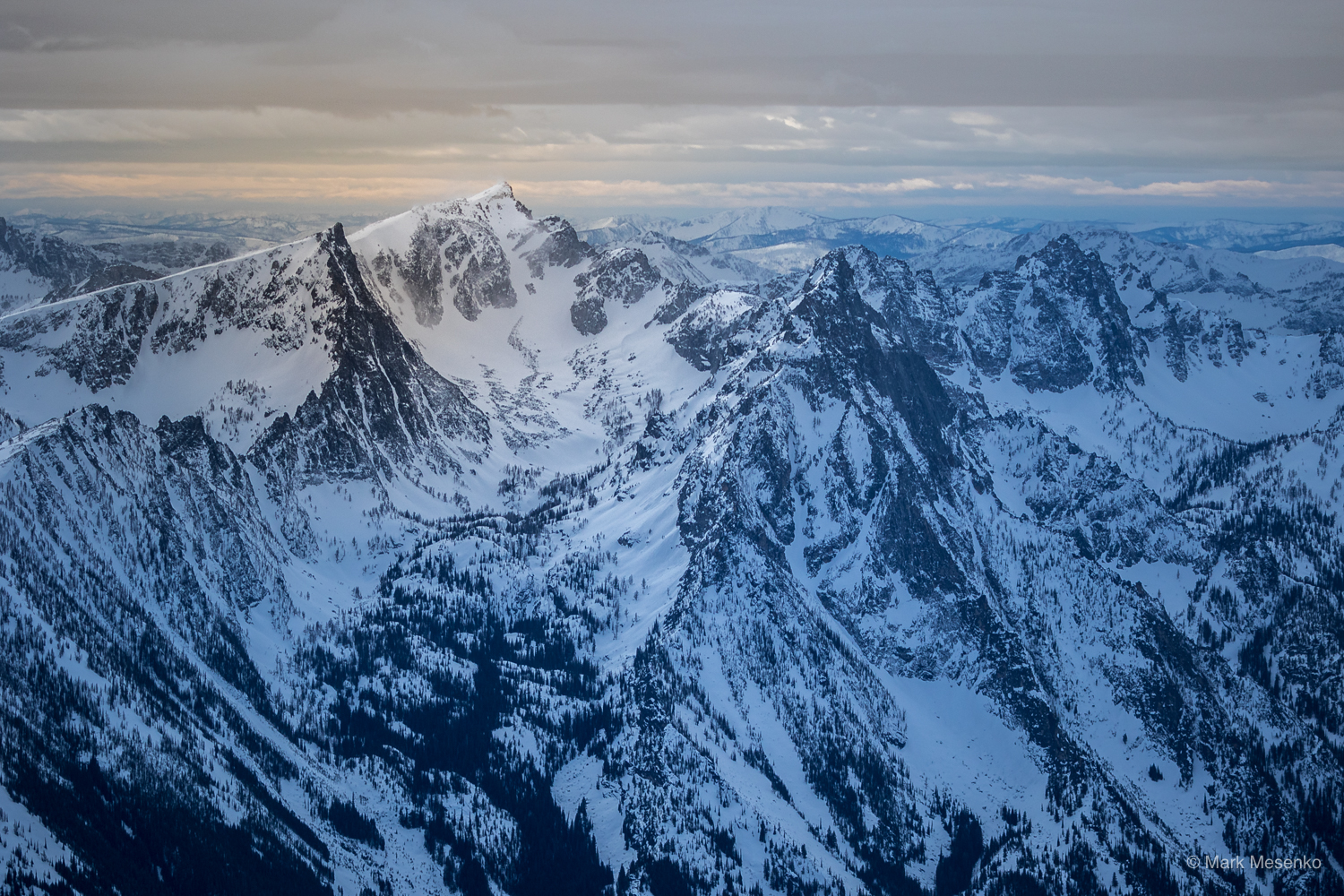
Shop Billings Gear

Shop Billings Gear

Billings Climate

Average Monthly Climate: Billings

MonthAvg HighAvg LowPrecipSnow
Jan40°F22°F0.7"1.5"
Feb31°F12°F1.4"3.6"
Mar46°F23°F1"1.8"
Apr55°F32°F1.7"1.7"
May67°F44°F2.4"0.1"
Jun79°F54°F2.9"0"
Jul89°F62°F0.7"0"
Aug88°F62°F0.7"0"
Sep78°F52°F1.2"0"
Oct58°F36°F1.8"2.1"
Nov47°F28°F0.7"0.9"
Dec39°F21°F0.8"1.5"
Housing & Economy

Housing & Cost of Living

$402,554
Typical Home Value
Census (2019–23): $311,800
$1,458/mo
Typical Rent
Census (2019–23): $1,097/mo
$71,855
Median Household Income
National Rankings
Home Value73rd percentile
Rent81st percentile
Income59th percentile
Affordability Ratio (home price ÷ income)5.6xExpensive
Percentile among ~21,000 U.S. cities. Higher = more expensive (home/rent) or higher earning (income).
Housing Availability
Updated Jan 2026
546
Homes for Sale
2.7% vs last year
$389,150
Median List Price
112
New Listings/Month
53,537
Total Housing Units
6%
Vacancy Rate
Employment & Economy
ACS 5-Year 2019–2023
3.5%
Unemployment Rate
MT avg: ~3.5%
66.1%
Labor Force Participation
60,423
Employed Residents
Top Industries
Education & Healthcare
26.2%
Retail
12.1%
Tourism & Hospitality
10.9%
Home values from Zillow ZHVI (Jun 2026). Inventory, list prices & new listings from Zillow Research (Jan 2026). Income, vacancy,, employment, industry, from U.S. Census Bureau ACS 5-Year 2019–2023. Data may not reflect current conditions. Check Zillow for the latest market data.
Schools
🏫
Billings Public Schools
~16,000 students · District Website
Grad Rate
82%
Per Pupil
$11,200
Graduation rate: OPI/NCES 2022–23. Per-pupil spending: Montana OPI fiscal data. MT state avg: ~87%.
Billings in Rankings & Guides
Compare Billings with Another Town

Neighborhood

Places connected to Billings — nearby towns, corridors, rankings, and compares.

Open on Explore atlas →Open in site graph →
View Billings in the site graph

Explore Nearby Destinations

LaurelBroadviewJoliet
FAQs About Billings

Frequently Asked Questions About Billings

What is the cost of living in Billings, Montana?
Billings’ median household income is $71,855 with a median home value of $384,994 (Zillow, January 2026). The affordability ratio of 5.4 is among the more competitive among Montana's major cities. Median rent is $1,404 per month. With 546 homes for sale and 112 new listings per month, Billings has by far Montana’s largest and most liquid housing market.
Is Billings a good place to live?
Billings offers big-city amenities — two major hospitals, Montana’s busiest airport, a university, and diverse dining and shopping — with relatively affordable housing among Montana's larger cities. The Yellowstone River and Rimrocks provide outdoor access, and the Beartooth Highway to Yellowstone is about 2 hours away. The climate is warmer and drier than western Montana with July highs reaching 89°F.
How big is Billings compared to other Montana cities?
At 117,116 residents, Billings is Montana’s largest city by a wide margin — more than three times the size of Missoula (73,489) and nearly four times Great Falls (60,442). The Billings metro area serves as the regional hub for roughly 500,000 people across eastern Montana, northern Wyoming, and western North Dakota.
What outdoor recreation is near Billings?
Billings has 39 recreation sites within 30 miles, including 8 fishing access sites, 2 state parks, and trails along the Rimrocks. The Yellowstone River flows near the city, and the Bighorn River (41 miles south) is world-class trout water. Pictograph Cave State Park and the Rimrocks provide easy day-trip outdoor access close to town.
What are the main industries in Billings?
Education and healthcare leads at 26.2% of employment, anchored by Billings Clinic and St. Vincent Healthcare — the largest hospital systems between Minneapolis and Seattle. Retail (12.1%) and tourism/hospitality (10.9%) follow. Energy is also significant, with two oil refineries in the city. First Interstate BancSystem is headquartered in Billings.
What are winters like in Billings?
Billings winters are cold but drier and milder than western Montana. January averages a high of 40°F and a low of 22°F. At 3,123 feet elevation — lower than most Montana cities — Billings gets less snow. Chinook winds regularly bring warm breaks during winter. Annual precipitation is about 14 inches.
Is Billings a good place for families?
Billings offers relatively affordable housing (ratio 5.4), the state’s largest school district (16,570 students across three AA high schools), two major hospitals, and family-friendly attractions including ZooMontana, Pictograph Cave State Park, and Lake Elmo. The diverse economy with healthcare and energy provides stable employment.
Can you fly into Billings?
Yes, Billings Logan International Airport (BIL) is Montana’s busiest airport with daily nonstop flights to Denver, Salt Lake City, Minneapolis, Seattle, Las Vegas, and Phoenix. The airport is about 2 miles from downtown. Billings sits at the junction of I-90 and I-94, making it easily accessible by car from all directions.
What is the housing market like in Billings?
As of January 2026, Billings’ median home value is $384,994 (Zillow) with 546 homes for sale and 112 new listings per month — by far Montana’s most liquid housing market. The median list price is $389,150. Inventory dipped 2.7% year-over-year. Across 53,537 total housing units, the vacancy rate is 6.0%.
How far is Billings from Yellowstone National Park?
Billings is roughly 120 miles from the northeast entrance of Yellowstone National Park via the Beartooth Highway (US-212), often called the most beautiful drive in America. The drive takes about 3 hours when the highway is open (late May through mid-October). Red Lodge, the gateway town at the base of the Beartooth, is 58 miles southwest of Billings.

Related Reading

Montana landscape representing 406 cultureMontana Facts
What Does 406 Mean in Montana?
The 406 area code is more than a phone number: it is Montana's cultural identity badge, worn on bumper stickers, hats, and tattoos across Big Sky Country.
Mar 21, 2026