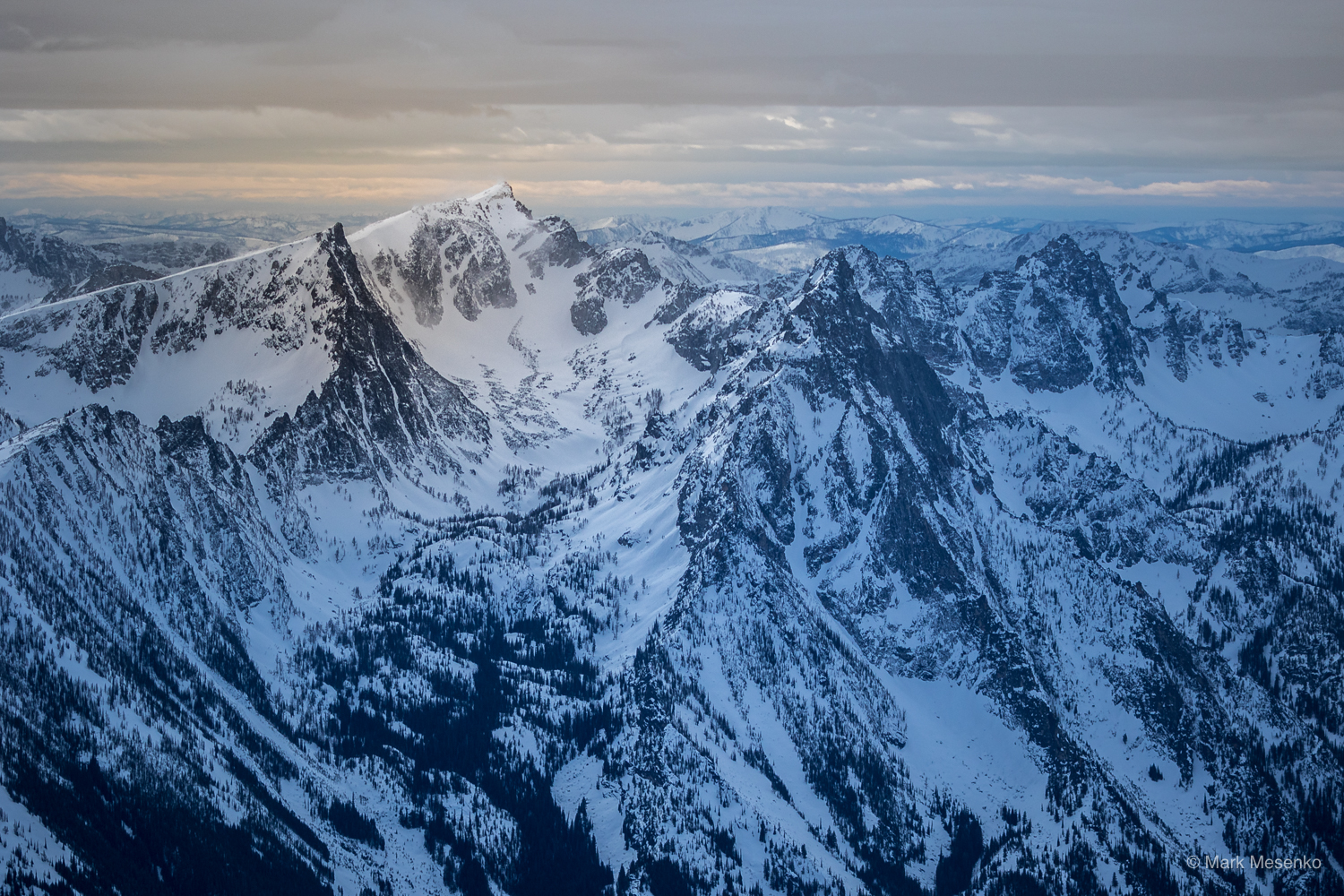
Hamilton - Scenic View

Hamilton

The Banana Belt of Montana

Hamilton is the largest city in Ravalli County with 4,659 residents, sitting at 3,573 feet in the heart of the Bitterroot Valley — widely known as the "Banana Belt of Montana" for its exceptionally mild climate, sheltered between the Bitterroot Mountains to the west and the Sapphire Range to the east. Warm Chinook winds, a rain shadow effect, and over 300 sunny days a year give the valley milder winters and warmer summers than almost anywhere else in the state, and the climate has made it one of western Montana's fastest-growing areas.

Located 47 miles south of Missoula on US-93, Hamilton anchors a valley that stretches from Lolo to Darby. The town is home to the Rocky Mountain Laboratories (NIH), the Bitterroot National Forest, and some of Montana's best hiking with 47 trailheads within 30 miles. With 182 recreation sites nearby including 1 wilderness area (Selway-Bitterroot), 1 hot spring (Sleeping Child), and 14 fishing access points, the Bitterroot Valley offers remarkable outdoor density.

Below you'll find a complete profile including cost of living data, school information, climate details, and housing market trends. For deeper coverage, explore our dedicated guides.

See lodging options in Hamilton

Quick Facts
Population
4,659
County
Ravalli County
Region
Western Montana
Elevation
3,573 ft
Top Industry
Retail
Nearest Hospital
Bitterroot Health - Daly Hospital (in town)
Zip Code
59840
Area Code
406
Time Zone
Mountain Time (MT)
Industry: Census ACS 5-Year 2019–2023 · Hospital: MT DPHHS 2024
Current Weather
Loading current weather...
Airport Distances

Nearest Major Airports

✈️ Missoula (MSO)
56 miles
~1h 10m drive
✈️ Butte (BTM)
98 miles
~1h 53m drive
✈️ Helena (HLN)
128 miles
~2h 22m drive

Map & Nearby

Explore Hamilton on the interactive map with 3 nearby towns and 60 highlighted recreation sites. Use the zoom controls or select a recreation item to focus it on the map.

Open Area in Google Maps
Loading map...
Outdoor Recreation Near Hamilton

Outdoor Recreation Near Hamilton

Jump to map →
9.5/10
World-Class
193 sites within 30 mi
17 categories

Distances are straight-line estimates. Driving distances may be longer. Data: OpenStreetMap contributors & editorial research.

History & Heritage

History & Heritage

Hamilton was established in 1890 as a planned community by Marcus Daly, the Irish-born copper magnate whose Anaconda Copper Mining Company dominated Montana's mining industry. Daly acquired thousands of acres starting in 1886 and directed the platting of the townsite by his engineer James W. Hamilton, after whom the town was named. The settlement was formally incorporated October 16, 1894. Daly established the 22,000-acre Bitterroot Stock Farm focused on thoroughbred horse breeding and agriculture, initiating irrigation ditches that irrigated over 10,000 acres. By 1898, Hamilton was designated the seat of Ravalli County. The Rocky Mountain Laboratory opened in 1928 to study Rocky Mountain spotted fever and other tick-borne diseases, marking Hamilton's entry into biomedical research; today it is a National Institutes of Health facility specializing in infectious disease. The Daly Mansion, completed in 1910 as the summer home of Daly's widow Margaret, features 42 rooms and is preserved by the Daly Mansion Preservation Trust. GlaxoSmithKline's Hamilton biologics campus, established in 1981, produces vaccine adjuvants.


Official historic markers tied to Hamilton in our statewide dataset. Expand the list to read inscriptions and follow links to full pages or deep reads where available. Browse Ravalli County on the map · History trails

Historic markers in Hamilton (8)tap to expand
337 West Main

With material and manpower redirected to winning the fight against fascism, commercial and domestic construction practically ceased during World War II. After the war, pent up demand led to a mini construction boom. With very few lots left on the 100 and 200 blocks of Main, downtown expanded west. Ravalli County Deputy Clerk and Recorder Anna Read owned this property in 1947. That year contractor Lyle Rasmussen constructed a one-story building here for use as a restaurant. It later housed an auto parts store and then the Sears Department Store. The modest, brick structure represents the shift away from ornamentation. The architectural movement toward simplicity, which began in the 1930s, solidified after World War II. The building’s design echoes earlier Hamilton business blocks with its large display windows, designed to attract pedestrians. In addition, like the business blocks that preceded it, the building abuts the sidewalk rather than providing room for landscaping or a parking lot, as later businesses would do. Unlike those earlier buildings, however, striated multicolored brick provides almost its only decoration.

Erected by

Montana Historical Society.

Carnegie LibraryDeep Read

Hamilton’s Ministerial Association opened the first free library in Ravalli County in April 1903 in a room donated by the Ravalli County Bank. Three months later, Hamilton voters levied a one mill tax to support the library, and the enterprise passed into public hands. In 1907, the library moved to the newly constructed city hall. When that space became inadequate, the community approached steel magnate Andrew Carnegie for money for a new building. The process stalled because Carnegie, who helped finance over 1,600 library buildings across the country, required towns to provide a building site. The Hamilton Woman’s Club revived the campaign in 1914 by procuring the necessary gift of land from Margaret Daly, widow of copper king Marcus Daly. On July 8, 1916, the new building opened to the public. The $9,000 structure’s symmetrical façade, daylight basement, and classical detailing are characteristic of Carnegie libraries. The front portico was added later. Community support led to construction of an addition in 1988, which has allowed the Bitterroot Public Library to meet the growing needs of its patrons

Erected by

Montana Historical Society.

City Hall

Town halls originated in twelfth-century Italy, where bells were rung to call public assemblies. Missoula architect A. J. Gibson’s city hall design references this history. Allusions to Italy include such Italian Renaissance features as a low-pitched hipped roof, wide eaves, an arch above the front door, and a symmetrical façade. The prominent bell tower, common to American town halls, symbolizes the significance of democratic assembly. The building was designed in 1906 to house city offices, the fire department, and the public library. Originally, two sets of large bay doors, used for horse-drawn fire wagons, flanked the front entrance. Small communities frequently combined city services under one roof, but multiple use was not always ideal. Hamilton library patrons, for example, sometimes complained about the smell of horses. The library moved to a new facility in 1914, and in 1940 Hamilton remodeled the city hall/fire station, adding a truck bay to the building’s south side. While city offices moved to South Second Street in 1990, the fire department continues to operate from its original home.

Erected by

Montana Historical Society.

Daly Mansion

Riverside served as the summer residence of Margaret Daly, widow of copper magnate Marcus Daly, from its completion in 1910 until her death here in 1941. Daly himself had begun buying Bitterroot Valley land in 1887, eventually owning 28,000 acres. After Daly’s death in 1900, Mrs. Daly had Riverside constructed and managed local family properties and the family syndicate that oversaw Daly interests. This home is a unique Montana example of early-twentieth-century revival styles that successful capitalists used to display their wealth. Because the Panic of 1893 destroyed many mining-based fortunes here, and out-of-state investors financed later mining ventures, grand homes were a thing of Montana’s past by the time Mrs. Daly constructed Riverside. Missoula architect A. J. Gibson designed this house in the Georgian Revival style. Although comparatively restrained for mansions of this period, the house’s outstanding features include its monumental, classical portico, symmetrical façade, hipped roof, and balustrated roof deck. Today, the appearance of the interior decoration and professionally landscaped grounds is virtually unchanged from that of 1910.

Erected by Montana Historical Society.

First National Bank

“No year has favored the business section like 1910. And best of all, the buildings are of a better class than last year,” enthused the Ravalli Republic. Part of this boom, the First National Bank building replaced two wooden structures that housed a general store and Hamilton’s first hospital in the mid-1890s. The second floor of the new masonry building was divided into inexpensive apartments. The building’s first-floor façade reflected its dual purpose as a bank and store. Large display windows with an aluminum mullion frame marked Hub Clothing, which occupied the business block’s south half. Double-hung windows accented by brick voussiors (wedge-shaped bricks or stones) adorned the more formal façade of the First National Bank. F. H. Drinkenberg, president of First National Bank, also owned an interest in Hub Clothing. Mayor of Hamilton in 1910, his real estate investments reflected his faith in the town’s future. In addition to this building, Drinkenberg owned interests in two other Second Street business blocks also constructed 1909-1910.

Erected by Montana Historical Society

.

Hamilton Commercial Historic DistrictDeep Read

Hamilton was born of the Anaconda Company’s voracious appetite for lumber, nurtured on the Bitterroot apple boom, and sustained by medical research. Copper King Marcus Daly—whose Big Mill cut millions of board feet annually to feed his mines and smelter—created this timber town after coming to the area to raise race horses. Working as Daly’s front man, engineer James Hamilton quietly bought 160 acres from area farmers. He platted the townsite in 1890, with Main Street running between the Big Mill on the west and the railroad on the east. By 1893, over forty businesses had opened downtown, catering to the mill workers whose heavy boots resounded on the wooden boardwalks that lined Main Street. Fearful of fire, downtown merchants steadily replaced many of Hamilton’s earliest false-front wooden buildings with buildings constructed from locally manufactured brick or blue-gray stone quarried in nearby Corvallis. New money arrived in Hamilton after 1907 with the Bitterroot apple boom. Hamilton’s population burgeoned to three thousand, and its downtown gained several stylish architect-designed buildings, identifiable by their high-fire brick, metal mullion storefronts, and leaded glass transoms. In the 1920s and 1930s the Rocky Mountain Laboratory, founded to combat spotted fever, sustained Hamilton’s economy, and up-to-date business owners introduced a sleeker architectural style to downtown. Designed by Missoula architect H. E. Kirkemo, the Bower Building at South Second and West Main typifies the smooth lines fashionable in the 1930s, while the wood-frame false-front building at 411 West Main reflects the community’s earliest history.

Erected by Montana Historical Society.

Telephone Exchange

State officials turned out on January 21, 1937, for the grand opening of Hamilton’s new telephone system. The event marked the modernization of telecommunications in the Bitterroot Valley. Ivan C. Gustafson owned this property and built the building, according to the telephone company’s specifications, for its exclusive use. The old quarters in the Teidt Building on Second Street had been home to Hamilton’s telephone office for a quarter of a century. That facility had a huge six-operator switchboard, but only two operators were needed at any given time. This streamlined facility offered a much more compact, two-person switchboard. A public phone booth, unlocked at all times, opened on Main Street to simplify night calls. In addition to its own hot water plant and stoker, the building’s amenities included an operators’ restroom off the main office, “fitted with modern lockers and a davenport,” and a two-car garage at the rear. The building of red brick features a prominent Romanesque arched entry and buff-colored brick trim. The small apartment was added in 1952, and the telephone exchange operated here until 1964

Erected by

Montana Historical Society.

United States Post Office

When construction began on Hamilton’s post office in August 1940, the worst of the Depression was over. Nevertheless, the building is a legacy of the New Deal, when the number of federal construction projects soared to put people to work. Montana congressman Jerry O’Connell secured the $100,000 appropriation for the combined post office and federal building as part of a bill that authorized $130 million for “emergency construction” across the United States. Constructed from a standardized plan provided by the Public Works Administration, the building has a symmetrical and dignified design. The post office expanded in 1997. To preserve this historic structure, officials placed the addition, and the new main entrance, on North Fourth Street. The original building, including the mural, Flathead War Party, remains open for viewing. Commissioned as part of a national project to employ artists and bring art to the people, the mural by Montana-born artist Henry Meloy depicts Flathead Indians preparing to attack their traditional enemies, the Blackfeet. It is one of only six Depression-era post office murals in Montana.

Erected by

Montana Historical Society.

Historic markers map

Open the interactive map filtered to Hamilton. The view zooms to the markers for this community.

Open map zoomed to Hamilton

Events & Festivals in Hamilton

Annual gatherings tied to Hamilton — check official sites for tickets and current dates.

Montana statewide events & festivals calendar

View all Montana events · Where to stay in Hamilton

Hamilton, Montana: Gateway to Wilderness Adventure

Where getting away from it all happens everyday.

Nestled in the heart of Montana's breathtaking Bitterroot Valley, Hamilton beckons adventurers with its perfect blend of small-town charm and boundless outdoor exploration. Surrounded by the towering Bitterroot Mountains to the west and the Sapphire Range to the east, this vibrant community serves as the ideal basecamp for thrill-seekers, nature enthusiasts, and those yearning to escape the ordinary. From world-class fly fishing on the Bitterroot River to hiking through pristine wilderness areas, Hamilton offers an authentic Montana experience where adventure awaits around every corner.


Quick Facts

  • Population: 4,659 (2020 Census)
  • County: Ravalli
  • Founded: 1890
  • Elevation: 3,573 ft
  • Known For: Outdoor recreation, Bitterroot Stock Farm, Rocky Mountain Laboratories
  • Nearby Landmarks: Bitterroot National Forest, Daly Mansion, Skalkaho Falls
  • Fun Fact: Hamilton was founded by copper king Marcus Daly, who built it out of his own pocket after being denied the opportunity to establish business in nearby Grantsdale. The town was named for James W. Hamilton, Daly's engineer who surveyed the site. Willy Burgdorfer discovered the bacterium causing Lyme disease at Rocky Mountain Laboratories in Hamilton in 1982.

Notable People & Pop Culture

  • Marcus Daly – Copper magnate who founded Hamilton in 1890 and established the 22,000-acre Bitterroot Stock Farm for thoroughbred horse breeding and agriculture. The town was platted by his engineer James W. Hamilton, after whom it was named.
  • Willy Burgdorfer – Entomologist and microbiologist who identified Borrelia burgdorferi as the spirochete causing Lyme disease in 1982 through studies of tick vectors at Rocky Mountain Laboratories, where he worked for 35 years.
  • Herald Rea Cox – Bacteriologist who advanced rickettsial disease research at RML in the 1930s, developing the yolk-sac method for cultivating rickettsia and enabling mass production of vaccines for Rocky Mountain spotted fever and typhus.
  • Val Skinner – Professional golfer, winner of six LPGA Tour events.
  • Suzanna Son – Film actress known for her role in "Red Rocket."
  • A River Runs Through It – While set in Missoula, many scenes from this iconic Robert Redford film showcase the Bitterroot Valley's stunning landscapes and fly fishing opportunities.

Top Things to Do in Hamilton

  • Bitterroot River Fly Fishing – Cast your line in one of Montana's premier trout fishing destinations, where rainbow, brown, and cutthroat trout await in crystal-clear waters
  • Daly Mansion Tours – Explore the magnificent 50-room Victorian mansion and 26 acres of grounds once owned by Hamilton's founder, Marcus Daly
  • Blodgett Canyon Hiking – Trek through this spectacular canyon with towering granite walls, pristine forests, and breathtaking waterfalls
  • Montana All Mountain Adventures – Experience heart-pounding thrills with zip-lining, mountain biking, and guided backcountry expeditions

Local Industry & Economy

Hamilton's economy blends historic roots with modern innovation. Originally built around agriculture and timber, the city has evolved into a diverse economic hub. The presence of Rocky Mountain Laboratories, a federal research facility focused on infectious diseases, brings scientific talent and research jobs to the area. GlaxoSmithKline's vaccine development center (formerly Corixa Corporation) further strengthens Hamilton's position in the biomedical field. Tourism plays an increasingly vital role, with outdoor recreation drawing visitors year-round to experience the Bitterroot Valley's natural splendor. Small businesses, including craft breweries, artisan shops, and outfitters, thrive alongside traditional ranching and farming operations that maintain the area's agricultural heritage. This blend of innovation and tradition creates a resilient economy that supports Hamilton's quality of life while preserving its distinctive character.


Seasonal Activities & Local Events

  • Spring/Summer: Whitewater rafting on the Bitterroot River, hiking in Blodgett Canyon, mountain biking on the extensive trail networks, farmers markets in downtown Hamilton, and guided fishing expeditions
  • Fall/Winter: Cross-country skiing at Chief Joseph Pass, downhill skiing at Lost Trail Powder Mountain, snowshoeing through pristine forests, ice fishing, and wildlife viewing
  • Annual Events: Ravalli County Fair, Daly Days celebration, Bitterroot Celtic Games & Gathering, Hardtimes Bluegrass Festival, and the McIntosh Apple Day Festival

Getting There & Nearby Destinations

Hamilton is conveniently located on U.S. Highway 93, approximately 47 miles south of Missoula. Visitors can fly into Missoula International Airport and enjoy the scenic drive south through the Bitterroot Valley. For those seeking a road trip adventure, Hamilton is about 3.5 hours from Yellowstone National Park and 4 hours from Glacier National Park, making it an ideal stop on a Montana wilderness tour. Nearby towns worth exploring include Stevensville (the first permanent settlement in Montana), Darby (gateway to the West Fork of the Bitterroot), and Corvallis. The Lost Trail Pass on the Montana-Idaho border offers spectacular mountain scenery and access to the Continental Divide.


Where to Stay in Hamilton

Hamilton offers accommodations to suit every adventure seeker's needs. For those desiring modern comforts, the city features several well-appointed hotels and motels, including the Quality Inn and Bitterroot River Inn & Conference Center, both providing convenient access to downtown amenities. Travelers seeking more intimate experiences can choose from numerous bed and breakfasts, such as the charming Bitterroot River Bed & Breakfast, where personalized service and local knowledge enhance your stay. Outdoor enthusiasts might prefer camping at nearby sites like Lake Como Recreation Area or Blodgett Canyon Campground, where starlit skies and morning birdsong create unforgettable memories. For extended stays, vacation rentals and cabins dot the valley, offering privacy and often spectacular mountain views. During peak summer and fall seasons, advance reservations are recommended as Hamilton's popularity as a basecamp for Bitterroot adventures continues to grow.

Affiliate links help support this site at no extra cost to you.
Shop Hamilton Gear

Shop Hamilton Gear

Hamilton Climate

Average Monthly Climate: Hamilton

MonthAvg HighAvg LowPrecipSnow
Jan40°F22°F1.5"2.5"
Feb38°F20°F2.3"4.4"
Mar46°F24°F1.7"3"
Apr54°F31°F2.7"2.2"
May64°F39°F2.9"0.6"
Jun73°F48°F1.8"0"
Jul85°F53°F0.6"0"
Aug83°F53°F1"0"
Sep74°F45°F1.3"0.2"
Oct58°F35°F2.2"1.7"
Nov46°F26°F1.8"2"
Dec40°F23°F1.7"3.2"
Housing & Economy

Housing & Cost of Living

$536,001
Typical Home Value
Census (2019–23): $299,800
$1,688/mo
Typical Rent
Census (2019–23): $958/mo
$52,917
Median Household Income
National Rankings
Home Value86th percentile
Rent86th percentile
Income30th percentile
Affordability Ratio (home price ÷ income)10.1xVery Expensive
Percentile among ~21,000 U.S. cities. Higher = more expensive (home/rent) or higher earning (income).
Housing Availability
Updated Jan 2026
100
Homes for Sale
11.1% vs last year
$703,267
Median List Price
13
New Listings/Month
2,849
Total Housing Units
10.5%
Vacancy Rate
Employment & Economy
ACS 5-Year 2019–2023
1.9%
Unemployment Rate
MT avg: ~3.5%
60.1%
Labor Force Participation
2,425
Employed Residents
Top Industries
Retail
21.3%
Education & Healthcare
15.5%
Professional Services
14.6%
Home values from Zillow ZHVI (May 2026). Inventory, list prices & new listings from Zillow Research (Jan 2026). Income, vacancy,, employment, industry, from U.S. Census Bureau ACS 5-Year 2019–2023. Data may not reflect current conditions. Check Zillow for the latest market data.
Schools
🏫
Hamilton Public Schools
~1,800 students
Grad Rate
85%
Per Pupil
$10,800
Graduation rate: OPI/NCES 2022–23. Per-pupil spending: Montana OPI fiscal data. MT state avg: ~87%.
Scenic Drives Near Hamilton
Hamilton in Rankings & Guides
Compare Hamilton with Another Town
View Hamilton in the site graph

Explore Nearby Destinations

PinesdaleDarbyStevensville
FAQs About Hamilton

Frequently Asked Questions About Hamilton

What is the cost of living in Hamilton, Montana?
Hamilton's median household income is $52,917 with a median home value of $504,784 (Zillow, January 2026). The affordability ratio of 9.5 places Hamilton in the moderately expensive range for Montana. The Bitterroot Valley has seen significant population growth from remote workers and retirees drawn to the scenery and outdoor access. Hamilton is less expensive than Missoula (47 miles north) but more expensive than Butte or Great Falls.
What is the Bitterroot Valley like?
The Bitterroot Valley stretches about 80 miles from Lolo (south of Missoula) to Lost Trail Pass on the Idaho border, with the Bitterroot Range to the west and the Sapphire Mountains to the east. Hamilton is the valley's commercial center. The valley is known for mild winters by Montana standards, world-class hiking and fishing, a growing arts community, and agricultural heritage. US-93 runs the length of the valley.
How far is Hamilton from Missoula?
Hamilton is 47 miles south of Missoula via US-93, about a 50-minute drive. Many Bitterroot Valley residents commute to Missoula for work, healthcare, and shopping. Missoula International Airport is the nearest commercial airport. The drive follows the Bitterroot River through Stevensville, Florence, and Lolo.
What hiking is available near Hamilton?
Hamilton has 47 trailheads and 1 wilderness area within 30 miles, making it one of Montana's best hiking destinations. The Selway-Bitterroot Wilderness (10 miles west) is one of the largest wilderness areas in the lower 48. Popular hikes include Blodgett Canyon, Lake Como Loop, St. Mary Peak, and Bear Creek Trail. The Bitterroot National Forest surrounds the valley on both sides.
What are winters like in Hamilton?
Hamilton has relatively mild winters for Montana at 3,573 feet elevation. January averages 40°F highs and 22°F lows. The valley receives moderate snow but significantly less than mountain communities like Big Sky or West Yellowstone. Lost Trail Powder Mountain (62 miles south) and Discovery Ski Area (59 miles east) provide nearby skiing. The Bitterroot Valley's east–west orientation allows some winter sun.
What is the job market like in Hamilton?
Hamilton's unemployment rate is just 1.9%, among the lowest in Montana. The economy is anchored by retail, healthcare (Marcus Daly Memorial Hospital), and the Rocky Mountain Laboratories (a National Institutes of Health research facility that has been in Hamilton since 1928). Agriculture, forestry, and construction are also significant. Remote workers have been a growing segment of the workforce.
What hot springs are near Hamilton?
Sleeping Child Hot Springs (8 miles east) is the nearest hot spring, and the only one within 30 miles. Lost Trail Hot Springs (36 miles south), Lolo Hot Springs (39 miles north), and Blue Joint Hot Springs (40 miles southwest) are accessible as day trips.
Is Hamilton a good place for fishing?
Hamilton is excellent for fishing with 14 fishing access sites and 55 lakes within 30 miles. The Bitterroot River, which runs through the valley, is a renowned trout stream with rainbow, brown, and cutthroat trout. The East Fork and West Fork of the Bitterroot offer less-pressured water. Painted Rocks Lake and Lake Como provide stillwater options. The fall brown trout run on the Bitterroot is a highlight.
What is the Rocky Mountain Laboratories?
The Rocky Mountain Laboratories (RML) is a National Institutes of Health (NIH) research facility in Hamilton that has been studying infectious diseases since 1928. Originally established to research Rocky Mountain spotted fever, it has expanded to study a wide range of pathogens including COVID-19, Ebola, and Lyme disease. RML is one of Hamilton's largest employers and a significant contributor to the local economy and scientific community.
How do I get to Hamilton?
Hamilton is on US-93, 47 miles south of Missoula. Missoula International Airport (MSO) is the nearest commercial airport with daily flights to major hubs. From Missoula, the drive south through the Bitterroot Valley takes about 50 minutes. Hamilton is also accessible from Idaho via US-93 over Lost Trail Pass, and from Anaconda/Butte via Highway 38 over Skalkaho Pass (seasonal).

Related Reading

Montana rural landscapeMontana Facts
Montana Slang and Expressions You Should Know
From 'Montucky' to 'blue-bird day,' these are the words and phrases that mark you as a local in Big Sky Country.
Mar 21, 2026
Montana landscape representing 406 cultureMontana Facts
What Does 406 Mean in Montana?
The 406 area code is more than a phone number: it is Montana's cultural identity badge, worn on bumper stickers, hats, and tattoos across Big Sky Country.
Mar 21, 2026
Montana winter landscapeGuide
Living in Montana vs. Visiting: What Changes
The Montana you visit for a week and the Montana you live in year-round are two different places. Here's what actually changes when you stay.
Mar 21, 2026