Great Falls - Scenic View

Great Falls

The Electric City

Great Falls is Montana's third-largest city with 60,000 residents, known as "The Electric City" for the hydroelectric dams that harness the Missouri River's five great falls first documented by Lewis and Clark in 1805. Whether you're considering a move or planning a visit, this guide covers everything you need to know — from housing costs and job opportunities to fishing on the Missouri River and a weekend itinerary for first-time visitors.

Situated in Cascade County where the Great Plains meet the Rocky Mountain Front, Great Falls is anchored by Malmstrom Air Force Base, Benefis Health System, and a legacy of western art centered on the C.M. Russell Museum. Giant Springs State Park — home to one of the largest freshwater springs in the world — sits just 4 miles from downtown, and the Missouri River flows right through the city with 60-plus miles of the River’s Edge Trail along its banks. First Peoples Buffalo Jump State Park (11 miles) preserves a mile-long cliff used for over 2,000 years by Native Americans.

With an affordability ratio of 5.1, Great Falls offers among the most affordable housing of Montana's major cities and a 31.5% year-over-year inventory increase. Below you'll find a complete profile including cost of living data, school information, climate details, and housing market trends. For deeper coverage, explore our dedicated guides.

See lodging options in Great Falls

Quick Facts
Population
60,000
County
Cascade County
Region
Central Montana
Elevation
3,340 ft
Top Industry
Education & Healthcare
Nearest Hospital
Benefis Health System (in town)
Zip Code
59403
Area Code
406
Time Zone
Mountain Time (MT)
Industry: Census ACS 5-Year 2019–2023 · Hospital: MT DPHHS 2024
Current Weather
Loading current weather...
Airport Distances

Nearest Major Airports

✈️ Great Falls (GTF)
5 miles
~19m drive
✈️ Helena (HLN)
84 miles
~1h 39m drive
🛩️ Havre (HVR)
121 miles
~2h 15m drive

Map & Nearby

Explore Great Falls on the interactive map with 3 nearby towns and 21 highlighted recreation sites. Use the zoom controls or select a recreation item to focus it on the map.

Open Area in Google Maps
Loading map...
Outdoor Recreation Near Great Falls

Outdoor Recreation Near Great Falls

Jump to map →
9/10
World-Class
45 sites within 30 mi
14 categories

Distances are straight-line estimates. Driving distances may be longer. Data: OpenStreetMap contributors & editorial research.

History & Heritage

History & Heritage

Founded in 1883 by Paris Gibson with support from James J. Hill, Great Falls was planned to harness the Missouri River's five waterfalls (total drop 612 feet). Lewis and Clark reached the falls on June 13, 1805, executing an 18-mile portage over 28 days amid grizzly attacks and hailstorms. Black Eagle Dam (1890–1892) was Montana's first major hydroelectric facility. The Boston and Montana Smelter (1891) employed over 1,000 workers; Anaconda Copper later controlled refining. Great Falls Army Air Base (1942) supported the Northwest Staging Route, ferrying Lend-Lease aircraft to Alaska. Malmstrom AFB (1955) became the first operational Minuteman ICBM base. Charles M. Russell made Great Falls his home; the C.M. Russell Museum preserves his legacy.


Official historic markers tied to Great Falls in our statewide dataset. Expand the list to read inscriptions and follow links to full pages or deep reads where available. Browse Cascade County on the map · History trails

Historic markers in Great Falls (69)tap to expand
"Nibbles"

"Nibbles," a Montanoceratops cerorynchus, was a small plant eating dinosaur from the late cretaceous period. The species is about 68 million years old and was discovered in 1942 in the St. Mary River Formation in North Central Montana by Barnum Brown. Full-grown adults were no larger than ten feet and weighed less than 400 pounds. They were the only dinosaurs of this group to have a nasal horn. The Montanoceratops also had a parrot-like beak and efficient grinding teeth.

Nature
305 Third Avenue North

A graceful wraparound porch with square posts, a central entry beneath a projecting gable, and transomed windows distinguish this charming vernacular example of the Greek Revival style. Inside, a rounded hall ceiling adds lovely period elegance. The single-story frame dwelling beautifully illustrates the Greek Revival style in transition. This popular architectural form evolved from the mid-1800s into the twentieth-century gable-front- and-wing, the nation’s most popular form of folk housing. Great Falls pioneer realtor Matthew Dunn purchased the property in 1888, built the home soon after, and was the first occupant. A succession of other early residents included the David Craig family who, along with five boarders, were tenants in 1900. Prominent pioneer attorney James W. Speer and his wife, Grace, owned the property circa 1907 to 1910. Grace taught piano while her husband built his law practice and served as county attorney in 1908 and 1909. He was later elected mayor (1911- 1913), state senator (1923 and 1925) and district judge (1948-1956). The Speers’ household in 1910 included their two small children, Grace’s mother, a brother-in-law, and two servants.

Erected by The Montana National Register Sign Program.

315 Fourth Avenue North

Great Falls’ premier residential street, Fourth Avenue North, gained 24 new homes between 1900 and 1910. Among them was this substantial residence, constructed in 1904 for bookkeeper Edgar Newlon and his wife Anna. The home is a classic American foursquare, a style so named for its boxy shape. Like most foursquare residences, this dignified clapboard home is two-and-one-half stories and features a hipped roof with a centered dormer, a symmetrical façade, and a full-length front porch (now enclosed). The residence’s efficient use of space—a hallmark of the foursquare style—must have appealed to civil engineer Frank Scotten who, with his wife Lola, purchased the home in the early 1920s. Scotten came to Great Falls in 1889 and was said to know more about the town’s construction than any other resident. He supervised construction of several branch railroads, the city’s streetcar lines and street lighting system, two smelters, and the four hydroelectric dams that gave meaning to the moniker “the Electric City.” An engaged philanthropist, he also founded a local Community Chest—a forerunner to the United Way.

Erected by

The Montana National Register Sign Program.

A "great" Set of Falls

Hidasta informants described a fall of water on the Missouri River near the mountains, so the Captains expected a short portage. Instead of one waterfall, Lewis happened upon a succession of five, and their hope for a short portage faded. Look upriver and see “upper pitch,” now called Black Eagle Falls, the last in the series. The remaining four cascades are downriver - the “sublimely grand” Great Falls is 8 river miles and a 20-minute drive away.

A “great” Challenge

Standing atop a knoll, now called Smelter Hill, just upstream, Lewis determined the south shore offered the shortest, most level portage with the fewest ravine crossings. Following Clark’s survey, the Corps pulled canoes and gear over 18 miles of unforgiving plains.

A “great” But Tamed, Resource

The 360 foot drop in this section of river offered a ready power source for the young community of Great Falls. Five dams now lasso the river and regulate its water levels and current.

A.W. Kingsbury House

Pictured in 1909 in the Great Falls Tribune under the headline “A Great Falls Residence,” this Queen Anne style house was hardly typical of its day. An imposing two-and-one-half-story structure, the elegant home was built in 1901 for Adkin W. and Margaret Kingsbury and their two children. Constructed on a corner lot purchased for about $1,000, the home features a geometric jumble of rooflines, including a concave bell-shaped roof atop a polygonal tower. A solid decorative eave with paired brackets and a molded frieze extends around the second story. A. W. Kingsbury earned his money in the livestock industry and is credited with bringing the first sheep into Cascade County. He also invested in Great Falls real estate, constructing the first brick building on Central Avenue. An active welfare worker, Margaret Kingsbury helped found Great Falls Associated Charities. The Kingsburys lived here until their deaths, within four months of each other, in 1924. In 1951, the mansion was remodeled into apartments, but its exterior remained intact; it was restored to a single-family residence in 2000.

Erected by

The Montana National Register Sign Program.

agricultureArchitecture
Abe and Carrie Kaufman Residence

A dramatic living room fireplace, crystal chandelier, and boxed-beam dining room ceiling are among the original fixtures continuing to decorate the interior of the Abe and Carrie Kaufman residence. Neoclassical, Craftsman, and Victorian detailing combine in this two-and-one-half-story residence, whose exterior ornamentation includes elaborate wooden brackets beneath the eaves, stickwork in the gable ends, lead glass windows, and a large wraparound porch. Abe Kaufman arrived in Great Falls in the 1890s, joining his brother-in-law, merchant Nathan Wertheim, to operate a clothing store on Central Avenue. Among their competitors were Mose Kaufman (no direct relation) and Arge Nathan. All four men were members of an extended network of pioneering Jewish businessmen, whose access to capital and merchandise were instrumental to Montana's commercial development. Great Falls' promising business climate spelled prosperity, and Abe's economic success is evident in this showcase home, constructed in 1906. Arge Nathan's son Robert, who inherited the store his father founded, purchased the residence in 1923 when the Kaufmans moved to San Francisco. He lived here with his family into the 1940s.

Erected by The Montana National Register Sign Program.

Anaconda Company Manager's House

The Boston and Montana Consolidated Copper and Silver Mining Company, later acquired by the Anaconda Company, chose a treeless bluff overlooking the river to locate its smelter and refinery in 1892. Among the seventeen managers’ houses built at Black Eagle in the mid-1890s, this Queen Anne style home was the largest. Although built circa 1893, its first resident manager was Charles W. Goodale (1902 to 1913). A later manager, Al Wiggin (1918 to 1941), had many trees planted on barren Smelter Hill, transforming it into a pleasant, shaded neighborhood. Managers continued to use the residence until the refinery closed in 1980, jeopardizing the future of the company houses. Most were saved and moved to new locations. This home, weighing 120 tons, was moved to its present site by Richard and Carol Ecke in 1983. The lovely vintage residence features oak floors, carved ceiling beams, and rain gutters of copper, a material readily available at the refinery. Mahogany trim and original pewter and crystal fixtures hint at the refined lifestyle of a high-ranking company official.

Erected by The Montana National

Register Sign Program.

Arvon Block

During the busy 1890s, Great Falls’ business district swarmed with activity. City boosters such as pioneer rancher Robert Vaughn expressed confidence in the town’s future by investing in commercial real estate. Vaughn commissioned an unknown designer to create this unusual combination stable and hotel. The Axtell Stables occupied the western portion of this splendid 1890 Renaissance-inspired building. Montana’s most complete livery stable provided passenger, express, draying, and transfer services. While basement stalls accommodated fifty-eight horses, ground-floor harness and carriage showrooms displayed the newest equipment. Stable hands shared second-floor sleeping quarters with huge hay chutes that ran to the basement. On the east, a three-story boardinghouse boasted forty rooms for offices and lodgings. The Derrig Fruit Company had moved into the main floor area below the hotel by 1895, and in that year, the company paid out over $76,000 in freight charges alone. Shipped by rail to the station a block away, the goods were no doubt then delivered to Derrig’s by Axtell’s wagons. One of few local Victorian-era commercial structures to have escaped natural and manmade destruction, this “grand old survivor” recalls the necessity of horse-drawn services before the advent of the automobile.

Erected by The Montana National Register Sign Program.

NatureArchitectureIndustry
Black Eagle Falls

The uppermost of the Great Falls of the Missouri bears west of this point. The name is a modern one derived from an entry for June 14th, 1805 in the journal of Capt. Meriwether Lewis of the Lewis and Clark Expedition. He discovered the falls on that date and wrote, “... below this fall at a little distance a beautiful little Island well timbered is situated about the middle of the river. In this Island on a cottonwood tree an Eagle has placed her nest; a more inaccessable spot I believe she could not have found for neither man nor beast dare pass those gulphs which separate her little domain from the shores”.

After viewing the falls, Capt. Lewis ascended the hill to the former location of the smelter stack and saw “... in these plains and more particularly in the valley just below me immence herds of buffaloe ...”

Exploration
Boyd House

By 1910, the Queen Anne style had lost much of its allure. Once admired, its artistic jumble of angles, textures, and colors had become reviled as cluttered and artificial. This rejection of complexity was gradual, and many houses—like this transitional Queen Anne/Colonial Revival style home—pursued a cleaner look while retaining some traditional late Victorian features. In this case, those features include a wraparound porch, corbelled chimney, beveled and leaded glass windows, and a shingled front gable. The rough-dressed sandstone windowsills and lintels contrast with the home’s dark brick. The 1908 home’s hipped roof, pedimented entranceway, and relative simplicity reflect a more modern taste. James and Frances Boyd, who built this house, lived here until their deaths in 1946 and 1947, respectively. The Boyds took in middle-class boarders, who included at various times an accountant, a student, and a librarian. James’s brother and business partner, Gilbert, also shared their home. The Boyd brothers owned a large plumbing business and invested in real estate. Their projects included plumbing the Deaconess Hospital and constructing the nearby Teton Apartments.

Erected by The Montana National Register Sign Program.

Bus Depot and Garage

Streamline Moderne architecture celebrated America’s engineering prowess. The style—which offered an optimistic response to the woes of the Great Depression—promised a better future through technology. Its celebration of speed and efficiency provided a perfect match for Greyhound Lines, which adopted the style as part of its corporate identity. Founded in 1914, the bus company built dozens of Streamline Moderne depots during its dramatic post-World War II expansion, including this one in 1947. Complementing the sleek aesthetic of Greyhound’s Silverside buses, the depots incorporated modern materials, including glass block and aluminum, which gave the buildings a progressive feel. In typical streamlined fashion, the depots hugged the ground while their smooth, aerodynamic surfaces, rounded corners, and curved plate-glass windows echoed the company’s commitment to fast, efficient transportation. The site of the Great Falls depot had once housed a livery stable. After 1947, it provided access to a more modern form of transportation, conveniently located near the city center.

Erected by The

Montana National Register Sign Program.

C.E. Davis Residence

Charles E. Davis, “expert watchmaker and jeweler,” arrived in Great Falls with his wife, Grace, in 1900. With Charles’ two brothers, the couple opened a store on bustling Central Avenue, selling jewelry, watches, cut glass, gifts, and eyeglasses. Their son, William, continued the family business, and Davis Jewelry remained a Central Avenue institution until 1983. The Davises built this two-story residence in 1902. The home’s architecture bridges the nineteenth and twentieth centuries. The fish-scale shingles in the gable end evoke the Queen Anne style, but most of the home’s features reflect the cleaner lines of the Colonial Revival style, which became increasingly popular after the turn of the century. Charles and Grace raised four children, three of whom continued to live here into adulthood. In 1930, the residence, valued at $10,000, sheltered Charles and Grace, two grown sons, a teenage daughter, and a live-in servant. When Charles died at the age of seventy-seven in 1948, he was thought to be Central Avenue’s oldest active businessman. Grace remained in the family home until 1958.

Erected by

The Montana National Register Sign Program.

Captain Lewis Arrives at the Great Falls

"... my ears were saluated (sic) with the agreeable sound of a fall of water...I saw the spray arrise (sic) above the plain like a collunm (sic) of smoke....soon began to make a roaring too tremendious (sic) to be mistaken for any cause short of the great falls of the Missouri....the river was one continued sene (sic) of rappids (sic) and cascades which i readily received could not be encountered with our canoes..." -- Meriwether Lewis, June 13, 1805

On Thursday. June 13, 1805, Captain Meriwether Lewis came upon what he described on his journal as a "....sublimely grand spectacle..." "He had arrived at the Great Falls of the Missouri River.

The previous winter, Mandan Indian Chiefs had told the Corps of Discovery that the party would encounter falls on the river.

However, Lewis soon found for more four more falls upstream from the Great Falls, How were they going to get past these obstacles? For the next three weeks the men portaged their boats and equipment eighteen miles overland around the falls. This portage was the most grueling stretch of the journey tha the expedition has faces so far.

Erected by

North Western Power.

Exploration
Cascade County Courthouse

Spirited revelry in the streets of Great Falls greeted news of the creation of Cascade County in 1887. Named county seat, Great Falls grew quickly, with county offices located in various downtown buildings. In 1891 voters approved the visionary $20,000 purchase of an entire city block for the site of a future courthouse. Lack of funds and taxable population delayed construction until 1901. Architects H. N. Black and Frank Longstaff called their courthouse design “pure French Renaissance with slight modifications.” Constructed of grey sandstone quarried nearby, the courthouse was dedicated on July 4, 1903. Its interior detail reflects the skill of the union craftsmen who fashioned it, while its beautifully landscaped grounds are a silent tribute to Great Falls city founder Paris Gibson, a tireless advocate for trees and parkland. The architects’ plan called for a dome made primarily from stone; instead, it is constructed entirely of copper. Topped by the Statue of Justice, the dome was used during World War II by lookouts guarding against possible Japanese air attacks. Today the courthouse continues to serve Cascade

County citizens.

Architecturegovernment
Chicago, Milwaukee and St. Paul Depot

The Chicago, Milwaukee and St. Paul Railway was constructed between 1907 and 1909, the last transcontinental railroad to cross Montana. Its service to Great Falls during the homestead boom supported the city’s establishment as a major urban center for central Montana. When the Milwaukee Road completed this passenger depot in January of 1915, railway officials hailed it as the finest of its kind between Spokane and Chicago. The terminal is the only building in Great Falls made of “flash” brick, which is burned and unevenly fired. The 135-foot tower became a Great Falls landmark, acting as a giant marker of the depot’s location. The corporate logos 100 feet up on each side of the tower were the first of this type, designed to be used on any railway station in the United States. They are composed of small, high-grade tiles pointed with tinted mortar to create a seamless effect—even if viewed close up. Each sign measures 17 feet by 10 feet. This grand railroad depot compares favorably with the Milwaukee Road’s passenger depots in Miles City (1909), Butte (1916-17), and Missoula (1910).

Erected by

Montana Historical Society; Department of the Interior, National Register of Historic Places.

Commissary of the Plains

The plains surrounding Great Falls were crowded with immense herds of deer, elk, antelope and buffalo. Buffalo was a staple diet item for plains Indians and became a favorite meal for the members of the Lewis and Clark Expedition.

Lewis and Clark commented on the numbers of buffalo carcasses they found in the Missouri River near here. Buffalo often died from falls off the eroding river cliffs or from drowning when animals in the rear of the herd pressed the buffalo at the river’s edge into the strong current.

”In this plain were infinitely more Buffaloe than I have ever before witnessed”

Meriwether Lewis

Erected by Lewis and Clark National Historic Trail.

Cowboys Bar and Museum

Former Great Falls “cowhands” held a reunion in 1938. Now grown men, as boys they had earned money herding local milk cows in and out of town each day or driving range cattle through the city streets. Membership soon expanded beyond Great Falls, and over 300 former cowboys attended the Montana Cowboys Association’s second annual reunion banquet in 1939. Association President Bill Shea donated the land for a meeting hall and museum dedicated to preserving memories of cowboy life. The Cowboys worked with the National Youth Association (NYA) to build the museum, completed in 1941. A New Deal program designed to provide work for youth between sixteen and twenty-five, the NYA intentionally adopted labor intensive designs and techniques to maximize employment. The result was a well-crafted stone and log building, whose Rustic style evoked the museum’s intention of glorifying the Old West. Later additions expanded the facility, which houses a bar, noted for its cowboy hospitality, and a museum of over 500 artifacts—from rifles and saddles to a Kimball-Reed organ, brought to Montana by steamboat in 1876.

Erected by

The Montana National Register Sign Program.

education
Dubbs Block

A shortage of steel and limited purchases of nonessential goods during World War II caused the automobile industry to skyrocket after the war ended. As the troops came home and the economy recovered, Montana experienced this boom as well. By the late 1940s, Great Falls consumers could choose from nearly a dozen makes of automobiles. North Dakotans Edmund and Clara Dubbs, in partnership with Frank P. McGrath, founded McGrath-Dubbs Motors in 1949 and constructed this building at what was one of the premier car sales locations of the time. Leonard Haggarty came to Great Falls in the early 1950s to manage the business, then known as Great Falls Motor, Inc. He purchased the company in 1952 and later changed its name to Haggarty Motors, Inc. The firm sold new Chryslers and Plymouths, used cars, and offered repair services. Three generations of Haggartys managed the business until the late 1990s. Streamline Moderne, a 1930s product of the Art Deco style, influenced the building’s design. The rounded corner, horizontal band of windows on the second story, and wraparound showroom storefront create a streamlined effect.

Erected by

The Montana National Register Sign Program.

Explorers at the Portage

excerpt from the journals of Captain Meriwether Lewis

I scelected a fat buffaloe and shot him very well Robert M. Scriver, Sculptor , through the lungs ... expecting him to fall ...

...a large white, or reather brown bear ... crept on me within 20 steps before I discovered him;... I drew up my gun to shoot, ... but recolected that she was not loaded ... I thought of retreating in a brisk walk ... as he was advancing ... but I had no sooner terned myself about but he pitched at me, open mouthed and full speed, ... the ideas struk me to get into the water to such a depth that I could stand and he would be obliged to swim, and that I should in that situation defend myself with my espontoon; ... the moment I put myself in this attitude of defence he sudonly wheeled about ... (and) declined the combat." (sic) Capt. Lewis - June 14, 1805

This statue, presented to the city of Great Falls, was made possible with the financial assistance provided by the following Montanans; Leo Graybill Jr., Donald Ostrem, G. Robert Crotty Jr., Gregory H. Warner, Turner C. Graybill, Michael G. Barer, Stephen A. Doherty, Dorothy Anderson,

Thomas Mather, Harold Poulsen, L.A. Donahue, Thomas Curren, Roy Volk, Robert M. Scriver, Lawrence Rossmiller, Charles Hope.

A Montana Centennial Project dedicated at Great Falls, Montana July 4, 1989

Erected 1989 by Montana Centennial Project.

F.W. Woolworth Building

A close look at the Woolworth Building’s upper floors makes evident that it was originally two separate, but closely related edifices. Connecting arches over second-story windows, a decorative metal cornice, and a crowning brick parapet distinguish the eastern portion from its less ornate neighbor. Constructed in 1890 and 1891, the buildings featured connecting second and third floors. Cascade County’s court and offices occupied the second floor in 1891. By 1897, the building was home to the Hotel Grand, which provided rooms for $2.00 per day. Free carriages met all trains, and the hotel boasted a “well-lighted sample room,” dining room, and billiard room on the first floor. Under new management and a slightly different name, the Grand Hotel opened in 1907 with sixty-two rooms. The residential hotel provided “first-class lodging” for businessmen, “local and transient, alike.” By 1916, the Golden Rule Store (a precursor to J.C. Penney) occupied the first floor. The ground floor was remodeled several times by mid-century, and again when the F. W. Woolworth’s Company moved here in 1956.

Erected by

The Montana National Register Sign Program.

First Methodist Church

First Sermon by Reverend Jacob Mills 401 Central Avenue 1884

Reverend Francis Asbury Riggin and Reverend William Wesley Van Orsdel secured present Church site 1886

First Sanctuary 1888 Second Sanctuary 1902 Educational Wing 1922 Present Sanctuary 1955

Erected by First Methodist Church.

First United Methodist Church Parsonage

The pioneer Methodist circuit rider William Wesley Van Orsdel—better known as “Brother Van”—arrived in Fort Benton, Montana, on the steamboat, Far West, in 1872. For forty-five years, he traveled on horseback, by wagon, by rail, and, finally, as a passenger, by car, holding services and establishing churches across the state. In the early days, he held prayer meetings in stores, barns, living rooms, and even, at times, saloons. He is credited with having helped found more than a hundred churches, a college, six hospitals, and a children’s home, which, in the years since, have contributed enormously to Montana’s welfare. Because he never married and spent most of his time traveling, Brother Van did not have a home of his own, even though he oversaw the building of approximately fifty parsonages. According to legend, saloonkeepers once gave him a thousand dollars to build himself a home; instead, he donated the money to the Great Falls hospital to help construct a nurses’ residence. When Rev. J. A. Martin had this classic American four-square home built in 1909, he included a room for Brother Van. A lively place, the six-bedroom parsonage also sheltered Martin, his wife, their three children, three boarders, and frequent guests. Brother Van’s room was located at the head of the stairs on the second floor, so he wouldn’t disturb the family when he came in late at night. When Brother Van died in 1919, the governor ordered flags to half-mast. Montana had lost one of her best-loved sons.

Erected by The Montana National Register Sign Program.

Formation of the Gorge and Falls

... the rocks seems to be most happily fixed to present a sheet of the whitest beaten froath for 200 yards in length and about 80 feet perpendicular. — Meriwether Lewis, June 13, 1805

The Great Falls of the Missouri River was first described in writing by Meriwether Lewis on June 13, 1805. In 1915, the upper part of the falls was inundated by Ryan Dam to produce electricity. These photos are views of the falls before the dam was constructed.

... the irregular and somewhat projecting rocks below receives the water in it’s passage down and brakes it into a perfect white foam which assumes a thousand foams ...

— Meriwether Lewis, June 13, 1805

The explorers were very impressed with the narrowness of the Missouri gorge and the falls:

... I beheld those Cateracts with astonishment the whole of the water of this great river Confined in a Channel of 280 yards and pitching over a rock of 97 feet ... — William Clark, viewing the falls for the first time (June 17, 1805)

Natural waterfalls need three things:

Plenty of water at least seasonally

A river or stream that is cutting down through the landscape due to some recent change in the drainage. In this area, the Missouri River was apparently forced out of its old channel when a continental ice sheet moved into northern Montana during the last ice age. The displaced river went to work cutting a new channel, and it has not yet finished the job. In time, it will look more like the Missouri River valley upstream and downstream of the gorge. The river will meander across a broader valley with fewer waterfalls.

A layer of rock that resists erosion more than the rocks above or below it. Hard sandstones are interlayered here with softer mudstones. As the river cuts its gorge, it gets “hung up” on the resistant sandstone layers, forming falls.

Exploration
From Water Comes Power

Inside the Ryan Powerhouse, electricity is generated from Missouri River water as it drops 150 feet from the reservoir behind the dam. The water you see flowing from the bottom of the powerhouse has passed through the turbines and is returning to the river.

Water flows to the turbines through large pipes called penstocks. It is the force of this falling water that spins the turbines, which are waterwheels turned on their side. Each turbine rotates at 200 rpm and provides 14,000 horsepower to the generator above it.

The six generators at the Ryan Hydroelectric Development can produce up to 60 megawatts of electricity, enough to power about 54,000 homes. The next time you surf the Internet, microwave your dinner or charge your cell phone, falling water might be providing some of the energy.

Erected by North Western Power.

Giant Fountain

Lewis and Clark

On their historic Expedition to the Pacific Coast discovered this

Giant Fountain

June 18 - 1805 In honor of the courage, fidelity and patriotism of the explorers this tablet is here placed and dedicated

Erected 1928 by Daughters of the American Revolution, Black Eagle Chapter.

Exploration
Great Falls Central Business Historic District

An eclectic cultural landscape has long characterized the West Bank. Separated from downtown Great Falls by the broad Missouri River, the larger neighborhood has hosted a varied mix of industrial, residential, and commercial development since the 1880s. The site of Johnstown, the earliest permanent Euro-American settlement, the greater West Bank area was also home to historic-era Chippewa-Cree encampments. The area began developing an industrial character after 1887, when the railroad arrived in Great Falls and constructed a roundhouse and shops nearby. A Great Northern spur line ran northeast along the West Bank to the Boston and Montana, later Anaconda Company’s Black Eagle smelter, encouraging nearby industrial development. The most prominent West Bank industry of the early twentieth century was the Sunburst Oil Refinery, which operated from 1923 to 1933. Two buildings remain as a tribute to the West Bank’s role in this early oil boom. Non-industrial development also increased in the early 1900s. Attracted by inexpensive land prices and the proximity of downtown, more residents constructed permanent homes. Improved roads and the construction of the Northern Montana Fairgrounds in 1931 drew retail and entertainment establishments. During the Great Depression, New Deal programs sponsored the construction of two of the district’s most notable landmarks: the WPA warehouse, built in 1939 as an operations base for the Works Progress Administration; and the 1940 Cowboys Bar and Museum, home of the Montana Cowboys Association. Today, six well-preserved residential, commercial, and industrial buildings compose this small, historic district, which epitomizes the West Bank’s diverse history.

Erected by The Montana National Register Sign Program.

Great Falls Civic Center

Clean lines, formal monumental openings, and restrained revival details mark the 1939 Great Falls Civic Center as a municipal Art Deco style building. The Works Projects Administration provided most of the funding for the building. The Depression-era federal jobs program employed people doing everything from local history research to public works projects. Since WPA funds could not be used to purchase land, the city situated the Civic Center on parkland, angering residents who wanted to preserve Great Falls’ beloved Gibson Circle at the end of Central Avenue. A lawsuit that went all the way to the state supreme court failed to save the park. Despite the controversy, the completed building filled a real need for a governmental and recreational center. Prominent Great Falls architects George Shanley and Johannes Van Teylingen collaborated on the modern design. The interior, ornamented with terrazzo, Art Deco details, and travertine plaster, still houses city offices and an eighteen-hundred-seat auditorium. The original ice rink was converted into a convention center in the 1980s.

Erected by The Montana

National Register Sign Program.

Great Falls of the Missouri River

Discovered by

Capt. Meriwether Lewis

June 13 1805

Power development

The Montana Power Co.

  • -- 1915 --- Height of Falls 77.8 Ft.

Height of Dam 65 Ft.

Length of Spillway 1000 Ft.

Maximum Head 155 Ft.

Maximum Capacity 80000 HP.

ExplorationNature
Great Falls West Bank Historic District

An eclectic cultural landscape has long characterized the West Bank. Separated from downtown Great Falls by the broad Missouri River, the larger neighborhood has hosted a varied mix of industrial, residential, and commercial development since the 1880s. The site of Johnstown, the earliest permanent Euro-American settlement, the greater West Bank area was also home to historic-era Chippewa-Cree encampments. The area began developing an industrial character after 1887, when the railroad arrived in Great Falls and constructed a roundhouse and shops nearby. A Great Northern spur line ran northeast along the West Bank to the Boston and Montana, later Anaconda Company’s Black Eagle smelter, encouraging nearby industrial development. The most prominent West Bank industry of the early twentieth century was the Sunburst Oil Refinery, which operated from 1923 to 1933. Two buildings remain as a tribute to the West Bank’s role in this early oil boom. Non-industrial development also increased in the early 1900s. Attracted by inexpensive land prices and the proximity of downtown, more residents constructed permanent homes. Improved roads and the construction of the Northern Montana Fairgrounds in 1931 drew retail and entertainment establishments. During the Great Depression, New Deal programs sponsored the construction of two of the district’s most notable landmarks: the WPA warehouse, built in 1939 as an operations base for the Works Progress Administration; and the 1940 Cowboys Bar and Museum, home of the Montana Cowboys Association. Today, six well-preserved residential, commercial, and industrial buildings compose this small, historic district, which epitomizes the West Bank’s diverse history.

Erected by The Montana National Register Sign Program.

It's All Geometry

"...and took the hight with as much accuricy as possible with a Spirit Leavels &c. dined at a fine Spring 200 yards below the pitch near which place ₄ Cotton willow trees grew. on one of them I marked my name the date and the hight of the falls," -- Captain William Clark June 17, 1805

After Captain Lewis arrived at the Great Falls, it was now Captain William Clark's job to measure and map them. Captain Clark, using a sextant and a rod, employed geometry to measure the falls. Using surveyor's tools, Clark measured the falls to be a height of 97 feet and 1/4 inches.

Clark's measurements were remarkably accurate. Recent electronic measurements record the height of the falls as 96 feet. Clark was off by a mere 1 foot 1/4 inches!

Erected by North Western Power.

Lemon Boarding House

Beneath the façade of this solid-looking building stands a much older wooden boarding house. In 1891, only seven years after the founding of Great Falls, a two-story dwelling stood on this lot. Mrs. S. H. Lemon ran the boarding house in 1896 and 1897, and owners continued to rent “furnished rooms” into the 1910s. Apartments were at a premium during this period, as Great Falls boomed from nearly 4,000 citizens in 1890 to over 15,000 in 1910. Dr. Alfred G. Ladd lived and saw patients here in 1913 and 1914. Cascade County’s first physician, Ladd is credited with performing the first major surgery in Great Falls, an appendectomy. The residence soon reverted to a boarding house, owned and managed in 1920 by Elizabeth Good. Four families lived here, with tenants including the business agent for a labor union, a jeweler, and a grocer. Sometime before 1929, Good renovated the property, attaching an ell-shaped addition to the rear. She also installed the dignified brick veneer, under which remains the residence’s original clapboard siding.

Erected by The Montana National Register Sign Program.

ArchitectureIndustryscience
Lewis & Clark Portage RouteDeep Read

To avoid the series of waterfalls along the Missouri River north of this point, the Expedition portaged their canoes and several tons of baggage, crossing the highway right here. At the lower camp, some 12 miles NE, the crew made crude wagons, the wheels sliced off a cottonwood tree. The upper camp, named after the bears which inhabited the islands, was located some 5 miles SW.

The portage was near man-killing. the men has to haul with all their strength wate & art Clark wrote.

Erected by Montana Department of Transportation.

Lewis and Clark Passed HereDeep Read
Liberty Theatre

Thirty-six hundred people watched Nomads of the North at the grand opening of the Liberty Theatre in August 1921. A musical score, played on a $47,000 Wurlitzer organ, accompanied the silent film. An overflow crowd of two thousand toured the theater’s lavishly appointed interior. The Renaissance Revival style building, designed by Great Falls architect George Shanley, also housed shops, apartments, offices, and a bowling alley. Outside, floodlights illuminated decorative terra cotta while cascading lights mimicked an Italian fountain, and other lights spelled out the name of the eighteen-hundred-seat theater. Two glowing terra-cotta torches atop the cornice emitted red smoke, an illusion created through the use of red lights and forced steam. Like other movie palaces of its day, the Liberty Theatre promised excitement and luxury with décor that alluded both to American patriotism and old world extravagance. Thirty cents transported moviegoers into a world of wealth and privilege—and not just on the screen. The Liberty’s rest rooms and men’s smoking room offered patrons “every convenience from maid service to engraved stationery and telephone.”

Erected by The Montana National Register Sign Program.

Malmstrom Air Force Base

Since 1942, Malmstrom Air Force Base has been on the frontline of America's national defense. Known locally as East Base during World War II. B-17 Flying Fortress pilots trained here and the base served as a staging area for military planes flown to Russian under the World War II Lend-Lease program. With the beginning of the Cold War, the mission of the base changed as tensions heightened between the U.S. and its former ally. Pilots trained for the Berlin Airlift at the air base in the late 1940s. For the first time, it was the home of fighter interceptor and air refueling squadrons. In 1955, the base was renamed in honor of Colonel Einar Malmstrom, who died in a tragic aircraft accident west of the airport on Gore Hill. Malmstrom AFB entered the space age in October 1962 when the nations (sic) first Minuteman missiles went on-alert in support of the Cuban Missile Crisis. Malmstrom AFB is currently the home of the 341st Space Wing of Air Force Space Command and is responsible for the maintenance, operation, and security of approximately 150 Minuteman III missiles located in silos scattered across north-central Montana.

Erected by

Montana Department of Transportation.

Masonic Temple

Freemasons trace their history to the stonemasons of Medieval Europe, an association referenced in the design for the Great Falls Masonic Temple. Constructed in 1914, the three-story building features a dramatic central tower and steep gable bays that rise above the roofline. Those features evoke Tudor England, as do the arched doorways and the narrow, multi-paned windows surrounded by stone. Festive, multicolored brick, stone, and terra cotta and heavily bracketed balconies echo the Spanish style. Montana architects associated that style with recreation. Indeed, in addition to providing office and meeting space for Great Falls’ Masonic lodges, the building featured a banquet hall, billiard room, stage, ballroom, and card-playing parlors. Johannes Van Teylingen designed the building, which cost $100,000 to construct. Then a young draftsman employed by architect W. R. Mowery, Van Teylingen would become a well-known architect. This building suggests why. For its design Van Teylingen used architectural symbolism to create a monument—both to the Masons’ mythic past and to their place in the social, cultural, and civic life of Great Falls.

Erected by The Montana National Register Sign Program.

McCulloh Residence

Carroll B. McCulloh and his wife Ella constructed this elegant two-story brick home in 1911, raising their two children here. Its two-and-one-half stories, simple box shape, low-hipped roof, large central dormer, wide overhanging eaves, and offset front porch mark it as a Prairie style foursquare. Light colored bricks decorate the eavelines; dark bricks mark the corners, mimicking stone quoins, which are stylistically associated with the Italian Renaissance. The most popular house type in the 1910s, foursquares had a reputation for economy and efficiency—their straightforward layout maximized a family’s living space. The style’s practicality and commitment to comfort may have appealed to Carroll, who spent his career improving Montanans’ living conditions. In the 1900s and 1910s, he worked as a civil engineer, helping to modernize the infrastructure (especially sewer and water) of towns across Montana. In the 1920s and 1930s, he became a businessman, serving as secretary of an ice company and manager of the People’s Finance and Thrift. Carroll died in 1937; Ella continued to live here through 1940.

Erected by

The Montana National Register Sign Program.

Architecture
Methodist Parsonage

Historic Methodist Parsonage Home of Brother Van Built 1910

Erected by United Methodist Church. (Marker Number 444.)

Mobile Villages

Regimented Routine

The men followed military protocol, receiving orders from the captains and sergeants. The daily chores became second nature and never-ending.

They hunted, cooked for today, or dried meat for tomorrow.

They prepared hides for clothing and mended moccasins.

They cleaned and repaired firearms and made lead balls.

They patched boats and sharpened tools.

What other daily jobs did they do?

The Corps of Discovery set up and broke camp hundreds of times, sometimes laying over for several days. They often needed to dry water-soaked clothes and supplies, stockpile food and repair equipment.

Explore River Camp

Although the Corps never camped here, demonstrations at this "river camp" show how they accomplished daily chores. If you see someone working, pitch in and help!

Erected by Lewis & Clark Interpretive Center.

Murphy Maclay Hardware Store

In the 1880s Murphy, Maclay and Co. sold everything from flour and fine teas to window glass and blasting powder. Edgar Maclay and John Murphy established the firm with stores in Helena and Fort Benton in 1882. Two years later they sent Worden Wren here to open a branch in a canvas tent; Great Falls was only a few months old. They constructed this stone and brick building in 1886. They expanded the building in 1888, remodeled again before 1900, and again sometime before 1929. Later remodels reflect Murphy Maclay’s continued prosperity but disguised the building’s historic character. A look at the west wall, however, reveals the original rubble stone construction. Locally available rubble stone supplied fire-resistant and sturdy building components before the railroad arrived in 1887, expanding the choice of construction material. By 1891 the one-story stone building housed both the Great Falls National Bank and the Murphy Maclay hardware and grocery store. One of the longest operating businesses in Great Falls, the firm sold hardware from this building from 1886 into the 1960s.

Erected by The Montana

National Register Sign Program.

New Park Hotel

Town founders Paris Gibson and Herbert Chowen built the original Park Hotel in 1892 to serve travelers disembarking at the nearby Great Northern Depot. When the hundred-room hotel burned in a 1913 fire, Park Hotel owners hired prominent Great Falls architect George Shanley to design a new building worthy of the booming metropolis. Gibson and Chowen originally estimated the New Park Hotel’s construction would cost $75,000. Ultimately, however, contractors Leigland, Kleppe and Co. built the five-story, fire-resistant, concrete and steel structure for an estimated $200,000. Plans specified a ballroom, banquet room, and dining room on the first floor and a Turkish bath in the basement. The building’s distinctively curved parapets and the balcony accentuated by prominent wooden brackets reflect the Mission Revival style. Inspired by California’s historic Spanish missions, railroad architects increasingly adopted the style for depots, with Great Falls’ 1914 Milwaukee Depot a case in point. The New Park Hotel’s Mission style references complemented the depot without tying it directly to the Milwaukee line. The hotel, after all, served passengers from both railroads.

Erected by The Montana National Register Sign Program.

Architecture
Northside Residential Historic District

Great Falls founder Paris Gibson was drawn to the power of the falls of the Missouri where he vowed to found an industrial center of “unsurpassed beauty.” Backed by railroad magnate James J. Hill, Gibson hired H. P. Rolfe to plat the townsite in 1883. Industry harnessed the river’s power and the advent of the railroad in 1887 assured the town a future. The Northside District, part of the original townsite, was planned as a neighborhood removed from industrial activity but still convenient to it. By the 1890s doctors, lawyers, politicians, businessmen, and smelter officials had begun to settle in its neighborhoods. More than 200 beautifully preserved homes and buildings span the period from 1885 to 1945, offering a medley of period architectural styles including Queen Anne, Colonial Revival, Craftsman Bungalow, Prairie, and Moderne. The work of renowned architect George Shanley, a Northside resident, indelibly colors the district. The Classical Revival style Sacred Heart Convent and the Romanesque Revival style Cascade County Jail showcase his talents. Paris Gibson himself, first mayor of Great Falls, also built a Northside home.

Gibson believed that beautiful surroundings molded a diverse population into a contented community. Gibson Park which skirts the district and the double-lined boulevards, resplendently shaded by huge trees planted between 1888 and 1913, are central to Gibson’s legacy. Today the Northside’s residential streets, magnificent churches, and impressive public buildings reflect the economic, social and political flowering of Gibson’s vision.

Erected by The Montana National Register Sign Program.

Of Special Concern

Meriwether Lewis recorded the first scientific observations of the westslope cutthroat trout while he ate one for dinner. Once abundant, the fish has been listed as a species of special concern since 1979.

"These trout...precisely resemble our mountain or speckled trout, but the specks on these are of a deep black." - Meriwether Lewis, June 13, 1805

Range of the Westslope Cutthroat Trout

Genetically-our westslope trout are found in less than 5% of their historic range in the Missouri River drainage. Most of these remnant populations are small, isolated, and in danger of extinction.

Troublesome Traveling Companions

Humans carry plants and animals with them wherever they settle. From cats in Australia to kudzu in Alabama or pigs in Hawaii, introduced plants and animals have radically changed local colonies and, in some cases, driven native species to extinction.

Brook, brown, and rainbow trout were introduced to Montana waters in the 1880s. Over fishing of native trout by hungry settlers had reduced their numbers to a point where some action was thought necessary.

Strategies to restore the native species include stocking currently-fishless headwaters areas and building barriers to protect existing populations.

Erected by Lewis & Clark Interpretive Center.

Nature
One of Many FirstsDeep Read

The narrowleaf cottonwood, a tree "with a leaf like that of the wild cherry" was first described for modern science by Lewis on June 12, 1805. Other expedition first near Great Falls include documenting the cutthroat trout, thirteen-lined ground squirrel, swift fox, bushy-tailed woodrat, western meadowlark, squaw currant, and Brewer's blackbird.

Bounty on the Riverbank

Could the Corps of Discovery have crossed the plains without cottonwoods for firewood, shelter, tools, and transport? The corps crafted dugout canoes and paddles from the trees to ascend the Upper Missouri, and made cottonwood cartwheels to portage the dugouts around the falls.

The cottonwood played almost as important a role in the lives of Plains Indian tribes as the bison. They used nearly every part of the tree:

  • leaves - poultice
  • buds - yellow dye
  • inner bark - food for horses (and people in lean times), firestarter
  • branches - firewood
  • roots - firestarter
  • bark - medicinal tea
  • twigs - food for horses

Trees in Trouble "the beaver appear to be extremely fond of this tree..." - Meriwether Lewis, June 12, 1805

Montana's cottonwood groves are disappearing. Steamboats traveling the Missouri during the 1800's required entire groves of cottonwood to feed their boilers. Today, a thriving beaver population, hungry cattle, and dams threaten the remaining groves.

Cottonwoods release their seeds in the spring, when streams are swollen with snowmelt. The floodwaters deposit seeds and silt high along a river's channel, where saplings can grow safely above ensuing high waters and winter ice. Dams, though, have eliminated this important spring flooding on many stretches of river.

Loss of cottonwoods could have devastating effect on wildlife. Three out of four Montana wildlife species rely on riverside habitat.

ExplorationNative American
Pure Springs Along the Missouri River

Over 150 million gallons of water flow from Giant Springs everyday and cascade into the Missouri River.

The springs occur where cracks in the rocks above the Madison Limestone allow water to leak upward to the land surface. It is similar to a leak in a hose where the water, under pressure, will exit upwards through the overlying opening.

Waters of the spring have been tested and found to be very pure. However, it is not advisable to drink the water directly from the springs because birds and other animals live in and use the water.

As you visit the spring today, you can see that William Clark's description is still true over 200 years later:

“…largest fountain or Spring I have ever Saw, and doubt if it is not the largest in America Known, this water boils up from under th rocks near the edge of the river and falls imediately into the river 8 feets and keeps its Colour for a mile which is emencely Clear and of a bluish Cast…”

William Clark

Erected by

Lewis and Clark National Historic Trail.

ExplorationNatureparks
Quigley House

By 1908, Montana’s agricultural boom was in full swing, and real estate agents like John Quigley, whose firm offered farms “on 20 years payments,” seemed poised to make a fortune. That year forty-eight-year-old Quigley built this large Colonial Revival style home on the prestigious block of Fourth Avenue North, where he and his wife, Katherine, reared three children. The hip-roofed, clapboard residence, whose symmetrical façade and columned front porch bespoke of propriety and tradition, reflected the fashion of the day. In 1910 the Quigleys owned the home free of mortgage, though two boarders lived with the family to help make ends meet. Post- World War I drought and low commodity prices ended the boom that built this home, and the Quigleys, like other Great Falls residents, felt the effects of the agricultural depression. From 1927 to 1930, John worked first as a laborer and then as a night watchman, and the family once again shared its home—worth $9,000 in 1930—with renters.

Erected by The Montana National Register Sign Program.

Rocks of the Gorge and Falls

...the river appears here to have woarn (sic) a channel in the process of time through a solid rocks." -- Meriwether Lewis, June 13, 1805.

The Early Cretaceous world

The layered sedimentary rocks in the falls and gorge walls belong to the Kootenai Formation. Their age is Early Cretaceous (about 100 to 140 million years old). Rivers flowing from new mountains in the west and south and off the eastern plains carried sediment to a central lowland that sometimes held an inland lake.

Nonmarine rocks

The gorge walls are mostly river deposited layers of alternating mud, sand, and gravel turned to rocks. Because the layers have varying resistance to erosion, Meriwether Lewis described them as "shelving rocks." Some are rusty red from iron oxide: "bluffs are of red earth" - William Clark, June 15, 1805.

Marine Rocks

The rocks of Ryan Island, the falls and the lower gorge walls have less mud and more quartz sand. They record a shallow sea. Waves and tidal currents along the edge of the sea winnowed out the fine mud, leaving mostly sand grains behind.

The upper falls rock is mostly tidal channel sandstone. Shifting tidal channels cut into each other and left stacked lens-shaped layers. Most of the lower falls is composed of coastal marine sandstone. These more tabular sand layers were deposited by waves and currents near the edge of the seal.

The Early Cretaceous sea advanced into Montana from the north, along a low area east of the early Rocky Mountains called the Alberta Trough. The trough formed where the weight of the new western mountains depressed the Earth's crust around its like a heavy person on a mattress.

Erected by North Western Power.

Exploration
S.H. Kress and Company

Thirty-six hundred people watched Nomads of the North at the grand opening of the Liberty Theatre in August 1921. A musical score, played on a $47,000 Wurlitzer organ, accompanied the silent film. An overflow crowd of two thousand toured the theater’s lavishly appointed interior. The Renaissance Revival style building, designed by Great Falls architect George Shanley, also housed shops, apartments, offices, and a bowling alley. Outside, floodlights illuminated decorative terra cotta while cascading lights mimicked an Italian fountain, and other lights spelled out the name of the eighteen-hundred-seat theater. Two glowing terra-cotta torches atop the cornice emitted red smoke, an illusion created through the use of red lights and forced steam. Like other movie palaces of its day, the Liberty Theatre promised excitement and luxury with décor that alluded both to American patriotism and old world extravagance. Thirty cents transported moviegoers into a world of wealth and privilege—and not just on the screen. The Liberty’s rest rooms and men’s smoking room offered patrons “every convenience from maid service to engraved stationery and telephone.”

Erected by The Montana National Register Sign Program.

Sacajawea Island

On July 3, 1984 this island was named in honor of Sacajawea, the Shoshoni Indian girl who accompanied the Lewis and Clark expedition from the Mandan villages to the Pacific Coast.

Sacajawea was born about 1788 in southwest Montana, At 12 years old she was taken from her home by the Minnetaree Indians and take to their Mandan villages near Bismark, North Dakota. It was from these Mandan villages that she and her French husband, Toussaint Charbonneau, joined the expedition in 1805. She was 16 years old with an infant son, Pomp, when she began her trek that would lead her into history.

As a member of the expedition she proved invaluable to Lewis and Clark, and their company. She interpreted, secured horses, procured native plants and identified certain land marks. Her presence, with her infant son, helped enhance a feeling of peacefulness to the expedition and testimony to her contributions are found throughout the journals of Lewis and Clark. (In the summer of 1805 the Lewis and Clark expedition spent about a month in this vicinity,)

Erected by Indian People of Great Falls

.

ExplorationNative Americanpeople
Seaman: Companion to the Corps

On his way down the Ohio River in 1803, Captain Meriwether Lewis purchased a Newfoundland dog for twenty dollars. It was a perfect choice of breed for the impending exploration; powerful swimmer, strong guarding instinct, gentle disposition and a commanding stature. In Lewis' own words, he writes:

"The dog was of the newfoundland breed one that I prised much for his docility and qualifications generally for my journey. -- November 6th, 1803

During the Expedition, Seaman withstood the same hardships as the Corps - extremes of temperature, pricks from cacti and other plants, and , of course, those troublesome mosquitoes. Despite the many threats of the wilderness, he continually carried out his duties as guardian, hunter, and friendly companion. No doubt, he served as a welcome reminder of the comforts of home and family. These qualities made Seaman an indispensable member of the Corps of Discovery.

This statue is dedicated to the virtues of that noble canine and was modeled after Windsor, a Newfie owned by James and Carol Mungus, that proudly played the role of Seaman at the Interpretive

Center. The bronze was created by the late wildlife artist, Joseph Halko.

St. Ann's Cathedral

Shortly after Pope Pius X established the Diocese of Great Falls in 1904, Great Falls’ first bishop, Matthias Lenihan, hired Montana architect John Hackett Kent to design a cathedral equal to those in Europe. Kent, who helped design the Montana state capitol, looked to thirteenth-century England for inspiration. St. Ann’s shares all the features of the Gothic Revival style: an “exaggerated verticality” that makes the building itself look as if it were reaching toward heaven, a cruciform plan, pointed arches, window tracery, and a ribbed interior vault. According to the Great Falls Tribune, its red and cream sandstone was quarried locally, with “each block ... cut for a particular place in the structure and ... marked [to] ... designate it for that one particular place.” Bitterroot Valley sculptor W. R. Gifford carved the two-ton exterior figure of Christ, which graces the top of the gable end arch. Construction of the cathedral, which seats five hundred people, cost approximately $100,000. Money for the project came from the four hundred parishioners living in Great Falls in 1906.

Erected by

Montana Historical Society; Department of the Interior, National Register of Historic Places.

T.E. Collins Mansion

Irish-born Timothy Collins followed the gold stampedes to Montana but soon turned to law and politics. For a time in the 1870s he was the only attorney practicing in Meagher County. Elected to the territorial legislature several times, Collins was a Great Falls founder and introduced the bill creating Cascade County with the new town as county seat. He helped organize the First National Bank of Great Falls, built the first brick business block, and platted the west side residential district, building his own home here in 1891. Sited high enough for a commanding view of the city, it was one of the first homes constructed on the far side of the Missouri River. The Daily Tribune proudly noted that such a beautiful residence built in a young town “tells powerfully the story of the confidence men have in the city’s future.” Gables embellished with bargeboards and modillions of classical and oriental influence, a graceful veranda, paneled chimneys, bay windows, and covered porte cochere recall elegant Victorian sensibilities. Although stucco now covers the original brick façade, the striking asymmetry and varied details demanded of the Queen Anne style are beautifully intact. Originally equipped with both gas and electricity, hot and cold running water, and hot air and steam heat, the home was a model of modern convenience before such amenities were commonplace. Rich wood finishings of quartered oak, dark cherry, and ash invite guests to experience the elegance of times gone by.

Erected by The Montana National Register Sign Program.

Terrill Apartments

Apartment buildings were good investments in rapidly expanding communities like Great Falls, which grew from 17,000 to 26,000 between 1910 and 1920. Owners reported waiting lists for units, which ranged from rooms in old-fashioned “apartment hotels” to elegant flats in modern buildings constructed specifically as apartments. By 1923, Great Falls boasted fifty-two apartment buildings. That year, Genevieve and Clarence Terrill hired the prominent contracting firm Pappin and Sons to construct this three-story, twelve-unit building, worth $30,000 by 1930. Genevieve managed the apartments; Clarence worked as a buyer for the Standard Furniture Company. A pedimented entrance, with the name “Terrill” embossed on the gable, and a frieze distinguished by diamond- patterned brickwork ornament the otherwise simple but solid western commercial style building. Rent in 1930 ranged from $45 to $62 per month, and the building attracted middle-class tenants: engineers, salesmen, small business owners, and stenographers. The Terrills also made their home here, Clarence until his death in a tragic car accident in 1931, and Genevieve into the 1940s.

Erected by The Montana National Register Sign Program.

The Army's Navy
The ExperimentDeep Read

Designed to be Portable

In 1803, Captain Meriwether Lewis led an expedition to map a water route west to the Pacific Ocean. Along the way, the Lewis and Clark Expedition uses 26 different boats, but one deserves special mention. Christened "The Experiment," this boat traveled down the Ohio River, up part of the Mississippi River and up most of the Missouri River - in a box! The iron frame before you is a replica of this peculiar boat.

In March of 1803, Lewis came to the U.S. Armory at Harpers Ferry, Virginia, to obtains rifles and supplies. He also carried plans for a portable, sturdy boat to replace heavier boats he planned to leave behind at the great falls. Armory craftsmen produced a canoe-shaped iron frame about 36 feet long, 4 feet 6 inches wide and 26 inched deep. The frame weighed less than 200 pounds, but Lewis estimated it would carry 8,000 pounds of cargo. His plan was to cover the hull with animal skins, then make it watertight by sealing the seams with tar from pine trees.

What Happened to the Iron Boat?

Assuming a pine tree forest at Great Falls was a mistake. Finding only scattered cottonwood trees on the riverbanks Lewis still proceeded to assemble the boat with a substitute sealer in mind. The men prepared the skins, assembled the frame and made a sealer of pounded charcoal, buffalo tallow and beeswax. When launched, Lewis described the boat as "a perfect cork on the water." Unfortunately, the substitute sealer did not adhere and the leaks were unstoppable. Lewis wrote, "...this circumstance mortified me not a little; ...the evil was irreparable." William Clark noted, "This failure of our favorite boat was a great disappointment to us, we havening more baggage than our Canoes could carry." Lewis abandoned his boat project and the pieces were buried on July 10, 1805. Clark assigned several men to carve additional canoes from nearby trees to replace "the Experiment." Journal records verify the men retrieved the iron frame on their 1806 return trip. No further mention of the boat is recorded, and its whereabouts remain a mystery even today.

The Falls Undergo a Change

Although Lewis and Clark saw the waterfalls as an obstruction, a century later others viewed it as a way to meet the region's energy needs. The natural rapid drop in river elevation provided a ready-made source of water power to spin turbines and generate electricity.

The Great Falls Power Company constructed the Ryan Dam and powerhouse between 1913 and 1915. The 1,336-foot long dam was built from each end and completed in the middle of the river. Temporary railroads were built to haul materials to the dam site. In its time, the dam's construction was unique and cutting edge.

When completed it was called Volta Dam, after Count Alessandro Volta for whom voltage was also named. The dam was renamed in 1940 in memory of John D, Ryan, Montana Power Company's first president.

North Western Energy purchased the Ryan Hydroelectric Development in 2014. It is one of nine hydroelectric developments owned by North Western Energy on the Missouri and Madison Rivers.

Erected by North Western Power.

Industry
The Falls: Obstacle or Opportunity

For Meriwether Lewis in 1805, the falls were an obstacle on the journey to the Pacific. To Paris Gibson (near right) the falls were a source of great opportunity. As Gibson laid out the townsite of Great Falls he envisioned dams to harness the falls for electricity, mills to process wool from sheep, and railroads to ship goods and bring settlers. Gibson's dream for the city came true in part when the Great Northern Railroad reached Great Falls in 1887. Eventually four railroads served Great Falls.

Erected by Lewis and Clark National Historic Trail.

ExplorationRailroadsSettlements
The Great Falls of the Missouri River

On June, 13, 1805 Captain Meriwether Lewis confirmed the existence of what had been just a legend to many - the Great Falls of the Missouri River. Earlier that day, Lewis, who as suspected the falls were in the area based on what the Minnetaree Indians had told him the previous winter, heard the "agreeable sound of a fall of water" and saw "the spray (arise) above the plain like a column of smoke." Finding a vantage spot overlooking the falls, he spent hours in a frustrating attempt to render a sketch that ultimately couldn't capture the essence of the "grandest sight I ever beheld."

Others followed Lewis and Clark. The Great Falls soon became a magnet for explorers and sightseers. In 1879, Ed Kelly was the first to hire guides and carry visitors in wagons to the falls. Visitors were awestruck by the natural wonder and descriptions of the falls in historical accounts are legion. Among those was Road-builder John Mullan's simple statement that the Great Falls "constituted a picture worthy (of) the pencil of the artist and the toil of the tourist." Since 1890, development of hydroelectric dams on the falls have significantly changed the appearance of Lewis's "majestically grand scenery." The Great Falls of the Missouri is located about five miles east of here.

Erected by Montana Centennial Project.

Exploration
The Portage Around the Falls

”…the men has to haul with all their Strength Wate & art, catching grass & knobes and Stones with their hands to give them more force in drawing on the Canoes & Loads, at every halt, those not employed in repairing the Course, are asleep in a moment… but no man Complains all go cheerfully on…”

William Clark,

June 23, 1805

The Indians told Lewis and Clark about a waterfall on the Missouri River. Lewis and Clark assumed that it would only require a half day portage. But Lewis discovered there were actually five waterfalls. The Corps labored for 11 days to make the 18 mile portage from Belt Creek (east of the city) to the White Bear Islands where they re-entered the Missouri.

Erected by Lewis and Clark National Historic Trail.

ExplorationNative American
The Smallest River Runs Through It

From here you can witness one of the shortest rivers in the country flowing into the longest river. The Roe River ranks as one of the shortest rivers at only 201 feet in length. The Missouri River is the longest in the country stretching 2,540 miles, 200 miles longer than the Mississippi River.

The Roe River gets its name from the term “Roe”, which commonly means fish eggs. Learn about the various stages of fish growth and the hatchery process by visiting Giant Springs Fish Hatchery Visitor Center. Each year one million rainbow trout are raised here. You may also enjoy feeding the fish in the nearby show pond.

Erected by Montana State Parks.

The Ten Who Died In Service

In Grateful Memory of 316 High School Boys Who Enlisted in the World War 1914 - 1919

All but ten returned to serve as

Citizens in the Arts of Peace

The Ten Who Died in Service for Whom the Elm Trees about this plat are growing are

Fred C Campbell • John B Cascaden • Francis K Dugan • John B French • Harley A Hamilton • Herbert J. McNamara • Clair Marsh • Sverre O Monsos • George S Reisz • Charles L Watkins

Dedicated by Students 1926 - 1927

Erected by Great Falls High School Students.

These Springs Have Witnessed...Deep Read

Native American tribes followed the buffalo through this area and camped at Giant Springs. The temperature of the spring water stays a consistent 54 degrees all year long, making this a good site for winter camps.

Lewis and Clark Corps of Discovery expedition member Captain William Clark first documented these springs on June 18, 1805. The Giant Springs area was one of many where the Corps reported plentiful beaver. Many trappers and fur traders eventually traveled through this area during the Fur Trade Era, which flourished along the Missouri River in the 1800's.

Nearly eighty-five years after William Clark’s discovery of the springs, completion of the Montana Smelter in 1888, located just south of present day Giant Springs Road, gave Great Falls its first major industry. The smelter overlooked Giant Springs and operated until 1902.

The Giant Springs Fish Hatchery was completed in 1922 and became an added attraction for the visitors to Giant Springs Park. The park was operated at the time by the City of Great Falls.

Giant Springs Park prospered during the Great Depression of the 1930’s as the result of major reconstruction projects. The Works Project Administration (WPA) and other local agencies built the concrete bridges, viewing platform, stone steps, and early roads. Workers also rehabilitated the rock walls and planted many of the large trees seen in the park today.

In 1970 Giant Springs Park was transferred from the City of Great Falls to the State of Montana and became Giant Springs State Park.

ExplorationNative Americanparks
Toole Residence

The front canted bay window hints at the modest one-story Queen Anne style residence that lies at the core of this elegant home. In 1891, the house was one of only two on the block. A small back addition had been added by 1900, when Mandeville Philips purchased the home. Philips owned the Stockholm Concert Hall, a vaudeville house, and was co-proprietor of the Silver Dollar Saloon, a favorite spot of artist Charlie Russell. Between 1900 and 1929, the residence underwent a series of significant renovations. Homeowners added a second story to the original footprint, a large one-story addition to the front northeast side, and a west-side bay. The transformed residence mirrored the latest architectural fashion, with its flared hipped roof, casement windows, and general massing reflecting the popular Prairie style. Lawyer and president of the Montana Wildlife Association John Thelan lived here with his wife, Vera, from 1911 to 1923. Democratic Party activist Eulalie Toole and her husband Warren lived here from 1925 to 1937. Son of Montana’s first governor, Warren was a lawyer and state legislator.

Erected by

The Montana National Register Sign Program.

Architecture
Twenty-eight Mile StationDeep Read

Lieutenant John Mullan built a wagon road through this area in late July 1860. The 624-mile road connected the head of navigation on the Columbia River at Walla Walla, Washington Territory and Fort Benton, the world's innermost steamboat port on the upper Missouri River. With the discovery of gold in southwestern Montana in early 1860s, the road became an important freight and passenger route between Fort Benton and Helena. One of the stage stations was located near here and called Twenty-Eight Mile Station because it was that distance from Fort Benton. For the next twenty-one years, the station was an important stop on the Benton Road. For a while in the 1870s, the imposing two-story station was famous for the high quality of meals served there and the hospitality of its operator, Irish emigrant Edward Kelly. A decade later, however, the meals were much less appetizing, as one passenger recalled, "No excuse should condone for such nauseous 'provender.' With a feeling of disgust we bolted on to Bull's Head...." When the Montana Central Railroad was completed in 1887, the old stage line was abandoned and the station closed.

Erected by

Montana Department of Transportation.

Union Bethel African Methodist Episcopal Church

At the center of the African American community in Great Falls for more than a century, the Union Bethel AME Church began holding regular services in the first fire station in 1890. The following year African American residents gathered with white supporters to lay the cornerstone of their new building. Built on swampy ground on donated land, the building was hard to maintain, and by 1915 the wooden church had fallen into disrepair. Substantial contributions from its forty-member congregation as well as donations from sympathetic whites—gathered in a door-to-door campaign conducted by the church’s women—allowed the congregation to rebuild. Completed in 1917, the new Gothic style edifice incorporated the cornerstone of the original structure. Like many African American churches, the wood-frame, brick-veneer building served as both a religious and cultural center. Black secular organizations, like the Dunbar Art and Study Club, were rooted in the church, while pastors promoted the church as a source of wholesome entertainment for Great Falls’ black youth—akin to the YMCA for whites. As importantly, the church offered institutional support for its members, many of whom took leading roles in the fight against segregation in Great Falls. With opening access to other churches and institutions, membership in Union Bethel declined, and the church lost its resident minister in the 1970s. By 2000, however, a full-time minister once again served the church, whose interracial congregation draws members from both long-time Great Falls residents and personnel from nearby Malmstrom Air Force Base.

Erected by The Montana National Register Sign Program.

peopleArchitectureeducation
Ursuline Academy

The Sisters of the Order of St. Ursula came to Montana in 1884 to establish schools for Indians. When the homestead movement created a need for more urban educational facilities, the Great Falls Townsite Company offered the sisters any two city blocks. This site overlooking the city was chosen for its tranquility, removed from the bustle of the city’s center. In 1912, the Ursuline Academy opened its doors to day and boarding students of all denominations. The academy, a detached gymnasium, two shrines, and the grounds comprise the campus. Iconography by Sister Raphael Schweda graces the academy’s interior. Great Falls architect George Shanley chose the Collegiate Gothic style to reflect the academy’s commitment to learning and its ecclesiastical associations. But the building also represents the culmination of the Ursulines’ mission to bring education and culture to Montana’s youth. From a log cabin to this grand and noble institution of learning, the “lady black robes” have touched the lives of thousands of Montanans. The sisters continued their mission teaching at the academy until it became the Ursuline Centre in 1971. The sisters who reside within its lofty halls continue to serve in the community and graciously open their home to ecumenical activities.

Erected by The Montana National Register Sign Program.

W.K. Floweree House

A grand home on a large corner lot, this Colonial Revival residence bespeaks the prominence of its first owners. Banker, rancher, and state senator William Floweree and his wife, Norma, built this brick two-and-one-half-story home in 1916. Its dentils (toothlike projections) under the cornice, multi-pane windows, pedimented entryway, and classical details are common to the Colonial Revival style. William, son of pioneer Daniel Floweree, arrived in Montana via covered wagon at age five in 1866. His father purchased land in five counties to create the Floweree Horse and Sheep Company, one of the largest ranches in the state. When Daniel retired, William became the ranching company’s president. Earle and Sarah Strain purchased the home in 1929. Strain was the first researcher to suggest a connection between tick bites and Rocky Mountain spotted fever. He came to Great Falls as a physician for the Anaconda Mining Company in 1896, later opening a private practice as an eye and ear specialist. Although Dr. Strain died in 1953, his daughter, Ruth Strain, continued to live here until her death in 1998.

Erected by

The Montana National Register Sign Program.

Where Does the Water Come From?

Geologists have determined that water seeps into the ground southeast of Great Falls in the Little Belt Mountains, where the Madison Limestone formation is exposed at the land surface. The water then travels through the formation toward Giant Springs.

In the springs area, the Madison Formation is about 400 feet below the surface. Pressure caused by the overlying rock layers forces the water from the Madison to escape upward, through the cracks in the overlying sandstone. These cracks are visible in the photo at right.

It takes less than 50 years for water to flow from the Little Belt Mountains to the Giant Springs area. The water emerges from the ground at a consistent 54 degrees, all year long.

Erected by Montana State Parks.

William & Isabel Shea House

William and Isabel Shea built this cozy one-story brick home in 1929. With its distinctive low profile, clipped-gable shingle roof, stucco siding, exposed rafter tails, and multi-pane windows, the inviting residence is a classic Craftsman style bungalow. Its horizontal orientation, sheltering roofline, subtle decorative elements, and use of varied natural materials, like wooden shingles, speak to the style’s desire to "sing into the landscape." The Sheas lived here over thirty years, until their deaths in 1959 and 1962. Great Falls' longtime sanitarian, William was among Montana’s first health officials to establish a mosquito control program. However, he is best remembered as the driving force behind the Montana Cowboys Association. The organization’s first president, Shea donated a portion of his property to construct the Montana Cowboys Association Bar and Museum to the north. He also organized dances to raise money for the construction. In 1941, the National Youth Association finished building the museum, turning Shea’s vision of a place to celebrate the romance of the Old West into a reality.

Erected by

The Montana National Register Sign Program.

Historic markers map

Open the interactive map filtered to Great Falls. The view zooms to the markers for this community.

Open map zoomed to Great Falls

Events & Festivals in Great Falls

Annual gatherings tied to Great Falls — check official sites for tickets and current dates.

Montana statewide events & festivals calendar

View all Montana events · Where to stay in Great Falls

Explore Great Falls, Montana: Your Basecamp for Big Sky Adventure!

Embark on an unforgettable journey in Great Falls, Montana, where the wild frontier spirit meets vibrant city life. Nestled along the mighty Missouri River and surrounded by breathtaking landscapes, Great Falls beckons adventurers, history buffs, and art lovers alike. Discover the legendary five falls, explore scenic trails, delve into the rich heritage of the American West, and get ready to write your own epic Montana story!


Quick Facts

  • Population: 60,422 (U.S. Census Bureau, July 1, 2023 estimate)
  • County: Cascade County
  • Founded: 1883
  • Elevation: 3,330 ft
  • Known For: The five waterfalls of the Missouri River, C.M. Russell Museum, Lewis and Clark National Historic Trail Interpretive Center
  • Nearby Landmarks: Giant Springs State Park, Sluice Boxes State Park, First Peoples Buffalo Jump State Park
  • Fun Fact: The Roe River (201 feet) was once recognized by Guinness as the world's shortest river. Lewis and Clark reached the five falls on June 13, 1805, executing an 18-mile portage over 28 days. Black Eagle Dam (1890–1892) was Montana's first major hydroelectric facility. Malmstrom AFB became the first operational Minuteman ICBM base in 1961.

Notable People & Pop Culture

  • Charles M. Russell – Famed Western artist who lived and worked in Great Falls; the C.M. Russell Museum preserves his studio and home.
  • Paris Gibson – Founded Great Falls in 1883, envisioning hydropower from the five falls; platted the town with James J. Hill.
  • Ryan Leaf – Former NFL quarterback, born in Great Falls.
  • Einar Axel Malmstrom – Colonel for whom Malmstrom AFB is named; killed in a 1954 crash.
  • The Untouchables (1987) – Several scenes filmed in Great Falls.

Top Things to Do in Great Falls

  • C.M. Russell Museum – Explore the extensive collection of works by renowned Western artist Charles M. Russell, his original studio, and his home.
  • Lewis and Clark National Historic Trail Interpretive Center – Discover the incredible journey of the Lewis and Clark Expedition, focusing on their challenging portage around the five falls of the Missouri.
  • River's Edge Trail – Enjoy over 50 miles of paved and single-track trails perfect for walking, jogging, and biking along the scenic Missouri River.
  • Giant Springs State Park – Visit one of the largest freshwater springs in the nation, home to the Roe River and the state fish hatchery.

Local Industry & Economy

Great Falls serves as a vital economic hub for central Montana. Its diverse economy is anchored by agriculture (wheat, barley, livestock), Malmstrom Air Force Base (a major employer and strategic military installation), and a robust healthcare sector. Tourism, retail, and manufacturing also contribute significantly. The city is actively developing its potential in renewable energy and continues to be a center for trade and services, reflecting its historical role as 'The Electric City' due to the hydroelectric power from the Missouri River's falls.


Seasonal Activities & Local Events

  • Spring/Summer: Hiking and biking the expansive River's Edge Trail, fishing or kayaking on the Missouri River, exploring the wonders of Giant Springs State Park, attending the Montana State Fair, and enjoying outdoor concerts and vibrant farmers markets.
  • Fall/Winter: Witnessing the stunning fall colors along the river, ice fishing on nearby lakes, cross-country skiing or snowshoeing on local trails, visiting the numerous museums, and enjoying the cozy atmosphere of local breweries and restaurants.
  • Annual Events: Western Art Week (a major celebration of Western art, coinciding with C.M. Russell's birthday auction), Montana State Fair, Great Falls Farmers' Market (May-September), various holiday parades, and community festivals throughout the year.

Getting There & Nearby Destinations

Great Falls is strategically located at the crossroads of Interstate 15 (north-south) and US Highway 87/89 (east-west), providing excellent accessibility by road. It's a common stop for travelers heading to Glacier National Park (approximately 2.5 to 3 hours northwest) or Yellowstone National Park (approximately 4 to 5 hours south). Helena, the state capital, is about 90 miles south, and other nearby towns include Fort Benton, the birthplace of Montana, and Lewistown.


Where to Stay in Great Falls

Great Falls offers a diverse array of lodging options to accommodate every traveler. You'll find a selection of well-known national hotel chains providing modern amenities, business services, and often, views of the Missouri River. For a more personal touch, charming bed and breakfasts offer unique local experiences. Budget-conscious travelers can choose from numerous motels. Many accommodations are conveniently located near downtown attractions, the airport, and major highways. For outdoor enthusiasts, several campgrounds and RV parks are available in and around the city, providing a closer connection to Montana's natural beauty.


Affiliate links help support this site at no extra cost to you.

Plan Your Visit

Ready to explore Great Falls? Add it to your Montana travel itinerary and discover the charm, history, and adventure waiting in Big Sky Country.
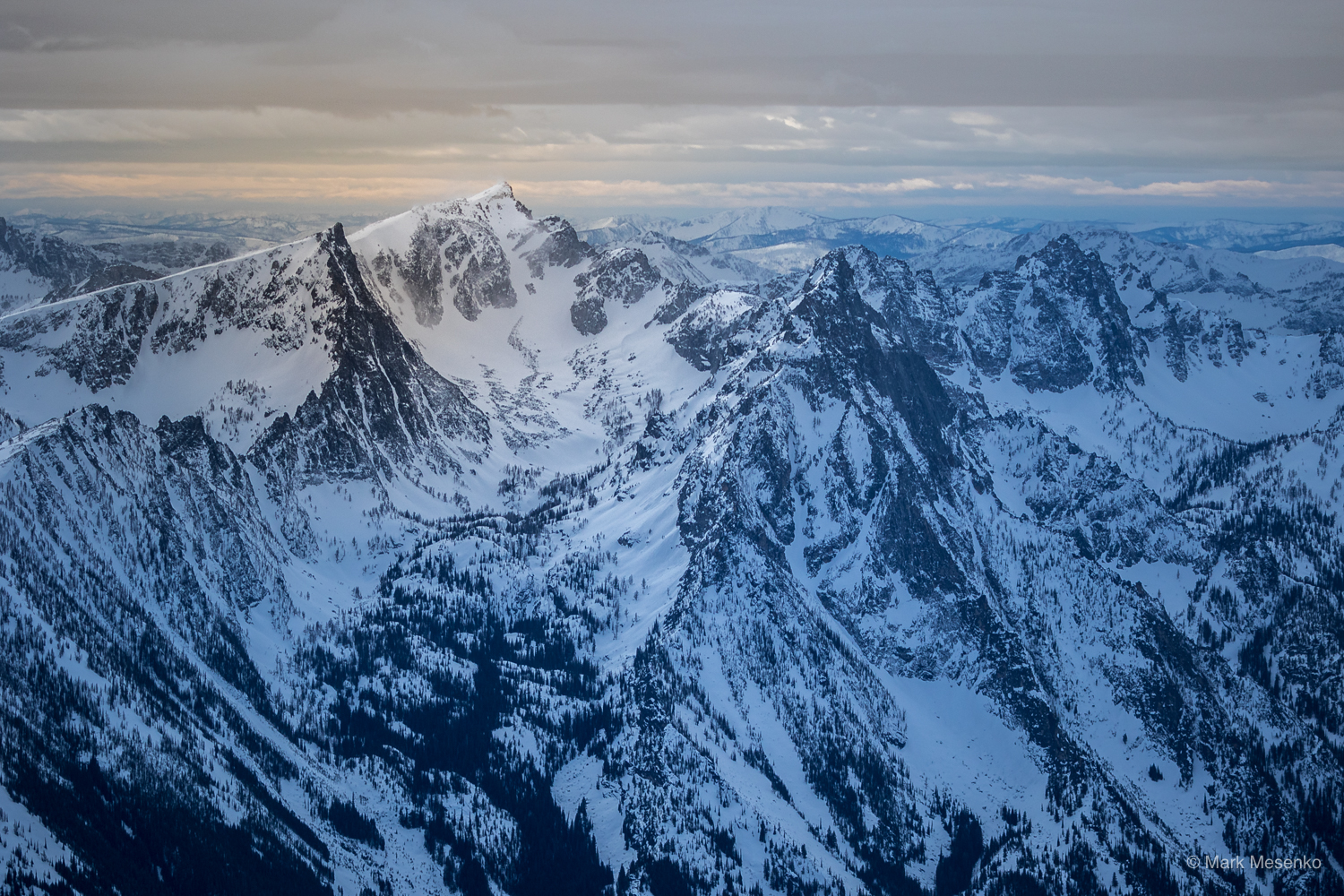
Shop Great Falls Gear

Shop Great Falls Gear

Great Falls Climate

Average Monthly Climate: Great Falls

MonthAvg HighAvg LowPrecipSnow
Jan38°F24°F0.8"1.7"
Feb29°F13°F1.2"3.1"
Mar42°F23°F0.8"1.7"
Apr52°F32°F2"2.6"
May63°F43°F2.4"0.7"
Jun74°F52°F2.6"0"
Jul85°F60°F0.4"0"
Aug84°F59°F0.9"0"
Sep74°F51°F1.4"0.5"
Oct55°F37°F1.6"2.4"
Nov44°F29°F0.9"1.8"
Dec37°F23°F0.8"2"
Housing & Economy

Housing & Cost of Living

$342,814
Typical Home Value
Census (2019–23): $237,400
$1,367/mo
Typical Rent
Census (2019–23): $866/mo
$63,934
Median Household Income
National Rankings
Home Value64th percentile
Rent77th percentile
Income48th percentile
Affordability Ratio (home price ÷ income)5.4xExpensive
Percentile among ~21,000 U.S. cities. Higher = more expensive (home/rent) or higher earning (income).
Housing Availability
Updated Jan 2026
284
Homes for Sale
31.5% vs last year
$375,250
Median List Price
52
New Listings/Month
28,333
Total Housing Units
8.2%
Vacancy Rate
Employment & Economy
ACS 5-Year 2019–2023
3.2%
Unemployment Rate
MT avg: ~3.5%
60.6%
Labor Force Participation
28,857
Employed Residents
Top Industries
Education & Healthcare
28.1%
Retail
13.2%
Tourism & Hospitality
11.2%
Home values from Zillow ZHVI (Jun 2026). Inventory, list prices & new listings from Zillow Research (Jan 2026). Income, vacancy,, employment, industry, from U.S. Census Bureau ACS 5-Year 2019–2023. Data may not reflect current conditions. Check Zillow for the latest market data.
Schools
🏫
Great Falls Public Schools
~10,000 students · District Website
Grad Rate
79%
Per Pupil
$10,800
Graduation rate: OPI/NCES 2022–23. Per-pupil spending: Montana OPI fiscal data. MT state avg: ~87%.
Scenic Drives Near Great Falls
Great Falls in Rankings & Guides
Compare Great Falls with Another Town
View Great Falls in the site graph

Explore Nearby Destinations

CascadeBeltDutton
FAQs About Great Falls

Frequently Asked Questions About Great Falls

What is the cost of living in Great Falls, Montana?
Great Falls’ median household income is $63,934 with a median home value of $327,514 (Zillow, January 2026). The affordability ratio of 5.1 is among the best among Montana's major cities. Median rent is $1,352 per month. Inventory has surged 31.5% year-over-year, giving buyers significantly more options than any other Montana market.
Why is Great Falls called The Electric City?
Great Falls earned its nickname from the hydroelectric dams built on the Missouri River’s five waterfalls. Ryan Dam (1915), Rainbow Dam, Black Eagle Dam, Morony Dam, and Cochrane Dam together generate electricity for much of Montana. Lewis and Clark first documented these falls during their 1805 expedition, calling the 18-mile portage around them one of their greatest challenges.
Is Malmstrom Air Force Base in Great Falls?
Yes, Malmstrom Air Force Base is located on the east side of Great Falls. It’s home to the 341st Missile Wing, which operates Minuteman III intercontinental ballistic missiles. The base employs thousands of military and civilian personnel, making it one of the city’s largest employers and a stabilizing economic force.
What outdoor recreation is near Great Falls?
Great Falls has 32 recreation sites within 30 miles, highlighted by Giant Springs State Park (4 miles) — one of the world’s largest freshwater springs. The Missouri River flows through the city with 60-plus miles of River’s Edge Trail. First Peoples Buffalo Jump State Park (11 miles) preserves a 2,000-year-old cliff. The Rocky Mountain Front begins roughly 50 miles west of town.
What are winters like in Great Falls?
Great Falls winters are cold and windy — the city is one of the windiest in the U.S. January averages a high of 38°F and a low of 24°F. However, Chinook winds regularly bring sudden warming, sometimes raising temperatures 30–40°F in hours. Annual precipitation is about 15 inches, and the city sits at 3,340 feet elevation.
Is Great Falls a good place for families?
Great Falls offers among the most affordable housing of Montana's major cities (ratio 5.1), stable military and healthcare employment, and family-friendly attractions including Giant Springs State Park, the Children’s Museum of Montana, and the River’s Edge Trail. Great Falls Public Schools serves 10,000 students with a 79% graduation rate. Two colleges provide local higher education options.
What are the main industries in Great Falls?
Education and healthcare leads at 28.1% of employment, anchored by Benefis Health System. Retail (13.2%) and tourism/hospitality (11.2%) follow. Malmstrom Air Force Base provides significant military employment. The Montana Air National Guard’s 120th Airlift Wing also operates from Great Falls International Airport. The unemployment rate is 3.2% with a job score of 9.2.
Can you fly into Great Falls?
Yes, Great Falls International Airport (GTF) offers daily flights to Denver, Salt Lake City, Minneapolis, and Seattle. The airport is about 4 miles southwest of downtown. Great Falls sits along I-15 (north-south) and US-87/US-89, roughly 90 miles north of Helena and 215 miles north of Yellowstone National Park.
What is the housing market like in Great Falls?
As of January 2026, Great Falls’ median home value is $327,514 (Zillow) with 284 homes for sale. Inventory has surged 31.5% year-over-year — the largest supply increase of any major Montana city. The median list price is $375,250. Across 28,333 total housing units, the vacancy rate is 8.2%, the highest among Montana’s larger cities.
What is Giant Springs State Park?
Giant Springs State Park, 4 miles from downtown Great Falls, is home to one of the largest freshwater springs in the world, producing roughly 156 million gallons of water per day. The park includes a fish hatchery, the Roe River (one of the shortest rivers in the world), picnic areas, and access to the River’s Edge Trail along the Missouri River.

Related Reading

Montana landscape representing 406 cultureMontana Facts
What Does 406 Mean in Montana?
The 406 area code is more than a phone number: it is Montana's cultural identity badge, worn on bumper stickers, hats, and tattoos across Big Sky Country.
Mar 21, 2026