Virginia City - Scenic View

Virginia City

Montana's Living Ghost Town

Quick Facts
Population
148
County
Madison County
Region
Central Montana
Elevation
5,778 ft
Top Industry
Tourism & Hospitality
Nearest Hospital
Madison Valley Hospital (11.1 mi)
Zip Code
59755
Area Code
406
Time Zone
Mountain Time (MT)
Industry: Census ACS 5-Year 2019–2023 · Hospital: MT DPHHS 2024
Current Weather
Loading current weather...
Airport Distances

Nearest Major Airports

✈️ Bozeman (BZN)
61 miles
~1h 16m drive
✈️ Butte (BTM)
64 miles
~1h 18m drive
✈️ West Yellowstone (WYS)
70 miles
~1h 24m drive

Map & Nearby

Explore Virginia City on the interactive map with 3 nearby towns and 44 highlighted recreation sites. Use the zoom controls or select a recreation item to focus it on the map.

Open Area in Google Maps
Loading map...
Outdoor Recreation Near Virginia City

Outdoor Recreation Near Virginia City

Jump to map →
8.7/10
Excellent
72 sites within 30 mi
17 categories

Distances are straight-line estimates. Driving distances may be longer. Data: OpenStreetMap contributors & editorial research.

History & Heritage

History & Heritage

Virginia City's story began with a lucky strike on May 26, 1863, when prospectors including Bill Fairweather, Henry Edgar, and Barney Hughes discovered gold in Alder Gulch. The first pan yielded $2.40 in gold. Within weeks, thousands of fortune seekers flooded the area; by fall 1864 the population reached an estimated 10,000. Sluice boxes and hydraulic methods lined the 30-mile gulch, extracting approximately $30 million in gold during the first three mining seasons (1863–1865). The town was platted June 16, 1863, initially as Varina (after Varina Davis); the name soon shifted to Virginia City. In 1865, it was designated the territorial capital, a position it held until 1875 when the capital moved to Helena.

The town's early days were marked by lawlessness. Henry Plummer, elected sheriff of Bannack in May 1863, was later identified as leader of a gang responsible for over 100 deaths. On December 21, 1863, Wilbur F. Sanders, Nathaniel P. Langford, and John X. Beidler formed the Vigilance Committee of Alder Gulch. The vigilantes executed at least 21 road agents, including Plummer and deputies Jack Gallagher and Buck Stinson on January 10, 1864. The signal "3-7-77" derived from Masonic influences among members.

As surface gold diminished, dredging operations revived activity in the late 1890s. Charles and Sue Bovey began purchasing and restoring historic structures in the 1940s; the Virginia City Historic District was designated a National Historic Landmark in 1961. In 1997, the Montana Legislature created the Montana Heritage Commission (MHC), which now manages 248 historic structures across 160 acres. Annual visitor numbers exceed 566,000; operations and visitor spending contribute over $74 million annually to Montana's economy.


Official historic markers tied to Virginia City in our statewide dataset. Expand the list to read inscriptions and follow links to full pages or deep reads where available. Browse Madison County on the map · History trails

Historic markers in Virginia City (93)tap to expand
Adobetown

Alder Gulch at peak population numbered ten thousand souls and the colorful mining camps that enjoyed the limelight were so numerous that contemporaries named it the Fourteen-mile City. Adobetown was one of the many settlements that lined the gulch. Centrally located a mile below Nevada City, it took its name from the dwellings miners built of adobe bricks they fashioned from mud and grass. The small settlement lay in one of the richest sections of the gulch. In 1864 alone, it was a hub of activity that reportedly yielded $350,000 in gold. In its heyday the area around Adobetown and Nevada City supported some 75 to 100 placer claims that each employed 5 to 12 men. Salaries ranged from $5 to $8 a day.

Irish-born Nicholas Carey walked from Denver to the Alder Gulch gold fields with his possessions on his back. But Carey's future was not in mining. In 1865, he built a log mercantile at Adobetown. He and partner David O'Brien added a post-express office and soon stages from Salt Lake City and the Northern Pacific railhead at Corinne, Utah made regular stops for passengers and mail at the Adobetown store. Adobetown once boasted a store, blacksmith shop, two hotels and a school. The school, built in 1873, served Adobetown's youngsters until 1923. The building was moved to Virginia City in 1960 where it stands today.

educationIndustrySettlements
African American Entrepreneurs

Between 1870 and 1880, Virginia City's African American population was small compared to other minorities such as the Chinese. African American freighter Jack "Jarret" Taylor was in town as early as 1866, Sarah Bickford arrived in January 1871, and Minerva Coggswell came sometime in the 1870s. The 1880 census listed Minerva as a thirty-five year old home-owning widow living with her sister Parthenia Sneed and boarder Jack Taylor. Minerva and Parthenia operated a restaurant in this area of Wallace Street in the late 1870s and took in laundry at Minerva's home on Jackson Street. According to an 1879 advertisement in the Madisonian the sister's restaurant was, "Five Doors below the Wells Fargo's Exp's Office Wallace Street." Minerva Coggswell died in 1894 and Jack Taylor then purchased her home at auction. Parthenia married and moved to Butte prior to her sister's death.

Probate records offer details into the live of Minerva Coggswell. Possessions in her estate included numerous bedsteads, springs, three mirrors, five pillows, ten comforters, one blanket, and two additional mattresses. She also had a washing machine, three bird cages, and several lamps.

In 2009, with funding from the Ford Foundation, the National Trust for Historic Preservation awarded Montana Heritage Commission (MHC) a Partnership in Scholarship Grant to conduct research into the lives of Virginia City's African American residents. This research conducted by MHC staff, public history faculty and students from Washington State University and University of Wisconsin Eau-Claire added great depth to the knowledge of Virginia City's African American community.

Erected by Montana Heritage Commission.

peopleSettlements
Alder Gulch Short Line Depot

The tracks of the Northern Pacific Railroad never really came to Virginia City. Although the town was the first overland transportation hum in the Territory of Montana and an important regional supply center, this status predates the railroad era. When the Northern Pacific finally reached Alder Gulch at the turn of the century, the tracks ended at Alder.

The depot area was home to Chinese residents that comprised nearly one third of the town's population in 1870. Confined to the west end of town, the Chinese lived in small cabins and cultivated rooftop gardens. Most were miners who reworked placer claims abandoned after the gold rush but shopkeepers and launderers did a lively trade. At temple once stood nearby where traditional religious practices were observed. Nothing remains on the landscape to mark this early community. By 1875, a dam partially flooded the area to supply water for hydraulic mining and in 1900, gold dredges camp up the gulch as far as this point.

In 1964, Charles Bovey built the Alder Gulch Short Line narrow gauge railroad to link Virginia City and Nevada City. The Northern Pacific was built according to standard railroad plans in the early 1890s at Harrison, Montana north of Ennis. After completion of the narrow gauge, Charles Bovey had the depot moved to this location. One old-timer remarked upon its arrival, "This is the first time I ever went to the train and watched the depot pull in."

Erected by Montana Heritage Commission, Montana Historical Society.

Allen and Millard Bank

The Federal Reserve Bank of Montana identifies the Allen and Millard Bank, which opened here in 1864, as the first real bank in Montana Territory. While other businesses in the Territory called themselves banks, most were actually express companies that exchanged gold for cash or offered storage space in their safes. Allen and Millard in fact had the power to write drafts on a New York bank. The building itself, beautifully maintained, is one of the Virginia City's oldest and best-preserved stone buildings. Although the original French doors and tall, narrow windows were replaced circa 1900, the front facade features the original ashlar stone, bracketed wooden cornice and wooden window heads allowing the building to retain its 1860s appearance. The bank operated as Hall and Bennett into the early 1900s and then became the Madison State Bank which did business until 1930.

Erected by Montana Historical Society.

ArchitectureIndustry
An Important Era in Railroad HistoryDeep Read

The Montana Heritage Commission’s state-owned collection of railroad equipment represents the construction era of railroads in Montana. The wooden Soo Line cars are representative of cars used by the Northern Pacific, Great Northern and Union Pacific as they reached into the state during the 1880’s. The bunk cars demonstrate the living conditions of workers who built and maintained the railroads. The freight cars demonstrate the nature of freight hauling in the pioneer era of Montana railroading.

The Milwaukee Road 222 and Great Northern A-3 may seem to be modern anomalies, but they too have beginnings in the early days of railroad history.

The Milwaukee Road 222 was built by Barney and Smith, of Dayton, Ohio in January 1882, as a business car for the Chicago, Milwaukee, St. Paul & Pacific Railroad (aka Milwaukee Road). Steel framing made it an advanced design for its early date. Rebuilt in 1930, the car continued to operate in the Rocky Mountain Division until retirement and acquisition by CA. Bovey in 1963.

The Great Northern Business Car A-3 was built by Barney and Smith as wooden Coach 265 in July, 1906. The addition of steel framing and sheathing in its April 1927 rebuild, and modernization in 1951, transformed the A-3 in effect, into an entirely new car. The Great Northern Railway gave the car to the Historic Landmark Society of Montana in November, 1965 and moved it on its own wheels by rail from St. Paul, MN to Alder, MT (the end of the line), where Charles Bovey transported it to Nevada City.

With the historic fact that railroads never made it to Alder Gulch, the railroad collection at Nevada City is part of the Bovey legacy. The bulk of the collection has been on site for over 50 years, and has gained historical significance relative to Nevada City, in addition to ably describing a short period of railroad history.

The train restoration was paid for by Tom and Barbi Donnelley.

Anaconda Hotel

The oldest section of this building, dating to 1863, was first a simple one-story building which housed a restaurant called the “Young American Eating House.” A butcher shop followed from 1866 to the 1880s, and then in the 1880s the building was a hotel/saloon. It became the Anaconda Hotel and Saloon in the 1890s under proprietor Frank McKeen. Renaming it the Fairweather Inn after the discoverer of gold in Alder Gulch, in 1946 Charles Bovey raised the height of the old hotel to two stories and added a “new” facade that duplicates the gold rush era design of the then-demolished Goodrich House in Bannack. This property contributes to the Virginia City Historic District • Listed in the National Register of Historic Places by the United States Department of the Interior • In cooperation with the Montana Historical Society

Erected by Montana Historical Society.

Anna Lyon / McKeen Place

Martin and Anna Lyon came to Virginia City by covered wagon in 1864 and settled into this small dwelling. Martin, a successful tailor, was on his way home in January of 1865 when thieves attacked and fatally struck him over the head. A blizzard prevented discovery of his body until three days later. He was buried on boot hill at the same time as three outlaws and due to this confusion, his grave was unmarked. Anna kept the family home, supporting her two sons as a domestic and later as a boardinghouse keeper. The 1880 census records that Anna’s eight male boarders included a 14-year-old student, a teacher, three carpenters, a surveyor, and a farmer. Lodgers likely crowded into the small building at the back. In 1905, newlyweds Frank and Amanda McKeen bought the house. Frank was a well-known saloon keeper and proprietor of the Anaconda Hotel (now the Fairweather Inn). This unassuming little dwelling, located on what was once the edge of Virginia City’s Chinatown, is a significant part of the National Landmark.

Erected by Montana Historical Society.

Assay Office

Mining is filthy work, a fact that spelled opportunity for African American barber George Turley, who opened a “Fashionable Hair Dressing and Shaving Saloon” in a narrow building on this site. In 1864, Turley advertised bathrooms for miners interested in sprucing up before a night out. He also offered haircuts, shaves, shoe-shines, and “mustache and hair coloring.” Barbering was one of the few professions open to African American men after the Civil War, and barbers’ services were in high demand in Montana Territory, where approximately 27 percent of African Americans pursued the trade. By 1884, Turley had moved on, and a cobbler occupied the false-front building. By the 1940s, when Charles and Sue Bovey began to take an interest in the town, the building was in ruins. After clearing the rubble, the Boveys constructed this false-front frame building based on an 1870s photograph of the Gilbert Assay Office. The word “assay” comes from a French word meaning “to try or test.” Every gold rush town had at least one assay office, where miners could bring ore samples to test the richness of their claims.

Erected by

Montana Historical Society.

people
Barlett’s Blacksmith Shop

Virginia City boomed and land prices soared accordingly in 1863 and 1864, a trend well illustrated in the earliest ownership transactions of this choice commercial property. On May 13, 1864, George Parker paid $800 for the lot and sold it for $1400 on June 27. By 1869, the property owner was Herschfield, Hanauer & Company, bankers who specialized in gold exchange. A photograph from the early 1870s shows the original log building which first occupied this lot. The present rubblestone building has been constructed by 1878 to house E.J. Barlett’s blacksmith shop. Barlett advertised as a “blacksmith and machinist” from 1879 through the early 1890s. The brick veneer on the front facade was added over the stone circa 1900, and the building converted for use as a trading post in 1950. This property contributes to the Virginia City Historic District • Listed in the National Register of Historic Places by the United States Department of the Interior • In cooperation with the Montana Historical Society

Industry
Belgium, Paris, New York, St. Louis, Virginia City

Dr. Levinus Daems built or purchased the home on the right (West) soon after his arrival in Virginia City in 1863. Born in Belgium, Levinus Daems studied medicine and pharmacy at the University of Paris. While in Paris, he likely met his future wife and nursing student Marie Valstin. Levinus sailed to New York with the Valstin family in 1856. They traveled west to St. Louis, where Marie and Levinus married in 1860. After stopping in Colorado, Dr. Daems arrived in Bannack, Montana in 1863, where he stayed only briefly before coming to Virginia City. Marie joined him from Colorado in 1864. Dr. Daems operated the City Drug Store on Wallace Street just east of the present day Masonic Temple. Active in local politics and the Masonic Lodge, Dr. Daems died in 1874, Marie in 1904, and many of their descendants still live in the area.

Separated by mere inches, windows in the Daems side look directly to the exterior walls in the Corbett side of the home; providing no view whatsoever. Logic dictates that the homes were completed when further apart because current locations make exterior construction impossible. Research into the property titles gives little insight into the mysterious placement of the houses. It would appear that the present locations are somehow connected to the construction of the Methodist Church next door in 1875. Perhaps the Daems family moved their home to accommodate the church? The definitive answer remains a mystery but the two homes are now connected by an interior doorway and function as a single unit. The Daems family sold the property to Charlie Bovey in 1952.

Erected by Montana Heritage Commission.

Blue Front Variety Store

Like the Picture Gallery, the Elling Store, and several others, this 1946 building and its neighbor to the left are a faithful reconstruction of the originals. The Elephant Auction House occupied these storefronts from summer 1863 until October 1864. By November 1866, William (Judge) Douglas had painted the storefront a deep azure blue and opened the Blue Front Novelty Store. Douglas leased stalls to various small businesses that offered everything from books and magazines to stationery, toys, produce, footwear, and cigarettes. The sword-wielding man painted on the façade advertised the store’s Turkish tobacco products. William Buttermore bought the store in 1879. He ran it with few changes until his death in 1911. At the time, it was one of Virginia City’s longest-lived businesses. Despite its status as a beloved institution in town, the Blue Front was torn down, most likely in winter 1919. A nationwide coal miners’ strike and ensuing coal shortage hit Virginia City hard, forcing freezing residents to tear down and salvage numerous abandoned buildings for firewood. After reconstruction, the building served as a penny arcade for nearly 40 years.

Erected by Montana Historical Society.

Boot Hill

This was Virginia City’s first Cemetery. There were many markers here, but only those of the road agents and Daltons remain. The road agent’s graves, which gave the Cemetery its name Boot Hill, were first marked by the city in 1907. William & Clara Dalton were no relation to the notorious gang nor connected with the road agents. The arrived in Bannack in 1862 with Captain James L. Fisk’s first wagon train and moved to Virginia City in 1863. William & Clara died of natural caused in January 1864, leaving four children. The grave was marked by a Granddaughter many years later

cemeteries
C. L. Dahler House

Two small houses shared this choice corner location in 1866, but after 1875, photographs reveal the unmistakable steeply pitched roof and central gable of this splendid Gothic Revival style residence. Expansion and remodeling during the 1890s added the bay windows, rear gable, and decorative bargeboards that now ornament the front façade. Pioneer businessman Charles L. Dahler owned the home in the 1880s, followed by banker Thomas Duncan in 1897, and Missouri Mining Company superintendent John Henry Pankey in 1917. Although Pankey, his wife Catherine, and their three sons sometimes lived on site at the mines, they always considered this spacious and appealing residence their true home. The Pankey family retained ownership until 1980, when the familiar landmark became home to the law firm of attorney Chester Lloyd Jones and, more recently, the Madison County Title Co.

This property contributes to the Virginia City Historic District • Listed in the National Register of Historic Places by the United States Department of the Interior • In cooperation with the Montana Historical Society

Erected by

Montana Historical Society.

Architecture
C.W. Rank House

Charles W. Rank arrived on the third train into Bozeman in 1883. There he launched a career in the drug store business that would span more than half a century. In 1884, he came to Virginia City to manage a small drug store. Partnering with his brother-in-law J. S. Allen, Charles purchased the store and later was the sole owner. Rank Drug Store’s inventory was as extensive as the leading stores in Montana’s largest communities. Not only was Charles a prominent businessman, but he also served terms as city councilman and mayor. Charles married Irish-born Elizabeth Hill in 1887 and the couple built this home in 1898. They raised an adopted daughter and spent the rest of their married lives here. The home’s Victorian-era footprint, with its three-sided bay window, gabled roof, and tucked in corner porch, remains intact. In 1937, well-wishers crowded the home and showered the Ranks with flowers and gifts as they celebrated their golden wedding anniversary. Charles passed away in 1939, and Elizabeth maintained the family home and ran the drug store until her death in 1946.

Erected by Montana Historical

Society.

Charlie & Sue

Charles Argalis Bovey ("Charlie") was born May 1, 1907, in Minneapolis, Minnesota into the comfort and social status provided by his father's position as President to the company which would become General Mills. Charlie, however, would find his greatest joy living modestly amid the time-worn vestiges of Montana's colorful past.

Rachel Sue Ford was born September 12, 1907 in Great Falls, Montana. The Fords were prominent, prosperous, and widely-respected Montana pioneers.

Charlie met Sue in 1929, when he was a struggling wheat rancher in the Great Falls area. The couple was married in 1933, and began life together in a very small, rough cabin.

It would be a great partnership which wrote its own success story, and shared the vision of preserving Montana's history.

By 1940, Charlie began his efforts to save some of Montana's historic buildings starting with the Sullivan Saddlery from Fort Benton. The buildings were moved to the fairgrounds at Great Falls, where they were exhibited as "Old Town".

Charlie served in the Montana House of Representatives, from 1947 to 1965, and the

Montana State Senate. In 1952, both Charlie and Sue received honorary degrees from Montana State University (Missoula) in recognition for their work to preserve Montana's history.

Their work was further recognized when Virginia City was designated a National Historic Landmark in 1961 and placed on the National Register of Historic Places in 1976.

Charlie died in Nevada City on June 9, 1978. Sue died on October 7, 1988, as was buried beside Charlie in the Highland Cemetery at Great Falls.

Erected by Virginia City Preservation Alliance.

Settlements
Coggswell - Taylor Cabins

The history of these two false-fronted cabins, joined by the 1890s, is interwoven with Virginia City’s African-American pioneers. The two separate, 1860s log cabins served both residential and commercial purposes. Minerva Coggswell acquired this property, according to her will, “by her own hard labor.” She and her sister, Parthenia Sneed, were among a few adventurous, independent black women who carved niches for themselves in western communities. The sisters took in laundry, ran a Wallace Street restaurant, and by 1880 kept boarders like Kentucky-born African-American Jack Taylor. Taylor served in the Union army during the Civil War and came to Virginia City in 1866, freighting for the outfit of Majors and Russell. Taylor continued freighting, accumulated livestock, and owned considerable property, including these cabins purchased after Minerva’s death in 1894. Taylor lived here until he died in 1926. Sarah Bickford, who rose from slavery to become Virginia City’s competent water company owner, cared for Taylor during his last illness and then acquired the cabins. Taylor’s tombstone in Hillside Cemetery recalls a life of honest labor: “While the earth remaineth, seed time and harvest shall not cease.”

Erected by Montana Historical Society.

Cole/Batten House

This early home, built circa 1868 by C. E. Hill, was reputedly the site of Virginia City’s first Chinese wedding. The two-story section was originally finished in vertical siding, the eaves were trimmed in fancy latticework, and a small porch sheltered the entry. The back sections and wraparound veranda were added well before 1900. The front door, original interior hardware, and parlor windows (likely packed in sawdust and shipped via steamboat and overland by ox-drawn freight wagon) remain intact. The Ella Cole family owned the property from 1873 to 1937 when it was sold to B. F. Williams. Richard and Clida Batten Fristedt bought the home in 1947. The family of Clida’s first husband, Evan Batten, was one of the first to settle in Nevada City in the 1850s. The property eventually passed to Evan and Clida’s daughter, Evalyn, and her husband, Richard Johnson. In 1992, the Johnsons meticulously restored the home to its nineteenth-century appearance, and it is today a prominent feature of this landmark Virginia City neighborhood.

Erected by Montana Historical Society.

Conrey Place

During Virginia City’s mid-1860s boom, residences and businesses crowded along Cover Street. Most commercial buildings were gone by the mid-1880s and the neighborhood became primarily residential. Irish immigrant Phillip Conrey, a rancher and two-term city treasurer, worked extensive Alder Gulch placer claims and built this two-story home in the 1880s. An open porch with turned spindles; tall, narrow windows; and clapboard siding are characteristic of the period. The interior features wood ceilings and an original staircase. A stone section likely predates the house; Conrey probably stored materials from his placer mining operations there. Conrey sold his Ruby Valley ranch for a mere $30,000; investors later dredged the property for gold making millions, much of it bequeathed to Harvard University. After several other owners, Anaconda Hotel owner Amanda McKeen bought the home in 1920. Upon her death in 1923, it passed to a niece. Alta Butler began her forty-year ownership of the home in 1933 after the death of her husband, deputy sheriff William Butler. The appearance of the home has changed little from the 1880s when it first appears in Virginia

City photographs.

Erected by Montana Historical Society.

Content's Corner

When Solomon Content built this commercial building in 1864, it was one of the area’s most impressive, desirable business spaces. Stucco scored to look like stone originally covered the rubble stone walls, and Gothic transoms lent a civilized dignity. While Virginia City was Montana’s Territorial Capital (1865-1875), the second floor held the entire territorial government offices. The first floor housed retail stores, including grocers Rockfellow and Dennee (1864) and clothing stores of the Seigel brothers, Henry Elling, Armstrong and Johnson, and Robert Vickers. In 1943, Vickers’ grandson Bob Gohn, who lost his sight in a mine accident at age twenty, opened his famous bar, grocery, and hardware store here, which he ran with remarkable ability until his death in 1986.

Erected by Montana Historical Society.

Corbett House

The cozy placement of the Corbett and Daems houses has long been a mystery in Virginia City. The log Corbett house was likely built in summer 1863, and the Daems house by early 1864. No records exist explaining why these two middle-class homes sit so close together but remained separate homes with separate owners (with no adjoining door) for over 140 years. Although Virginia City was formally platted (divided into lots) by July 1863, miners and merchants weren’t worried about city planning. Within eight months of the first gold strike, more than five hundred buildings sprang up, without regard to lot lines or setbacks. With land in high demand, many of Virginia City’s early residences abutted others as a space-saving measure. Early owners of this home included an actress, county surveyor John Corbett, and watchmaker Norris Butler and his family. By 1952, preservationist Charles Bovey owned both houses, which remained in use for paint storage for more than fifty years. In 2007, the Montana Heritage Commission introduced an interior door during restoration, finally connecting the two houses.

Creighton Stone Block

Brothers John A. and Edward Creighton came west scouting the first transcontinental telegraph lines from Omaha, Nebraska, to the coast. Temporarily settling in Virginia City, Edward hired Thompson and Griffith to construct this building, the first of locally quarried stone. Beautifully returned to its original appearance, the nine arched openings once defined three separate storefronts. Early occupants included E. Creighton & Co. and B. D. Maxham's liquors and groceries. In 1866, the Creightons, who constructed the first transcontinental telegraph line in 1861, brought this critical link to Montana Territory with the first line to Salt Lake City via a pole on this corner. In 1873, the Madisonian began more than a century of publication in the building's east portion. Edward died in 1874 and, following his wishes, his widow endowed Omaha's Creighton University, one of the first Catholic universities in the western United States. John's philanthropy enlarged and developed the school. John partnered with Butte's fourth copper king, Patrick Largey, who once constructed telegraph lines for the Creightons. The State Savings Bank of Butte and the Speculator Mine were among their joint enterprises.

This property contributes to the Virginia City Historic District • Listed in the National Register of Historic Places by the United States Department of the Interior • In cooperation with the Montana Historical Society

Erected by Montana Historical Society.

Industry
Daems House

Though simple by today’s standards, the Daems house exemplifies an upper-middle-class, early-1860s Virginia City dwelling. Dr. Levinus Daems and his wife Marie Daems, a nurse, may have been the first residents of the house. Born in Belgium and trained in Paris, Dr. Daems arrived in Virginia City in 1863 to open the City Drug Store. Marie followed a year later with their young daughter and Marie’s two sisters. Levinus served on the first Board of Aldermen in 1865, the Territorial Council in 1866, and as mayor in 1868. He owned more than thirty properties in town. It is unclear if the Daems’s continued to live here as their family and fortunes grew, or if the home became a rental property. Nevertheless, its colorful wallpaper, paint, and faux wood-grain trim reflected the Daems’s economic status and showcased the decorative products their drugstore sold. Levinus died in 1874, and Marie died in 1904. The house remained in the family until 1952. In 2007, the Montana Heritage Commission documented the house’s multi-layered interior finishes before restoring the residence to its 1860s appearance.

Erected by

Montana Historical Society.

Dance and Stuart Store

James Stuart and his brother Granville set up the first sluice boxes in the northern Rockies in 1852. Delaware native Walter B. Dance came to Gold Creek in 1862. James Stuart and Dance opened their mercantile in November, 1863. One of Virginia City’s most complete and respected shops, Dance and Stuart also briefly housed the post office. Club Foot George Lane, reputed member of the infamous Plummer Gang, lived at the store and was arrested there by the Vigilantes in 1864. A year later, the Montana Historical Society was founded in the building. The original Dance and Stuart was demolished circa 1925, and Charles Bovey built this replica of vintage logs in 1950. This property contributes to the Virginia City Historic District • Listed in the National Register of Historic Places by the United States Department of the Interior • In cooperation with the Montana Historical Society

Erected by Montana Historical Society.

Discovery - Ellingsen ParkDeep Read

Discovery Park - The Fairweather Party

One spring day in 1863, six men looking for their next big gold strike found it in Alder Gulch, William Fairweather, Henry Edgar, Thomas Cover, Barney Hughes, Micheal Sweeney, and Harry Rogers left Bannack, attempting to meet and travel with James Stewart's Yellowstone Expedition, to find gold and establish town sites along the Yellowstone. The six were two days behind the main party and trying to catch up. An encounter with a Crow tribe that left them considering the best route back to Bannack, led them up into the mountains away from the Madison River. Fairweather and Edgar slipped their gold pans into the cold creek waters beside the spot they picked for that night's camp. They soon realized they had discovered a rich deposit of placer gold in what Edgar would name Alder Creek.

During the early 1850's small amounts of gold had been found in this region of Idaho Territory, but within ten years the number of prospectors and the intensity of their search had increased. Gold discoveries were made throughout the territory, with prospectors rushing from one region to another: Elk City, Gold Creek, Grasshopper Creek. The May 26, 1863 gold discovery in Alder Creek not only changed the lives of the six men who found it and the thousands who followed them, but it also influenced Montana's future, with the creation of the Montana Territory in 1864.

The six men known as the Fairweather party discovered the gold that soon brought a growth in population that created settlements all along the gulch. Thomas Cover and Henry Edgar played an important part in establishing the town site of the city of Varina, soon to be renamed Virginia. The upper most settlement in the gulch was Summit, with Junction City being the last of the "14-mile city'. Virginia City was central in location and importance and was established closely after Nevada City, with claims that both were first.

The Secretary of the Treasury, H. McCulloch, reported on March 5, 1868: "Alder gulch has produced more gold than all the others, and probably more within the last three years than ever was taken in the same time from any gulch of the same extent. It is the opinion of those best qualified to judge that within three years from the commencement of mining operations on this gulch $30,000,000 were taken from it."

These six men that formed a partnership and deep alliances in their successful quest for gold eventually found different paths, but will be well remembered as the Fairweather party, discoverers of one of the world's richest gold deposits.

John D. Ellingsen

John D. Ellingsen was born in Great Falls, Montana on May 17, 1947. John's earliest memories of Old Town, located in Great Falls, which was a collection of old Montana buildings that were being preserved by Charles Bovey. Charles and Sue Ford Bovey also began acquiring and saving deteriorating buildings in Virginia and Nevada Cities in 1944. John's trip to Virginia City in 1952 when he was a boy began his fascination with architecture. This set him on a path of working alongside Charles Bovey in his quest of preserving the past.

Ellingsen started working with Bovey on March 15, 1972, and his duties as curator included, but were not limited to, cleaning and setting up authentic displays, painting many storefront signs in historical fonts, furnishing and setting up the Sedman House and Barber in Nevada City, printing in the Montana Post Print Shop, repairing nickelodeons and band organs and searching, disassembling, and reconstructing old buildings in Nevada City from throughout the state. John built about half the buildings in Nevada City with Charlie. Unfortunately, John's time working with Bovey came to an end when Charles died from a heart attack in Nevada City on June 9, 1978. John continued to work for Bovey Restorations and Sue until her death on October 7, 1988. John's work as curator continued as Ford, Charles and Sue's only child, took charge of Bovey Restorations.

As early as 1989, Ford asked John to go to the Legislature in Helena to see if the state would purchase the Bovey properties in Virginia and Nevada Cities. In the 1995 session, John along with supporters such as the Montana Historical Society, Virginia City Preservation Alliance and the National Trust for Historic Preservation, expected the state legislature to authorize money to buy the Bovey properties but they were one vote short. Finally in 1997, House Bill 14 came up for a final vote and passed with 81 in favor and 19 opposed. John's greatest accomplishment was saving Virginia and Nevada Cities from being sold off piece by piece. Instead it was saved with the State of Montana's purchase of the 250 buildings, 160 acres, and over a million artifacts for $6.5 million.

Charlie Bovey's last words to John were "take care of things." which he kept close to heart. Presently, John is curator emeritus and has felt since his first trip to Virginia City that he was coming home. He has a Master's degree in history and received a minor in architecture and archaeology. John has won numerous awards for his work in historic preservation, including a lifetime achievement award from the Montana Preservation

Alliance, the Governor's Award for Historic Preservation, and a "special award for preservation" from the Department of the Interior for his work at Garnet Ghost Town. John resides in Nevada City, Montana, and continues in many ways to "take care of things."

Erected by Montana Heritage Commission, Montana History Foundation.

eventslandmarks
Dr. Don L. Byam Residence

Light timber framing with board-and-batten walls characterizes this early home original to the Nevada City townsite. Inside, the original, well-preserved, muslin-covered walls are a rare example of a frontier decorating technique. The cabin’s first occupants were Dr. Don Byam and his family, who came to Alder Gulch in 1863 after someone jumped their claim near Bannack. Elected judge of the miner’s court, Dr. Byam presided over the murder trial of George Ives, held on Nevada City’s main street in December 1863. Ives, convicted and hanged, was incarcerated during the trial in the small cabin behind the house. The trial was the catalyst for forming the Vigilantes. During the Civil War in Confederate-dominated Alder Gulch, Dr. Byam was a member of the anti-Confederate Union League of America. Clandestine meetings were held in the Byam attic. The Byams moved on and Samuel B. Wonderly next owned the house. He removed the original false front and added the gable as camp phase architecture gave way to the settlement period. Lawrence Fenner and his wife Amanda moved into the house in 1875. They remained in Nevada City long after almost everyone else had moved away. Fenner, a Union League activist and self-styled Vigilante like Dr. Byam, was a civil engineer and inventor. He obtained the US Mineral Patent on the Nevada City townsite in 1878 and was the first to dredge in the area using a method he invented. After Fenner died in 1915, Amanda stayed on and died here in 1930 at 84.

This property contributes to the Virginia City Historic District • Listed in the National Register of Historic Places by the United States Department of the Interior • In cooperation with the Montana Historical Society

Erected by Montana Historical Society.

Settlements
E. L. Smith Store

The design of this false-fronted wooden shop, built in 1863, includes hand hewn timbers and bay windows which are said to have been Montana's first "show windows.” The Star Billiard Hall was an early tenant, followed by a shoe dealer and in the 1870s, the "New York One Price Clothing House." E. L. Smith opened a dry goods store here in 1880 and later moved to the Merk Block, now the Pioneer Bar. Many items displayed here are from Smith's actual inventory, donated by the Smith family.

This property contributes to the Virginia City Historic District • Listed in the National Register of Historic Places by the United States Department of the Interior • In cooperation with the Montana Historical Society

Erected by Montana Historical Society.

Elephant Auction HouseDeep Read

The livestock trade was big business in emerging gold towns across the West. In the 1860s when livestock was essential to transportation, owners of liveries (stables) and corrals stood to profit far more than any gold digger. James Gray and Justus Cooke ran the Elephant Auction House here from summer 1863 to fall 1864. A long, sloped porch roof once extended from this building far into Wallace Street, providing shade for the auctioneer and attracting many passers-by. This corner was already the busiest in town, and at auction time pandemonium ensued as crowds of buyers and spectators blocked the street with horses and wagons. After several traffic jams and accidents, city officials outlawed the sale of livestock on Virginia City’s main streets. After the auction house moved, the porch was dismantled, and for the next forty years the building held various stores and offices. It was demolished with its neighbor before 1922, but Charles Bovey reconstructed it in 1948 to house antique fire department equipment. A gift shop has occupied the building since the late 1990s.

Erected by Montana Historical Society

.

Nature
Elling Bank

Bankers Nowlan and Weary set up business in this brick-veneered building, one of the town’s oldest stone structures, in 1864. Three well-proportioned gothic arches with elaborate tracery, removed during 1910 remodeling, originally graced this stone facade. In 1873, Henry Elling took over the banking business. His first fortune, made in merchandising, had disappeared along with his partner, but Elling quickly recouped his losses. The buying of gold dust proved a most profitable venture and Elling became an expert, able to determine the exact location of extraction from the texture and color of the dust. Under his shrewd direction, Elling’s tiny bank became the first financial capital of Montana. The ornate vault, still intact, always carried large amounts of dust. The Elling State Bank was organized in 1899 and Elling died a millionaire the following year. His family continued to operate the bank for another thirty years. This property contributes to the Virginia City Historic District • Listed in the National Register of Historic Places by the United States Department of the Interior • In cooperation with the Montana Historical Society

Erected by

Montana Historical Society.

F.R. Merk Block

Gold dust was the common currency when George Higgins built this sturdy “fire-proof stone” business block circa 1866. F.R. Merk leased the new building for his mercantile, advertising fancy and staple groceries, liquors, Queensware, woodenware household implements and a tin shop with “prices to suit the times.” Merk bought the building for $1,800 in 1867, but soon went back to mining. Harrington, Baker & Company sold boots and shoes here during the 1870s and E.L. Smith located his department store on these premises in the late 1880s. At the start of Prohibition in 1918, this was the Little Club Saloon. Like other such businesses, the club switched to advertising soft drinks until saloons were again legal in 1933. The present Pioneer Bar has served as a popular watering hole and gathering place since 1947. Although its ground-floor window openings were “frontierized” in the 1960s with rough boards and smaller panes, the impressive stone facade of this gold rush era landmark has changed little since the 1860s. This property contributes to the Virginia City Historic District • Listed in the National Register of Historic Places by the United States Department of the Interior • In cooperation with the Montana Historical Society

Erected by Montana Historical Society.

Fight of the Century and Flour RiotsDeep Read

J. A. Nelson built Leviathan Hall in 1863 with a "special view to the development of muscular talent." Torn down just five years later in 1868, the hall dominated Wallace Street with its impressive 28 feet wide and 100 feet long footprint.

On January 2, 1865 saloon owner Con Orem, age 29, the son of an Ohio blacksmith and veteran prizefighter, faced Hugh O'Neil, age 34, a native of Ireland, a well known miner and whiskey drinking, barroom brawler. All respectable saloons in Virginia City sold reserved seat tickets at ten dollars, while pit seats were only five. At the end of Round 185, O'Neil knocked down Orem and Nelson, the referee, called the fight a draw, much to the dismay of all in attendance.

Later in 1865, Leviathan Hall again played a role in the community as a storage vault for precious flour. Snow had closed all transportation routes to Virginia City, literally cutting the town off from the rest of the world, which severely limited storekeeper's offerings as well as household supplies. As the winter wore on and flour levels dropped, local anxiety rose along with the price of flour. By March 1865, flour sold for $1.50 per pound in Virginia City, more than twenty times the price in the rest of the country.

As spring arrived, the passes and roads remained snow-clogged and tension continued to mount. Sheriff Neil Howie, aided by the Vigilance Committee, supervised the first organized flour riot, when 438 people marched into Virginia City residences and confiscated all the flour they could find. They did not balk at entering private homes, searching Colonel Wilbur Fisk Sanders' home, once when Mrs. Harriet Sanders was home, and again when she was in town attempting to buy the much sought-after flour. The rioters searched the home of Mary Sheehan as well, but to no avail – her mother hid the flour at the bottom of a bin of beans. The presence of beans does indicate that starvation was not imminent and beef was still plentiful as well. Ultimately, the rioters rounded up over eighty sacks of flour, stockpiling them in Leviathan Hall and later redistributed the flour to the town's residents.

The present-day log house was built by Julius Kohl about 1875. "Aunt” Julia Elledge, daughter of Lucien Romey, a Virginia City pioneer, lived there from the 1920s to 1950's.

cultureeventsSettlements
Finney House

Construction layers of this original homestead tell much of Nevada City’s ‘boom and bust’ history. In 1864, miner Frank Finney and his bride, Mary, moved into a cabin on this property that had been constructed the previous year. The cabin forms the core of the present house. The newlyweds soon added the front room, decorating the log wall and ceiling with muslin stretched smooth to mimic plastered walls, then applying wall paper over the muslin. Clapboard siding covered the rough exterior log walls in the front and by the end of the 1860s, the house had a second story, some gingerbread trim, and a picket fence. A well provided water for laundry and a nearby spring supplied their drinking water. The Finneys used a fireplace until they could afford a woodstove, then they blocked the chimney. The couple’s four children, three of whom survived to adulthood, were born in the house. Another abandoned miner’s cabin to the north became the Finney’s summer kitchen. A yearly coat of whitewash in the kitchen grew to be inches thick. The Finneys kept a milk cow and Mary made butter and cheese, the best in the region. The Finney family lived here continuously from 1864 until the 1950s when daughter Cora Finney was Nevada City’s last resident. Unlike their neighbors who moved on, the Finneys stayed and adapted what their neighbors left to their own uses, helping to preserve a sampling of the local building traditions and structural forms of the original mining camp.

Erected by Montana Historical Society.

Frank Prasch Blacksmith Shop

Like the blacksmith shop next door, this early building was probably a dance hall or saloon in the mid-1860s run by owner John Trollman. In 1865 Trollman was one of Virginia City’s seventy-three licensed retail liquor dealers. By the 1870, a larger door and higher roof had been added to accommodate Frank Prasch and Fred Kohls’ blacksmith shop. Prasch operated the shop until about 1914, then sold out to Louis Romey who continued until 1946. The building, in near ruin, was rescued by the Historic Landmark Society of Montana. With funds donated by C.A. Bovey, its false front was rebuilt using vintage board and square nails. This property contributes to the Virginia City Historic District • Listed in the National Register of Historic Places by the United States Department of the Interior • In cooperation with the Montana Historical Society

Erected by Montana Historical Society.

Frisch/Ferguson Cabin

The Frisch/Ferguson cabin escaped collapse twice and survives as an excellent example of a one-room log dwelling meant to provide short term, basic shelter for prospectors. The cabin’s early history is unknown, but by 1874, miner Fred Frisch and his wife Amelia were residents. Fred died in April 1878, leaving Amelia to care for two young children. In December of that year, Amelia married Fred’s mining partner, Abram Thurgood. They left town to settle in the Ruby Valley where Abram worked various mining claims. For nearly eighty years the Frisch/Thurgood family maintained the cabin as a rental property. Abram Thurgood became a successful miner and saloon owner and was elected Madison County Assessor in 1898. By 1901, he and Amelia lived nearby on the southwest corner of Jackson and Cover streets. Widowed prospector Sim Ferguson was the last renter in the 1940s. Preservationist Charles Bovey rebuilt the cabin in the 1950s, but with no tenant in residence it fell into disrepair by the 1980s. The Montana Heritage Commission rescued the cabin once again in 2005, preserving it as a permanent exhibit.

Erected by

Montana Historical Society.

G. Goldberg Store

This 1863 building features a classic Greek Revival style storefront with French doors, typical of the 1860s frontier. The lintel above the door still bears the name of G. Goldberg, who ran the Pioneer Clothing Store Company prior to 1866. The single door on the left led to the Weston Hotel, a series of four tiny rooms. With accomodations [sic] at a premium, any inside space was better than sleeping in the snow. Circa 1908 sisters Hanna and Mary McGovern moved their ladies’ clothing store here. It remains today exactly as it was left on the last day of business in 1945. This property contributes to the Virginia City Historic District • Listed in the National Register of Historic Places by the United States Department of the Interior • In cooperation with the Montana Historical Society

Erected by Montana Historical Society.

Gallows Barn

Built in the 1890’s for the White Sulfur Springs Sheriff’s Department. In the year 1917 this barn had a legal gallows installed for the execution of three men. These men robbed a train south of White Sulfur Springs and murdered a trainman on January 16, 1917. Hanged were: Henry Hall – February 16, 1917; Leslie Tahley – February 16, 1917; Harrison Gibson – February 16, 1917 The bar was donated to Bovey Restorations by the White Sulfur Springs Historical Society, and moved here intact in May 1975. Montana Heritage Commission.

Erected by Montana Heritage Commission.

events
Gilbert House

Christen Richter, Henry Gilbert’s partner in the brewing business, built a home on this site in 1864 and soon added a stone wing. Gilbert purchased both Richter’s interest in the business and the house, moving his own dwelling to adjoin it on the east in 1873. Few changes have occurred to the three-part residence since the 1870s; even the fancy trim and period screen doors remain in place. Margaret and Henry Gilbert raised fifteen children in the sprawling home, including daughters Amelia and Clara, who were the first twins born in the area. Gilbert had a varied career as teacher, saddler, and trader before coming to Virginia City at the height of the gold rush. He was a prominent member of the early community, serving two terms as mayor of Virginia City as well as county treasurer and assessor. Gilbert met a tragic end in 1903 when his wagon overturned and pinned him underneath. Several of his sons carried on the brewery business until it closed in 1919.

Erected by Montana Historical Society.

Gohn Residence

George Gohn, a butcher by trade, came to Alder Gulch with the first rush in June of 1863. A member of the vigilance committee and later elected to several county offices, Gohn ran a local meat market. The Gohn family lived in the house next door prior to 1867 until the completion of this fine one-and-one-half-story stone residence in 1892. Originally incorporated into the wooden house (which was moved eight feet west in 1990), the “pleasant and convenient” home boasted excellent stonework, “artistic painting,” and a very handsome interior finished in oak and maple. Most of the original features remain, including windows, doors, and porch brackets, reinforcing the frontier refinement of this well-cared for home.

Erected by Montana Historical Society.

Gold in Alder GulchDeep Read

Alder Gulch, located between Virginia City and Alder, is one of the most significant placer mining districts in the U.S., having produced over 2.5 million troy ounces of gold between 1863, and 1889. In total, miners recovered over $40 billion (today's prices) in gold from the gulch!

Almost as soon as prospectors discovered placer gold on Alder Gulch in 1863, the search was on for the mother lode. Gold-bearing quartz veins south of Virginia City – the most likely source of the placer gold – were heavily mined in the late 1800s, producing about 170,800 troy ounces of gold. Over time the gold eroded from the veins and was transported, concentrated, and preserved in the Alder Gulch gravels and channels.

The gold-bearing quartz veins originated from fluids generated from deep in the earth's crust over a billion years ago that had moved through planes of weakness in even older metamorphic rock where they were deposited. The extremely old metamorphic rock is widely exposed in the parts of the Tobacco Root Mountains, Ruby Range, and Gravelly Range that border Alder Gulch.

Articles in the local paper, The Madisonian, between 1915 and 1923 discussed the opinions of several eminent geologists that a gravel-filled channel may exist beneath volcanic rock on the east side of Alder Gulch, and that similar to the gravels of Alder Gulch, it may also contain large amounts of placer gold. Prospectors drilled for the gold in limited areas, but never found a buried channel.

Gold Dredges

The devastated landscape of Alder Gulch is the result of gold dredging from 1899 to 1922. Dredge boats were floating sluice boxes designed to recover gold from the gravel buried deep under the gulch. Floating on ponds of their own making, the dredges literally turned the gulch inside out as they chewed their way through the gulch. Huge cast iron buckets deposited the gravel onto a conveyor belt that carried the gravel inside the dredge and onto a series of sluices and shakers. The gravel, minus the gold and soil was deposited behind the dredge boat onto the piles you see in the gulch today.

Geo-facts:

  • Gneiss is a metamorphic rock exposed in areas around Alder Gulch. It started out as sedimentary and igneous rock, but over a billion years ago and at a depth of over 10 miles, extreme temperature and pressure transformed (metamorphosed) those rocks to gneiss.
  • Mount Baldy is at the head of Alder Gulch directly south of Virginia City in the Gravelly Range. Its glaciated cliff face exposes sedimentary rocks deposited by a succession of seas that flooded the area hundreds of millions of years ago.
  • Much of the $126.7 million (today's prices) in gold recovered by the dredges on Alder Gulch in the early 20th century helped finance Harvard University in Cambridge, Massachusetts.

Geo-activity:

  • Imagine Alder Gulch when five prospectors discovered gold here in May 1863. What do you think the gulch looked like then?

Erected by Montana Department of Transportation.

IndustrySettlements
Green Front Boarding House

These two adjoining log houses were probably built by Calvin Holly and William Douglas as dwellings in the late 1860s. By 1890, the two buildings were operated as “female boarding houses” or house of prostitution run by madames Myrtle Butler and Pearl McGinnis. During the early years, this area was Virginia City’s thriving red-light district, but by the 1890’s the Green Front was surrounded by Virginia City’s “China Town.” This building faced the Chinese Temple which stood between the two trees across the street. This property contributes to the Virginia City Historic District • Listed in the National Register of Historic Places by the United States Department of the Interior • In cooperation with the Montana Historical Society

Erected by Montana Historical Society.

Grub Stake

Look for something to eat, and find it in the water, in the ground, on the surface; whose bill of fare ranges from grass-seed, nuts, roots, grasshoppers, lizards, and rattlesnakes up to the antelope, deer elk, bear, and buffalo... Randolph Marcy; The Prairie Traveler, p. 232

Prospectors and miners purchased initial food or "grub stakes" from retail sources along established travel routes. In Montana early supply points included Bannack, Fort Benton, and Gold Creel. Grub stakes included food such as dried beans, dried fruit, coffee, flour, salt pork, and even jerky. The miner's selection of food was greatly influenced by place and season. Wild plants and animals supplied much of the food prospectors ate when out on the trail. Early miners in most places ate by campfire and foods were cooked using simple methods with as few utensils as possible.

As settlements grew, so did the range of cuisine. Improvements in housing and transportation enabled a greater variety of food to be prepared in more traditional ways. In boom town communities such as Virginia City, the most modern food and menu items were available to miners in hotels, restaurants, and grocery stores. By the fall of 1864, oysters, champagne, a wide variety of condiments, fresh cuts of meet, and fancy desserts were available in Virginia City's eateries.

Erected by Montana Heritage Commission, Bitter Valley Forest Products, Montana Ghost Town Preservation Society.

Industry
H.S. Gilbert Brewery ParkDeep Read

Virginia City supported three brewing operations in the 1860's. Eventually only the H.S. Gilbert Brewery would remain. There is no finer intact historic example in the West, possibly even the country, that exemplifies the 19th century brewing culture brought to this country by German immigrants. It remains a time capsule of the historic brewing process, producing the bottom fermented lager immigrants hadn't enjoyed since leaving their native Europe. Sawdust-insulated walls for keeping ice cold, oak aging barrels, a boiler, kiln, malting tower and artifacts off insight and understanding into traditional brewing method, alongside creative incorporation of natural water features and frontier ingenuity.

The Gilbert Brewery was founded in 1863 by Henry S. Gilbert, William Smith, and Christen Richter as the first Montana brewery in 1864. With Gilbert's entrepreneurial spirit, and an experienced brewer and cooper in Richter, the operation expanded. The complex included a bottling building, family residence, stables, and Beer Garden filled with century-old willows. Although altered as the business expanded, but there has been little change since the 1880s.

In 1872, Gilbert purchased both Richter's interest in the business and his house, built in 1864. Gilbert established a grain and stock farm on the Madison Valley to supply most of the barley. In 1875, he began bottling his own Gilbert Lager on site. The operation incorporated the latest technologies, while adhering to traditional standards of purity carried over from Europe.

This lager style beer became popular after the Civil War. Lager beers depend on yeast which ferment slowly and at a colder temperature for longer periods of time, resulting in a purer beer than traditional ale.

To start this brewing process, raw materials are deposited into the Gilbert Brewery's second story by wagon from the hillside behind the brewery. Using gravity, brewers moved wheat, barley and hops via chutes downhill. As a source of cold water, Daylight Creek played an important role in the brewery's beer production. Gilbert's brewers lagered beer in brewing casks on the brewery stone floor. Water diverted from Daylight Creek circulated beneath the beer casks, cooling the beer while the lager yeast worked.

Erected by Montana History Foundation.

Hangman’s Building

On January 14, 1864, the Vigilantes used the heavy center support beam of this building, then under construction, to hang five of Henry Plummer’s road agents: Frank Parish, Boone Helm, Jack Gallagher, Haze Lyons and Club Foot George Lane. Druggists Clayton, Hale and then Morris occupied the completed building until the 1880s when the U.S. Post Office was located here. In 1903, the Virginia City Water Company, owned and operated by Sarah Bickford, purchased the property and maintained offices here until her death in 1939. Bickford was perhaps the only black woman in state history to own a utility, a remarkable achievement in turn-of-century Montana. This property contributes to the Virginia City Historic District • Listed in the National Register of Historic Places by the United States Department of the Interior • In cooperation with the Montana Historical Society

peopleIndustry
Hargrave/Vanderbeck House

In the mid-1860s stores, hotels, and businesses lined both sides of Jackson Street near Idaho. The road was bustling with pedestrians and noisy teams of horses and wagons traveling on the toll road that led South to Summit. The Tootle, Leach & Co. mercantile occupied this site in 1863. Tootle, Leach & Co. had stores across the West that sold a wide variety of items from women’s dresses to toys and farm implements. In the fall of 1864, the store moved to the imposing new Masonic Temple storefront on Wallace Street. Many businesses followed suit by 1870. Traffic died down considerably, and Jackson Street above Idaho became residential. The original store on the site was either torn down and rebuilt or remodeled into a house by 1878. Widow Mary Hargrave held part interest in the building in the late 1880s and James and Mary Vanderbeck bought the house in 1898. The Vanderbecks had six children, were active in community affairs, operated a grocery store on Wallace St., and ran a brickyard just outside town until the early 1930s.

Erected by Montana Historical Society.

Henderson's Paint Shop

John Henderson’s painting business occupied this humble log building beginning in 1864. In addition to painting buildings, Henderson also offered decorative painting and sign writing. In Virginia City’s boom days, when new buildings on Wallace Street emerged and changed owners often, Henderson’s artistic hand was in high demand. He designed and hand-painted a wide variety of signs from large dry goods store and political campaign signs to small hand-lettered signs on office doors. He even labeled and decorated Virginia City’s first hook and ladder fire wagon in 1865. Henderson was an active member of the Virginia City Masonic Lodge No. 1, ran for alderman in 1865, and county treasurer in 1867. Virginia City’s building boom faded by the late 1860s, and like so many other early territorial entrepreneurs, Henderson moved to Helena in 1868. Nevertheless, the name Henderson’s Paint Shop stayed with the building for years after. Henderson’s shop remained a practical rental property owned by several successful Virginia City residents, including blacksmith George Thexton, businessman James Vanderbeck, Montana’s sixth governor Sam Stewart, and builder/butcher

George Vickers.

Erected by Montana Historical Society.

History Wins!

In 2009, the Friends of the Cumbres & Toltec Scenic Railroad (the Friends) and the Montana Heritage Commission (MHC) engaged in partnership whereby the MHC loaned some unused railroad trucks (axles, wheels, and suspensions systems of rail cars) to the Friends in conjunction with volunteer work in Nevada City. Improvements you see here in the Nevada City Rail Yard are a testimony to work that was performed through this three year partnership.

These box cars dating to c.1880 originally operated in Colorado before coming to Montana about 1917 when they were put in service at the mining town of Coolidge, Montana. Among the work performed by the Friends was the restoration of these Florence and Cripple Creek/Montana Southern boxcars. These boxcars now provide much needed storage for the Montana Heritage Commission. The Friends used the trucks in the historically accurate restoration of working tank cars for the Cumbres and Toltec Scenic Railroad.

This partnership demonstrates how two historic preservation organizations representing three states can work together to the mutual benefit of all involved. The Friends of the Cumbres

& Toltec Scenic Railroad is based in Albuquerque, NM and has approximately 2,200 members worldwide. For information on how to support the Montana Heritage Commission call 406-843-5247.

  • Trucks from the Montana Heritage Commission help complete the restoration of these tank cars for use on the Combres and Toltec Scenic Railroad in Colorado and New Mexico
  • The Friends of the Cumbres and Toltec Scenic Railroad constructing track to move Montana Heritage Commission rail cars.
  • Friends of the Cumbres and Toltec Scenic Railroad rebuilding the Florence and Cripple Creek/Montana Southern Boxcars.

Erected by Montana Heritage Commission.

Home on the Claim

When in the hills, prospectors often constructed temporary shelters called wikiups. Minters stood poles in a half circle and bound smaller ends together at the top with a cord. Evergreen boughs were planted against this conical frame work forming a mostly weatherproof shelter. Based on Native American shelter similar to tipis, wikiups date back thousands of years. Miners often selected dense thickets for their encampments and sometimes covered the wikiups with cloth or canvas to further protect them from the elements. In winter, prospectors packed snow against the side of the wikiups for additional insulation. Fires built at the entrance of the shelter reflected heat back inside. More permanent structures soon sprang up at significant gold strikes like Alder Gulch.

Erected by Montana Heritage Commission, Montana History Foundation.

Integration on the Mining FrontierDeep Read

Virginia City's booming gold mines provided economic opportunities for a small number of African Americans after the Civil War. By 1866, at least thirty African American men and women resided in Virginia City. Aside from working in the mines, they worked as barbers, cooks, teamsters, and general laborers. Most married women kept house but along with single women often worked as servants, cooks and laundresses. By 1870, following the decline of the mining industry, only about twenty African Americans remained in the Virginia City. A few of those who remained owned successful businesses.

Born in the 1840s in Kentucky, Jack or "Jarrett" resided in Virginia City from 1866 until his death in 1926. After serving as a Union Army stable hand, Taylor made his way to Virginia City by working for a freighting company. He continued freighting on the vital Virginia City-Fort Benton road for the F.R. Merk Company, formerly located in what is now the Pioneer Bar on Wallace Street. Taylor eventually became a successful real estate entrepreneur and by 1875, he owned 160 acres in the Madison Valley.

In 1880 Taylor was boarding with

African American sisters Minerva Coggswell and Parthenia Sneed. Shortly after Minerva's death in 1894, Taylor purchased this house from her estate. By 1905, he owned a number of cattle and horses that carried his brands. That same year, Thomas Thexton sue Taylor for horse theft. The court ruled in Taylor's favor largely due to testimony from white citizens. The integration of Taylor and other African Americans in the community suggests better race relations in Virginia City than other parts of the country. Sarah Bickford, a prominent local African American businesswoman, cared for Taylor in his final years and served as the executor of his estate. Taylor died on September 16, 1926 and is buried in Hillside Cemetery next to Bickford,

In 2009, with funding from the Ford Foundation, the National Trust for Historic Preservation awarded Montana Heritage Commission (MHC) a Partnership in Scholarship Grant to conduct research into the lives of Virginia City's African American residents. This research conducted by MHC staff, public history faculty and students from Washington State University and University of Wisconsin Eau-Claire added great depth to the knowledge of Virginia City's African American community.

Erected by Montana Heritage Commission.

peopleMining
J.B. LaBeau, Jeweler

This property contributes to the Virginia City

Historic District

Listed in the National Register of Historic Places By the United States Department of Interior

  • In cooperation with the

Montana Historical Society

Ford, Robinson and Clark built this narrow building in late 1863 or early 1864. J.B. LaBeau purchased it for $500 in 1865 to house his shop, and pioneer surgeon Dr. I.C. Smith established his office here in 1870. In the 1890s the building was known as the Anaconda Hotel Annex (the Anaconda is now the Fairweather Inn). Interconnecting rooms made a nighttime visit to the two-story privy out back, once accessed by a bridge, hardly private. In 1948 the Boveys recreated a toy store in the building and added a porch to protect its classic Greek Revival facade.

Erected by Montana Historical Society.

Industry
J.F. Stoer Saloon

Retail liquor dealer J.F. Stoer operated here from the raucous 1860s until about 1890. From that time until 1908, Smith and Boyd who ran the livery next door ran this establishment, aptly renamed the “Bale of Hay.” After 1908, the building stood empty until 1946 when the Boveys saved it from collapse and added a front porch. In 1983 a fire heavily damaged the building. Construction to repair the building was confined to the saloon’s interior, allowing the outer square-hewn log walls, supported by a new inner structure, to remain in place. This property contributes to the Virginia City Historic District • Listed in the National Register of Historic Places by the United States Department of the Interior • In cooperation with the Montana Historical Society

Erected by Montana Historical Society.

cultureIndustry
Kiskadden’s Stone Block

Virginia City’s first stone building, constructed during the summer of 1863, originally housed three stores on the ground floor and a meeting hall upstairs. Popular legend has long designated this as the meeting place of the Vigilantes, who prosecuted and hung two dozen outlaw road agents in Virginia City between 1863 and 1864. Grocer William Kiskadden, the original occupant, married the former Mrs. Jack Slade after Slade was hung by the Vigilantes. Blacksmith George Thexton remodeled the building as a livery in the early 1870s, removing one of the two original center doors to enlarge the entrance and reusing it on the hay loft above. This property contributes to the Virginia City Historic District • Listed in the National Register of Historic Places by the United States Department of the Interior • In cooperation with the Montana Historical Society

Erected by Montana Historical Society.

Industryevents
Kohl's/Little Joe's Cabin

Carpenter Julius Kohls purchased this property in 1882, where he built a one-room log cabin and a combination wood shed and outhouse. In contrast to most of the town’s 1860s-era gold-rush log buildings, Kohls’ cabin does not have hand-notched logs interlaced at the corners. Instead, he nailed the logs to vertical two-by-four-inch pieces of milled lumber. Hand notching and joining the corners together (like Lincoln Logs) creates a tighter, more stable structure, whereas nailing the logs takes less time and labor. The porch and rear addition were likely added in the early 1900s, when dredge mining renewed the economy, bringing jobs and men to the area. Kohls made wagons, wheels, and cabinets, and was a lumber dealer who lived within sight of this cabin in a then-modern wood-frame house on the north side of Wallace Street. This cabin was one of Kohls’ many rental properties; he likely leased it to unmarried men or women. Preservationist Charles Bovey purchased the cabin in the early 1950s and rented it to sheepherder “Little Joe” Shanizie until the early 1970s.

Erected by Montana Historical Society.

Kramer Building

The hasty construction on this remarkably preserved early dwelling reflects the excitement of the gold rush to Alder Gulch during the summer of 1863. Its original dirt-covered pole roof predates the first saw mills; the roof was later covered over with sawn boards. The interior illustrates the once-common use of muslin stretched over logs to imitate a smooth plastered wall. Early occupants were blacksmiths, and during the late 1880s and 1890s Julius and Frederick Kramer operated a saddlery here. Living quarters were located in the rear, a common arrangement in mining camps and frontier towns. This property contributes to the Virginia City Historic District • Listed in the National Register of Historic Places by the United States Department of the Interior • In cooperation with the Montana Historical Society

Erected by Montana Historical Society.

Industry
Leander Frary House

Dentist-turned-miner Leander W. Frary came to Virginia City with the gold rush to try his luck. He and his wife Alice owned interests in a number of lode claims. Frary, a prominent citizen, was among the founders of the Grand Lodge of Masons in Virginia City in 1866 and served as Treasurer of Montana Territory in 1869. He went back to his profession in the 1870s, practicing dentistry in Helena. Frary died in California in 1911. Deed records show that in 1866 Frary purchased a house and property here on Cover Street for $200. This early home has interesting architectural elements that support a construction date prior to its use as the Frarys’ residence. The structure originally had a small front porch with a central entry door. Two tall, narrow double French doors running to floor level, like the first Greek Revival style storefronts on Wallace Street, flanked the entry. These features suggest a commercial function, consistent with the character of Cover Street in the mid-1860s. The original gingerbread trim remains tucked under the front gable.

Erected by Montana Historical Society.

Lewis/Gohn House

During restoration of this modest dwelling, built in 1864 by J. M. Lewis and later owned by the Gohn family, its unusual construction came to light. Hand-planed planks finely crafted with key joints in between, posts of hand-hewn timbers, and ceiling joists notched to the wall plate with half-dovetailed joints allowed construction without nails. The planks are numbered for ease of assembly. This post-and-plank method is similar to period grain mill construction, and it is possible that the building was disassembled elsewhere and freighted here for reuse. Lewis, who also built three identical houses to the west, apparently harbored a well-kept secret. Inscriptions preserved on the interior walls reveal that he and his friends were Union sympathizers in a town of staunch Confederate supporters.

Erected by Montana Historical Society.

Madison County Courthouse

Courthouse and the original Beaverhead County Courthouse in Bannack (later the Meade Hotel) in 1875. Among the earliest architect-designed buildings in the territory, they both feature dramatic, gracefully curving interior staircases with beautiful newel posts and banisters. The staircases show an appreciation for woodwork that may have come from Olds’ original profession as a millwright. The Madison County Courthouse is the more ornate of the two. Its Italianate style details include paired brackets under the wide, overhanging eaves; tall, arched windows; and a cupola. Built for $35,000—a princely sum in 1875—the courthouse also features fanlight windows, a grand second-story balcony, and a round window centered in the gable end. William W. Morris, a Virginia City capitalist and Madison County treasurer, donated the lots for this important structure, which was dedicated on July 4, 1876. The oldest courthouse in the state still used for its original purpose, its vault continues to store some of Montana Territory’s earliest records.

Erected by Montana Historical Society.

Madison County PioneersDeep Read

The gold rush to Alder Creek in 1863 spurred settlement of the Madison Valley, and among the first families to settle here were the Jeffers, the Switzers (whose home is preserved here in Nevada City) and the Careys. Irish-born Nick Carey walked to Virginia City from Denver with his possessions on his back. He established a mercantile and the first local post office where he was postmaster at nearby Adobetown from 1863 to 1905. In 1873 Nick married Mary Emerson, then 16. Their thirteen children live to majority.

The Carey’s oldest child, Matt married Helen Jeffers, daughter of Josiah and Susan Switzer Jeffers in 1907. Matt and Helen had four sons and a daughter, Mary Helen. All were raised and schooled in Virginia City. Mary was to play a significant role in Charles Bovey’s Nevada City enterprise.

Mary Helen married rodeo cowboy Lester Stiles (who grew up in Salmon, Idaho) in 1930. Generous to a fault, Lester could “talk the gold fillings out of your teeth and you’d be glad to have a toothache.” When Charlie and Sue Bovey came to Virginia City in the 1940’s, Lester and Mary took them under their wing. Lester and Charlie became good friends. Mary and Lester gained title to most of the property at Nevada City from the Careys. Lester used the property as pasture but vacant buildings were a danger to his horses. Charlie interceded when Lester burned some of the houses. The Boveys thus acquired the Carey’s Nevada City property through Mary and Lester Stiles.

Mary and Lester raised four children, opened their home to many others, and always maintained their Virginia City roots. Mary managed the Nevada City operations for Bovey Restorations and Lester drove the stagecoach. In 1967, Mary was appointed Deputy Clerk of the District Court and like her father was elected Clerk of the District Court. She served in that position until she retired in 1986.

Friends and family gathered to pay tribute to Mary on her 90th birthday in November of 2000. Proud of her pioneer ancestors, Mary inherited their enthusiasm for the homes they carved in the wilderness of Montana’s Madison County. This, especially, she passed on to her children, grandchildren, great-grandchildren and great-great-grandchildren.

Plaque provided by the Montana Historical Society, 2000

Erected by Montana Historical Society.

Settlements
Methodist Church

Virginia City witnessed Montana’s first Methodist services in 1864. By 1874, however, too many residents had succumbed to “depraved and wicked conditions.” Well-known itinerant ministers Revs. W. W. Van Orsdel and T. C. Iliff, then resident pastors at Virginia City, successfully held a revival to inspire the congregation. On May 4, 1875, a large and reverent crowd gathered to witness the laying of the cornerstone of the Grace Methodist Episcopal Church. Territorial Governor Benjamin Potts and Judge Henry Blake delivered addresses. Construction under D. C. Farwell proceeded rapidly. The church was, however, unfinished on August 28 when the first service was held there: the well-attended funeral of Alder Gulch discoverer William Fairweather. The finished church, dedicated on November 14, had a debt of $1,013. The guest speaker, Rev. Clark Wright of Helena, stood before the congregation, made an eloquent plea, and the debt was paid before the service ended. The building, its rubblestone walls covered in stucco, functioned as a church until 1900. A Gothic-arched entry, Gothic windows—two with original tracery—and a nameplate, which reads “M.E.

Church 1875,” recall the building’s origins.

Erected by Montana Historical Society.

Metropolitan Meat Market

George Gohn was one of the first to arrive at Alder Gulch in 1863 where he and Conrad Kohrs set up a meat market in a log cabin. Alkali dust sifted through the chinks and covered the meat prompting Gohn to experiment with various other locations until he settled on this site in 1880. When fire destroyed much of the block in 1888, only Gohn rebuilt. The present building, completed that year, long stood solitary on this section of Wallace Street. Decorated pilasters, brackets and imitation quarried stone highlight the cast iron storefront manufactured by George Mesker of Evansville, Indiana. Recent interior renovations included restoration of the tin ceiling. In the process, owners discovered a hidden treasure behind a plastered drywall: Gohn’s elaborate oak meat cooler with beveled mirrors intact. This unusual example of 1880s state-of-the-art equipment stands sixteen feet high. Gohn advertised that his cooler was always well stocked with beef, veal, pork, game fowl and mutton and that his peddling wagons were “run regularly up and down the gulch.” This property contributes to the Virginia City Historic District • Listed in the

National Register of Historic Places by the United States Department of the Interior • In cooperation with the Montana Historical Society

Erected by Montana Historical Society.

Montana’s Oldest Standing School

This little log building is Montana’s Oldest Standing Public School, built in 1867 in Twin Bridges, Montana, about 30 miles north of here. It served Twin Bridges until 1873, when the Masons built a two-story building with the first floor for use as a school. Nevada City may have had the first school in Montana, started during the summer of 1863 by Miss Kate Dunlap. Another very early school started in Bannack and was taught by Miss Lucia Darling, niece of Governor Edgerton. “Miss Dunlap’s school was probably the first Montana school, as Miss Darling’s school was not opened until sometime in October.” (Newton Carl Abbott, Montana in the Making, Billings: Gazette Printing Co., 1959, p. 230). Besides being the oldest standing public school building in Montana, this building is also very typical of many rural Montana schools even up into the 1920;s and 1930’s. The small room in the back is called the “Teacherage” and was used as an apartment by the teacher to live in. Dedicated rural schoolteachers taught grades 1-8 and maintained the school building as well as often organizing many community activities. Montana Heritage

Commission

Erected by Montana Heritage Commission.

education
Nevada City

Nine booming gold camps sprawled along remote Alder Gulch in 1863. Nevada City and Virginia City were the largest. In December, 1863, Nevada City’s main street was the scene of the miner’s court and hanging of George Ives. This event was the catalyst for the forming of the Viglilantes.

Dozen of stores and cabins extended back six blocks, but by 1876 only a few residents remained at Nevada City. The gold dredges later came through leaving piles of tailings as big as barns and by 1920, the highway had cut the town in half. By 1955, Cora and Alfred Finney were the only residents. Charles and Sue Bovey began collecting buildings in the early 1940’s. Acquiring Nevada City from Lester and Mary Stiles, they began to place buildings here in 1959. Nevada City became a haven for endangered structures; today more than ninety buildings from across Montana line the streets. The State of Montana now maintains the historic resources at Nevada City.

Settlements
Old Masonic Temple

In the top story of his building the Grand Lodge of A.F. & A.M. of Montana was formed on January 24th to 29th AL. 5866

Virginia City Lodge No. 43 of Kansas

Montana Lodge No. 9 of Colorado and

Helena Lodge No. 10 of Colorado Which are now members one, two and three of Montana

Original Madison County Courthouse

Madison County was one of the original nine counties created by the first territorial legislature in 1865. This building, constructed in 1866, served as the county courthouse during Virginia City’s stint as territorial capital (1865-1875). When the present courthouse on Wallace Street replaced it in 1876, three Catholic Sisters of Charity of Leavenworth, Kansas, came to Virginia City at the request of Father Francis Kelleher. The sisters opened St. Mary’s Hospital for miners in the old courthouse. The hospital briefly prospered and the three sisters worked tirelessly caring for patients, cooking, sterilizing instruments, and doing endless hospital laundry. Placer gold was soon exhausted and St. Mary’s closed for lack of patients in 1879. In 1949, Charles Bovey remodeled the interior as a hotel, but the exterior, with its clapboard siding and tall false front, is little changed from the 1870s.

Erected by Montana Historical Society.

Pfouts and Russel

Paris Pfouts, Vigilante president and Virginia City’s first mayor, was instrumental in laying out the town. He and his partner, Samuel Russell, built a log store on this site in summer, 1863. Local hell-raiser Jack Slade was arrested here on March 10, 1864 and, in an execution controversial even among the Vigilantes, hanged on the corral gatepost behind the building in 1865. Lime was not yet available for mortar, so the stone walls were secured with adobe mud. A loyal Mason, Pfouts gave the second floor to the Masonic Lodge. There, the Grand Lodge of Montana A.F. & A.M. was founded on January 24, 1866. W.W. Morris moved his drug store, established in the Hangman’s Building in 1864, to this location circa 1877. C.W. Rank bought the business in 1889. He and his wife ran it until 1946. Now housing the oldest continuously-operated business in Montana, the building has been little altered since the 1860s. This property contributes to the Virginia City Historic District • Listed in the National Register of Historic Places by the United States Department of the Interior • In cooperation with the Montana Historical Society

Erected by

Montana Historical Society.

Raymond House

Eighteen-year-old Winthrop Raymond arrived in Virginia City from Missouri in 1865. He and his brother, Hillhouse, began a business hauling wood and building materials. Winthrop built this home soon after, perhaps on speculation. First owner B. F. Christnof obtained a city deed in 1869, when the property was valued at $250. Christnof made a handsome profit when he sold out to Theodore Slosson for a whopping $1,000 in 1874. The following year, Winthrop Raymond’s wife, Hannah Ellen, purchased the home. John S. Allen subsequently lived here from 1892 until 1931. The original building was ell-shaped, with intersecting gables and gingerbread latticework. Despite five additions, this historic home, with its lovely French windows, retains much of its 1860s appearance and well deserves significant status as one of Virginia City’s oldest frame dwellings.

Erected by Montana Historical Society.

S. R. Buford & Company

Rounded arches and a tall false front characterize Virginia City's first brick building, built by clothing merchant E. J. Walter in 1875. It is said that construction using locally produced bricks was accomplished as a test before the building of the Madison County Courthouse. Backed by banker Henry Elling, Simeon R. Buford opened the region's largest grocery store here in 1878. Buford's was the supply point for most of southwestern Montana, including the infant "Butte City." In later years Butte's huge warehouses would, in turn, supply Buford's own business. Most of the merchandise displayed, including the canned goods, came from Buford's inventory.

This property contributes to the Virginia City Historic District • Listed in the National Register of Historic Places by the United States Department of the Interior • In cooperation with the Montana Historical Society

Erected by Montana Historical Society.

ArchitectureIndustry
S.L. Simpson Building

This narrow frame building may be one of Virginia City’s earliest structures, dating to the summer of 1863 when buildings like this were rented for up to $175 during the initial gold rush. Its odd-sized door appears to have been locally handmade. First owner D.H. Weston also owned a “hotel” across the street, and S.L. Simpson and J.G. Vetters, owners in the 1870s, may have rented this building as a tonsorial parlor. An early photo shows a barber pole out front. The building served as a residence from the 1880s until 1946 when the Boveys acquired it. This property contributes to the Virginia City Historic District • Listed in the National Register of Historic Places by the United States Department of the Interior • In cooperation with the Montana Historical Society

Erected by Montana Historical Society.

Industry
Sanders HouseDeep Read

The murder trial and subsequent hanging of outlaw George Ives in 1863 won the courageous young prosecutor, Wilbur Fisk Sanders, an indelible place in Montana history. Sanders went on to play a key role in the creation of Montana Territory and served in the first Territorial Legislature. Acclaimed for his fiery speeches and passionate dedication to Montana's welfare, Sanders later gained national prominence as one of the state's first two senators (1890-1893). The Sanders family moved into this Carpenter Gothic style cottage in 1867. It must have been an oasis of refinement at a time when precious amenities like window glass were shipped by steamboat and freight wagon to the remote frontier. Indeed, Mrs. Sanders was said to have spread her fine carpets over dirt until the wood flooring could be laid. The interior has been lovingly maintained by its few owners and features original hand-grained woodwork, wood floors, window latches with porcelain insets and other cast hardware. This landmark home, reputedly Montana's oldest constantly inhabited residence, appears today almost as it did in the 1860s.

Erected by

Montana Historical Society.

Architecture
Sauerbier Blacksmith Shop

A notorious dance hall was the original occupant of this 1863 building which encompasses a small cabin of V-notched logs, one of the first built in June of that year. Tall French doors and a few dentils clinging to the facade recall its former dance hall elegance. Converted to a blacksmith shop in the 1870s, Charles Saurbier and his son Karl operated the business until the 1940s. In the early years, Saurbier repaired stage coaches and shod the ox teams that pulled huge freight wagons of goods. Original tools and machinery are still in place, and various additions chronicle the building’s history in boards, nails and labor. This property contributes to the Virginia City Historic District • Listed in the National Register of Historic Places by the United States Department of the Interior • In cooperation with the Montana Historical Society

Saving Montana''s HistoryDeep Read

Many people have called Virginia City their home and many thousands of others have had the pleasure of visiting this unique town. This would hardly be a place worth visiting, were it not for the tireless efforts of a man unpretentiously known as "Charlie."

As a young boy, Charles, (Charlie) Bovey showed an interest in collecting and preserving artifacts that represented a vanishing age. This interest deepened and its scope expanded as he grew older. Charlie came to Great Falls, Montana in 1926, where he became a very successful rancher and wheat farmer. By 1940, his interests included saving historically significant buildings and artifacts as illustrated by his successful recreation of "Old Town Montana" within a Great Falls, Montana fairground exhibit hall.

During a visit to Madison County in 1944, Charlie discovered Virginia City (or what was left of it) - and what would become his life's work.

By 1946, Charlie had founded the Historic Landmark Society of Montana, a state-wide non-profit preservation advocacy group formed to protect Montana's vanishing frontier heritage. One of their first projects was reconstructing

Virginia City's Montana Post building that had burned down only a decade earlier. Over the next forty years, the Boveys - Charlie, his wife Sue, and son Ford - purchased, stabilized, and recreated dozens of Virginia City properties, including outfitting many with period authentic furnishings. They also initiated still-popular tourism attractions such as the Virginia City Players, the Brewery Follies, the Fairweather Inn, and the Wells Fargo Coffee House.

In 1958, the Boveys began the monumental task of relocating the buildings of "Old Town" plus over 100 other buildings, to their final resting place in Nevada City. As Nevada City took shape, Charlie decided a railroad was also needed to connect the two "cities" - and the Alder Gulch shoreline railroad was born.

Following the deaths of Charlie and Sue, on-going management of the Virginia City and Nevada City properties became an overwhelming task for their son and sole heir, Ford. Rather than have the properties and artifacts sold piecemeal, or removed from Montana, in 1994 a determined group of residents formed the Virginia City Preservation Alliance. From their tireless efforts, the Montana State Legislature purchased the Bovey properties and created the Montana Heritage Commission to manage and preserve this incredible historic treasure....and Charlie's dream.

Erected by Virginia City Preservation Alliance.

Sim Ferguson Cabin

The Simon (Sim) Ferguson Cabin is a Virginia City prospector's cabin dating back to the 1870s. Likely constructed from logs salvaged from another building in the area, the cabin underwent several modifications during its history, Historic evidence suggests these modifications including structural additions and the construction of outbuildings. All that remains today is the single room log cabin from the 1920s to the 1950s. Local historians tell a story about the love Sim had for his wife Edith. When Edith died in 1924, Sim carved her name and appropriate dates into a large stone to serve as her headstone. The then transported the large stone up to her grave in the Virginia City Cemetery where it remains today.

During the summer of 2005, the Montana Heritage Commission's Historic Preservation Team undertook a complete preservation of the cabin, which include an archaeological investigation of the area. As you walk around the cabin, take time to notice the exterior features. Can you see evidence of a fire? How does the site drain? By looking closely at this cabin you will find faint traces of the people who lived here and the history of the cabin.

When done well, historic preservation work is difficult to see. Since 1997, the Montana Heritage Commission has preserved many of Virginia City's most endangered structures. The New York Times has called Virginia City, "One of America's most ambitious preservation projects." When you walk the streets in town look closely at the buildings. Can you spot the preservation work in the Sauerbier Blacksmith Shop, the Kiskadden Barn, or the Daems-Corbett homes? Ongoing preservation efforts are taking place all over town and Virginia City now serves as one of the Nation's leaders in Historic Preservation education.

Erected by Montana History Foundation, Virginia City Preservation Alliance.

Site of First Masonic Meetings

This Monument Marks The Site Wherein

Virginia City Lodge No. 43

Of Kansas And

Montana Lodge No. 9

Of Colorado

Held Their First Meetings.

Virginia City Lodge Held Its First Meeting

February 27th, AL. 5864.

Montana Lodge Held Its First Meeting

May 30th, AL. 5865.

Site of the Trial and Hanging of George Ives

Dec. 21, 1863

Most extraordinary trial in history.

events
Smith & Boyd Livery Stable

This false-fronted rubble stone barn was constructed by Smith and Boyd circa 1900, replacing a log livery stable. The stone part of the building and the front doors and windows remain as they were at the turn of the century. The barn was converted to a theater in 1949, with the additions made to the rear. The porch was salvaged from the famous Morgan Evans Mansion near Anaconda, and was added to the front at that time. The “Old Stone Barn” has been the home to the Virginia City Players, Montana’s oldest professional acting company, since 1949. This property contributes to the Virginia City Historic District • Listed in the National Register of Historic Places by the United States Department of the Interior • In cooperation with the Montana Historical Society

Erected by Montana Historical Society.

Spacious Victorian Luxury

The home on the left (East) belonged to John L. Corbett, a civil engineer who drafted the original plat of Virginia City in 1868. Records indicate that Corbett owned the home only briefly in 1875-76. The Corbett side of the dwelling is constructed of log while the Daems side on right (West) is built with sawn lumber. Dr. Daems may have rented this side as an office for his medical practice; however, it is unlikely that the two buildings ever functioned together.

The Corbett residence, while small by today's standards, represents spacious and luxurious housing typical of Virginia City's wealthiest families in the 1860s and 70s. Front porches played a cultural role in the Victorian era by meeting specific female needs as a place where women gathered and shared information. Both homes exhibit spacious front porches, further suggesting that the porch held an important role in the social life of the occupants.

In 1946, Nelson McClurg sold the property to Charlie Bovey who used the building as a paint shop and storage facility. The careful restoration of the home by the Montana Heritage Commission's Historic Preservation

Team began in 2006. In May of 2007, graduate students from Washington State University's Public History program stayed in the home as the first guests and are responsible for some of this interpretive text. The exterior finishing is the result of a historic finishes class taught by the Montana Heritage Commission.

Erected by Montana Heritage Commission.

St. Paul's Elling Memorial Episcopal Church

Following the death of her husband, Henry Elling, in 1900, Mary Elling donated $20,000 to build a new St. Paul's Episcopal Church in his honor. An influential merchant and banker, he had been a stalwart supporter of St. Paul's. The church was founded by Bishop Daniel S. Tuttle, who directed the territory's first Episcopal services on July 21, 1867, in a hall on Jackson Street. Tuttle also raised the funds to build Montana's first Episcopal church, dedicating the simple wood-frame building in May 1868. That church was demolished in 1903 to make way for this Gothic Revival style edifice designed by Butte architects Fennel and Grove. Local stonemason James Emslie laid the rough-cut porphyry walls, and Chicago's Munich Studios crafted the stained-glass resurrection window above the altar, the ascension window at the rear of the sanctuary, and other windows found throughout the church. On July 21, 1904, exactly thirty-seven years after Bishop Tuttle held the territory's first Episcopal service, Bishop Leigh R. Brewer consecrated the new church with a congregation of four hundred in attendance.

Erected by

Montana Historical Society.

Stonewall Hall

From 1865 to 1875 when Virginia City was Montana’s territorial capital, the Territorial Legislature met on the second floor of this stone building. Constructed in 1864, it is Montana’s oldest standing capitol building. The second floor also housed the Virginia City Lyceum, a small library for “civilized” young men. The retail clothing store of Greenhood, Bohm & Company, a national chain whose company salesmen traveled by stage across Montana, occupied the first floor. Their sign remains on the side of the building. After 1882, R.O. Hickman, then Jacob Albright operated the clothing store. In 1914 part of the 1890’s storefront was removed and the building converted into the Dudley Garage. This property contributes to the Virginia City Historic District • Listed in the National Register of Historic Places by the United States Department of the Interior • In cooperation with the Montana Historical Society

Strasburger’s Colorado Store

This property contributes to the

Virginia City Historic District

Listed in the National Register of Historic Places by the United States Department of the Interior

  • In cooperation with the Montana Historical Society

Inspired by the Renaissance Revival style, the impressive facade of this 1863 building reveals a storefront design very innovative for the 1860s. By the 1880s this “reverse by style” door and window arrangement became a standard storefront treatment. The facade remains unchanged today except for the replacement of the center door, circa 1890. The building housed two shops; Isador Strasburger operated a men’s clothing shop in the larger section until the mid-1870s. After 1878 the building served as a residence for many years. The Boveys recreated a jewelry store, similar to J.B. LaBeau’s two doors up, and added the porch in 1949.

Erected by Montana Historical Society.

Industry
Susie Marr House

The small-scale simplicity of Susie Marr’s house belies the owner’s rich life. Marr emigrated from Scotland in 1870. In Virginia City, she managed household affairs for banker, William Morris, his wife, and their six children. In turn, Morris took care of Susie and gave her this house, which she shared with her brother, William Marr, a widower. The Marrs were Masons, an organization that formed a caring social circle and set Susie, a maid, and William, a store clerk, on an equal plane with more affluent community members. William, who ran unsuccessfully for sheriff, served stints as Virginia City’s postmaster and county clerk. Susie frequently visited her Masonic Sisters of the Eastern Star outside Virginia City and rubbed elbows with Montana’s elite as a Virginia City delegate to the 1893 Chicago World’s Fair. In 1910, when Susie was sixty-five, brother William died, and Susie’s employers, the Morrises, moved to Bozeman. Nevertheless, Susie remained in Virginia City for another twenty-five years, eventually bequeathing her house to the Masons and moving to the Helena Masonic Home, where she lived to age ninety-seven.

Erected by

Montana Historical Society.

Ten Pin Alley Store

Virginia City grew up almost overnight after William Fairweather found color in Alder Creek. Miners rushed to the rich diggings, leaving Bannack, Montana’s first major gold camp, practically a ghost town. Among the Bannack merchants to follow their customers to Virginia City was J. E. McClurg, who opened a mercantile here with partner James Ptorney. The false-front Greek Revival style building later accommodated other tenants, including Meyer and Koerner’s Ten Pin Alley Saloon (circa 1873-75). A popular nineteenth-century male sport, bowling was not the respectable pastime it later became. Bowling was originally played with nine pins; entrepreneurs added the final pin to circumvent laws banning the game, and ten pin bowling was born. In 1899, Wells Fargo & Co., originally located a few doors east, moved to this location. In the turbulent 1860s and 1870s, the famous stage company provided an essential link to the outside world, but by 1899 rail travel had almost displaced the stagecoach. The last stage departed in 1910 and the building was abandoned until restoration in 1945 by Charles Bovey.

Erected by

Montana Historical Society.

culture
Territorial Governor's Mansion

When President Grant named Benjamin F. Potts of Ohio governor of the Territory of Montana in 1870, it was to this modest home that the new governor came to begin serving his appointment. Virginia City was then the territorial capital, and this small residence served as the “governor’s mansion” for the first three years of Pott’s twelve-year stint (a longer term than any other territorial governor). Potts was a large and powerfully built man, who must have appeared gigantic in this diminutive dwelling. The unassuming frame house, demurely adorned with decorative bargeboards and perched on a terrace bordered by a balustraded stonewall, has changed little since it was built in 1864 by J. M. Lewis. Lewis, who was its first occupant, also built the houses next door on either side.

Erected by Montana Historical Society.

The Buford Block

Built in 1899. one can see that this imposing structure was the pride, not only of Virginia City, but also of Montana – being, according to history the largest mercantile store in the state at that time. Hardware, hay, grain, salt, and groceries were available, AND WHISKEY BY THE BARREL! Original site of the Wells Fargo Co. from which the well known Wells Fargo Coffee Shop justly derives its name. The Virginia Trading Co.

Erected by The Virginia Trading Co.

Industry
The Mount Vernon DredgeDeep Read

In its first five years, Alder Gulch produced between 30 and 60 million in gold. By 1874 about 35,000 people lived in the gulch. Times ran out but the gold never did. You can still find it here in the hills and streams of Alder Gulch.

There were 5 dredges working this stream at one time. They ranged in size from a No. 2 to a No. 16, the world’s largest dredge. They removed from 150 to 200 million dollars in gold. The Mount Vernon Dredge is a No. 2 dredge and was donated to the museum by Mr. Harold Lynch and Mr. Joe Gray in 1985. It worked Deadwood Gulch and Crooked River of Idaho.

The dredge was built at a cost of $37,350 in 1937. The bucket line has 65 two cubic foot buckets and digs 2,000 cubic yards per day. It has a digging depth of 20 ft and was powered by diesel electric generators. The gravel, which contains the free gold, is picked up in the buckets, dumped into a revolving screen, referred to as a trommel, where it is washed. Oversize gravel is dumped behind the boat with a conveyer belt, referred to as a stacker. The gold bearing gravel passes into riffled sluice boxes, then into a mercury trap before being discharged at the rear of the boat. On clean-up day the sluices are cleaned, the amalgam restored and sent to the smelter. The Chilean Wheel, sometimes called Chi Mill by Americans, was a superior crusher capable of being powered by a water wheel. Its origin was the threshing floor of the ancient Middle East. The Chilean Wheel was not the best invention in the world but it had one important virtue, it could be cheaply erected almost anywhere and used animal or water power. The Chilean Wheels being displayed were donated to the museum by Lester and Mary Stiles. Nicholas Carey, Mary’s grandfather arrived here in the fall of 1863, after walking from Denver. Her grandmother, Mary Carey arrived in 1864 by wagon train. By Mary Carey’s directions the wheels were later located by Lester Stiles several miles up Browns Gulch.

The other mining relics on display throughout the grounds have been collected from numerous mining sites in Montana.

Industry
The Remarkable Sarah BickfordDeep Read

Born a slave in 1852 near Jonesborough, Tennessee, Sarah Bickford would become an iconic Montana businesswoman. Separated from her parents during the Civil War, upon conclusion of the war Sarah then moved to Knoxville, Tennessee. In 1870, local lawyer and former Union officer John L. Murphy received an appointment as a territorial judge in Virginia City, Montana. In exchange for passage west, Sarah worked as a nanny for Murphy's adopted children. They arrived in Virginia City in January 1871, where Sarah soon found work as a domestic servant.

On October 20, 1872, Sarah married John L. Brown. They lived two miles west of Virginia City on Granite Creek with their three children – Eva, William, and Leonard. In 1879, Brown abandoned Sarah and their only surviving child, Eva, as William and Leonard perished earlier in a diphtheria epidemic. Sarah soon filed for divorce, stating that John was physically abusive and unwilling to support his family. Always resourceful, Sarah then started the New City Bakery & Restaurant in downtown Virginia City. Tragically, Eva died in 1881.

In 1883, prior to Montana's 1909 miscegenation law prohibiting interracial marriage, Sarah married Stephen Bickford, a white man originally from Maine. The Bickfords had four children, Elmer, Harriet, Helena, and Mabel. In 1888, Stephen Bickford made a business decision that would ultimately change Sarah's life: he purchased two-thirds of the Virginia City Water Company. Bickford also owned various lots, mining claims, and a small farm on the east end of town where the couple lived.

Sadly, Stephen Bickford died of pneumonia on March 22, 1900 leaving Sarah his shares of the water company in his $9500 estate. After his death Sarah further honed her business skills through a correspondence course at a school in Scranton, Pennsylvania. In 1902, she purchased the "Hangman's Building” as the water company’s headquarters. She installed a trap door which she would open for a small fee, revealing the notorious beam from which the Vigilantes hanged five alleged criminals in January 1864. Additionally, she installed a restroom for the region's affluent tourists.

Remarkably, Sarah bought out her partner in the water company, running the business until her death in July 1931. Her inspiring life story left an indelible mark on Montana History. For more information on this remarkable woman please visit http://sarahbickford.org/

In 2009, with funding from the Ford Foundation, the National Trust for Historic Preservation awarded Montana Heritage Commission (MHC) a Partnership in Scholarship Grant to conduct research into the lives of Virginia City’s African American residents. This research conducted by MHC staff, public history faculty and students from Washington State University and the University of Wisconsin Eau-Claire added great depth to the knowledge of Virginia City’s African American community.

peopleIndustry
Thexton House

A steeply pitched roof and windows with pointed arches reveal Gothic Revival style influence in this finely-crafted 1884 residence, built by George Thexton. The style, often adapted to the frontier in wood, is here expressed in stone as was the norm back east. Fancy brackets between porch supports and a decorative bargeboard in the front central gable echo the arch motif. Thexton, an early Virginia City blacksmith and alderman who later branched out into mining and ranching, forged the machinery used to bore the town’s wooden water pipes (some of which were still in use as late as 1971). Restored to its 1880s likeness, the home reflects cosmopolitan tastes that extended even to the western frontier.

Erected by Montana Historical Society.

Thomas Francis Meager

Born Waterford, Ireland, August 3, 1823

Died Fort Benton, Montana Territory, July 1, 1867

Irish Patriot, American Civil War General, Acting Governor of Montana Territory, Soldier, Statesman, Orator, Journalist, Lawyer, Patriot, American Civil War Hero

"His Form was manly,

His manners cordial,

His demeanor instructive,

His wit kindly,

His impulse generous"

  • - Colonel Wilbur Fisk Sanders, Eureka Journal, 1867
Thomas Francis Meagher Residence

General Thomas Francis Meagher, political activist in his native Ireland and American Civil War hero, stepped into a political maelstrom when he came to Montana in September 1865. As the first territorial secretary appointed by President Andrew Johnson, Meagher soon became acting governor and lived here on Idaho Street during his tenure in the territorial capital. He was a brilliant orator and a dashing, controversial figure amongst stormy partisan loyalties. Meagher’s career ended abruptly when he mysteriously disappeared from the deck of a steamship at Fort Benton on July 1, 1867. His widow searched the river’s edges in vain for his body, but his fate remains unknown. With her husband’s whereabouts unresolved, Mrs. Meagher purchased their Virginia City home and returned East. The landmark dwelling burned circa 1905. Charles Bovey reconstructed the residence of square-hewn logs on its original site in 1945. The Helena Ancient Order of Hibernians, Thomas Francis Meagher Division, adopted and will maintain this important residence.

Erected by Montana Historical Society.

Thompson-Hickman Library and Museum

William Boyce Thompson and his wife, Gertrude Hickman, were born in Virginia City to parents of early pioneers. The couple moved to New York City, but retained local ties. The Thompsons provided the funds to build this facility housing a public library and historical collections. Frank A. Colby and Thomas A. Bruno of New York City designed and constructed the building. Work began in 1918 with the laying of the cornerstone; items sealed inside include coins and Thompson and Hickman family histories. Mayor Jacob Albright and Harry E. Hall served as overseers of construction. Built of locally quarried blue-gray stone, the public facility opened in 1922. Generous fireplaces and huge bookcases at either end welcomed patrons to the upper-level reading room and public library. While residents established the first library as early as 1865, the Virginia City Women's Club organized the current library, in 1902. The ground floor museum features local artifacts, photographs, and collections of early Alder Gulch, much of it acquired by former Virginia City mayors James Emslie and James Walker.

This property contributes to the Virginia

City Historic District • Listed in the National Register of Historic Places by the United States Department of the Interior • In cooperation with the Montana Historical Society

Erected by Montana Historical Society.

Tootle, Leach & Company Warehouse

Thomas Tootle and Richard Leach formed a partnership, operating with various other partners in mercantile stores in Denver, Kansas City, here in Virginia City, and later in Deer Lodge. Tootle and Leach was one of Virginia City’s first businesses, opening in 1863. Their mercantile soon expanded, moving here to Idaho Street, four doors up from the corner of Idaho and Jackson. In 1864, Stephen J. Gainan, who was later a successful placer miner at Brown’s Gulch, built this fireproof stone building adjacent to the main store as a warehouse to house the mercantile’s extensive inventory. Tootle & Leach advertised a variety of hard to find “Fancy and Staple Goods,” such as Shaker hoods, hoop skirts, and fine Brussels and hemp carpets. The store offered practical items as well including stationery, miner’s blankets, brown muslin, “Missouri” jeans, and housekeeping supplies. Tootle and Leach dissolved their Virginia City partnership in 1872, and the store no longer stands. Its other walls and dirt roof long since collapsed, this single stone wall of the warehouse is the lone survivor.

Erected by Montana Historical

Society.

Industry
Vigilantes in MontanaDeep Read

The formation of a vigilante group in 1863-1864 was not new to the frontier of America West. Over forty vigilante movements occurred between 1850 and 1879 during the period of Civil War violence and the uneasy settlement of the western frontier. Present day Montana, however, was the most significant vigilante territory.

March 1863 Congress divided the massive Washington Territory and created Idaho Territory, itself a huge 325,000 square mile area. Idaho Territory contained what we now call Idaho, Wyoming and Montana. The federal government was preoccupied with war, and Congress had adjourned without appropriating any money for the new government, and without providing it any civil or criminal laws.

New settlers, lured by the gold rush to the eastern regions of Idaho Territory that included Bannack and Adler Gulch, found themselves with little government. Physically remote, with slow communications and no federal soldiers, the area harbored men who threatened residents' lives and property.

As the movement of people, goods and gold increased in the area, especially between Alder Gulch and Bannack, travel became a real hazard. Road Agents began to ambush and rob travelers who were known to be carrying gold or money, sometimes with fatal results, as with Nicholas Tiebolt.

Tiebolt's murder precipitated the trial, conviction and hanging of suspected road agent George Ives. A compact was drawn up two days after the trial, with two dozen men signing the oath, including some who captured George Ives and brought him to Nevada City for trial. Ives death avenging the killing of Tiebolt triggered an urgency in many of the men in the gold camps to form an honorable group with duties of law enforcement, to rein in the lawlessness they witnessed around them. The Vigilance Committee in Alder Gulch was established to rid the communities of such menaces for the benefit of public order.

This new Vigilance Committee united many town leaders who were provoked by the rash of recent stagecoach robberies and frustrated with an ineffective legal system. The Vigilance Committee included a president, and executive officer, secretary, treasurer, and an executive committee. The president appointed captains for each of the mining districts, who formed companies and chose their lieutenants. Together, captains and lieutenants chose honest men to join them. The leadership was meant to remain secret. With bylaws to guide them, the Vigilantes felt a duty to conduct their own hearings with swift justice, hanging or banishment, to follow.

Sidney Edgarton, Chief Justice of Idaho Territory, soon led a delegation to lobby Congress to divide Idaho Territory and create Montana Territory, believing it would make both territories more governable. Edgerton brought gold dust and nuggets to Washington to demonstrate the wealth of the region knowing the Union needed the gold reserve and tax revenues to support the war effort. President Abraham Lincoln signed a bill into law creating Montana, Territory on May 26, 1864 and appointed Sidney Edgarton as governor.

By July 1864, settled in Bannack, Governor Sidney Edgerton called for the rule of law and appointed territorial officials. He commissioned a census that counted nearly 16,000 residents, with about 11,500 of them in the towns of Virginia City and Alder Gulch. With Edgerton wanting to remain in Bannack and not exerting much control over areas where law enforcement was inadequate, the bulk of Montana's population living in Alder Gulch was still far from regulatory control. There seemed an unspoken consent by some in the newly formed government that the vigilantes could continue to impose justice without laws, ridding the territory of troublemakers without the expense of time or money for trials.

In December 1864 a governmental framework was begun as the first Legislative Assembly met in Bannack. It passed 700 pages of laws and chose Virginia City as the new capital of Montana Territory. Also in December of that year, the first federal court in Montana Territory was set up by Chief Justice Hezekiah Hosmer in the dining room of a Virginia City hotel, The Planters House. Hosmer convened a grand jury and charged them with their duties, including a directive to indict the Vigilantes on chargers of murder if they acted again. Hosmer gave the Vigilantes formal notice to cease their activities or face the consequences, and the notice was printed in the Montana Post December 10, 1864 for all to see. The Vigilantes stopped for a while.

The Montana vigilante movement began with the Vigilance Committee in Alder Gulch and Bannack in late 1863 and in 1864. Vigilantism spread northward to Helena in 1865 and continued into the 1870's with the Committee of Safety. By April 30, 1870, those two movements had targeted fifty-seven men, carrying out fifty-seven hangings. In 1879 Helena's Committee of Safety revived a posting of "3-7-77" meant to warn undesirables to leave town. A third group lead by Granville Stuart in central and eastern Montana, called "Stuart's Stranglers", formed in 1884. Lynching continued through statehood, into the 20th century, when Frank Little was hanged in 1917 in Butte, with a "3-7-77" sign on his back

Vigilance

Committee - Oath & Bylaws

"We the undersigned uniting ourselves in a party for laudable purpos of arresting thievs & murderers & recovering stolen property do pledge ourselves upon our scared honor each to all others & solemnly swear that we will reveal no secrets, violate no laws of right & never desert each other or or standards of justice so help us God as witness our hand & seal this 23 of December AD 1863."

Official Oath of Allegiance of the Vigilance Committee of Virginia City and Alder Gulch area

"It shall be the duty of members to attach themselves to some company and whenever any criminal act shall come to their (a member's) knowledge to inform his Captain or Lieutenant of the same, when the officers so informed shall call together the members of his Company, (unless the Company has chosen a committee for such purpose) when they shall proceed to investigate a case, and elicit facts and should the said company conclude that the person charged with any offense should be be punished by the committee, the Captain or Lieutenant will first take steps to arrest the Criminal and then report the same with proof to the Chief who will thereupon call a meeting of the Executive Committee and the judgement of such Executive Committee shall be final."

"The only punishment that shall be inflicted by this Committee is death." from Vigilance Committee Bylaws

Targets of the Vigilance Committee - Hangings in Virginia City or Nevada City

  • George Lane - January 14, 1864 - Virginia City
  • Frank Parish - January 14, 1864 - Virginia City
  • Hayes Lyons - January 14, 1864 - Virginia City
  • Jack Gallagher - January 14, 1864 - Virginia City
  • Boone Helm - January 14, 1864 - Virginia City
  • Unknown - February 17, 1864 - Virginia City
  • J.A. "Jack" Slade - March 10, 1864 - Virginia City
  • James Brady - June 15, 1864 - Nevada City
  • John Dolan - September 17, 1864 - Nevada City
  • John Morgan - September 27, 1865 - Virginia City
  • John Jackson - September 27, 1865 - Virginia City
  • Rosenbaum - February 1867 - Nevada City
  • Charles Wilson - September 25, 1867 - Virginia City

The Montana Vigilante Activities Movement was from 1864-1870 that resulted into 57 shootings and hangings across Idaho, Utah and Montana. -- "A Decent Orderly Lynching, The Montana Vigilantes" -- Fredereck Allen

Erected by Montana Heritage Commission, Montana History Foundation.

Virginia City

Prospectors found placer gold along a streambed choked with alder trees in May, 1863. Thousands came from every corner of the world to try their luck in the placer mines and, perhaps, to garner a piece of the far-famed treasure. A brief but turbulent period of lawlessness and vigilante justice ended with the creation of Montana Territory in 1864. Virginia City quickly rose to be territorial capital (1865-1875), but the glory faded when placer gold played out and the people moved on.

Bypassed on the railroad route, Virginia City struggled. Gold dredging operations from the 1890's to the 1940's saved the town from abandonment. Then, Charles and Sue Bovey began buying the dilapidated gold-rush era buildings in the 1940's. Virginia City became one of the first preservation efforts in the West and was designated a National Historic Landmark in 1961. The gold rush-era false-fronts and territorial-period landmarks reflect the optimism of Virginia City's early residents, providing a unique window to the past.

IndustrySettlements
Virginia City in the 1940s - a New BeginningDeep Read

To truly appreciate the scale of the Boveys' accomplishment in Virginia City, it's important to understand what they found when they first visited in the mid-1940s.

After more than 80 years, Alder Gulch's legendary gold deposits were finally playing out and gold mining was declared a "non-essential industry" during WWII. The local population dwindled as able-bodied persons were drafted into the war, and families relocated to west coast factories to find work. While a few businesses remained active near the courthouse, most of the buildings on the lower end of Wallace Street, the former commercial core of the community, were abandoned or barely functioning.

It was into this almost ghost-town like setting that in 1944 Charlie and Sue Bovey wandered during one of their frequent drives through rural Montana. As the photos below indicate, at that time much of Virginia City was slowly melting into the ground after years of neglect. Fortunately, where others saw decay and ruin, the Boveys saw authentic lingering remnants of Montana's glorious frontier past. They also realized that if someone didn't act quickly these rare remaining fragments, and the fascinating stories they embodied, would soon be lost. So began a relationship of more than 50 years between the Bovey family and Virginia City.

Much of the Virginia City experience we enjoy today is due to Charlie and Sue's incredible foresight. From rustic wooden boardwalks, carefully restored and reconstructed storefronts, compelling interpretive exhibits, to a fully functioning railroad, they invested considerable time, money, and effort to create an authentic and enjoyable frontier-era setting for us all. Where needed, with a careful eye to detail, they reconstructed entire buildings based on historic photos to fill vacant openings along the streetscape. Once stabilized, they then outfitted the various "period-correct" businesses from their vast personal collection of 19th-century merchandise, furnishings, and equipment.

At the time many people considered the Boveys "eccentric" for their interest in these primitive old buildings that most deemed only suitable for firewood. But they persevered, and over time as the lower end of Wallace Street slowly came back to life, their work was appreciated and recognized with numerous awards and designations, including National Historic Landmark status in 1961, and state ownership in 1997.

Since the 1950s, the Boveys' work in Virginia City, and nearby Nevada City, has been enjoyed by thousands of annual visitors.

Erected by Virginia City Preservation Alliance.

landmarksSettlements
Virginia City National Historic Landmark District

The spectacular gold discovery in Alder Gulch on May 26, 1863, led to the rapid growth of this colorful and legendary gold camp town. Thousands of fortune-seekers rushed to the area, and by 1864 the Virginia City area boasted 30,000 residents. Rough characters attracted by the gold rush gave Virginia City an unsavory reputation, but these were tempered by pioneers and their families who settled here and helped to shape the new frontier. After the creation of the Territory of Montana, Virginia City became the territorial capital, 1868-1875, and the Madison County seat. As the gold played out, Virginia City’s population dwindled. False-fronted commercial structures, simple log cabins and frame Victorian residences remained as testimony to the transitory gold rush. Among the first to recognize the historical and architectural significance of Virginia City were Charlie and Sue Bovey of Great Falls. They began to purchase and stabilize some of the fragile buildings in the early 1940s. The Boveys’ personal efforts and those of their son, Ford, resulted in the town’s designation as a National Historic Landmark and its remarkable preservation as on of the most intact gold era towns in the West.

Listed in the National Register of Historic Places by the United States Department of the Interior • In cooperation with the Montana Historical Society

Erected by Montana Historical Society.

landmarks
Virginia City School

Professor Thomas Dimsdale, author of The Vigilantes of Montana, opened the first school in the gold camp in fall 1863. In 1864, a log cabin, built where the Methodist Church now stands, served for preaching on Sundays and school during the week. There were eighty-one registered students. Virginia City School District #1 organized in January 1866, and the first public school in Montana Territory opened in March. Sarah Raymond Herndon, later Madison County superintendent of schools, was the first teacher. She paid $6.00 in “clean gold dust” to take an examination at home earning her teaching certificate. This school opened in January 1876. Designed by Loren Olds, architect of the Madison County Courthouse, the community built the four-room brick school for $8,400. It is one of Montana’s oldest surviving schoolhouses. A 1910 addition accommodated increased enrollment. A severe earthquake in 1959 necessitated the removal of its wooden bell tower and prompted installation of larger windows to the north and south. The school closed its historic doors to the last students in 1976. Today, the building houses City Hall and county offices.

Erected by

Montana Historical Society.

Historic markers map

Open the interactive map filtered to Virginia City. The view zooms to the markers for this community.

Open map zoomed to Virginia City

Events & Festivals in Virginia City

Annual gatherings tied to Virginia City — check official sites for tickets and current dates.

Montana statewide events & festivals calendar

View all Montana events · Where to stay in Virginia City

Virginia City, Montana: A Gold Rush Time Capsule Where Adventure Awaits

Where History Lives - Est. 1863

Virginia City invites modern-day explorers to step back in time and experience the authentic Wild West. This remarkably preserved gold rush boomtown offers a thrilling journey through Montana's frontier past, where every weathered building, creaking boardwalk, and historic artifact tells a story of fortune-seekers, vigilante justice, and pioneer spirit. Unlike reconstructed tourist attractions, Virginia City stands as a genuine time capsule of the 1860s gold rush era, allowing visitors to walk the same streets where prospectors struck it rich and outlaws met their fate.


Quick Facts

  • Population: 148
  • County: Madison County
  • Founded: 1863
  • Elevation: 5,804 ft
  • Known For: Montana Territorial Capital (1865-1875), preserved Victorian-era architecture, gold rush history
  • Nearby Landmarks: Nevada City (1 mile away), Alder Gulch, Madison River Valley, Yellowstone National Park (50 miles east/90 miles by road)
  • Fun Fact: The town was originally going to be named "Varina" after Jefferson Davis's wife, but the Union-supporting judge, Dr. G.G. Bissell, changed it to Virginia City when filing official documents. Alder Gulch placers yielded an estimated $30 million in gold during the first three mining seasons (1863–1865); total district production exceeded $40 million. The vigilantes' signal "3-7-77" was left on bodies or doors to warn suspected criminals.

Notable People & Pop Culture

  • Nelson Story Sr. – Pioneer entrepreneur who made $30,000 in gold from Virginia City mines, then led the first cattle drive from Texas to Montana in 1866, inspiring the novel "Lonesome Dove."
  • Sarah Gammon Brown Bickford – Born into slavery, she became the first and only woman in Montana—and probably the nation's only female African American—to own a utility when she purchased the Virginia City Water Company.
  • Thomas Francis Meagher – Irish revolutionary and Civil War general; served as acting Territorial Governor (1866–1867) and resided in a house on Idaho Street.
  • Wilbur F. Sanders, Nathaniel P. Langford, John X. Beidler – Formed the Vigilance Committee of Alder Gulch on December 21, 1863, to combat road agents.
  • "The Ballad of Lefty Brown" (2017) – Western film starring Bill Pullman that was filmed in Virginia City, showcasing the town's authentic 19th-century architecture and landscape.

Top Things to Do in Virginia City

  • Alder Gulch Short Line Railroad – Experience the thrill of steam-powered transportation on Montana's oldest operating railroad, offering scenic rides between Virginia City and Nevada City.
  • Virginia City Players at the Opera House – Enjoy the oldest continuously operating summer stock theater west of the Mississippi, featuring authentic melodramas and vaudeville shows in period style.
  • Boothill Cemetery – Explore the final resting place of notorious outlaws and respected pioneers, where weathered headstones tell tales of Virginia City's colorful past.
  • Gold Panning Adventures – Try your luck at striking it rich in the same gulch that sparked Montana's gold rush, with hands-on instruction from experienced prospectors.

Local Industry & Economy

Virginia City's economy has transformed dramatically from its gold rush origins to a heritage tourism destination. Today, the town's economic engine is powered by historical tourism, with the Montana Heritage Commission managing the preserved historic properties that serve as the foundation for local commerce. According to the 2021 Economic Impact Analysis, Virginia City and Nevada City generate $74.6 million in annual economic output and support 1,226 full and part-time jobs throughout the region.

The town operates on a highly seasonal rhythm, with most businesses open from Memorial Day through Labor Day. During this peak season, the historic district comes alive with period-appropriate shops, restaurants, entertainment venues, and accommodations that maintain 19th-century character while providing modern amenities. Key economic sectors include heritage tourism, hospitality services, specialty retail, entertainment, and museum operations. While mining once dominated the local economy, today's "gold" comes from visitors seeking authentic experiences in one of America's best-preserved Victorian mining towns.


Seasonal Activities & Local Events

  • Spring/Summer: Gold panning demonstrations, daily stagecoach rides, live theater performances at the Opera House, Brewery Follies comedy shows, guided ghost tours, and steam train excursions between Virginia City and Nevada City.
  • Fall/Winter: Self-guided walking tours of the historic district, winter photography workshops, holiday celebrations with period decorations, and cross-country skiing on nearby trails when snow conditions permit.
  • Annual Events: Grand Victorian Ball for Peace 1865 (August), Virginia City Players season (June-September), Motorcycle Rally (July), Labor Day Living History Weekend, and Haunted Virginia City Halloween events (October).

Getting There & Nearby Destinations

Virginia City is located in southwest Montana, approximately 90 miles by road from Yellowstone National Park's west entrance. The town is accessible via Highway 287, with the nearest major airports being Bozeman Yellowstone International Airport (75 miles) and Bert Mooney Airport in Butte (60 miles). Most visitors arrive by car, enjoying the scenic drive through the Madison River Valley.

Nearby destinations worth exploring include Nevada City (1 mile west), Ennis (14 miles north), Lewis & Clark Caverns State Park (55 miles northwest), and the historic mining town of Bannack State Park (70 miles southwest). Virginia City makes an ideal stop on a Montana road trip circuit that includes Yellowstone National Park, Big Sky Resort, and the charming town of Bozeman.


Where to Stay in Virginia City

Virginia City offers visitors the unique opportunity to immerse themselves in history while enjoying comfortable accommodations. The Fairweather Inn, housed in an 1860s building, provides Victorian-style rooms with modern amenities in the heart of the historic district. For a more intimate experience, the Elling House Inn and Rambling Rose Inn offer period-appropriate bed and breakfast accommodations in carefully restored historic buildings.

Families and groups can rent several historic cabins and homes throughout town, allowing for a more independent stay while maintaining the historical ambiance. Nearby Nevada City features the Nevada City Hotel, another option for experiencing frontier-era lodging. For those preferring modern conveniences, the Alder KOA campground offers full RV hookups and tent camping just a short drive away.

Most accommodations operate seasonally from Memorial Day through Labor Day, with limited options available during the shoulder seasons. Visitors are encouraged to book well in advance during summer months, as the historic properties have limited capacity and fill quickly during peak season. Regardless of where you stay, spending the night in Virginia City allows you to experience the town's unique atmosphere after day-trippers have departed, when the evening quiet makes it easier to imagine yourself transported back to the 1860s.


Affiliate links help support this site at no extra cost to you.

Plan Your Visit

Ready to explore Virginia City? Add it to your Montana travel itinerary and discover the charm, history, and adventure waiting in Big Sky Country. Whether you're panning for gold, watching a melodrama at the Opera House, or simply strolling the boardwalks, Virginia City offers an authentic journey into Montana's colorful past that will create lasting memories for adventurers of all ages.
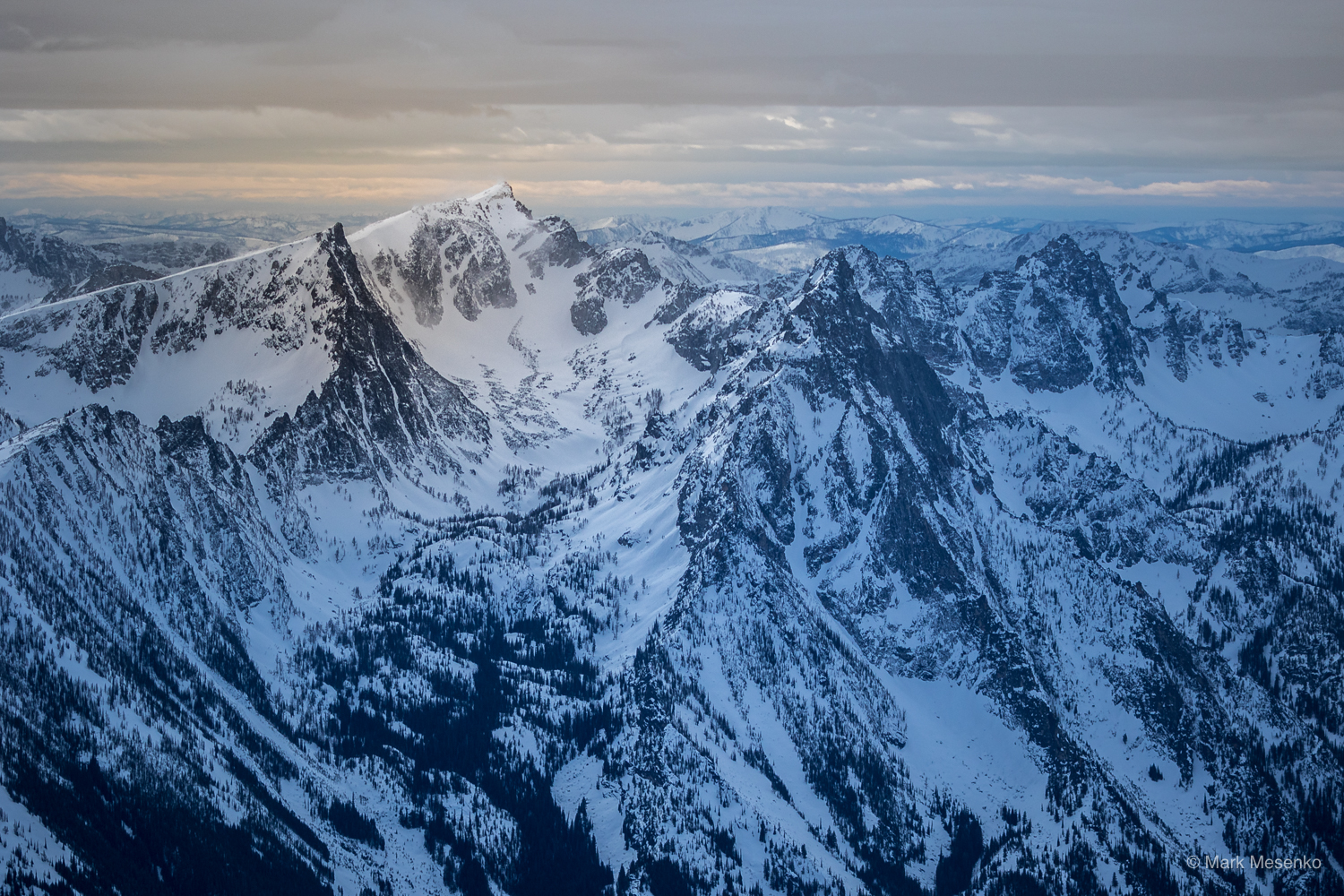
Shop Virginia City Gear

Shop Virginia City Gear

Virginia City Climate

Average Monthly Climate: Virginia City

MonthAvg HighAvg LowPrecipSnow
Jan29°F13°F1"2.8"
Feb26°F9°F1.4"3.9"
Mar35°F17°F1.1"3"
Apr43°F23°F2"4.2"
May56°F36°F3.2"3"
Jun68°F45°F3.1"0.7"
Jul79°F54°F1"0"
Aug77°F53°F1.5"0"
Sep68°F45°F1.9"0.5"
Oct50°F29°F1.8"2.6"
Nov38°F19°F1"2.4"
Dec30°F13°F1.1"3.1"
Housing & Economy

Housing & Cost of Living

$288,600
Median Home Value
$875/mo
Median Rent
National Rankings
Home Value73rd percentile
Rent41st percentile
Percentile among ~21,000 U.S. cities. Higher = more expensive (home/rent) or higher earning (income).
Housing Availability
140
Total Housing Units
58.6%
Vacancy Rate
Employment & Economy
ACS 5-Year 2019–2023
0%
Unemployment Rate
MT avg: ~3.5%
43.5%
Labor Force Participation
57
Employed Residents
Top Industries
Tourism & Hospitality
28.1%
Other Services
17.5%
Agriculture & Mining
14%
Data may not reflect current conditions. Check Zillow for the latest market data.
Schools
🏫
Virginia City Public Schools
~40 students
Virginia City in Rankings & Guides
Compare Virginia City with Another Town
View Virginia City in the site graph

Explore Nearby Destinations

EnnisTwin BridgesBig Sky

Related Reading

Montana mountain landscapeMontana Facts
The Deep History Behind Montana's Treasure State Nickname
Montana's nickname traces back to gold strikes at Grasshopper Creek in 1862, but the real treasure has always been bigger than mineral wealth.
Mar 21, 2026