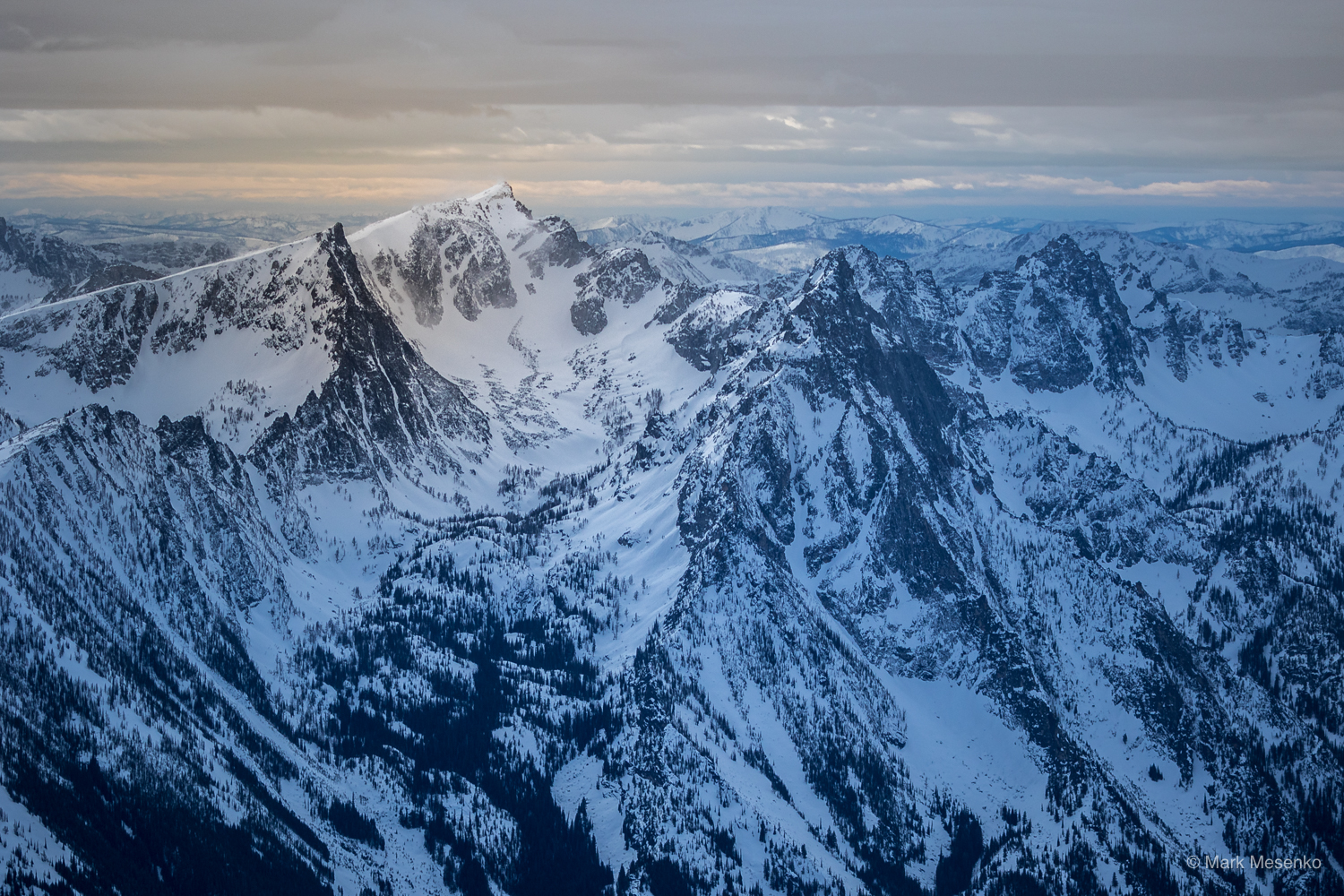
The Anaconda-Pintler and Flint Creek Mountains
By editor
Anaconda, Deer Lodge County, Montana
The towering ridges and rugged peaks that enclose the Deer Lodge Valley are far from mere happenstance. These ranges--the Anaconda-Pintler and Flint Creek Mountains--are the product of immense, ancient forces that shaped the very bedrock beneath our feet. Their story begins over a hundred million years ago, during a time when the earth’s crust was no placid plane but a restless, convulsing mass of rock and molten fire.
Geologists identify the initial mountain-building event here as part of the Laramide Orogeny, a period stretching roughly from 70 to 50 million years ago. Unlike the vertical upheaval that often forms mountains, the Anaconda-Pintler and Flint Creek Mountains arose chiefly through thrust faulting, a process by which vast slabs of sedimentary rock were pushed horizontally over one another. Imagine a colossal deck of cards sliding forward, each card representing a thick layer of rock miles in thickness. These layers, fractured and fractured again, stacked with relentless pressure until they formed the high peaks we see today--peaks comparable in scale to the Andes or the Himalayas.
The rocks that comprise these mountains tell their own story. Metamorphic rocks, such as quartzite and schist, reveal the heat and pressure exerted deep within the earth’s crust that transformed earlier sedimentary layers. These rocks, often hard and resistant, were forced upward from depths unreachable by sunlight, bearing the scars of their subterranean journey. Igneous intrusions, notably the granite bodies known as the Boulder Batholith, also played a critical role. This batholith, formed some 70 to 80 million years ago when molten magma cooled slowly beneath the surface, now forms the bedrock beneath much of southwestern Montana.
The Boulder Batholith is no mere geological curiosity. It harbors some of the richest veins of mineral wealth in the American West. The city of Butte, situated just east of these mountains, owes its very existence to the metals contained within this granite. Copper, silver, and gold were deposited when mineral-rich hydrothermal fluids permeated fractures in the batholith, cooling and crystallizing into veins some 50 feet wide and extending over 4,500 feet in length. As geologist Charles Dwight described the remarkable ore deposits, “The richness and extent of these veins challenge comparison with any known in the world.” This abundance fueled Butte’s rise as a mining center, earning it the sobriquet “The Richest Hill on Earth."
The story of these mountains does not end with their building; it continues with their slow unraveling. Around 50 million years ago, tectonic forces shifted from compression to extension. The earth’s crust began to stretch and pull apart, fracturing along new faults. Among these, the Anaconda detachment fault--a gently sloping normal fault--separated the rising mountains from the adjacent Deer Lodge Valley. This fault created a dramatic contrast in elevation: while the mountains climbed skyward, the valley floor subsided, creating space that soon filled with thousands of feet of sediment derived from the relentless erosion of the peaks.
This process of erosion and sedimentation remains ongoing. The detachment fault itself no longer moves, but steeper normal faults continue to reshape the region’s topography. The valley’s alluvial fans and river terraces bear witness to the slow but steady wearing down of the mountains, carried by streams such as the Clark Fork and Flint Creek. Nearby, the flora reflects the varied geology--ponderosa pines (Pinus ponderosa) and Douglas-fir (Pseudotsuga menziesii) cling to the lower slopes, while subalpine fir (Abies lasiocarpa) and Engelmann spruce (Picea engelmannii) ascend toward the rocky summits. These living communities, from the mountain goats navigating sheer cliffs to the elusive wolverines prowling the high ridges, are shaped by the physical contours that geology has wrought.
The human history intertwined with these mountains is no less compelling. In 1852, Francois Finlay, a trapper and prospector, discovered gold on Gold Creek near the northern end of the Flint Creek Mountains. This find constituted the first recorded gold discovery in what would become Montana. The news ignited a rush of miners by 1858, who trekked to the region in pursuit of fortune. Though the placer and lode mines yielded only modest amounts compared to later strikes, their significance lies in opening Montana to the era of gold mining. By 1863, many miners had moved on from these early workings to richer deposits, but the legacy of those first claims remains embedded in the local landscape.
The explorer and naturalist Meriwether Lewis, during his expedition in 1805, noted the ruggedness of this part of the Rocky Mountains, writing, “The mountains have a singular appearance, with abrupt cliffs and deep valleys carved by ancient glaciers.” Though he did not witness the intense mining activity that would follow, his observations capture the enduring grandeur of the terrain.
Today, standing at the base of the Anaconda-Pintler and Flint Creek ranges, one senses the vast scales of time and force that have shaped this land. The mountains are not merely stone and mineral; they are records of planetary processes--thrust faults pushing slabs of rock miles thick, molten granite cooling far below the earth’s surface, and the slow subsidence of valleys filled by the debris of erosion. These processes continue to sculpt the land, shaping the habitats and human histories that rise and fall within their shadow.
In the quiet of a spring morning, when the sun first strikes the granite faces and the scent of lodgepole pine (Pinus contorta) mingles with the crisp mountain air, one might reflect on the words of the geologist Charles Walcott, who studied the Rocky Mountains with reverence: “The history of these mountains is written not in books, but in the stones themselves--if one only knows how to read them.”
See also
- The Anaconda-Pintler and Flint Creek Mountains at Anaconda, Deer Lodge County
- The Boulder Batholith and the Richest Hill on Earth at Butte, Silver Bow County
- Plutons and the Humbug Spires at Butte, Silver Bow County
Where to Stay in Montana
Affiliate links help support this site at no extra cost to you