Madison Limestone and the Garnet Mountains
By editor
Near Drummond, Granite County, Montana, April 2026
The pale gray cliffs on the north side of the interstate are 350 million years old. The marine creatures whose bodies built them lived and died in a shallow tropical sea that covered most of what is now Montana. They had no names for the place. They had no names at all. They built their shells from calcium carbonate dissolved in the seawater, and when they died the shells settled to the bottom, and over hundreds of millions of years the accumulated weight of those shells compressed into limestone. The geologists call it Madison Limestone, after the Madison River valley where it was first studied. In places it is two thousand feet thick.
The cliffs along the Clark Fork are what happens when the softer rock around the limestone erodes away and the limestone is left standing. It resists weathering better than most other rock types, which is why it forms the dramatic ridges and canyon walls that make this stretch of the interstate worth looking at. The red streaks in the rock and soil are iron oxide. The limestone itself is gray, the color of old concrete, and it has been here since before there were fish in the sea.
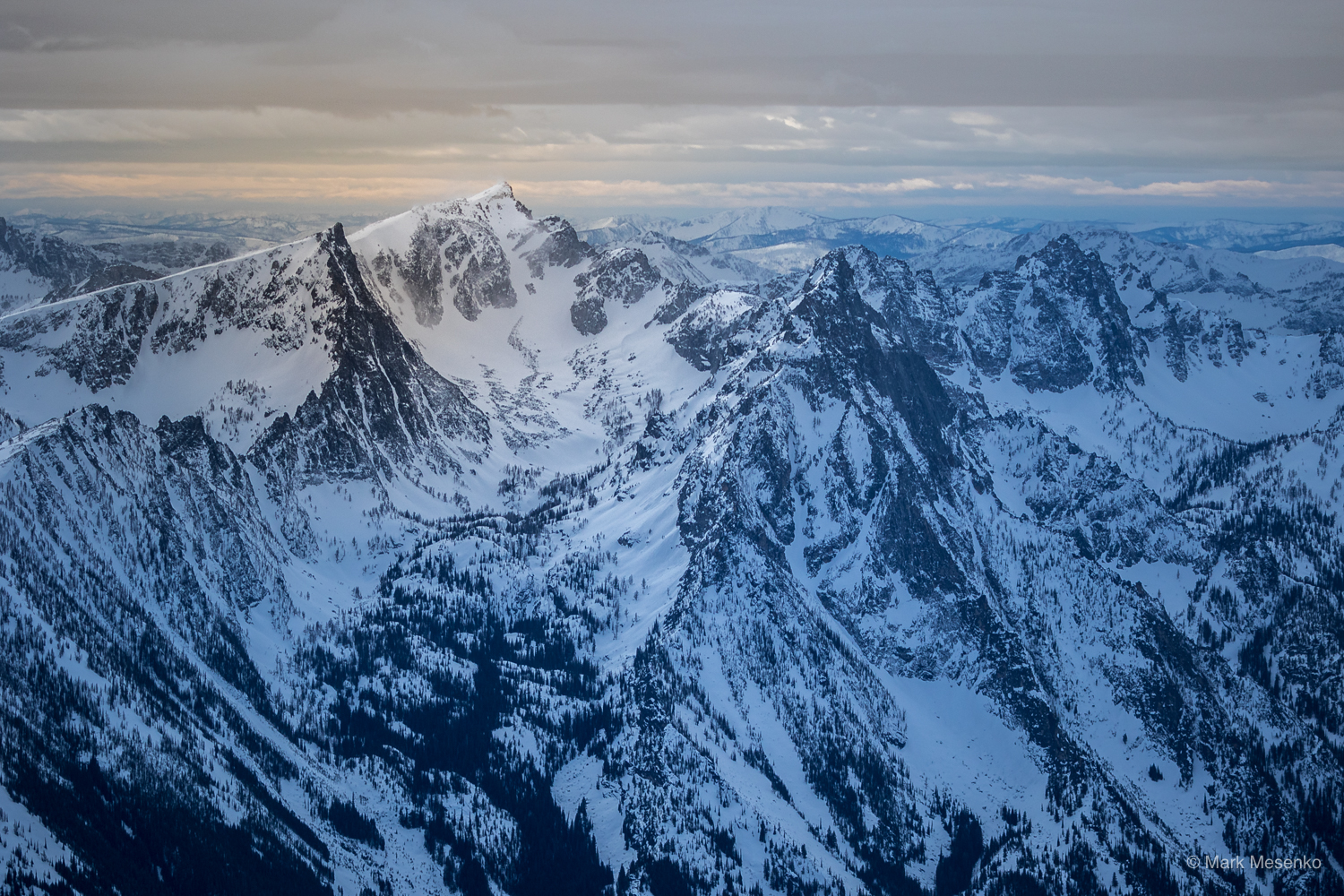
Seven miles north of the rest area, the Garnet Range rises to elevations above seven thousand feet. About seventy-five million years ago, molten rock intruded into the base of the range, and the heat and pressure of that intrusion drove mineral-rich fluids through the existing rock along northwest-trending faults. Where those fluids contacted the Madison Limestone, they caused a chemical reaction called a skarn, and the skarn formed garnets. The range is named for them. The fluids also deposited gold and silver in the Cambrian and Precambrian rocks, in three principal veins and numerous smaller zones.
In 1865, a prospector found gold placers at the mouth of Bear Gulch, about a mile northeast of where you are standing. Other prospectors followed. By 1866, gold-bearing veins had been discovered, though the technology to work them profitably did not yet exist. The placer miners worked the stream gravels with sluice boxes and rockers, washing the gold out of the gravel with water. Between 1865 and 1869, the miners working Bear Gulch and its tributaries recovered thirty million dollars in gold and silver. As many as seven thousand people lived in the camp called Beartown during its peak years.
Seven thousand people in a narrow gulch in the Garnet Range. They needed food, tools, boots, whiskey, and medical care. They needed housing of some kind, even if that housing was a tent or a rough board shack. They needed someone to run the assay office and someone to run the brothel and someone to run the express company that carried the gold out. All of those people were there because the gold was there, and when the gold ran out, they left.
The placer mines produced approximately sixty thousand ounces of gold. The lode mines, which came later and required more capital and more machinery, produced roughly the same amount. The gold is still there, in the sense that the geological surveys have identified several hundred thousand ounces of gold still remaining in the Garnet Range in deposits that have not been worked. There are also gold placer reserves under the rest area where you stopped to read this marker. The ground beneath the parking lot contains gold. The Anaconda Company and its successors knew this. They chose not to mine it, for reasons that had more to do with economics than with sentiment.
The town of Garnet, higher in the range than Beartown, came later. By 1896, underground mines were producing gold, silver, and copper from the lode deposits. By 1898, more than a thousand people lived in Garnet to support the miners working the surrounding area. The town had a hotel, a school, a union hall, and the usual complement of saloons. It burned in 1912 and was rebuilt. It burned again in 1934 and was not fully rebuilt. The Bureau of Land Management maintains what remains of the second Garnet as a ghost town open to visitors.
The men who worked the underground mines in the Garnet Range were paid by the shift. In the 1890s, a hard-rock miner in Montana earned between three and four dollars a day. He worked in tunnels where the temperature varied between the heat of the rock at depth and the cold of the mountain air at the portal. He breathed rock dust, which over time deposited silica in his lungs and produced a condition called silicosis, which the miners called miner's consumption. There was no compensation for silicosis. There was no pension. When a man could no longer work, he stopped being paid, and that was the end of the arrangement between him and the company.
The Granite Mountain Mining Company, which operated the richest silver mines in the range, paid its workers in cash and provided housing in the company town of Granite, at seven thousand feet elevation above Philipsburg. The company also provided a hospital, which was necessary because the mines were dangerous. Men were killed by falling rock, by premature blasts, by machinery, and by the simple fact of working underground in conditions that the safety regulations of the time did not adequately address. The company kept records of these deaths. The records are in the archives.
The thirty million dollars recovered from Bear Gulch between 1865 and 1869 went somewhere. Some of it went to the miners who worked the placers, though the men who worked for wages rather than on their own account got only their daily rate. Most of it went to the men who owned the claims, and from them to the merchants and bankers and investors who financed the operations. The gold left the Garnet Range in express shipments and never came back. The range still has the garnets that gave it its name, and the cliffs of Madison Limestone, and the geological record of everything that happened here over the last three hundred and fifty million years. The men who took the gold out are gone.
See also
- Madison Limestone and the Garnet Mountains near Drummond, Granite County (Montana Department of Transportation, erected 2012)
- Ghost Town Byway at Greenough, Missoula County -- the Garnet Range gold mines and the road to the ghost town of Garnet
- Granite Ghost Town at Philipsburg, Granite County -- the silver mining town at 7,000 feet that emptied in a day
Where to Stay in Montana
Affiliate links help support this site at no extra cost to you