Elkhorn Mountain Volcanoes
By editor
Montana
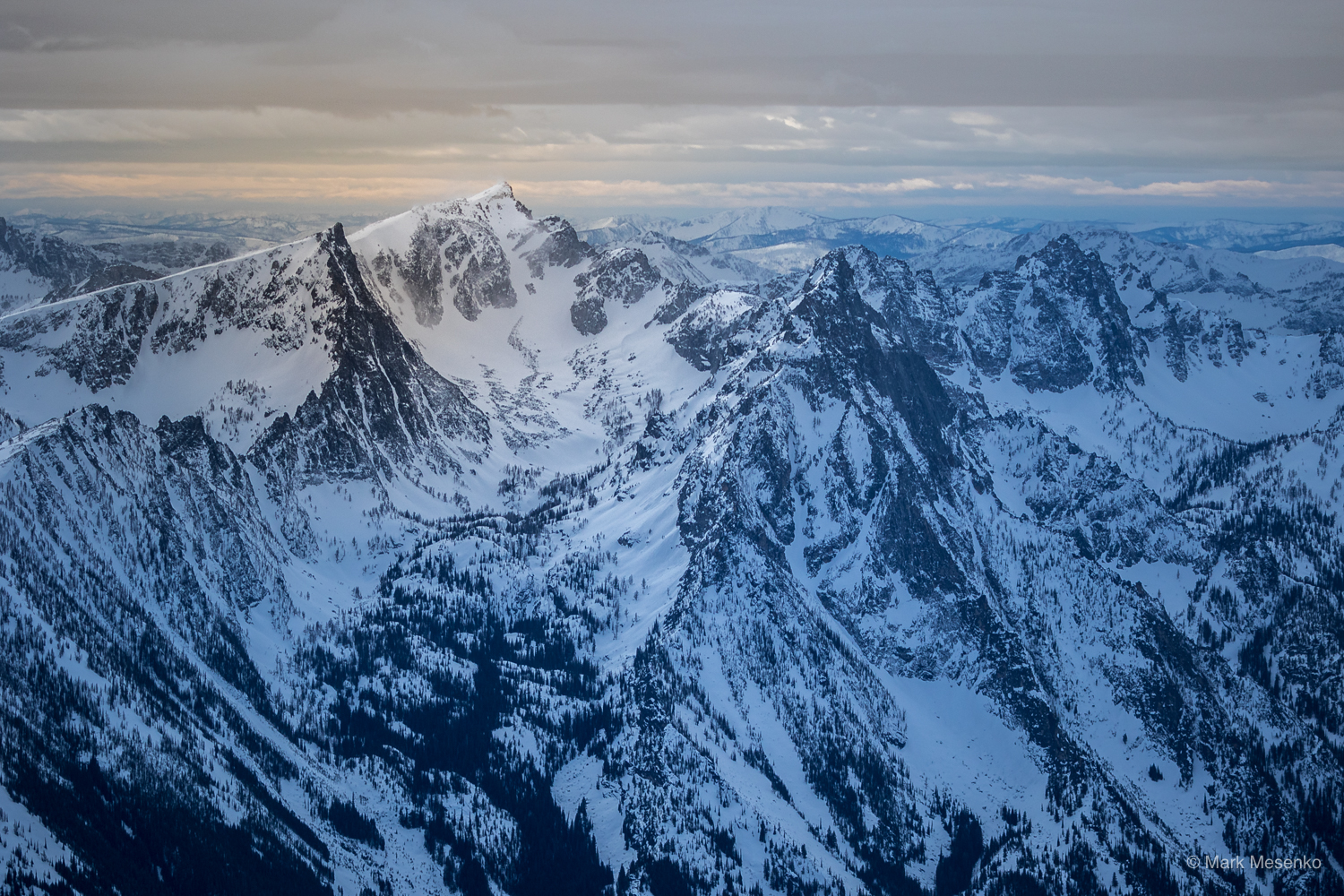
More than 74 million years ago, a vast volcanic field erupted across what we now call the Elkhorn Mountains, east of Helena, Montana. This was no ordinary eruption, but a prolonged convulsion of Earth’s molten heart that reshaped the landscape on a colossal scale. The volcanic field sprawled roughly one hundred miles across, with volcanic strata accumulating to three miles thick in places. These eruptions were so intense that volcanic ash traveled hundreds of miles eastward, blanketing terrain as distant as central Montana. In fact, the ashfall was so thick near Choteau’s Egg Mountain that it preserved the remains of dinosaurs--creatures that perished beneath the volcanic fury--allowing paleontologists to unearth their fossils millions of years later.
The origin of this volcanic upheaval lies deep beneath the Yellowstone Plateau, where the Farallon Plate, a vast segment of oceanic crust once lying beneath the Pacific Ocean, plunged beneath the western edge of North America. This subduction process, beginning roughly 81 million years ago during the Late Cretaceous period, forced approximately 10,000 miles of the Farallon Plate under Montana’s crust. The immense pressure and heat generated by this descent melted rock, forming magma that found its way upward through weaknesses in the crust. It was here, in this region of relative geological vulnerability, that magma breached the surface repeatedly, generating violent volcanic eruptions that poured lava, ash, and pyroclastic material across the landscape.
The volcanoes of the Elkhorn Mountains did not erupt in a single event but persisted for millions of years, their lava flows and ash deposits layering over one another. Over time, however, the pile of volcanic rock grew so thick that it became a formidable barrier to further eruptions reaching the surface. Instead, magma began to accumulate beneath the volcanic pile, pooling in chambers deep within the crust. This process led to the formation of the Boulder Batholith, a vast mass of granite rock stretching from Helena to Butte. Modern seismic and gravity surveys reveal that the batholith plunges nearly ten miles deep and occupies tens of thousands of cubic miles of subterranean space.
This granite body holds more than mere geological interest; it is the source of some of Montana’s richest mineral veins. As the granite cooled and contracted, it fractured, allowing mineral-rich hydrothermal fluids to infiltrate these cracks. These hot solutions deposited veins of copper near Butte and veins of gold around Helena. The Butte copper deposits, famously vast, earned the city the nickname “The Richest Hill on Earth,” while the Helena gold veins fueled a rush of miners and prospectors seeking fortune. The mineral wealth extracted from these veins shaped Montana’s economy and settlement patterns for generations.
The gold veins did not solely remain in their original fractures. Over millions of years, weathering and erosion gradually wore down the granite, releasing gold particles that washed into nearby valleys. One such valley is the Prickly Pear Creek near Montana City, where gold once coursed through gravels that miners tirelessly worked. Starting in 1938, a massive gold dredge operated in the creek, floating on a pond it had excavated thirty feet deep. This dredge churned through the gravels relentlessly, leaving behind landscapes of mounded gravel piles that mark the valley today. Such industrial efforts testify to the enduring legacy of the volcanic and granitic processes that began tens of millions of years prior.
Lewis and Clark, traveling through Montana in 1805, marveled at the ruggedness of this region, though the volcanic origins were yet unknown to them. William Clark noted in his journal: “The hills rise suddenly from the plains, their jagged forms silhouetted against the sky, as if shaped by fire and fury.” His keen eye perceived the harshness sculpted by ancient forces, even if the science had not caught up. Later geologists would confirm the volcanic genesis and unravel the complex story beneath those hills.
One might ponder the scale and power of the Farallon Plate’s subduction to appreciate the magnitude of these events. The plate’s descent beneath Montana spanned thousands of miles, and the processes it set in motion were vast in both space and time. The volcanic eruptions were not isolated outbursts but part of a larger tectonic ballet that shaped much of western North America’s geology. This subduction zone also contributed to mountain building, metamorphism, and mineralization throughout the region.
Today, the Elkhorn Mountains and the Boulder Batholith provide a remarkable window into Earth’s fiery past. The granite outcrops and volcanic remnants tell a story written in stone--one of molten rock pushing upward, of volcanic cones rising and collapsing, of ash clouds spreading far and wide, and of mineral veins forming deep inside the crust. The landscape is a palimpsest of these ancient forces, offering clues to scientists and adventurers alike.
If one strolls along the rocky ridges east of Helena, the scent of pine and the sharp tang of mountain air fill the lungs, while beneath the feet lie the hardened remains of ancient lava flows. The ponderosa pine (Pinus ponderosa) and Douglas fir (Pseudotsuga menziesii) grow vigorously here, their roots tangled among the fractured granite, as if anchoring themselves to the memory of volcanic upheaval. In spring, wildflowers like lupine and paintbrush dot the meadows, their colors vivid against the gray rock. This natural beauty, born from violent geologic processes, calls to those who seek to understand the slow and relentless workings of the Earth.
The story of the Elkhorn Mountain volcanoes reminds us that the ground beneath our feet is not idle but shaped by forces of incredible power and duration. The molten rock that once surged upward shaped not only the physical landscape but also the human history of Montana, providing the mineral wealth that drew settlers and miners. As geologist Charles Swanson once remarked during his studies of Montana’s geology, “The Elkhorn Mountains are a grand chapter in the book of our continent’s fiery youth.”
Through patient observation and scientific inquiry, we piece together this narrative, bridging millions of years to the present moment. In the volcanic rocks and granite batholiths, in the veins of copper and gold, and in the churned gravels of Prickly Pear Creek, the legacy of the Elkhorn Mountain volcanoes endures--etched in stone and story.
See also
- Elkhorn Mountain Volcanoes at Montana
- The Boulder Batholith and the Richest Hill on Earth at Butte, Silver Bow County
- The Prickly Pear Diggings at Montana City, Jefferson County
Where to Stay in Montana
Affiliate links help support this site at no extra cost to you