← Back to Trout Waters of Montana hub

There is a stretch of the Missouri River below Holter Dam that does not look like a trout stream. It is wide, slow, and sweeping, meandering through a dry, grassy valley toward the town of Cascade. There are no tumbling rapids here, no deep, boulder-strewn pools. It looks like a river meant for catfish and carp.

But beneath the surface of that slow, methodical current lies one of the greatest trout fisheries on earth. The cold water released from the dam creates a massive, fertile spring creek, holding between five and seven thousand trout per mile. They are heavy, broad-shouldered rainbows and long, predatory brown trout, and they are some of the most difficult fish to catch in the state of Montana.

To fish the Missouri is to submit to an education in humility. The water is flat, the currents are complex, and the fish have all the time in the world to inspect your fly. They will not tolerate drag. They will not tolerate a sloppy cast. They demand perfection.

The Technical Water

The Missouri is a river for the dry-fly purist. It is a river where a man can spend an entire afternoon casting to a single, rising fish. You must use long leaders, often twelve or fifteen feet, and fine tippet, down to 5X or 6X. You must present the fly so that it drifts exactly at the speed of the current, without the slightest hint of unnatural movement.

When the Pale Morning Duns hatch in July, the surface of the river comes alive with the subtle, sipping rises of feeding trout. It is a quiet, deliberate kind of fishing. There is no blind casting here. You locate a rising fish, you study its rhythm, you position yourself, and you make the cast.

And when you finally hook one of these fish, the fight is not over. The rainbows of the Missouri are famous for their strength. They will take you deep into your backing, running hard across the wide river, using the heavy current to their advantage. A man must be patient, and he must trust his knots.

The Seasons of the River

Because it is a tailwater, the Missouri fishes well all year. In the dead of winter, when the freestone rivers are locked in ice, the Missouri runs clear and cold. On a calm afternoon in January, the midges will hatch, and the trout will rise to them. It requires cold hands and fine tippet, but it is a way to break the long winter.

Spring brings the Blue-Winged Olives, a reliable hatch that produces some of the most consistent dry-fly fishing of the year. But the true glory of the Missouri comes in the summer. The PMDs dominate July, followed by the Trico spinner falls in August.

The Trico hatch is a spectacle of micro-engineering. Millions of tiny, size twenty-two mayflies blanket the water in the early morning. The trout line up in the foam lines, mouths open, sipping the spent spinners as they drift by. It is maddening, exacting work, trying to track a tiny speck of a fly among thousands of naturals, waiting for the right fish to take it.

The Missouri is not a river for beginners. It is a river that will expose your flaws and test your patience. But when everything comes together—when the cast is true, the drift is perfect, and a heavy brown trout slowly tips up and inhales your fly—there is no finer feeling in the world of fly fishing.
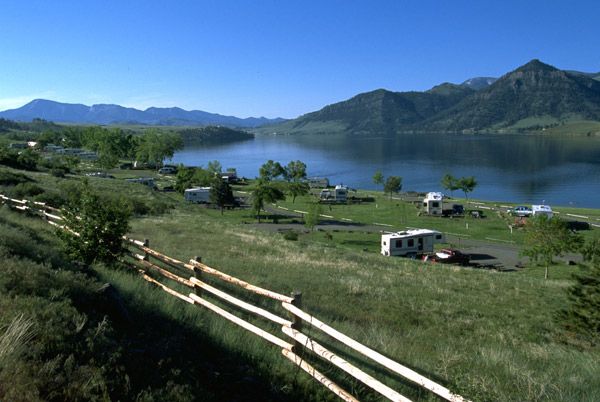
The Missouri River — Montana fly fishing

Open-source photograph

Local fishing details near Helena

Helena sits at the doorstep of one of the finest trout fisheries in North America. The Missouri River below Holter Dam — about 43 miles north at the town of Craig — is a world-class tailwater carrying over 4,000 trout per mile, drawing fly anglers from around the globe. But the Missouri is only the headline. Canyon Ferry, Hauser, and Holter lakes form a chain of Missouri River impoundments within 20 miles, Spring Meadow Lake offers catch-and-release trout fishing two miles from the capitol building, and the permit-only Smith River float is one of Montana's most coveted angling experiences. With 10 lakes within 30 miles and multiple blue-ribbon rivers within reach, Helena is among the strongest fishing bases in the state. For Montana's fly fishing heritage and the Missouri River tailwater, see our Fly Fishing Guide and Rivers Deep Dive. For the full city profile, see our Helena guide.

At a Glance

  • 10 lakes within 30 miles
  • Primary species: Rainbow trout, brown trout, walleye, yellow perch, kokanee salmon, mountain whitefish
  • Signature fishery: Missouri River tailwater at Craig (43 mi) — 4,000+ trout per mile
  • Closest lake: Spring Meadow Lake, 2 miles (catch-and-release)
  • Closest reservoir: Hauser Lake, 11 miles
  • Permit-only float: Smith River (47 mi) — lottery system for float permits
  • License required: Montana fishing license (available at local shops and fwp.mt.gov)

The Missouri River Tailwater

Craig & the Canyon

The Missouri River below Holter Dam is the defining fishery of Helena and one of the premier trout streams in the United States. The 35-mile tailwater stretch from Holter Dam downstream through the town of Craig consistently holds 4,000 to 5,000 trout per mile — predominantly rainbow and brown trout in the 14- to 20-inch range, with fish over 20 inches taken regularly. The dam-regulated flows maintain cold, stable water temperatures year-round, creating a fertile environment for aquatic insects and the trout that feed on them. This is dry-fly water at its finest: prolific hatches of pale morning duns, caddis, blue-winged olives, and tricos produce surface feeding from April through November.

Most anglers fish the Missouri from drift boats, floating the classic sections between Holter Dam and the town of Cascade. Wade fishing is productive at several access points, particularly near Craig and at the Dearborn River confluence. The river is wide and wadeable in many places during normal flows, though felt-soled or studded wading boots are essential on the slippery cobble bottom. Guide services based in Craig and Helena offer full-day float trips year-round — the Missouri fishes well even in winter, with midges bringing trout to the surface on warmer afternoons.

The Lakes

Canyon Ferry Lake

Canyon Ferry Lake is the largest body of water near Helena — a 35-mile-long reservoir on the Missouri River just 15 miles east of town. It's the most popular recreational lake in central Montana, drawing boaters, water-skiers, and anglers alike. The fishing is diverse: walleye are the primary draw, with consistent catches of 16- to 22-inch fish throughout the reservoir. Rainbow trout run large here, with fish commonly exceeding 18 inches. Yellow perch are abundant and provide reliable action for shore anglers and families. Ice fishing on Canyon Ferry is a winter tradition — hundreds of ice houses dot the lake from December through March, targeting perch and walleye through the ice.

Hauser Lake

Hauser Lake (11 miles north) is the closest Missouri River impoundment to Helena and offers excellent fishing with less recreational boat traffic than Canyon Ferry. Rainbow trout are the headline species, with strong populations supported by dam tailwater conditions. Walleye and yellow perch round out the fishery. The lake's relatively compact size makes it manageable for small-boat and kayak anglers. Shore fishing is productive at several access points along the reservoir.

Holter Lake

Holter Lake (19 miles north) sits in a dramatic canyon setting upstream of the legendary Craig tailwater. The lake holds rainbow trout, kokanee salmon, and walleye in deep, cold water flanked by towering limestone walls — the same Gates of the Mountains formation that awed Lewis and Clark. Trolling for kokanee in summer and jigging for walleye are popular techniques. The upper end of the lake transitions into river current, creating productive trout water where the Missouri enters the reservoir.

Spring Meadow Lake

Spring Meadow Lake State Park (2 miles from downtown) is Helena's urban fishing gem — a crystal-clear, 13.7-acre spring-fed pond (officially named Spring Meadow Lake) managed as catch-and-release for trout. The lake's spring water maintains cold temperatures year-round, supporting healthy rainbow trout that test light-tackle anglers in gin-clear conditions. It's a rare opportunity to fish for trout on a lunch break from the state capitol. Fly fishing from float tubes is popular; motors are prohibited.

LakeDistance from Helena
Spring Meadow Lake2 mi
Northern Pacific Reservoir7 mi
Three Mile Reservoir10 mi
Hauser Lake11 mi
Chessman Reservoir11 mi
Spadefoot Reservoir11 mi
Canyon Ferry Lake15 mi
Holter Lake19 mi
Gravelly Range Lake23 mi
South Fork Crow Creek Lakes24 mi

The Rivers

Beyond the Missouri tailwater, several significant rivers lie within day-trip distance of Helena. The Smith River (47 miles northeast) is one of Montana's most sought-after float-fishing experiences — a 59-mile, multi-day canyon float through remote limestone gorges accessible only by raft or canoe. Access is controlled by a competitive lottery permit system administered by Montana FWP, with the float season running from late May through early July. Brown trout and rainbow trout inhabit the river, and the canyon scenery is spectacular.

The Jefferson River (53 miles south) offers a quieter alternative — a slower-paced river winding through agricultural bottomlands with strong populations of brown trout. It's less pressured than the Missouri and fishes best in late summer and fall when flows stabilize. The Sun River (60 miles northwest) drains the Bob Marshall Wilderness and holds cutthroat and rainbow trout in its upper reaches, with warmer-water species below Gibson Reservoir.

Fishing Access Sites

No formal FWP fishing access sites lie within 30 miles of Helena. However, boat ramps and public access points are available at Canyon Ferry, Hauser, and Holter lakes through Bureau of Reclamation facilities and county-maintained sites. The Missouri River below Holter Dam has multiple access points at bridge crossings and boat launches near Craig. Spring Meadow Lake State Park provides walk-in access within the city. Always check current access conditions, as water levels on the reservoirs can affect ramp usability.

Access SiteDistance from Helena
Helena Valley Regulating Reservoir Fishing Access Site8 mi
Regulating Reservoir Fishing Access8 mi
Causeway Fishing Access10 mi
Park Lake Fishing Access Site12 mi
York Bridge Fishing Access Site14 mi
Tizer Lakes Fishing Access Site21 mi
Lichen Cliff Fishing Access Site24 mi
Prickly Pear Fishing Access Site24 mi
Table Rock Fishing Access Site26 mi
Wolf Creek Bridge Fishing Access Site29 mi

Seasonal Guide

Spring (March–May): The Missouri tailwater fishes well from the moment the ice breaks. Blue-winged olive hatches begin as early as March on warmer afternoons, bringing trout to the surface. Mother's Day caddis hatches in mid-May are legendary on the Missouri — blizzard hatches of caddis flies blanket the water, producing some of the year's best dry-fly action. Canyon Ferry and Hauser lakes ice off in late March to early April, with walleye moving shallow for the spring spawn. Smith River float permits run from late May into July.

Summer (June–August): Prime season across all waters. The Missouri tailwater's stable flows maintain excellent fishing through the warmest months — pale morning dun hatches in June and July provide consistent surface feeding, followed by tricos in July and August. Canyon Ferry walleye fishing peaks in early summer before fish move deep. Perch and trout remain active on all three reservoirs. Evening hatches on the Missouri can produce outstanding dry-fly fishing into dark. Water temperatures on non-tailwater rivers rise in August, shifting fish activity to early morning and evening.

Fall (September–November): Many experienced anglers consider fall the best season on the Missouri. Brown trout become aggressive ahead of their October– November spawning run, and streamer fishing produces some of the year's largest fish. Blue-winged olives return on overcast autumn afternoons — sometimes the heaviest hatches of the year. Canyon Ferry walleye move shallow again as water temperatures drop. The Jefferson River fishes at its best in early fall with lower, clearer flows.

Winter (December–February): Ice fishing on Canyon Ferry Lake is a central Montana tradition — yellow perch and walleye are the primary targets, with hundreds of ice shelters dotting the lake on winter weekends. The Missouri tailwater remains fishable year-round; midges are the primary winter hatch, and nymphing with small midge patterns under an indicator is the standard technique. Warmer winter afternoons can bring fish to midge clusters on the surface. Hauser and Holter lakes offer additional ice-fishing opportunities.

Local Resources

Helena and the Craig corridor have well-established fly shops and outfitters serving the Missouri River fishery. Shops in Craig — the small town that serves as the Missouri tailwater's base camp — are the best source for current river conditions, hatch reports, and guide bookings. Multiple outfitters run drift-boat trips on the Missouri year-round. A Montana fishing license is required for anyone 12 and older; licenses are available online at Montana FWP or at local sporting goods stores. Non-resident licenses are available for durations ranging from two days to a full season. Smith River float permits are awarded by lottery — applications open in February for the upcoming season; check FWP for current deadlines.

For hiking and other outdoor activities near Helena, see our hiking guide and the weekend itinerary.

Open full Helena fishing guide →
Hatch calendar & regulations

The Master Hatch Calendar

The insects that govern Montana's rivers follow the sun and the temperature, not the calendar. A cold spring will push every hatch back by two or three weeks. A warm spring will accelerate them. These dates are guidelines, not certainties. A fisherman must learn to read the water and the air, not just the calendar.

Insect Peak Months Key Rivers Recommended Patterns
Midges (Chironomidae) Year-round Missouri, Bighorn, all tailwaters WD-40 #22-26, Griffiths Gnat, Hi-Vis Parachute Midge
Capnia Stonefly January-February Clark Fork, Bitterroot Small dark nymphs
Nemoura Stonefly February-March Clark Fork, Bitterroot Small dark nymphs
Skwala Stonefly February-April Bitterroot, Clark Fork, Gallatin Skwala Adult #8-10, Chubby Chernobyl, Plan B
Blue-Winged Olive (Baetis) March-May, September-November All rivers; best on Missouri, Bitterroot Sparkle Dun #18-22, CDC Dun, RS2 Emerger
Western March Brown March-April Clark Fork, Blackfoot Parachute Adams #14
Mother's Day Caddis April-May Bitterroot, Clark Fork Elk Hair Caddis #14-16
Salmonfly (Pteronarcys) Late May-June Madison, Big Hole, Yellowstone, Gallatin Chernobyl Ant #4-6, Stimulator, Club Sandwich
Green Drake June-July Big Hole, Madison Hi-Vis Extended Body Drake, Trina's Carnage Drake
Golden Stonefly June-July Madison, Big Hole, Yellowstone Stimulator #6-8, Elk Hair Stone, Chubby Chernobyl
Yellow Sally June-July Most freestone rivers Yellow Stimulator #14-16
Pale Morning Dun June-August Missouri, Gallatin, Bitterroot PMD Sparkle Dun #16-18, Comparadun, CDC Emerger
Pale Evening Dun June-August Most freestone rivers Comparadun #16-18
Caddis May-October All rivers Elk Hair Caddis #14-18, Goddard Caddis
Hoppers and Crickets July-September Madison, Yellowstone, Ruby, Big Hole Dave's Hopper #8-10, Fat Albert, Parachute Hopper
Trico July-September Missouri, Madison, Gallatin Trico Spinner #22-26, Two-Wing Spinner
Ants and Beetles June-September All rivers Black Foam Ant #16-20, Beetle #16-18
Spruce Moth August-October Gallatin, Madison, Yellowstone Galloup's Butch Caddis, Elk Hair Caddis #14
Hecuba August-September Big Hole, Beaverhead Hecuba Comparadun #12-14
Mahogany Dun September-October All rivers Comparadun #16, Split Flag
October Caddis September-November Clark Fork, Blackfoot, Bitterroot Elk Hair Caddis #8-10, Stimulator

The Key Hatch Events

The Salmonfly Hatch is the most anticipated event in western fly fishing. The giant stoneflies (Pteronarcys californica) emerge from the Madison, Big Hole, Gallatin, and Yellowstone in late May, moving upriver as water temperatures reach the low 50s F. The hatch is brief, often just two weeks on any given stretch, and it moves upstream at a rate of two to five miles per day. To fish the front of the hatch, you must move with it.

The Skwala Hatch is Montana's first major dry-fly opportunity of the year. It fires on the Bitterroot, Clark Fork, and Gallatin when daytime temperatures warm and water temperatures climb above 40 F, typically late February through April. Trout that have been lethargic all winter aggressively rise to these medium-sized stoneflies.

The PMD Hatch is Montana's most reliable and widespread summer mayfly hatch. PMDs emerge in the mornings on the Missouri, Gallatin, and Bitterroot from June through August, with peak density in July. On the Missouri tailwater, PMD fishing requires long leaders, fine tippet, and an accurate upstream cast to individual rising fish.

Hopper Season is the stuff of legend. Grasshoppers become active along the banks of the Madison, Yellowstone, and Big Hole from July through September. Fish a big foam hopper pattern tight to cut banks, undercut roots, and grassy edges.


2026 Montana Fishing Regulations Summary

All regulations are administered by Montana Fish, Wildlife and Parks (FWP). A fishing license is required for all anglers 12 and older. Regulations change annually; always verify current rules at fwp.mt.gov before fishing.

License Fees (2026)

License Type Resident Nonresident
Annual Fishing License $28 $111
Conservation License (required) $8 $10
2-Day Fishing License N/A $30
10-Day Fishing License N/A $55
Youth Annual (under 15) Free N/A

Standard Season

The standard season for rivers and streams runs from the third Saturday in May through November 30. Many waters have special regulations that differ from the standard season.

Free Fishing Weekends

By Montana law, any person may fish for any fish species without a license on Mother's Day weekend (May 9-10, 2026) and Father's Day weekend (June 20-21, 2026).

Waters Open Year-Round

The following waters are open to fishing year-round under standard regulations unless otherwise noted:

  • Missouri River (all sections)
  • Bighorn River (Fort Smith to Yellowtail Dam)
  • Paradise Valley Spring Creeks (DePuy, Armstrong, Nelson)
  • Most reservoirs and lakes

Special Regulations Waters

Several of Montana's premier rivers have special regulations designed to protect the fishery. These include catch-and-release requirements, artificial lure restrictions, and reduced bag limits. Key examples include:

  • Smith River: Permit required for overnight floats. Permit lottery administered by FWP.
  • Big Hole River: Special regulations to protect the native Arctic Grayling population. Check FWP regulations for current restrictions.
  • Blackfoot River: Artificial lures and flies only in some sections.
  • Missouri River: Catch-and-release only in some sections.

Yellowstone National Park

Fishing in Yellowstone National Park requires a separate YNP fishing permit, available at park visitor centers and ranger stations. Montana fishing licenses are not valid within the park boundaries.


River Conditions and Flow Information

Current river conditions are available through the following resources:

A fisherman must check conditions before driving to a river. The freestone rivers of southwest Montana can blow out overnight after a heavy rain or a warm spell that accelerates snowmelt. A river that was fishing perfectly on Tuesday can be unfishable by Thursday.

Open full hatch calendar page →
Today in Montana History

No story for this date

Check the archive for other days in Montana history.