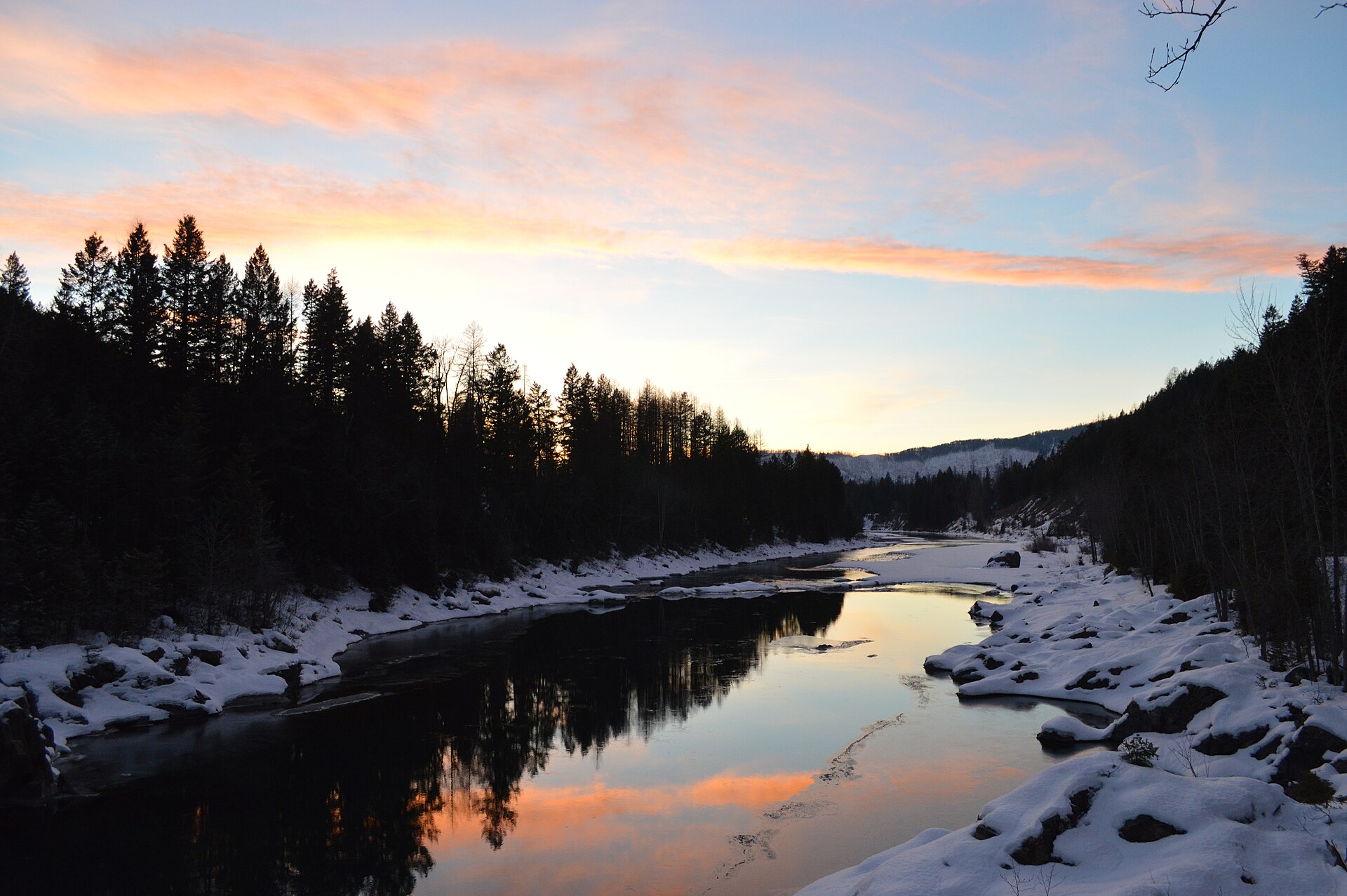
Bigfork sits at 2,940 feet on the northeast shore of Flathead Lake—the largest natural freshwater lake west of the Mississippi—in Flathead County, Montana. The Swan River flows directly through town, and 32 lakes lie within 30 miles alongside 10 fishing access sites and multiple blue-ribbon rivers. Flathead Lake itself is the star fishery—trophy lake trout (mackinaw) exceeding 30 pounds, bull trout, yellow perch, and westslope cutthroat draw anglers from across the region. The Jewel Basin alpine lakes offer backcountry cutthroat fishing, while Echo Lake and the Swan and Flathead rivers round out an extraordinary range of fishable water. This guide covers every major fishing zone accessible from Bigfork. For Montana's fly fishing heritage and the Flathead River system, see our Fly Fishing Guide and Rivers Deep Dive. For the full town profile, see our Bigfork guide.
At a Glance
- 10 fishing access sites within 30 miles
- 32 lakes within 30 miles
- Key rivers: Swan River (through town), Flathead River (10 miles)
- Primary species: Lake trout (mackinaw), bull trout, westslope cutthroat trout, yellow perch, lake whitefish, mountain whitefish
- Star fishery: Flathead Lake—trophy mackinaw up to 30+ lbs
- Closest fishing access: South Shore (2 miles), Sportsman’s Bridge (2 miles)
- Family fishing: Echo Lake (3 miles)—popular, easy access
- Backcountry fishing: Jewel Basin alpine lakes—westslope cutthroat
- Charter fishing: Available on Flathead Lake for mackinaw
- Bull trout: Catch-and-release only throughout the region
- License required: Montana fishing license (available at local shops and fwp.mt.gov); Flathead Indian Reservation tribal permit may be required for south half of Flathead Lake
Flathead Lake
Flathead Lake is the defining fishery of Bigfork and one of the most significant inland lakes in the western United States. At nearly 200 square miles, the lake’s cold, clear waters support a world-class lake trout (mackinaw) fishery—fish exceeding 30 pounds are taken each year, and the lake record stands among the largest in Montana. Mackinaw fishing is best pursued by trolling or jigging in deep water, and charter fishing services operate out of Bigfork and nearby marinas for anglers who want a guided experience on this vast lake.
Bull trout inhabit Flathead Lake and its tributary rivers but are strictly catch-and-release only throughout the region—they are a threatened species under the Endangered Species Act. Yellow perch are abundant and provide excellent table fare, particularly in spring and fall near shallow weed beds. Lake whitefish and westslope cutthroat trout round out the lake’s species mix. The south half of Flathead Lake lies within the Flathead Indian Reservation, where a tribal recreation permit from the Confederated Salish and Kootenai Tribes is required in addition to a Montana fishing license.
Swan River
The Swan River flows directly through Bigfork, giving anglers in-town access to trout fishing without driving anywhere. The river holds westslope cutthroat trout, bull trout (catch-and-release only), and mountain whitefish. The Wild Mile—a whitewater section just above town—is popular with kayakers but also offers pocket water and pools that hold trout for wading anglers. Below the Wild Mile, the Swan River calms as it flows through Bigfork and into Flathead Lake, providing gentle water well suited to fly fishing and spin casting.
Fishing access points at Sportsman’s Bridge (2 miles) and along the river through town make the Swan River one of the most convenient fisheries in Montana. The river is particularly productive in summer and early fall with dry flies, nymphs, and small streamers.
Echo Lake
Echo Lake, just 3 miles from Bigfork, is a popular family fishing destination with easy shoreline access and a boat launch. The lake holds a mix of species and provides consistent fishing in a relaxed setting with mountain views. It is an excellent option for anglers with children or those seeking a casual half-day outing close to town. In winter, Echo Lake freezes reliably and attracts ice fishing enthusiasts.
Jewel Basin Alpine Lakes
The Jewel Basin Hiking Area, 10 miles east of Bigfork, holds 27 named alpine lakes scattered across 15,349 acres of hikers-only terrain. Several of these lakes support populations of westslope cutthroat trout—native fish in pristine high-mountain settings above 6,000 feet. Backcountry fishing in Jewel Basin rewards anglers willing to hike 3–8 miles for their fish. The cutthroat are generally willing to take dry flies, small nymphs, and lightweight spinning lures. The best fishing window runs from mid-July (after ice-out) through September. Come prepared with bear spray and appropriate backcountry gear.
Rivers Near Bigfork
The Flathead River (10 miles) is one of Montana’s premier trout rivers, supporting westslope cutthroat trout, bull trout (catch-and-release only), rainbow trout, and mountain whitefish. The river’s three forks—North, Middle, and South—drain some of the wildest country in the Northern Rockies, including the Bob Marshall Wilderness and Glacier National Park. Fly fishing is exceptional with caddis, stonefly, and attractor patterns through the summer months.
The Swan River provides closer fishing right through Bigfork, while smaller tributaries in the Swan Range and surrounding national forest offer creek fishing for cutthroat and brook trout in forested settings. These smaller waters are often overlooked but provide rewarding half-day fishing within easy reach of Bigfork.
Fishing Access Sites
Montana Fish, Wildlife & Parks maintains 10 public fishing access sites within 30 miles of Bigfork. The closest are South Shore (2 miles) and Sportsman’s Bridge (2 miles), providing quick access to Flathead Lake and the Swan River respectively. Kearney Rapids (3 miles) and Loon Lake (6 miles) expand the nearby options. These sites provide parking and, in most cases, boat launch facilities.
Lakes Near Bigfork
Beyond Flathead Lake and Echo Lake, an extraordinary 32 lakes lie within 30 miles of Bigfork. Aeneas Lake (10 miles), Birch Lake (10 miles), and Picnic Lakes (10 miles) are among the closest in the Jewel Basin. Big Hawk Lake (11 miles), Strawberry Lake (11 miles), Tom Tom Lake (11 miles), and Wildcat Lake (11 miles) extend the network further. Many of the alpine lakes hold westslope cutthroat trout and are accessible only by trail, rewarding anglers willing to hike for uncrowded water in stunning mountain settings.
+ more lakes within 30 miles.
Seasonal Guide
Spring (March–May): Flathead Lake’s mackinaw fishing heats up as lake trout move to shallower water for feeding—spring is one of the best seasons for trophy mackinaw. Swan River fishing improves as flows stabilize before spring runoff in May. Echo Lake and other low-elevation lakes fish well as water warms. Alpine lakes in Jewel Basin remain frozen through May and often into June.
Summer (June–August): Prime season across most waters. Fly fishing on the Swan River and Flathead River is productive with caddis, stoneflies, and attractor patterns. Flathead Lake mackinaw move deeper as surface temperatures rise— downrigger trolling and deep jigging are the primary techniques. Jewel Basin alpine lakes become accessible as ice clears in late June and July, opening backcountry cutthroat fishing. Charter trips on Flathead Lake are popular through summer.
Fall (September–November): Many locals consider fall the best fishing season. Flathead Lake mackinaw fishing improves as lake trout return to shallower water with cooling temperatures. Swan River cutthroat fishing is excellent in September and October. Jewel Basin offers outstanding September fishing before snow closes access. Yellow perch fishing on Flathead Lake peaks in fall near weed beds.
Winter (December–March): Ice fishing takes center stage on Echo Lake and Swan Lake, both of which freeze reliably. Flathead Lake itself rarely freezes completely due to its size and depth, but some sheltered bays offer occasional ice fishing. Winter fishing on the Swan River and Flathead River is possible with nymphs and streamers on warmer afternoons. Alpine lakes are inaccessible.
Regulations and Conservation
A Montana fishing license is required for anyone 12 and older on all state waters. Licenses are available online at Montana FWP or at local sporting goods stores. Non-resident licenses are available for durations ranging from two days to a full season.
Bull trout are catch-and-release only throughout the Flathead drainage and all waters near Bigfork—no exceptions. The south half of Flathead Lake lies within the Flathead Indian Reservation, where a tribal recreation permit from the Confederated Salish and Kootenai Tribes is required in addition to the Montana license. The tribal permit boundary is well-marked on the lake. Flathead Lake has specific daily and possession limits for lake trout and other species that change periodically—check current regulations before fishing. Always check current FWP regulations before fishing any water near Bigfork.
For hiking and other outdoor activities near Bigfork, see our hiking guide.