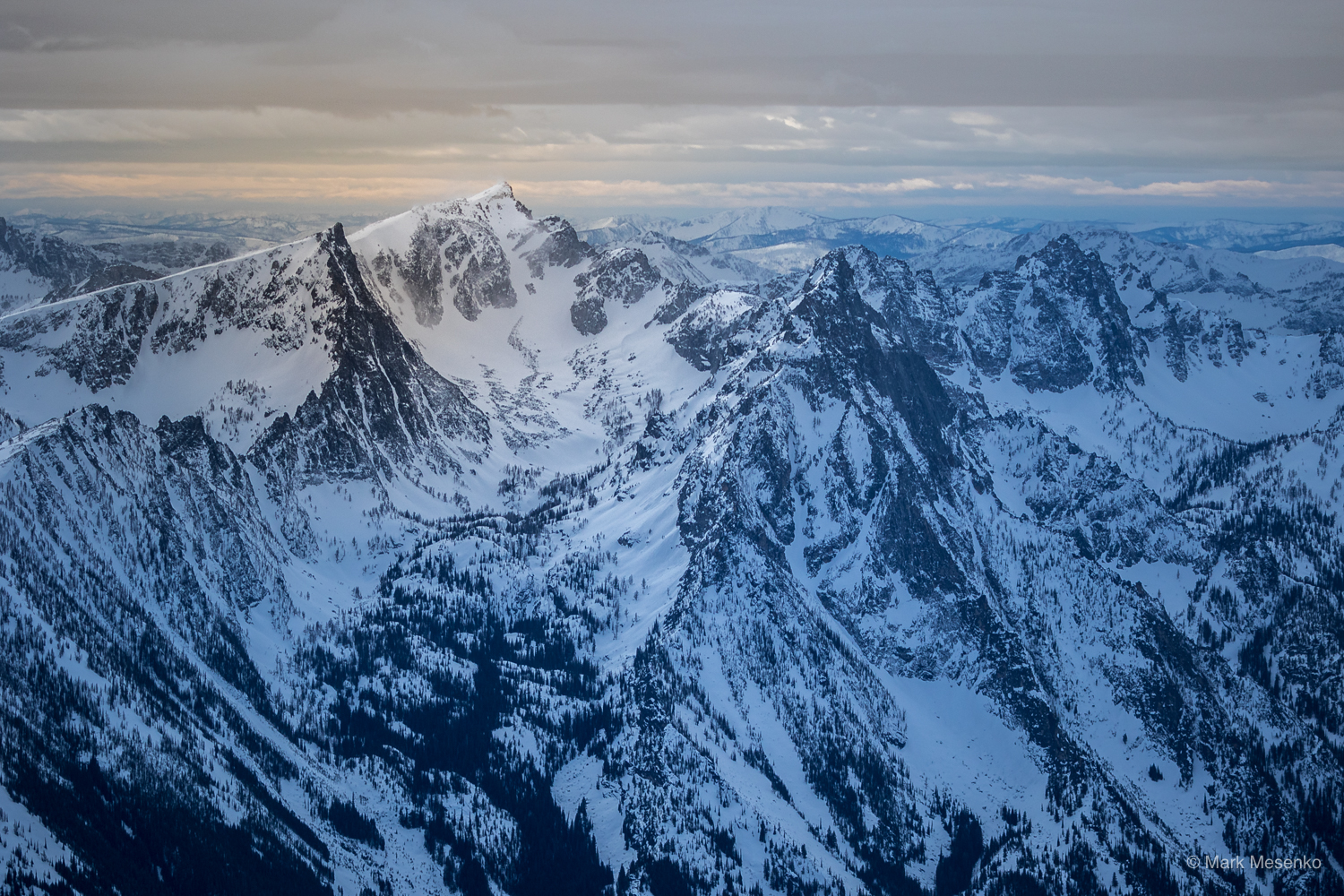
An Island on the Plains: The Bears Paw Mountains
By editor
Big Sandy, Chouteau County, Montana
In the midst of the vast and unyielding Great Plains, where the grasses ripple like an ocean and the sky seems to stretch without end, there rise the Bears Paw Mountains -- a cluster of rugged peaks and buttes that appear as islands cast upon an endless sea of prairie. These mountains, though modest in height compared to the grand Rockies to the west, reveal a geological vitality and complexity that engages the mind and invites close study. Their origins lie deep in the slow and restless workings of the Earth, processes that unfolded over tens of millions of years beneath this quiet land.
Between fifty-five and thirty-four million years ago, during the late Paleocene and Eocene epochs, central Montana experienced a flurry of volcanic activity. Magma, molten rock born from the fiery depths beneath the Earth’s crust, forced its way upward in several places. The Bears Paw Mountains rose largely from this subterranean fury, their formation linked to the intrusion of magma into the sedimentary layers that once stretched flat across the region. It is in this interaction between molten fire and sediment that the mountains took shape.
The magma did not always break through to the surface as flowing lava. In many instances, it pushed upward but remained trapped beneath the sedimentary rock, arching these layers into domes called laccoliths. These laccoliths, like great blisters beneath the Earth’s crust, lifted the overlaying strata into rounded hills and buttes. Over eons, erosion stripped away the softer sediments, revealing the hardened cores beneath. Square Butte, northeast of Box Elder, and Centennial Mountain, northeast of Big Sandy, stand today as prominent remnants of these ancient laccoliths, their rugged outlines marking the boundaries of this slow volcanic uplift.
Elsewhere, the magma rose vertically in narrow veins, cutting through the sediment like fingers thrust upward from below. These intrusions cooled into dikes, now visible as ridges of resistant rock thrusting through the prairie. The dikes resemble the fallen stone walls of an ancient fortress, long decayed but still defiantly marking the land. Among these intrusive rocks lies shonkinite, a rare and unusual igneous rock named for exposures near the small town of Shonkin, Montana. Shonkinite’s composition -- rich in dark minerals such as augite and nepheline -- gives it a distinctive appearance and ties it uniquely to this region.
Beneath these volcanic formations lies an older foundation. The oldest rocks exposed in the Bears Paw Mountains date to approximately 350 million years ago and consist primarily of Madison limestone. This limestone forms the backbone of the Rocky Mountains farther west and records a time when this region was submerged beneath ancient seas. The visible layers of fossil-rich limestone are a reminder of this marine past and contrast sharply with the igneous intrusions that disrupted them tens of millions of years ago.
The tectonic forces that lifted the Bears Paw Mountains left further evidence in the form of faults and fractures. As the mountains rose, an east-west rift developed near the range’s crest. This caused blocks of Cretaceous marine shale to slide both north and south, producing numerous faults in the surrounding plains. South of the mountains, these faults remain especially visible, cutting the land with jagged lines that mark the restless strain of the Earth’s crust. To the north, glacial deposits have covered many of these breaks, but their presence beneath the soil is known through careful geological investigation.
Glacial ice shaped the landscape further during the Pleistocene epoch, the last two million years of Earth’s history. Several glaciations sent ice sheets creeping down from the Rocky Mountains, reaching the lower slopes of the Bears Paw Mountains on all sides except the south. The glaciers sculpted valleys, deposited moraines, and left behind the coarse till that now blankets parts of the range’s foothills. These icy advances remind us of a colder, wilder era when the land was locked in a different rhythm of seasons and the great ice sheets ruled the northern hemisphere.
The name “Bears Paw Mountains” carries its own mysteries. Multiple legends attempt to explain the origin, though no single account commands certainty. One tale recalls a Native American hunter who, after felling a deer in the mountains, was surprised and pinned by a bear. Struggling beneath the powerful beast, the hunter called upon the Great Spirit for aid, and according to the story, lightning flashed and thunder roared, striking the bear dead and severing its paw. Another explanation suggests that from an aerial view, one of the peaks resembles the shape of a bear’s paw. A third proposes that the ridges spreading outward below the summit look like the spread toes of a bear’s foot when viewed from a high vantage point. These stories, while varied, reflect the intimate attention that the indigenous peoples paid to the land’s forms and features.
The early explorers and scientists who ventured into this part of Montana also recorded their impressions. Meriwether Lewis, of the Lewis and Clark expedition, passed through the general region in 1805 and again in 1806. Though the Bears Paw Mountains themselves were not named in his journals, Lewis noted the striking isolation of such ranges on the plains. He wrote, “The hills and mountains rise abruptly from the prairie, like islands in a sea, reminding one of the power of the subterranean fire which has upheaved them.” This observation remains apt for understanding the Bears Paw Mountains’ character.
The flora and fauna of these mountains also reflect their unique setting. The lower slopes and foothills support stands of Ponderosa pine (Pinus ponderosa), their amber bark glowing in the sunlight. Grasses such as bluebunch wheatgrass (Pseudoroegneria spicata) and western wheatgrass (Pascopyrum smithii) dominate the surrounding plains. Wildlife includes mule deer (Odocoileus hemionus), which browse the open forests, and the occasional black bear (Ursus americanus), which lends a living presence to the mountain’s name. Raptors such as red-tailed hawks (Buteo jamaicensis) soar overhead, taking advantage of the thermals that rise from the sun-warmed slopes.
Standing amidst these ancient rocks and watching the broad sweep of prairie beyond, one gains a profound sense of the deep time and restless forces that shaped the land. The Bears Paw Mountains, though modest in elevation, embody the intersection of volcanic fire, sedimentary calm, glacial power, and human stories -- all layered upon one another through millions of years. They command respect not by towering height, but by their layered complexity and the quiet endurance of their presence on the plains.
See also
- An Island on the Plains at Big Sandy, Chouteau County
- Lewis and Clark National Historic Trail at Fort Benton, Chouteau County
- The Little Shell Chippewa at Fort Benton, Chouteau County
Where to Stay in Montana
Affiliate links help support this site at no extra cost to you