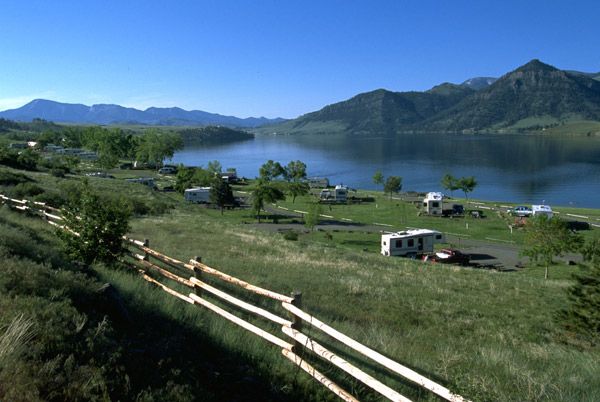
Choteau sits at 3,816 feet on the high plains east of the Rocky Mountain Front in north-central Montana, the seat of Teton County, 60 miles northwest of Great Falls. With 8 lakes within 30 miles and rivers flowing east from the Bob Marshall Wilderness, Choteau offers a mix of prairie reservoir fishing, freestone river trout fishing, and bucket-list backcountry fishing in one of the most remote wilderness areas in the lower 48. The Teton River flows through the Choteau area carrying brown and rainbow trout from the Rocky Mountain Front, while the Sun River (28 miles) provides excellent trout water draining the vast Sun River Game Preserve. For those willing to pack in, the Bob Marshall Wilderness holds pristine streams and alpine lakes with native westslope cutthroat trout. This guide covers every major fishing zone accessible from Choteau. For Montana's fly fishing heritage, see our Fly Fishing Guide. For the full town profile, see our Choteau guide.
At a Glance
- 8 lakes within 30 miles
- Primary species: Westslope cutthroat trout (native), rainbow trout, brown trout, brook trout
- Star fishery: Bob Marshall Wilderness—native westslope cutthroat in pristine backcountry
- Closest lake: Dougcliff Reservoir, 9 miles
- Major rivers: Teton River (through area), Sun River (28 miles)
- Backcountry fishing: Bob Marshall Wilderness streams and alpine lakes—pack-in trips
- Float fishing: Lower Teton River and Sun River
- Hot springs: Nearest hot springs are beyond 30 miles
- License required: Montana fishing license (available at local shops and fwp.mt.gov)
Teton River
The Teton River is Choteau’s home water, flowing east from the Rocky Mountain Front through the Choteau area and out across the plains toward the Marias River. The river’s upper reaches near the Front run through cottonwood bottoms and ranch land, carrying cold water off the mountains that supports populations of brown trout and rainbow trout. The Teton is an intimate, wadeable stream in most sections—classic western freestone water with riffles, runs, and undercut banks that hold trout.
The upper Teton offers the best trout fishing, where the gradient is steeper and water temperatures stay cold through summer. As the river moves east past Choteau and onto the open plains, it warms and slows, and the fishery transitions accordingly. Float fishing on the lower Teton is possible in spring and early summer when flows are sufficient, offering a quieter alternative to Montana’s more famous float streams. Access is primarily through public land crossings and willing landowner permission—respect private property along the river corridor.
Sun River
The Sun River (28 miles from Choteau) is a major tributary of the Missouri River and one of the premier trout fisheries accessible from the Choteau area. The river drains the vast Sun River Game Preserve in the Bob Marshall Wilderness, flowing east through a dramatic canyon before emerging onto the plains near Augusta. The Sun River holds strong populations of rainbow trout and brown trout, with excellent water quality sustained by its wilderness headwaters.
The South Fork Sun River, deep in the Bob Marshall Wilderness, is a legendary backcountry trout stream. This wilderness water holds pure westslope cutthroat trout—Montana’s native trout species—in pristine, undeveloped settings. Reaching the South Fork requires multi-day pack trips by horse or backpacking; there are no roads. The fishing rewards those who make the effort—wild cutthroat rising to dry flies in water that has not changed in centuries. Float fishing on the lower Sun River below Gibson Reservoir is a productive option for trout in more accessible water.
Bob Marshall Wilderness Fishing
Fishing the Bob Marshall Wilderness is a bucket-list experience for serious anglers. The “Bob” encompasses over 1 million acres of roadless wilderness with hundreds of miles of streams and dozens of alpine lakes holding native westslope cutthroat trout. These fish are wild, genetically pure, and live in water that receives zero stocking pressure or development. The wilderness streams—the South Fork Sun, the South Fork Flathead, and their tributaries—run gin-clear through lodgepole forests and subalpine meadows.
Access from the Choteau side is primarily via the South Fork Teton Trail (28 miles) and other eastern-slope trailheads. Most wilderness fishing trips require 2–5 days minimum, either backpacking or with horses and an outfitter. The cutthroat are generally willing to take dry flies, small nymphs, and lightweight spinning lures. Mountain lakes in the Bob hold cutthroat that may see only a handful of anglers per year. Come prepared with bear-resistant food storage, water purification, and backcountry experience—this is grizzly bear country with no cell service and no rescue access.
Rivers Near Choteau
Beyond the Teton and Sun Rivers, several smaller streams draining the Rocky Mountain Front provide creek fishing for trout in forested and canyon settings. These waters flow east from the Lewis and Clark National Forest through wildlife management areas and ranch land, offering half-day fishing opportunities within easy reach of Choteau. Brook trout are common in the smaller mountain streams, while the larger drainages hold rainbow and brown trout. The intimate scale of these streams rewards careful, stealthy approaches with light tackle.
Fishing Access Sites
No formal FWP fishing access sites lie within 30 miles of Choteau. Access to fishing waters is available through wildlife management areas, national forest lands, and bridge crossings on public roads.
Lakes Near Choteau
8 lakes lie within 30 miles of Choteau, a mix of prairie reservoirs and mountain lakes. Dougcliff Reservoir (9 miles) is the closest, followed by Arod Lakes (15 miles), Bynum Reservoir (15 miles), and Willow Creek Reservoir (15 miles). The reservoirs offer warmwater species and some trout fishing, while alpine lakes along the Front hold native cutthroat trout accessible only by trail. Nilan Reservoir (28 miles) and Our Lake (29 miles) round out the options. Many of the mountain lakes are small, remote, and lightly fished—ideal for anglers seeking solitude in stunning Rocky Mountain Front settings.
+ more lakes within 30 miles.
Hot Springs
No hot springs lie within 30 miles of Choteau. The nearest thermal springs are farther afield but remain day-trip options for post-fishing recovery after long days of wading rivers or packing into backcountry lakes along the Rocky Mountain Front.
Seasonal Guide
Spring (March–May): The Teton River and lower-elevation waters begin clearing after spring runoff in late April and May. Reservoir fishing at Dougcliff, Bynum, and Willow Creek picks up as ice comes off, typically in April. Mountain streams are running high with snowmelt and are generally unfishable until late May or June. Backcountry waters in the Bob Marshall remain frozen and inaccessible through May.
Summer (June–August): Prime season across all waters. The Teton River fishes well with caddis, stonefly, and attractor patterns as flows stabilize in June. The Sun River below Gibson Reservoir is productive for rainbow and brown trout. Backcountry streams and lakes in the Bob Marshall become accessible as snow melts in late June and July—the window for wilderness fishing trips opens. Reservoirs near Choteau are warm and productive for warmwater species. Afternoon thunderstorms are common.
Fall (September–October): Many locals consider fall the best fishing season. River flows drop and clarify, making for excellent sight-fishing on the Teton and Sun Rivers. Brown trout become aggressive ahead of their fall spawn. Cutthroat fishing in the Bob Marshall is exceptional in September before snow closes access. Reservoir fishing remains productive through October. Fewer anglers on all waters.
Winter (November–March): The Teton River can be fished through winter on warmer days with nymphs and streamers, though access may be limited by ice and snow. Reservoirs freeze and offer limited ice fishing opportunities. Backcountry waters in the Bob Marshall are completely inaccessible. Winter fishing near Choteau is a cold-weather endeavor—dress for wind and subzero temperatures on the high plains.
Regulations and Conservation
A Montana fishing license is required for anyone 12 and older on all state waters. Licenses are available online at Montana FWP or at local sporting goods stores. Non-resident licenses are available for durations ranging from two days to a full season.
Special regulations apply on several waters near Choteau. The Teton River and Sun River have specific reach-by-reach regulations including gear restrictions and catch-and-release sections—check current FWP regulations before fishing. Westslope cutthroat trout are a species of special concern in Montana, and many backcountry waters in the Bob Marshall Wilderness have catch-and-release requirements to protect genetically pure populations. Always check current FWP regulations before fishing any water near Choteau.
For hiking and other outdoor activities near Choteau, see our hiking guide.