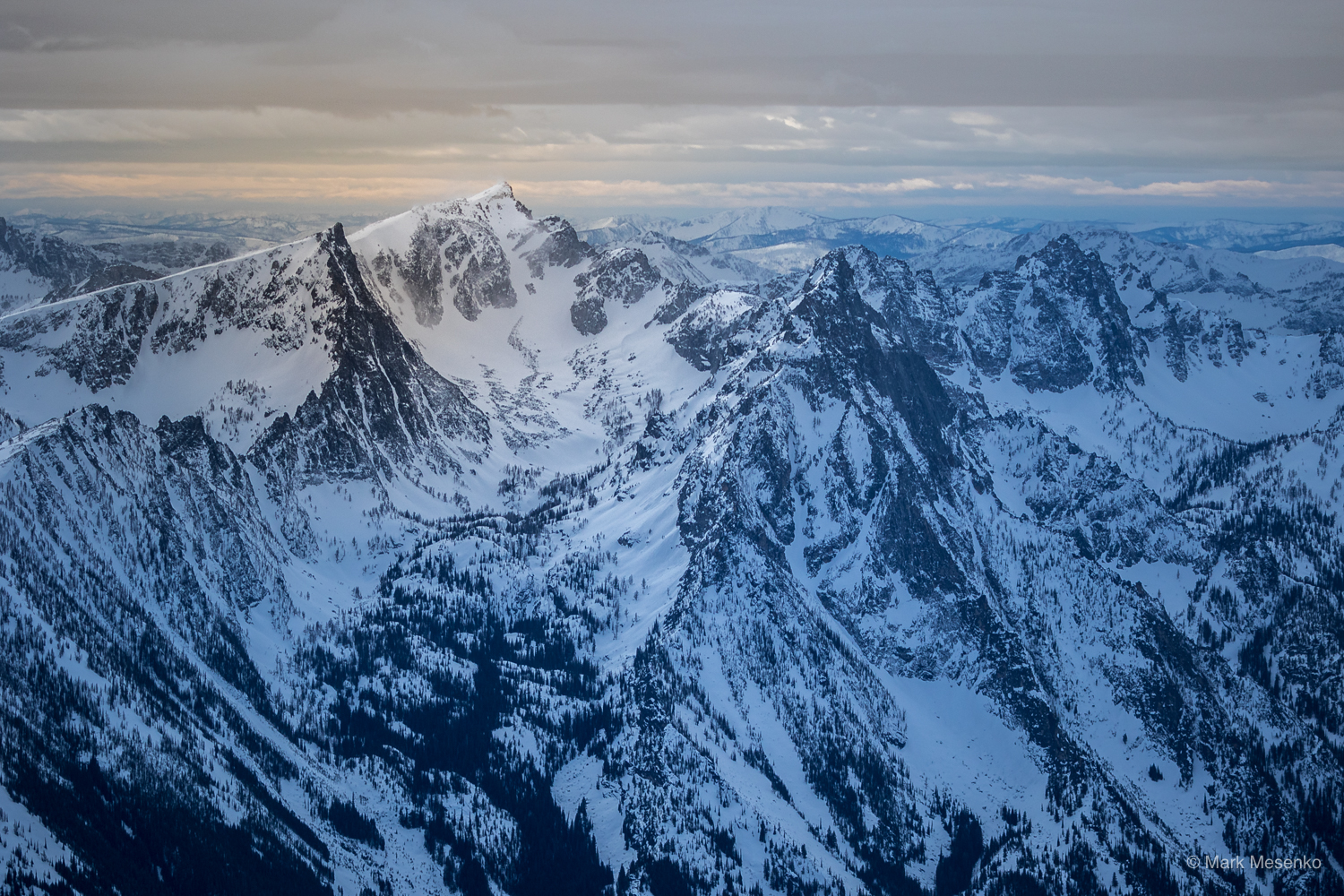
East Glacier - Scenic View

East Glacier

Gateway to Glacier National Park

Quick Facts
Population
354
County
Glacier County
Region
Western Montana
Elevation
4,852 ft
Top Industry
Education & Healthcare
Nearest Hospital
Northern Rockies Medical Center (43.4 mi)
Zip Code
59434
Area Code
406
Time Zone
Mountain Time (MT)
Industry: Census ACS 5-Year 2019–2023 · Hospital: MT DPHHS 2024
Current Weather
Loading current weather...
Airport Distances

Nearest Major Airports

✈️ Kalispell (FCA)
57 miles
~1h 12m drive
✈️ Great Falls (GTF)
131 miles
~2h 25m drive
✈️ Missoula (MSO)
136 miles
~2h 30m drive

Map & Nearby

Explore East Glacier on the interactive map with 3 nearby towns and 60 highlighted recreation sites. Use the zoom controls or select a recreation item to focus it on the map.

Open Area in Google Maps
Loading map...
Outdoor Recreation Near East Glacier

Outdoor Recreation Near East Glacier

Jump to map →
9.3/10
World-Class
105 sites within 30 mi
11 categories

Distances are straight-line estimates. Driving distances may be longer. Data: OpenStreetMap contributors & editorial research.

History & Heritage

History & Heritage

The Blackfeet Tribe has utilized the area for millennia. The Great Northern Railway completed Marias Pass in 1891 and platted Midvale in the early 1890s. The first post office opened in 1891. Renamed Glacier Park in 1913 to capitalize on proximity to the newly created national park; adopted East Glacier Park in 1949. Glacier Park Lodge was constructed 1912–1914 and opened in 1913. The East Glacier Ranger Station Historic District (1921–1937) and Glacier Park Women's Club building (1933, CCC-built) are on the National Register of Historic Places. The village is a census-designated place on the Blackfeet Indian Reservation.

Official historic markers tied to East Glacier in our statewide dataset. Expand the list to read inscriptions and follow links to full pages or deep reads where available. Browse Glacier County on the map · History trails

Historic markers in East Glacier (6)tap to expand
A Day's Ride Apart

The present-day general store is the latest incarnation of a historic lodge, built in 1913 before there were roads into the park's interior.

To promote Glacier to adventurous tourists in the early 1900s, the Great Northern Railway built a network of hotels and chalets a day's ride apart throughout the park. Horse parties would arrive here from Glacier Park Hotel and continue from chalet to chalet across the park.

By 1925, more than a thousand horses and ten thousand people traveled the park trails each year. Two Medicine Chalet was no solitary outpost.

Several of these Swiss-style hotels and lodges continue in their historic roles. Look for similar structures at Many Glacier, East Glacier, and Lake McDonald, as well as the Sperry and Granite Park backcountry chalets. The historic map (right) shows Glacier Park chalets in 1925.

parks
Glacier Park Woman's ClubDeep Read

Women, and especially club women, played outsized roles in creating and maintaining the community institutions - churches, schools, and libraries - that they and their families valued. Providing an outlet for women to exercise their leadership skills, women's clubs thrived in the late nineteenth century. By 1901, Montana alone boasted over fifteen women's clubs, with at least one in every major town.

Helene Dawson Edkins, a Blackfeet woman and the adopted daughter of one of East Glacier's founding families, together with twenty-two other women, established the Glacier Park Woman's Club on December 4, 1920. While some women's clubs were stratified by race and class, the Glacier Park Woman's Club welcomed all interested women.

Initially, members took turns hosting meetings in their homes. In 1928, they acquired this lot from the Great Northern Railway. In 1933, they donated the site to Glacier County so that the county could commission the Civilian Conservation Corps-Indian Division (CCC-ID) to construct this saddle-notched log library and community hall. Part of the "Indian New Deal." the CCC-ID employed 80,000 tribal members across the country to work to improve their reservations through pest control, weed eradication, and building projects, including dams, roads, fire lookouts, and other structures. The federally funded program could not perform work for private organizations, but after the hall was completed, the county deeded it back to the club. The hall is a good representation of Rustic architecture, a style associated both with park architecture and the CCC. The building continues to serve the community as a library, meeting space, and social center.

Erected by Montana Department of Transportation.

ArchitectureNative American
Marias Pass ObeliskDeep Read

Lewis and Clark National Forest Memorial to Theodore Roosevelt

This memorial was authorized by a Bill introduced in the Congress of the United States of America, by Representative Scot Leavitt, February 1, 1930 and approved by President Hoover on June 2, 1930.

Erected by Forest Service, U.S. Department of Agriculture.

The Lewis Overthrust Fault and Marias PassDeep Read

One of the most impressive geologic features in Montana is the mountainside north of you. Notice the prominent layer of white limestone half way up the mountainside. The rocks above this layer were deposited more than 50 miles southwest of here and moved here as part of the Lewis Thrust Sheet-an enormous slab of Precambrian-age sediment more than a mile thick that encompasses most of today's Glacier National Park. The Lewis Thrust Fault on which the thrust sheet moved is under the whitish limestone layer and is a thin zone of intensely sheared shale. How do geologists known that the upper part of the mountain is "out-of-place" and moved so far? See the Geo-Facts below. Movement of the Lewis Thrust Sheet and the many other thrust sheets in the area occurred between 72 and 58 million years ago as the Rocky Mountains were forming. The "motor" causing the Rocky Mountains to form was the subduction of an oceanic plate-The Farallon Tectonic Plate-under the western margin of North America.

Geo-Facts:

  • The layers of sedimentary rocks on the mountainside north of the highway are "out-of-order" because of the thrust fault. Deeply buried rocks are now on top of rocks that were only buried to shallow depths. Metamorphosed rocks are on top of rocks that have not been "cooked." Rocks with old fossils are on top of rocks with young fossils.
  • Rocks deposited originally as mud occurs above and below the thrust fault. Below the fault the former mud is now shale with clay minerals. still has some of the original seawater, is relatively soft, weathers easily and makes gentle slopes. Above the fault the water was squeezed out of the mud due to the great depth of burial and the clay minerals changed to mica because of the high temperatures at the depth creating argillite-a strong metamorphic rock that now forms steep cliffs and dramatic landscapes.
  • Below the thrust fault the Cretaceous-age shales and sandstones have abundant marine fossils and were deposited between about 80 and 110 million years ago. Above the thrust fault the Precambrian-age argillite and limestone only contains fossil algae-stromatolites-deposited about 1.4 billion years ago.

Geo-Activity:

  • The next time you have some silly putty to play with, roll it into a ball and leave it on the table. After a half hour notice how the ball has just oozed out to make a flat "puddle." The rocks here behave in a similar manner. Mountain building created high mountains, but the soft shale was very weak and the rocks just coxed out toward the prairie, even though there were strong layers inside.

Although Marias Pass was well-known to Montana's Indians, it was a recent discovery by non-Indians. The Salish, Kootenai, and Blackfeet frequently crossed the pass to hunt buffalo and raid their neighbors. By the 1830s, the area had become so associated with the Blackfeet, that few non-Indians dared search for the Pass. Isaac Stevens' railroad survey attempted to "discover" the pass in 1854, but failed to find it. In 1889, the Great Northern Railway sent engineer John F. Stevens to locate the pass. Stevens plowed through four feet of snow in subzero weather in search of the 5,214-foot pass, finding it on December 10, 1889. The Great Northern built its line over Marias Pass in 1891. It was not until 1930 that a highway was constructed over it. Before then, motorists on U.S. Highway 2 had to load their automobiles onto railroad cars at East or West Glacier to ship them around the southern boundary of Glacier National Park on the Great Northern. The railroad dedicated the statue of John F. Stevens in 1925. The federal Bureau of Public Roads installed the stone obelisk in 1930 after it completed the highway.

Erected by Montana Department of Transportation.

ExplorationNature
Time MachinesDeep Read

A Glacier Tradition

National parks often seem timeless and are valued for the continuity of experience they offer to generations of visitors. At Glacier National Park, the past and future come together through a fleet of historic buses, time machines for a unique touring experience across the crown of the continent.

Glacier's time machines are refurbished vintage White Motor Company touring buses. These bright red icons of Going-to-the-Sun Road have been taking passengers through the park for nearly 70 years, providing sightseers an opportunity to enjoy Glacier's spectacular scenery and wildlife free from the distraction of driving. The red buses hold the record for the longest continuous service of any fleet in the United States, and perhaps the world; but, these old veterans needed some special attention....

Back for the Future

Glacier's time machines needed an upgrade. By 1999, the buses were still running on mostly 1930's technology. Concerns about safety brought the fleet to a standstill and the buses were pulled from service. Seasons unfolded, but without the familiar flash of red, the landscape was incomplete. Everyone mourned the loss, so linked were the buses to Glacier's history and spirit.

The big break came when Ford Motor Company stepped in with a plan to rehabilitate the buses with new technology. The outdated red buses could be brought back to life, using modern engineering to save a cultural treasure while making the buses safer, cleaner, fuel efficient, and more comfortable. In June 2002, the plan became reality. And now a new generation of travelers will ride the red buses once again.

What's New with the Old Red Buses

  • Ford E-450 chassis stretched to original wheel base
  • 5.4L V8 bi-fuel engine using LPG
  • Aluminum honeycomb floor to increase strength
  • Emissions are 93% cleaner
  • Lighter-weight rear door and body reinforcement
  • Upgraded glass and lighting
  • Upgraded instrument panel
  • Body painted with environmentally friendly paint

Getting Around Glacier

Build it and they will come. Directors of the Great Northern Railway saw the financial wisdom in such a motto and found Glacier National Park the perfect place to implement it. The Great Northern constructed a series of hotels and chalets throughout the park, each within an easy day's travel from each other. Visitors arrived by rail and then toured the park on horseback and in stage coaches. As roads were constructed around the park, motorized transportation became the preferred means of travel. Full-time motorized transportation in Glacier began in the 1914 season. The buses went through a series of upgrades as technology advanced and roads improved.

Partners in Preservation

The red bus project required a team of over 200 experts and took nearly three years to complete. The Ford Motor company shared its environmental leadership, vision, and generosity with the project. The following partners were instrumental in making the red buses ride again.

Transportation
Trains, Trails, and Chalets

Arriving at East Glacier depot, tourist in the 1920s could gaze at the glaciated peaks looming beyond their first night's lodging. The hotel appeared to be their last taste of civilization before riding horseback into the primitive backcountry of Glacier National Park.

Yet this hotel was part of a network of chalets built a day's ride apart. From here, guests would trailride to Two Medicine and Cut Bank Chalets. Some riders crossed the entire park and spent each night in relative comfort before reboarding at Belton Depot in West Glacier.

Erected by Glacier National Park.

Historic markers map

Open the interactive map filtered to East Glacier. The view zooms to the markers for this community.

Open map zoomed to East Glacier

Events & Festivals in East Glacier

We do not have featured local listings for East Glacier yet.

Montana statewide events & festivals calendar

Browse the statewide calendar for festivals, fairs, rodeos, and concerts across Montana.

View all Montana events · Where to stay in East Glacier

Explore East Glacier, Montana: Your Gateway to Alpine Adventure!

Nestled where the majestic Rocky Mountains greet the expansive Montana prairies, East Glacier Park beckons thrill-seekers and nature lovers alike. For over a century, this historic village has served as the eastern portal to the untamed wilderness of Glacier National Park, offering a timeless escape into a realm of towering peaks, pristine lakes, and trails that whisper tales of epic journeys. Prepare to unleash your adventurous spirit and discover the legendary mountain hospitality that defines this captivating corner of Big Sky Country.

Quick Facts

  • Population: 354 (as of 2020 census)
  • County: Glacier County
  • Founded: Original settlement Midvale in 1890s (officially East Glacier Park in 1949)
  • Elevation: 4,823 ft
  • Known For: Eastern gateway to Glacier National Park, stunning scenery, Blackfeet Nation history, Great Northern Railway.
  • Nearby Landmarks: Glacier National Park, Two Medicine Lake, Marias Pass, Glacier Park Lodge.
  • Fun Fact: The historic Glacier Park Lodge, known as the "Big Tree Lodge," was built in 1912-13 by the Great Northern Railway and is known for its massive Douglas fir log construction. Originally platted as Midvale in the early 1890s; renamed Glacier Park in 1913 to avoid mail confusion; adopted East Glacier Park in 1949. The village sits on the Blackfeet Indian Reservation. Glacier National Park attracted 3.2 million visitors in 2024.

Notable People & Pop Culture

East Glacier Park and the surrounding region have inspired artists and adventurers for generations. While not a bustling metropolis, its natural beauty and rich history have drawn notable figures and left their mark.

  • John L. Clarke (Cutapuis) – Renowned Blackfeet sculptor and painter born in 1881; lived and worked in East Glacier until his death in 1970.
  • James Willard Schultz – Prolific Western writer who lived in the area and captured its essence in his stories.
  • Winold Reiss – German-born artist who created iconic portraits of the Blackfeet people, featured on Great Northern Railway calendars.

Top Things to Do in East Glacier Park

  1. Explore Two Medicine Valley: Discover breathtaking scenery, hike scenic trails, and enjoy the tranquility of this less-crowded part of Glacier National Park.
  2. Visit Glacier Park Lodge: Admire the historic architecture of this grand lodge, a testament to early 20th-century park design.
  3. Hike to Aster Falls: A relatively easy hike leading to a beautiful waterfall, perfect for a refreshing nature experience.
  4. Drive the Going-to-the-Sun Road (from the east side): Experience one of the most scenic drives in North America, with stunning vistas and wildlife viewing opportunities.
  5. Learn about Blackfeet Culture: Explore the rich cultural heritage of the Blackfeet Nation, whose ancestral lands include this region.

Local Industry & Economy

The economy of East Glacier Park is primarily driven by tourism, thanks to its proximity to Glacier National Park. Visitors seeking adventure and natural beauty support local businesses, including lodging, dining, and guiding services. Historically, the Great Northern Railway played a significant role in the town's development, and its legacy continues to shape the area.

Seasonal Activities & Local Events

East Glacier Park offers a variety of activities depending on the season. In the summer, hiking, backpacking, fishing, and boating are popular. Fall brings stunning foliage and quieter trails. Winter provides opportunities for cross-country skiing and snowshoeing in nearby areas. Throughout the year, local events and festivals may offer a glimpse into the community's culture and traditions.

Getting There & Nearby Destinations

East Glacier Park is accessible by car via U.S. Highway 2. The East Glacier Park Amtrak station also provides rail access. Nearby destinations include St. Mary (eastern entrance to Going-to-the-Sun Road), Browning (headquarters of the Blackfeet Nation), and the stunning Two Medicine Valley within Glacier National Park.

Where to Stay in East Glacier Park

Accommodation options in East Glacier Park range from the historic Glacier Park Lodge to various smaller lodges, motels, and cabins. For those who prefer camping, several campgrounds are available within Glacier National Park, including Two Medicine Campground near East Glacier.

Affiliate links help support this site at no extra cost to you.

Plan Your Visit

Ready to explore East Glacier Park? Add it to your Montana travel itinerary and discover the charm, history, and adventure waiting in Big Sky Country. Remember to check current conditions and any park alerts before your visit.
Shop East Glacier Gear

Shop East Glacier Gear

East Glacier Climate

Average Monthly Climate: East Glacier

MonthAvg HighAvg LowPrecipSnow
Jan29°F18°F1.7"4.3"
Feb22°F9°F2.4"6.4"
Mar33°F19°F1.7"4.1"
Apr41°F25°F2.3"5.3"
May53°F34°F3.3"3.1"
Jun64°F44°F3"0.6"
Jul74°F50°F0.7"0"
Aug73°F51°F1.4"0"
Sep63°F44°F2"1.6"
Oct46°F30°F2.1"2.8"
Nov33°F22°F2.4"4.6"
Dec28°F17°F2"5"
Housing & Economy

Housing & Cost of Living

$170,800
Median Home Value
$867/mo
Median Rent
$37,500
Median Household Income
National Rankings
Home Value48th percentile
Rent40th percentile
Income9th percentile
Affordability Ratio (home price ÷ income)4.6xModerate
Percentile among ~21,000 U.S. cities. Higher = more expensive (home/rent) or higher earning (income).
Housing Availability
175
Total Housing Units
42.9%
Vacancy Rate
Employment & Economy
ACS 5-Year 2019–2023
8.7%
Unemployment Rate
MT avg: ~3.5%
53.5%
Labor Force Participation
84
Employed Residents
Top Industries
Education & Healthcare
42.9%
Tourism & Hospitality
20.2%
Retail
13.1%
Income, home values,, vacancy,, employment, industry, from U.S. Census Bureau ACS 5-Year 2019–2023. Data may not reflect current conditions. Check Zillow for the latest market data.
Schools
🏫
East Glacier Park Schools
~40 students
Grad Rate
52%
Graduation rate: OPI/NCES 2022–23. MT state avg: ~87%.
Scenic Drives Near East Glacier

Scenic Drives Near East Glacier

East Glacier is located along or near a scenic corridor in Montana.

East Glacier in Rankings & Guides
Compare East Glacier with Another Town
View East Glacier in the site graph

Explore Nearby Destinations

BrowningWest GlacierCut Bank

Related Reading

Montana rural landscapeMontana Facts
Montana Slang and Expressions You Should Know
From 'Montucky' to 'blue-bird day,' these are the words and phrases that mark you as a local in Big Sky Country.
Mar 21, 2026
Montana landscape representing 406 cultureMontana Facts
What Does 406 Mean in Montana?
The 406 area code is more than a phone number: it is Montana's cultural identity badge, worn on bumper stickers, hats, and tattoos across Big Sky Country.
Mar 21, 2026
Montana winter landscapeGuide
Living in Montana vs. Visiting: What Changes
The Montana you visit for a week and the Montana you live in year-round are two different places. Here's what actually changes when you stay.
Mar 21, 2026