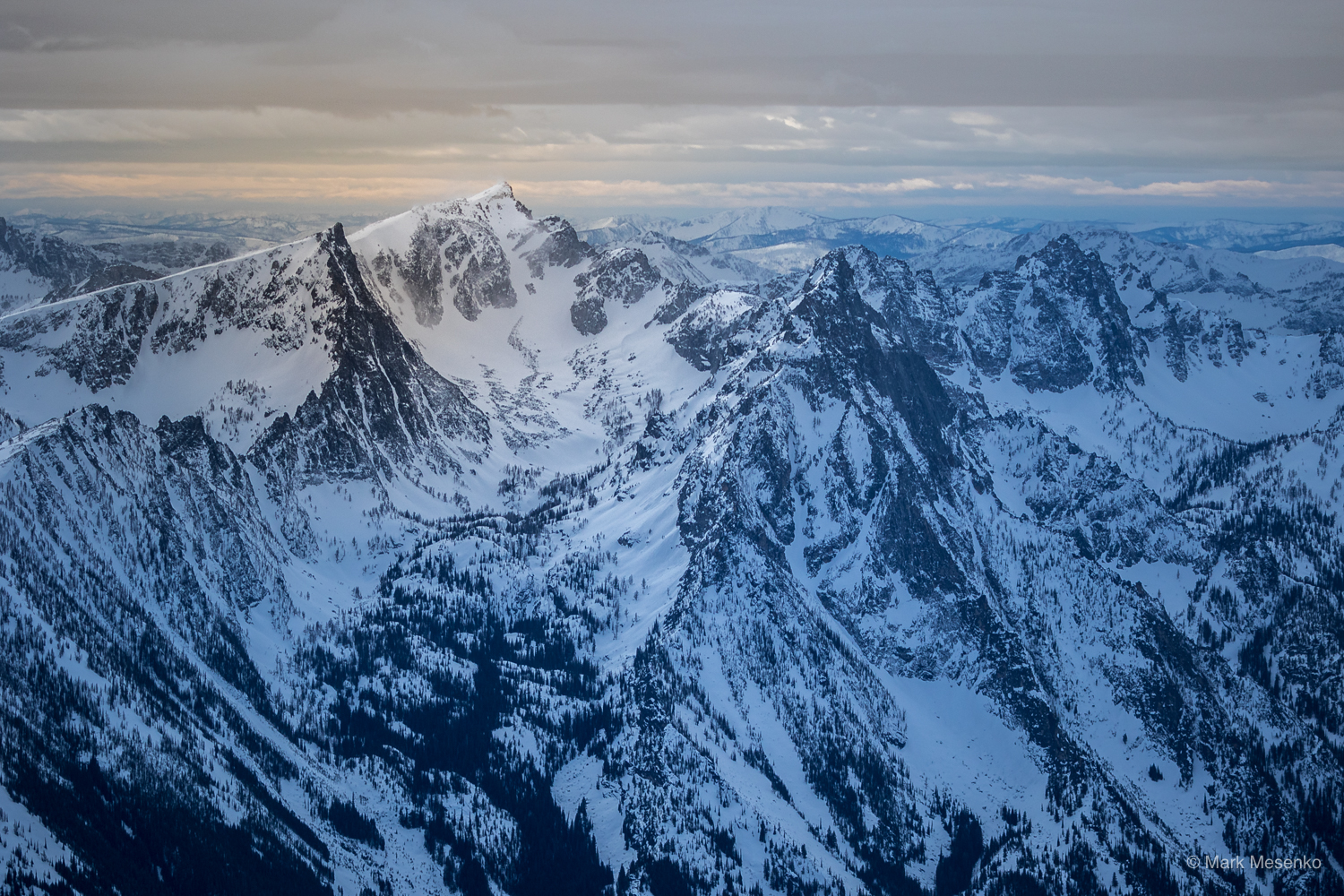
Welcome to the Mountain Ranges: Crossroads for Centuries
By editor
Big Sandy, Chouteau County, Montana
In this place where the Judith River joins the Missouri, one may discern a landscape shaped by epochs upon epochs of geological and biological activity. Long before human feet trod these banks, colossal creatures--the dinosaurs--roamed the rolling plains and river terraces, leaving behind fossilized impressions that whisper of an age when the earth was young and wild. The sedimentary layers exposed here reveal stories of an ancient world, a world in which the forces of water and wind sculpted a land that would endure and transform, becoming a crossroads not only for beasts of prehistory but for the many peoples who followed.
The confluence of rivers here is more than a mere meeting of waters; it is a confluence of life and opportunity. The Judith River, named by William Clark for Julia Hancock, his betrothed, courses with a steady grace, its banks more heavily wooded than is typical in this semi-arid stretch of Montana. The Blackfeet people, who called it Oo-tan-kwi-si-sa-tan--Yellow River--knew this land intimately, recognizing the dense groves of cottonwood (Populus deltoides) and willow that thrive here, fed by the nourishing waters and sheltered from the harsher winds that sweep the surrounding prairie. These trees and waters provide not only sustenance but sanctuary, a place where game animals, such as the pronghorn (Antilocapra americana) and mule deer (Odocoileus hemionus), find refuge, drawing the Native tribes who followed these herds and the rhythms of the seasons.
It was on the 28th day of May in the year 1805 that the Lewis and Clark Expedition camped by these waters, marking a moment of intersection between ancient landscapes and the unfolding story of a new nation. Meriwether Lewis and William Clark, traversing the vast and varied contours of the continent, paused here to rest and reflect. From their journals, one reads Lewis’s keen observations of the Missouri’s currents and the fertile valleys that flanked its banks. The island visible from the landing, now known as Council Island, was named for the treaty councils that gathered on the adjacent mainland--sites where peoples negotiated, allied, and sought peace amid the uncertainties brought by changing times.
The history of this place is not without its shadows. In 1844 and 1845, a trading post known as Fort Chardon was established here, but its tenure was brief and troubled. The founder’s reputation preceded him--he had led a massacre against the Piegan, a member tribe of the Blackfoot Confederacy. Distrust rooted in such violence cut deep, and the fort failed to take hold. Yet, this was but the beginning of the complex and often turbulent interactions between indigenous peoples and Euro-American settlers and military forces. Camp Cooke, established in 1866 as Montana’s first military post, represented the federal government’s increasing assertion over these lands. Fort Claggett, operating from 1869 to 1878 as a trading post, further underscored the strategic importance of this crossing.
The Missouri River itself functioned as an artery of commerce and movement. Before the iron rails of the railroad reached Fort Benton in 1887, nearly all goods, people, and news entering or leaving Montana passed by this junction. The Power-Norris Ranch, founded around 1880, became a focal point of this transit. Its P-N Cable Ferry, spanning the Missouri’s wide waters, allowed for the passage of livestock, wagons, and settlers, linking the isolated frontier with the broader currents of American expansion. Many of the ranch’s original wooden buildings stand yet, weathered but enduring, bearing silent witness to the generations who lived and labored here.
The land itself bears marks of these human endeavors but also retains a deep, abiding natural character. The grasses of the prairie--blue grama (Bouteloua gracilis), needle-and-thread grass (Hesperostipa comata)--bend and sway with the wind, their roots anchoring soils that have resisted erosion for centuries. Waterfowl find nesting grounds in the marshy edges along the river, while hawks and eagles wheel overhead, their keen eyes scanning for prey. The rhythms of this ecosystem continue much as they have for millennia, a continuity amid change.
By 1881, ranching had taken root firmly in this region, a practice that has persisted to the present day. The careful stewardship of land and livestock shapes a delicate balance between human use and natural preservation. Programs like Undaunted Stewardship aid in managing grazing in ways that maintain the character of the land and protect critical habitats. As Theodore Roosevelt once remarked in a speech on conservation, “The nation behaves well if it treats the natural resources as assets which it must turn over to the next generation increased, and not impaired in value.” Here, that ethic finds practical expression in the ongoing care of these lands.
Standing where the rivers meet, one cannot help but sense the deep time--the layering of histories, both human and natural--that have unfolded upon this ground. The convergence of rivers mirrors the convergence of peoples and purposes, from the ancient herds that grazed these meadows to the indigenous nations who hunted and held council here, to the explorers and settlers who passed through in waves. The land has been a crossroads not only in geography but in the human experience itself.
As I reflect upon this place, the words of William Clark come to mind, spoken with hope and a sense of discovery: “We are in a land of great rivers and vast plains, where the earth’s secrets are hidden beneath a mantle of grass and stone.” Here at Judith Landing, those secrets are revealed slowly to those who pause and look closely--etched in the stones, carried on the wind, and flowing in the waters that sustain life through the ages.
Visitors to this land today may find themselves walking paths worn by countless footsteps, both ancient and recent. They may catch sight of the cottonwoods’ trembling leaves or the rippling currents of the Missouri. In these moments, one glimpses the persistence of a place that has, through all its transformations, remained a vital intersection--of nature, history, and the enduring spirit of the West.
Where to Stay in Montana
Affiliate links help support this site at no extra cost to you