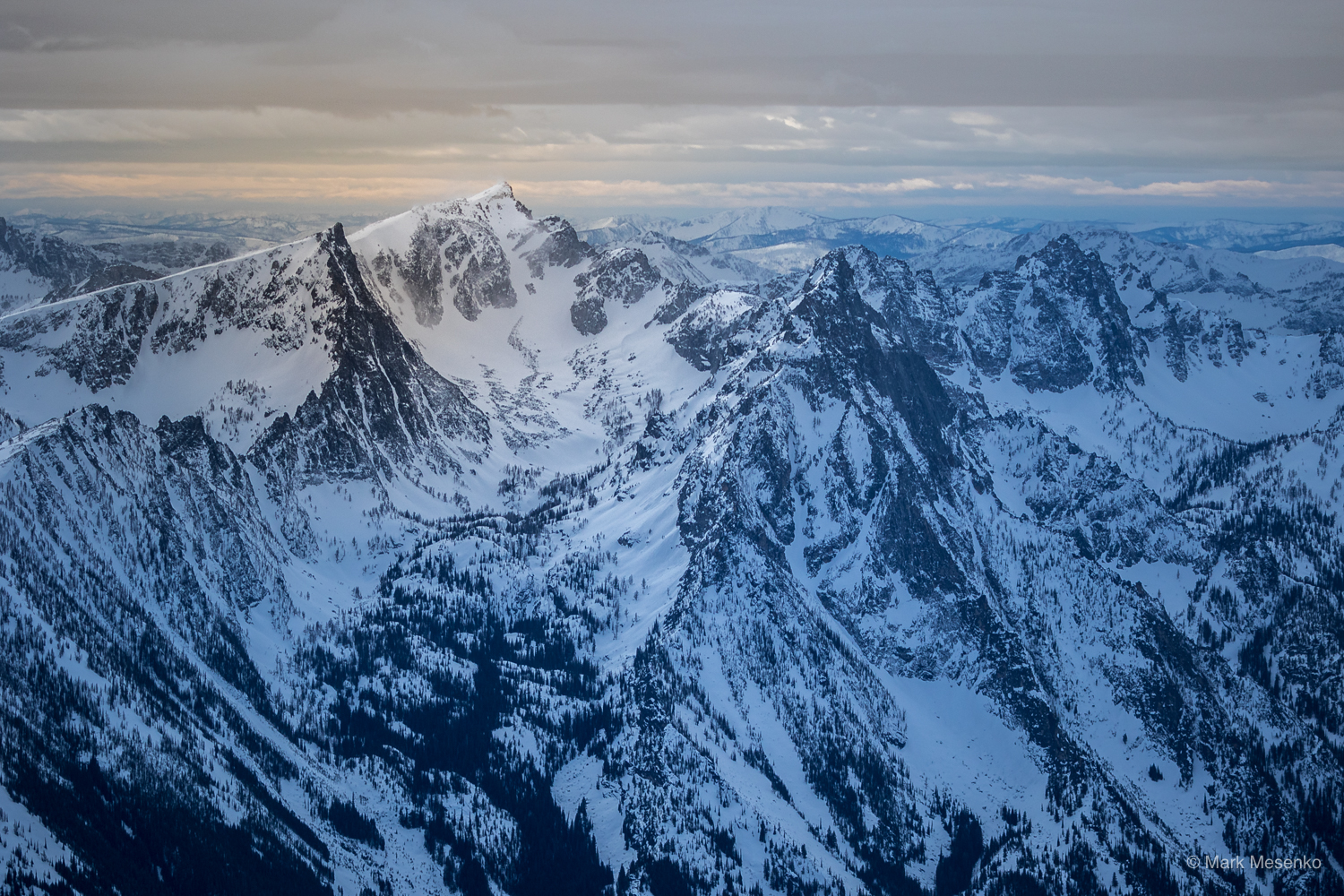
Trapper Peak
By editor
Darby, Ravalli County
Now, if you've ever had the good fortune, or perhaps the misfortune, depending on your disposition for high places and thin air, to cast your gaze upon the Bitterroot Mountains, you'd notice one particular lump of granite that fancies itself king. That'd be Trapper Peak, standing a proud 10,157 feet, which, in plain English, means it's taller than its neighbors by a considerable stretch. The folks who named it weren't much for poetry, it seems, but they were certainly good at counting feet. It's a grand old pile of rock, carved by ice sheets long before any self-respecting human thought to put a boot on it, leaving behind all manner of jagged bits and pieces that give it a look of having wrestled with a giant and won, or at least come to a draw.
This mountain, you see, has been minding its own business for a good 8,000 years, give or take a century or two – a span of time that makes a man feel about as significant as a gnat on a buffalo's backside. First came the prehistoric hunters, no doubt chasing some beast that thought itself clever enough to hide in the shadows of the peaks. Then the Bitterroot Salish, who knew the valley like the back of their hand, until, as often happens in these parts, progress, or what passed for it, decided they'd be better off somewhere else. In 1891, they were packed off to the Flathead Indian Reservation, a tidy solution for those who prefer their history neat and uncomplicated.
Then came the explorers, a curious lot, always poking their noses where they weren't strictly invited. Lewis and Clark, for instance, passed through in 1805, though they seemed more preoccupied with the weather than the grandeur. William Clark, a man not given to flowery prose when a simple observation would do, noted on September 11, 1805, that the "hills on the right high & ruged, the mountains on the left high & Covered with Snow." A man of few words, our Mr. Clark, but he got the point across. Patrick Gass, another member of that intrepid party, echoed the sentiment, declaring, "The mountains are not so high, as at some distance back. ... The country is poor and mountainous." One gathers they weren't exactly planning a summer vacation home in the Bitterroots.
After them, a parade of traders, trappers, and missionaries, each with their own particular brand of ambition or salvation. The trappers, bless their industrious souls, were the ones who truly put the peak on the map, at least in name. In 1876, a surveyor for the Anaconda Mining Company, Granville Lee Shook, christened it "Trapper Peak" for its bounty of furs. A practical man, Mr. Shook, more interested in pelts than poetry, which is often the way of things in a country where a dollar is worth more than a sunset.
And then, in 1877, came the Nez Perce, not for trapping or surveying, but in a desperate flight from the U.S. Army. They passed peacefully through the valley, a monument to their dignity in the face of overwhelming odds, on their way east. One can only imagine the thoughts that passed through their minds as they gazed upon this colossal peak, a silent witness to their long journey. It’s a curious thing, history, how the same landscape can bear witness to such disparate human dramas: the quiet industry of the trapper, the hurried passage of the explorer, and the solemn retreat of a people dispossessed.
This grand old mountain, Trapper Peak, stands today as it has for millennia, a sturdy sentinel overlooking the Bitterroot Valley. It has seen the grinding work of glaciers, the patient hunting of ancient peoples, the fleeting passage of explorers, and the determined efforts of those who sought to tame the wilderness for their own ends. It represents history, from the historic travelers of the past to the modern-day traveler of tomorrow, a silent, craggy philosopher, observing the folly and the occasional magnificence of mankind. And if you listen closely, on a quiet day, you might just hear the faint echo of a steamboat whistle, or perhaps the chuckle of a certain riverboat pilot, appreciating the enduring humor of it all.
Where to Stay in Montana
Affiliate links help support this site at no extra cost to you