The Beartooth Plateau
By editor
Red Lodge, Carbon County, Montana
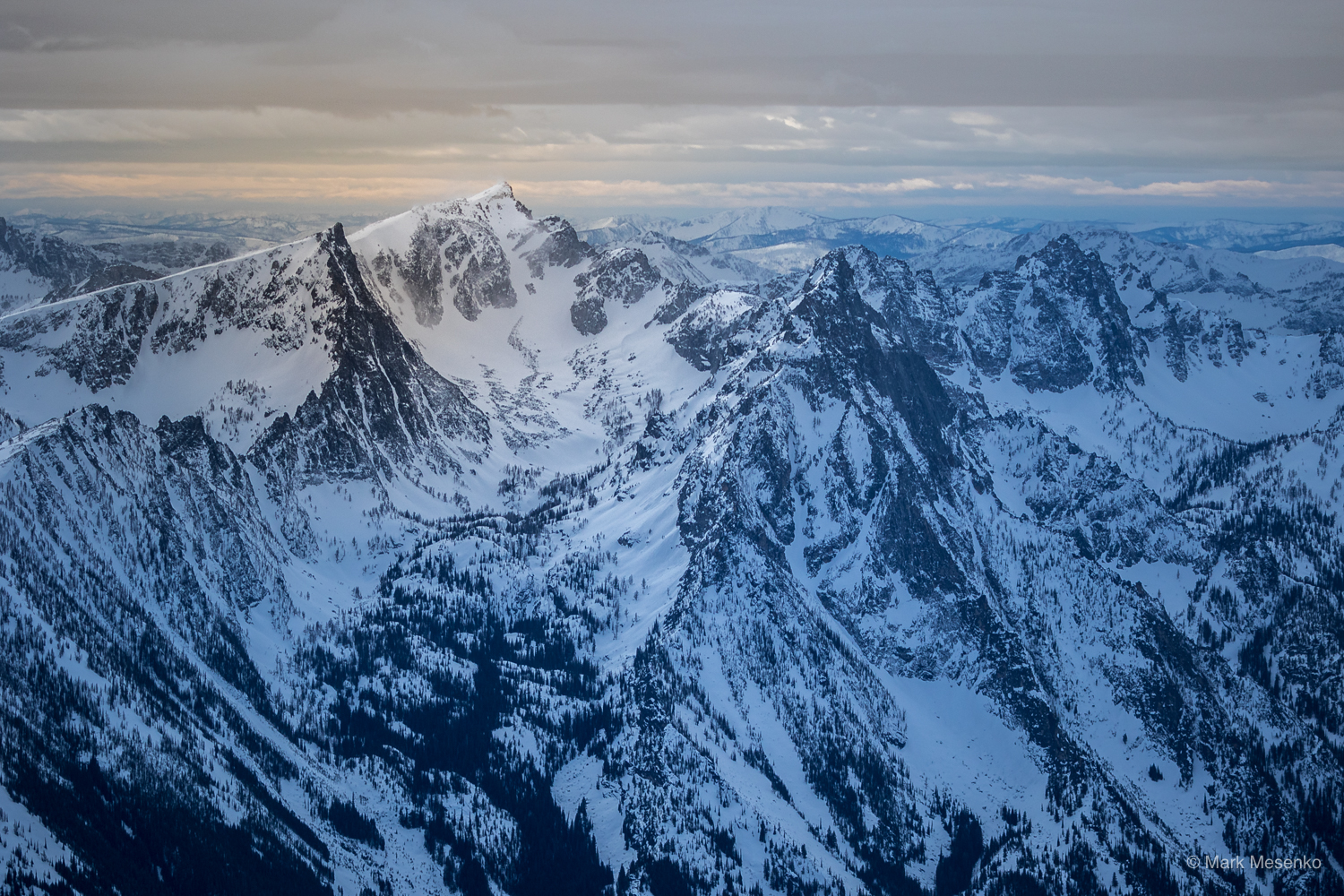
The Beartooth Plateau rises above the surrounding valleys as a vast expanse of ancient rock, its surface etched by the restless hand of time across billions of years. Here lie some of the oldest exposed rocks known to man, coarse-grained granites and gneisses forged deep within the Earth’s crust roughly 3.3 billion years ago, a time when the Earth itself was scarcely a billion years old. This primordial foundation, once buried beneath layers of sediment, pushed skyward about 55 million years past, during the Laramide orogeny, the great mountain-building epoch that also raised the Rockies. The plateau’s rugged mass, with elevations exceeding 11,000 feet, commands a formidable presence on Montana’s southern border, a geological monument carved by ice, fire, and the inexorable forces of the Earth.
The history of the Beartooth Plateau begins with its core of metamorphic basement rock, a complex assemblage of gneisses, schists, and granites. These rocks bear the marks of intense heat and pressure that altered their composition and texture deep beneath the surface, transforming older volcanic and sedimentary layers into crystalline stone. As the Laramide orogeny thrust this block upward, it fractured the crust along steep faults, elevating the plateau nearly two miles above its former resting place. This uplift revealed the ancient rocks and exposed them to the relentless weathering of wind, water, and ice.
The northern flank of the plateau harbors the Stillwater Complex, a layered mafic intrusion of igneous rock that rivals the famed Bushveld Complex of South Africa in its richness and economic importance. The Stillwater Complex yields valuable deposits of chromite, the sole source of chromium in the United States, alongside significant quantities of platinum and palladium. These metals, vital for industrial applications and catalytic converters, attract miners and geologists alike. The complex’s layered structure records a slow, rhythmic crystallization from molten magma, a geological symphony frozen in stone.
During the Pleistocene epoch, some 100,000 years ago, the plateau’s high elevation gathered sufficient snowfall to birth glaciers that cloaked its surface in ice thousands of feet thick. These glaciers sculpted the landscape with a patient, grinding hand. As they advanced and retreated, the ice sheets smoothed the plateau’s summit, rounding its once jagged outcrops, and gouged deep valleys below. The plateaus’ summit now supports a fragile alpine tundra, a stark environment where only the hardiest plants such as alpine forget-me-nots (Eritrichium nanum) and dwarf willows (Salix herbacea) eke out an existence amid short growing seasons and fierce winds.
The glaciers also carved out hundreds of tarns, ponds, and depressions that punctuate the plateau’s surface, each a small basin filled with cold, clear water. Below the plateau, glaciers widened and deepened old stream valleys, fashioning steep-walled canyons and exposing jagged peaks. This rugged terrain commands respect and wonder in equal measure.
The human story of the Beartooth Plateau intersects with its natural grandeur in the early twentieth century, when the nearby town of Red Lodge sought to connect itself more directly with Yellowstone National Park. As the coal mines around Red Lodge closed, local businessmen lobbied Montana’s congressional representatives to authorize a road traversing the plateau, providing a link between civilization and the wilderness beyond. In 1931, President Herbert Hoover signed the Park Approach Act into law, appropriating $2.5 million for the project.
Construction commenced in 1932, employing nearly 100 workers from five companies. These laborers faced the daunting task of blasting a road along steep cliffs and rugged terrain near the 11,000-foot summit. The work demanded both grit and ingenuity, carving a highway that would wind through the high country with hairpin turns and breathtaking views. The road’s builders, often working in perilous conditions, named many of the features they encountered. “Lunch Meadow,” a grassy clearing where crews paused to rest; “Mae West Curve,” a sharp bend named after the era’s sultry movie star; and “High Lonesome Ridge,” a remote spur that epitomized the isolation of the region.
When the Beartooth Highway officially opened on June 14, 1936, it offered travelers a dramatic passage through one of the most geologically significant and visually striking landscapes in the United States. The road ascends from Red Lodge’s 5,600 feet to nearly 11,000 feet at the summit, crossing alpine environments and exposing passengers to the stark beauty of the plateau.
Early explorers and scientists recognized the plateau’s significance. In 1805, Captain William Clark passed near the region during the Lewis and Clark expedition, noting the “high and steep mountains” that lay to the north. More than a century later, geologists such as Charles R. Van Hise studied the area’s rock formations, marveling at their antiquity and complexity. Van Hise remarked, “The Beartooth Plateau reveals the very cradle of the continental crust; it is a page in the oldest volume of Earth’s history.”
The plateau’s ecological communities reflect its elevation and climate. The alpine tundra supports a sparse but specialized assemblage of flora and fauna. Mountain goats (Oreamnos americanus) traverse the rocky cliffs with ease, their sure-footedness unmatched. Pikas (Ochotona princeps), small lagomorphs related to rabbits, gather grasses and flowers in the brief summer months, storing food for the long winter. Bird species such as the white-tailed ptarmigan (Lagopus leucura) camouflage themselves against the snow and rocks, blending perfectly with the landscape.
The Beartooth Plateau remains a place where time’s immensity can be felt in the rocks beneath one’s feet and the vast sky above. Its ancient stones record a history lost to human memory, yet preserved in the granites and gneisses that form its backbone. The road that ascends it today invites visitors to witness a world shaped by deep geological forces and the slow passage of ages.
In traveling its heights, one might recall the words of the naturalist John Wesley Powell, who explored the American West in the late 19th century: “The earth is all broken up and torn to pieces, and it is a great work to put it back together again.” The Beartooth Plateau, with its massive uplift and glacial sculpting, embodies this ongoing work of the planet’s ceaseless transformation.
See also
- The Beartooth Plateau at Red Lodge, Carbon County
- Lone Mountain at Big Sky, Gallatin County
- The Absaroka Range at Livingston, Park County
Where to Stay in Montana
Affiliate links help support this site at no extra cost to you