Souvenirs of the Ice Age
By editor
Greenough, Missoula County, Montana
As one journeys along Highway 200 near this modest rest area in western Montana, the land reveals itself as a chronicle of immense antiquity and sculptural power. Here, the landscape carries the handiwork of glaciers that advanced repeatedly from the Mission and Swan ranges, as well as from the rugged heights of the Bob Marshall and Scapegoat wildernesses. These glaciers, over epochs measured not in centuries but hundreds of thousands of years, formed an ice cap so vast it nearly filled the valleys, reaching the mountain peaks between Salmon Lake and the Flathead Valley some eighty miles north. This was not an isolated phenomenon; the ice cap connected seamlessly to the formidable Cordilleran Ice Sheet, a continental glacier that crept southward from the Canadian Rockies, shaping much of the terrain of the northern Rockies.
The glaciers that carved this region took form during two principal ice ages known as the Bull Lake and the Pinedale. During the Bull Lake glaciation, approximately 140,000 years ago, ice masses flowed farther south than the present rest area, extending into the valleys south of Ovando and Helmville. This epoch left behind broad moraines and gravel deposits that mark the southernmost advance of the ice. Later, between roughly 60,000 and 15,000 years ago, the Pinedale glaciation reasserted this icy dominion with renewed vigor. During this later phase, glaciers again formed an ice cap that spread southward, pushing sand and gravel into the Ovando area, just one or two miles south of the highway.
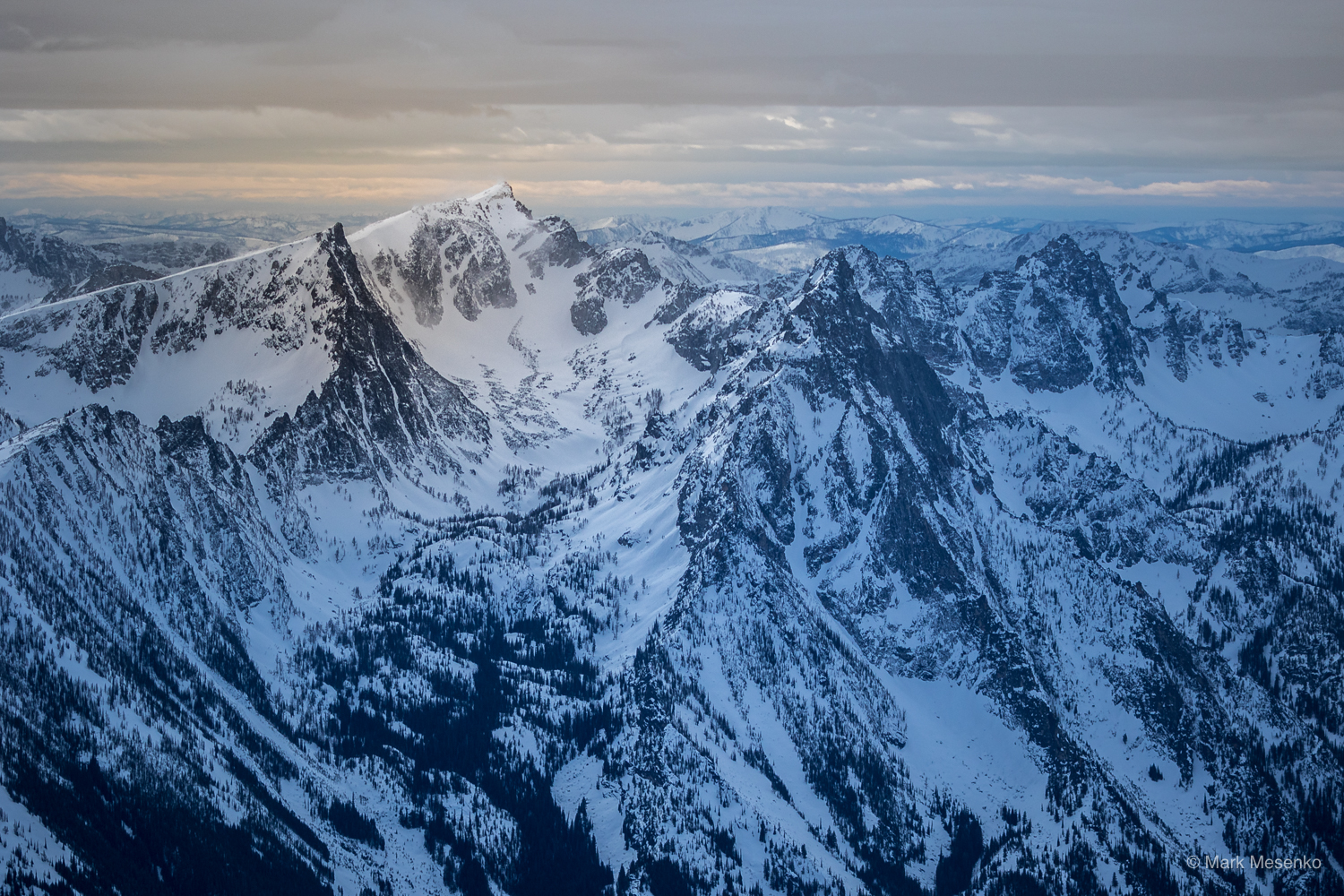
To witness the evidence of these glacial advances is to read the land’s frozen history in stone and soil. The glaciers ground down rock faces, gouging and polishing the mountain peaks you see from the rest area. The sharp ridges and jagged peaks of the Mission and Swan ranges owe their rugged profiles to this icy abrasion. As the glaciers retreated, they left behind moraines -- ridges and mounds of unsorted debris composed of rock fragments, sand, and clay. These moraines form irregular ridges that mark the former borders of the ice. Between these moraines are depressions where glacial till was not deposited. These hollows filled with meltwater, creating wetlands, shallow ponds, and small lakes that endure today.
Among these features, the kettles found north of the rest area along Highway 83 capture particular interest. Kettles form when large blocks of ice became detached from the retreating glacier and were buried in the outwash sediments. As these isolated ice masses slowly melted, the ground above collapsed, leaving behind depressions. Some kettles filled with water, forming ponds or kettle lakes. The size of these kettles varies widely, but their presence offers a clear signature of the dynamic processes that marked the glacier’s final retreat.
The plains stretching north and east from here are glacial outwash plains, landscapes shaped by torrents of meltwater rushing from the ice margins during the waning days of the Pinedale glaciation. These streams carried vast quantities of mud, sand, and gravel, depositing them over broad areas. The resulting plains, swept smooth by these ancient currents, now serve as fertile farmland along the Clearwater and Blackfoot rivers. The transformation from ice to soil to field speaks of the enduring cycles of geology and life.
The significance of this glaciated region extends beyond its physical features to the impressions it left on early explorers and geologists. Meriwether Lewis, of the famed Lewis and Clark expedition, noted in his journals the striking nature of the mountains and valleys shaped by forces invisible yet immense. He wrote, “The mountains are vast and high, with their rugged peaks and deep valleys, as if carved by some mighty hand.” Though he did not comprehend glaciers fully, his words hint at the awe these formations inspired.
Later scientists, including geologist J Harlen Bretz, would elaborate on these forces. Bretz’s studies in the Pacific Northwest and Northern Rockies during the early 20th century helped establish the understanding of ice-age glaciation and its erosive power. He described glaciers as “nature’s great sculptors, carving the face of the earth with patient, inexorable force.” Observing the moraines, outwash plains, and kettles near Greenough brings this truth sharply into focus.
The flora and fauna of this region reflect the legacy of the glacial past. The wetlands and ponds formed in kettle depressions provide habitat for a variety of wetland plants such as Carex spp. (sedges) and Typha latifolia (broadleaf cattail), while the surrounding forests of Pseudotsuga menziesii (Douglas fir) and Pinus ponderosa (ponderosa pine) thrive on soils enriched by glacial sediments. These ecosystems support wildlife including the American dipper (Cinclus mexicanus), a bird species that frequents the clear mountain streams, and the elusive wolverine (Gulo gulo), which roams the high country shaped by ice.
Standing at this rest area, one cannot help but consider the immense span of time these features embody. The glaciers that once dominated the land are long gone, yet their influence remains etched in the contours of the mountains and plains. These “souvenirs” of the Ice Age offer a tangible connection to a world transformed by cold and ice, a landscape continually reshaped by the forces of nature.
In reflecting on these landscapes, I recall words from naturalist and geologist Grove Karl Gilbert, who studied glacial geology extensively in the American West. He remarked, “The earth has been the scene of processes of a magnitude and duration that baffle human imagination.” Indeed, the ice sheets and glaciers that pressed through this region remind us that the planet’s features are not static but the records of slow and powerful change.
As one turns from the rest area to continue along Highway 200, consider the layered history beneath your feet -- the grinding ice, the rushing meltwater, the shifting soils -- all converging to form a land both ancient and alive. These glaciers departed long ago, yet the stories they carved endure in stone and stream.
See also
- Souvenirs of the Ice Age at Greenough, Missoula County
- Mountains on the Move at Sula, Ravalli County
- When the Glaciers Melt at Montana
Where to Stay in Montana
Affiliate links help support this site at no extra cost to you