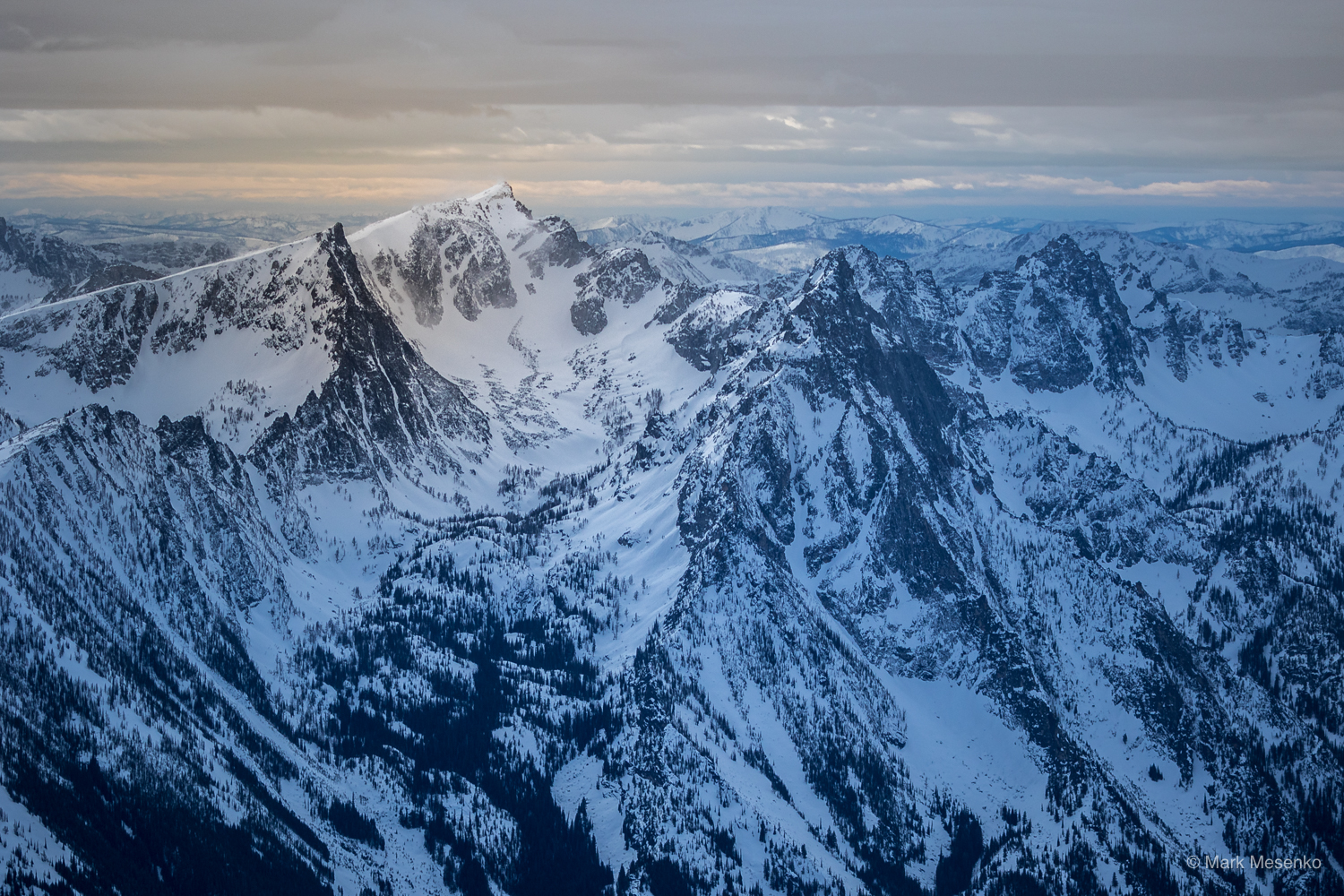
Lone Mountain
By editor
Big Sky, Gallatin County, Montana
Lone Mountain rises with commanding presence, its summit reaching 11,166 feet above sea level at the head of the Gallatin Canyon. It occupies a solitary position, detached from the main Madison Range to the west and the Gallatin Range to the east. Though not the highest peak in this part of Montana, its sharp, pyramidal form commands the horizon and dominates the view from the valley floor on clear days. The peak projects above the dense cover of Engelmann spruce (Picea engelmannii) and subalpine fir (Abies lasiocarpa), and its upper reaches lie beyond the treeline, where only rock, wind, and the occasional sure-footed mountain goat (Oreamnos americanus) persist.
The mountain’s very fabric tells a story written over eons. Beneath the snow and talus lies a complex assembly of Precambrian metamorphic rock and younger sedimentary layers intruded by igneous rock. Some geologists suggest that if Lone Mountain were cleaved in half, the cross-section would reveal a form resembling a Christmas tree -- a vertical channel of dacite, an igneous rock, cutting upward through layers of sandstone and shale. This dacite, having crystallized deep within the crust rather than erupting as lava, forms the “trunk and branches” of the tree. The magma forced its way along a fissure, spreading laterally between sedimentary beds, baking adjacent rocks and rendering them more resistant to erosion. Over millions of years, softer sedimentary rock eroded away, leaving the hard, baked rock and dacite core to stand tall as Lone Mountain. The mountain’s jagged ridges and cirques bear the marks of glaciers from the last Ice Age, while modern rock glaciers -- slow-moving masses of rock debris encasing perennial ice -- creep down the slopes, shifting imperceptibly under their own weight.
The ancient metamorphic rocks of the nearby Spanish Peaks, northwest of Big Sky, tell an even older story. These rocks date back billions of years, far predating the igneous and sedimentary rocks of Lone Mountain. They were thrust upward along a vast fault zone extending from the Tobacco Root Mountains southward to Gardiner near Yellowstone National Park. This fault marks a boundary where the Earth’s crust has fractured and shifted repeatedly, shaping the rugged terrain.
Lone Mountain’s significance extends beyond geology. It presides over the birthplace of the Gallatin River, which begins in the high meadows and snowfields of the Gallatin Range. Flowing northward through the Gallatin Canyon, the river courses past the Big Sky valley before joining the Missouri River at Three Forks. In July 1805, the Corps of Discovery named the river for Albert Gallatin, then Secretary of the Treasury under President Thomas Jefferson. Meriwether Lewis wrote in his journal, “We named this river Gallatin in honor of the Secretary of the Treasury whose exertions have so much contributed to the prosperity and happiness of our country.” The river’s clear waters and riparian habitat once supported native trout and untamed wilderness, though the landscape around it has since changed with settlement and development.
The modern history of Lone Mountain intertwines with the vision of Chet Huntley, a native Montanan born in Saco in 1911 who became a prominent television journalist in New York City. Returning home in the late 1960s, Huntley sought to create a mountain resort that would attract visitors to Montana’s high country without sacrificing its natural character. The Big Sky resort, centered around Lone Mountain’s slopes, began development in the early 1970s. Huntley died in 1974, before the resort fully flourished, but his intention shaped its trajectory. The resort’s designers preserved large tracts of forest and open space, allowing the mountain’s grandeur to remain the centerpiece. Today, Lone Mountain’s snow-covered slopes offer some of the finest skiing and snowboarding in the northern Rockies, drawing enthusiasts who glide amid the mountain’s rugged contours and crystalline air.
The mountain’s ecology reflects its elevation and isolation. Below the treeline, the forests of Engelmann spruce and subalpine fir create dense, dark stands punctuated by lodgepole pine (Pinus contorta) in drier areas. These trees provide habitat for mule deer (Odocoileus hemionus), elk (Cervus canadensis), and black bear (Ursus americanus). Above the treeline, alpine tundra with hardy grasses and wildflowers such as alpine forget-me-not (Eritrichium nanum) and moss campion (Silene acaulis) cling to rocky soil. The mountain goats traverse these heights, adapting to steep cliffs and sparse forage.
The geological and ecological features of Lone Mountain invite reflection on the immense forces shaping the western landscape. The processes that uplifted this peak began hundreds of millions of years ago, as oceanic sediments accumulated and transformed into sedimentary rock. Later, tectonic collisions and volcanic activity injected igneous intrusions. Glacial sculpting during the Pleistocene carved cirques and valleys, setting the stage for the mountain’s present form. Observing Lone Mountain from the valley, one perceives the slow passage of geological time, measured not in years but in epochs and eras.
Lone Mountain’s presence also recalls the human history woven into the Gallatin Canyon. Before Euro-American settlement, the area was traveled and hunted by various Indigenous peoples, including the Crow and Shoshone nations. These groups moved through the valleys and mountains seasonally, relying on the land’s resources with intimate knowledge. Later, the arrival of prospectors, ranchers, and eventually tourists transformed the region’s economy and environment.
The mountain’s geology, ecology, and history converge in a landscape that commands attention and respect. It invites those who pause to consider the deep time of its rocks and the fleeting moments of human endeavor beneath its shadow. As Meriwether Lewis observed during his expedition, “The grandeur of the mountains and the beauty of the streams impressed us deeply; they speak to a time far beyond our own, and yet shape the lives of those who dwell here now.” Lone Mountain continues to rise above the Gallatin Canyon, an enduring figure in Montana’s high country.
See also
- Lone Mountain at Big Sky, Gallatin County
- Headwaters of the Missouri River at Three Forks, Gallatin County
- Geologists' Dream at West Yellowstone, Gallatin County
Where to Stay in Montana
Affiliate links help support this site at no extra cost to you