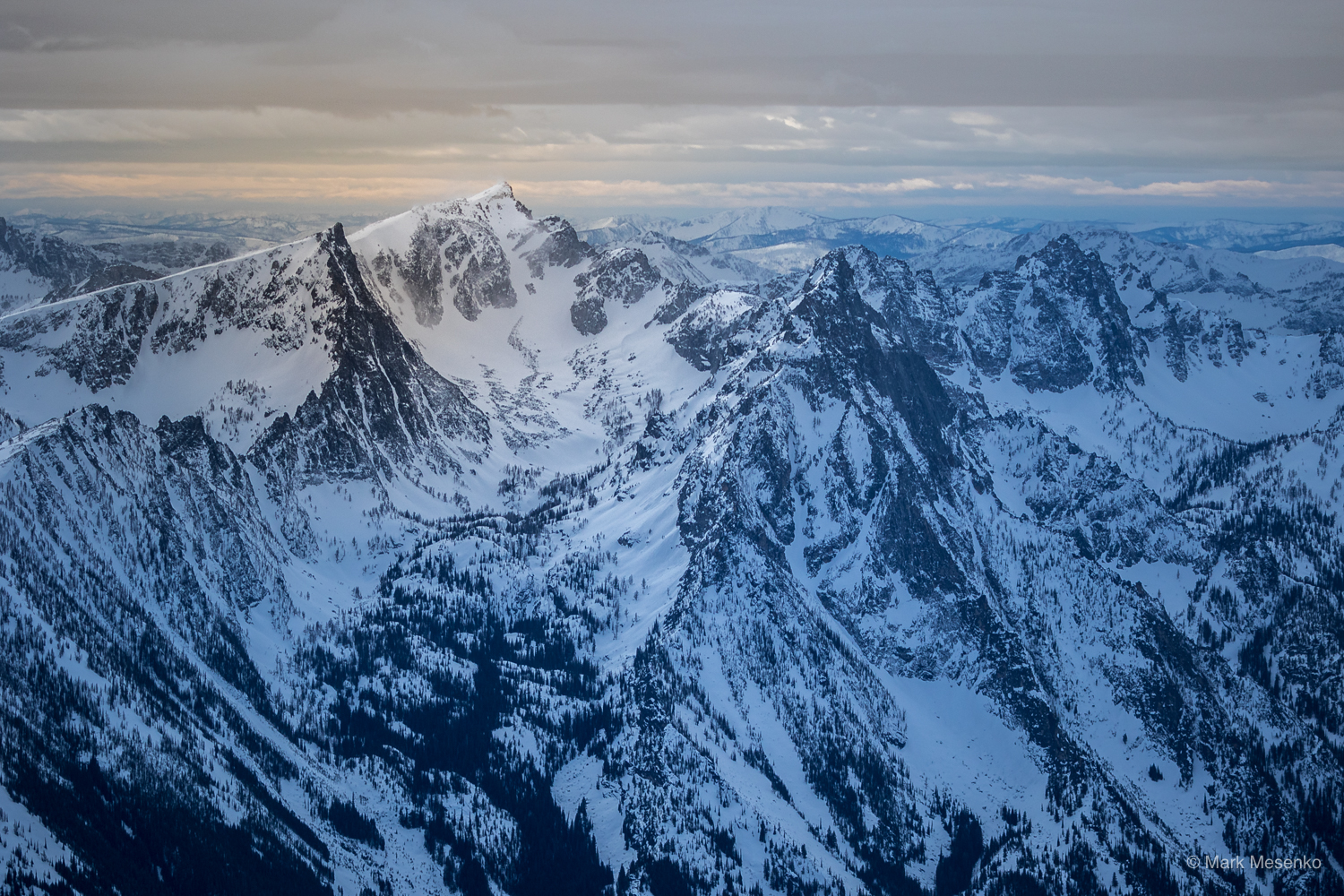
Coldest Temperature in the Contiguous United States
By editor
Lincoln, Lewis and Clark County, Montana
For those who imagine the West as a place where the sun always shines and the coyotes yip in balmy evenings, the story of January 1954 at Rogers Pass ought to disabuse them. Near the town of Lincoln, tucked into the shadowy folds of Montana’s rugged Lewis and Clark County, a small crew of miners endured what would become the coldest recorded temperature in the contiguous United States. It was a feat less of heroism and more of stubbornness, or perhaps the sort of foolhardiness that comes from years of working the land and believing it will bend to your will.
The scene: The 4 K’s Mine, a modest claim situated about thirty miles east of Lincoln near Rogers Pass. Four men--brothers Albert and Harry Kleinschmidt, their nephew Harrison Mercer Kleinschmidt, and Leroy Keil of Elliston--had set themselves to coaxing gold and copper from the earth. By 1954, the era of the small mining claim was fading fast. The great railroad companies, big banks, and industrial mining conglomerates had squeezed most of the life out of the old ways. Smaller claims were closing or being swallowed up. Yet these four stuck to their patch, digging, sluicing, and hoping.
The winter had begun reasonably enough that year, giving no hints of the brutal ordeal to come. But around January 13, the weather turned sour and stayed that way. Snow fell relentlessly for a full week. By January 20, the total depth of snow had piled up to more than five feet--66 inches in all. On January 14 alone, a staggering 28.5 inches blanketed the landscape. The wind howled with a merciless fury, and temperatures plummeted to levels so low they could not be measured by ordinary means.
Harrison Mercer Kleinschmidt, known to his friends as H.M., was the man who bore witness to this extraordinary chill. At about 2 a.m. on January 20, with the mercury dipping beyond the limits of common thermometers, he checked his personal instrument through an insulated window. The temperature read a staggering -68 degrees Fahrenheit. Determined to confirm this, he ventured through snow tunnels six feet deep--carved out by hand and sheer willpower--to an instrument shelter some 40 feet from the cabin. There, the official thermometer had shattered under the cold, its measurement capacity capped at -65 degrees. The indicator had retreated into the liquid reservoir bulb, a sure sign the mercury had plunged beyond what the device was built to record.
This was no idle curiosity. The 4 K’s Mine was isolated--no telephone, no radio contact to quickly report such an anomaly. The men simply carried on, their routine hardly altered by the extraordinary weather. It wasn’t until weeks later that State Climatologist Richard Dightman reviewed the monthly weather forms and noticed something unusual. Dightman contacted Kleinschmidt, requesting the thermometers be sent to a laboratory in Washington for testing. The results confirmed what Kleinschmidt had suspected: the temperature plunged to -70 degrees Fahrenheit on that bitter January night.
This record held firm as the coldest ever recorded in the contiguous United States--a title it kept until Alaska, which lies outside the continental bounds, trumped it with a chilling -79.8 degrees in 1971. But the significance of the Rogers Pass reading is more than just a number. It reflects the raw, unforgiving character of Montana winters and the kind of men who worked the land despite every hardship.
The Heddleston District, home to the 4 K’s Mine, had a mining pedigree dating back to the 1860s. Early prospectors, lured by tales of gold and copper veins threading through the mountains, had staked their claims and carved out a living in the unforgiving terrain. By the mid-20th century, the region had seen better days. The post-war years ushered in mechanization, consolidation of claims, and the slow disappearance of the small independent miner. Yet the Kleinschmidts and Keil were emblematic of the last generation who refused to abandon the old ways.
Leroy Keil, for example, was known locally as the “best bulldozer man” in the area, a title earned through years of navigating rocky slopes and stubborn earth. His skills were indispensable in maintaining the mine roads and clearing snow, work that undoubtedly saved the crew during the relentless January storms. The brothers and their nephew, meanwhile, had roots stretching deep into Montana’s pioneering history. The Kleinschmidt family name was well known in Helena and beyond, tied to some of the earliest settlers who had braved the frontier.
This episode of extreme cold was not just about the weather; it was about endurance. It is worth noting that the official weather instruments of the era were limited in their capacity to capture such extremes. The fact that the official thermometer broke under the cold illustrates how remarkable the conditions truly were. As H.M. Kleinschmidt later recounted, the “thermometer was jumping up and down often,” a phrase that captures both the volatility of the storm and the miners’ bemused persistence in the face of it.
Richard Dightman, the State Climatologist who authenticated the reading, remarked on the event’s significance. In a 1954 report, he stated, “The reading at Rogers Pass exceeded all expectations and underscored the extreme conditions that can develop in Montana’s mountainous regions.” Such candor from a professional observer lent credence to the fact that the West’s weather could still surprise even those who thought they had seen it all.
One might wonder why the men didn’t simply pack up and wait out the storm in warmer quarters. But the economics of mining claims then were harsh. Each day lost was money lost, and the promise of precious metals waiting just beneath the frozen ground was enough incentive to brave temperatures that would send most city dwellers running for their furnaces. In an age when railroad lines still threaded through Montana’s wilds, bringing in supplies and shipping out ore, every delay could mean the difference between profit and loss.
Moreover, the story of the 4 K’s Mine during that January storm is not just a tale of survival; it is a snapshot of a transitional moment in Montana’s mining history. The old small claim operators were clinging to their livelihoods even as larger corporate interests pushed forward. The coldest temperature record is thus intertwined with a fading way of life--one marked by individual grit, familial ties, and a hands-on relationship with the land.
When the news of the -70 degrees reading finally reached the broader public, it challenged preconceived notions about the American West’s climate. Montana was often seen as harsh but not extreme. This record forced a reconsideration--an acknowledgment that in the shadow of the Rockies, nature could impose conditions as severe as anywhere in the lower forty-eight states.
In truth, the men at the 4 K’s Mine were unlikely to have thought of themselves as part of any grand narrative. They were focused on the day-to-day work, moving ore, keeping the fire stoked, and surviving the storm. The thermometer was a tool, not a symbol. But their experience endures
Where to Stay in Montana
Affiliate links help support this site at no extra cost to you