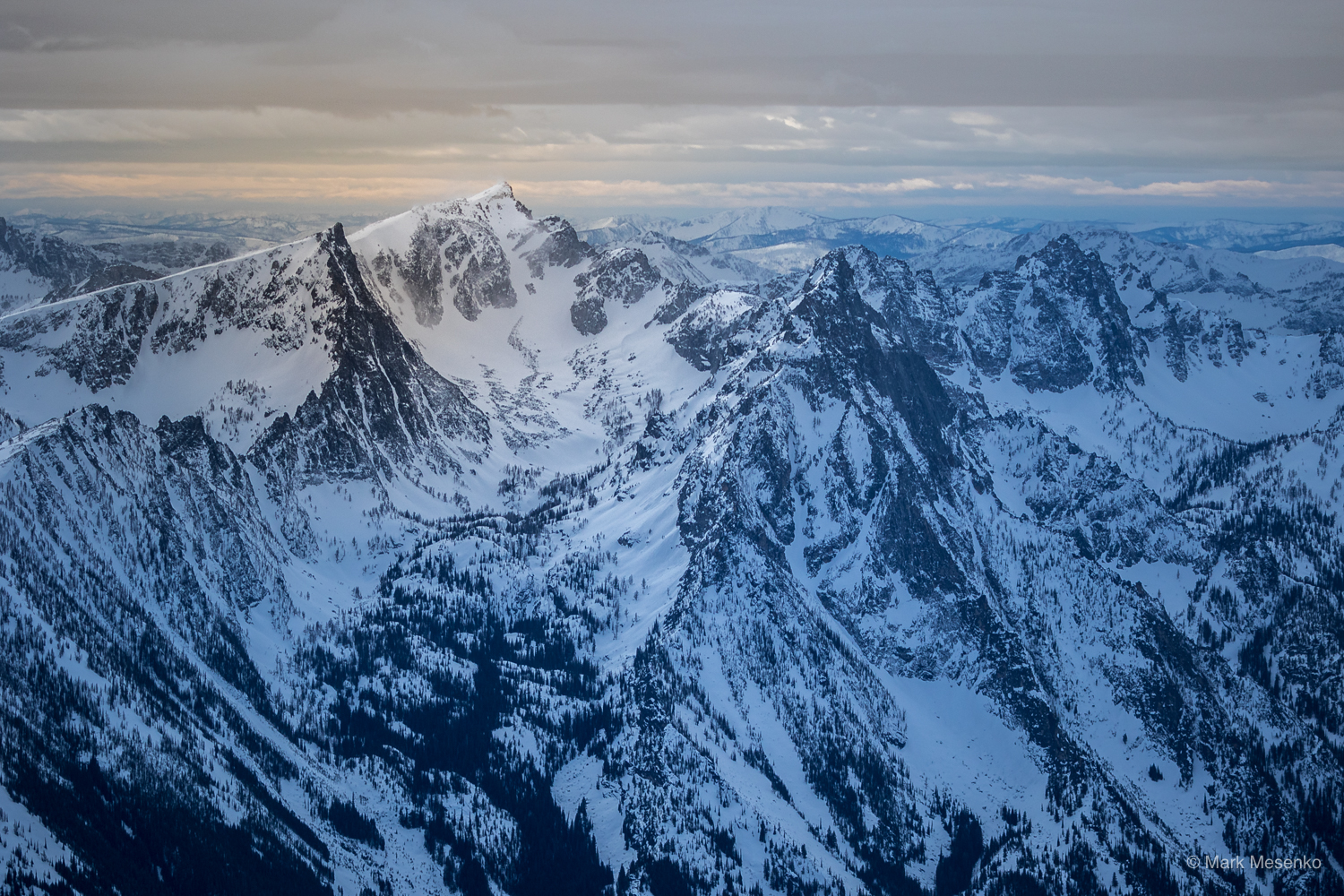
The Tendoy Mountains
By editor
Lima, Beaverhead County, Montana
As I stand in the Red Rock Valley, beneath the vast Montana sky, I am struck by the slow and powerful forces that have shaped this land over eons. About four million years ago, the very ground beneath my feet began to change in a profound manner. The North American tectonic plate, that immense slab of Earth’s outer shell, drifted steadily over a fixed plume of heat rising from the depths of the mantle. This plume--the Yellowstone hot spot--is the invisible engine that now fuels the geysers and steaming springs of Yellowstone National Park, just to the south. But here, far from those bubbling pools, the same fiery heart has molded mountains and valleys by its relentless heat and motion.
The thermal energy rising through the Earth’s crust caused it to bulge upward, stretching and thinning the rigid rock above. This stretching was so intense that the crust fractured into blocks. Some of these blocks rose, forming ridges and mountains; others sank, forming valleys and basins. The Red Rock Valley where I stand is one such down-dropped block, while the Tendoy Mountains to the west are an uplifted block. The boundary between these two lies along a fault line--the Red Rock Fault--visible here as a sharp break at the mountain’s base. The ridges end abruptly in triangular facets, those distinct, angular faces that reveal the fault’s youth. The land itself bears witness to recent upheaval; the fault ruptured as recently as three thousand years ago and continues to move beneath our feet, making this landscape alive with slow, patient energy.
The Tendoy Mountains carry a human story as well. They are named for Tendoy, a chief of the Lemhi Shoshone, who lived here in the mid-nineteenth century. Tendoy was a leader of quiet strength and wisdom, a man who sought peace in a world rapidly changing around him. He endeavored to maintain good relations with the United States government while fiercely protecting his people’s right to the hunting grounds that had sustained them for countless generations. Tendoy passed away in 1907, having witnessed the passing of the buffalo, the end of the open range, and the fading of a world he had known in his youth. His legacy remains etched in these mountains, a reminder of resilience and adaptation amid change.
Beneath my feet, hidden in the ancient layers of soil and stone, lie relics of a far more ancient time. Nearly ninety-five million years ago, long before the rise of the mountains or the arrival of the Shoshone, a small herbivorous dinosaur named Oryctodromeus made its home here. Unlike the grand, towering dinosaurs often imagined, Oryctodromeus was a modest creature with a curious habit: it lived underground in burrows. In 2006, paleontologists uncovered the fossilized remains of an adult and two juveniles nestled within an ancient burrow not far from here. This discovery was revolutionary, the first firm evidence that dinosaurs had sought refuge beneath the earth’s surface.
The anatomy of Oryctodromeus reveals adaptations suited for digging and burrowing. Its strong forearms and shoulders, broad beak, and long legs speak of a life spent pushing through soil and racing across the ground. Why did this dinosaur choose such a life? Perhaps it sought shelter from predators prowling the Cretaceous landscape, or refuge from the extremes of temperature that can grip these lands. It may have been a safe place to rear young, protecting them from the perils of an ancient world. The burrows speak of a creature deeply connected to the land, adapting its life to the rhythms of earth and season.
The forces that uplifted the Tendoy Mountains and carved the Red Rock Valley are the same that gradually buried these ancient bones beneath sediment and rock. The Yellowstone hot spot, still burning far below, continues to shape this land, pushing and pulling with a quiet but unyielding hand. The fault along the mountain base, still shifting, serves as a reminder that the Earth is never still. It is a living, breathing entity, slowly sculpting the world anew.
Standing here, one cannot help but feel the vastness of time and the smallness of our own lives. The land beneath us is a palimpsest of millions of years--volcanic heat, tectonic movement, ancient creatures, and human history all layered one upon the other. As the great geologist Grove Karl Gilbert once said, “The history of the earth is a history of change.” Here in the Tendoy Mountains, that change is plain to see, writ large across the landscape in stone and soil, in faults and fossils.
I am reminded that these mountains and valleys are not fixed monuments but chapters in an ongoing story. The Yellowstone hot spot will continue its slow journey, the faults will shift and crack, and new life will adapt and flourish in the spaces left behind. The past is never truly gone; it lives in the land, in the bones beneath our feet, and in the memory of those who walked here long before us.
See also
- The Tendoy Mountains at Lima, Beaverhead County (Montana Department of Transportation)
- Camp Fortunate at Dillon, Beaverhead County
- Reliable Landmarks at Dillon, Beaverhead County
Where to Stay in Montana
Affiliate links help support this site at no extra cost to you