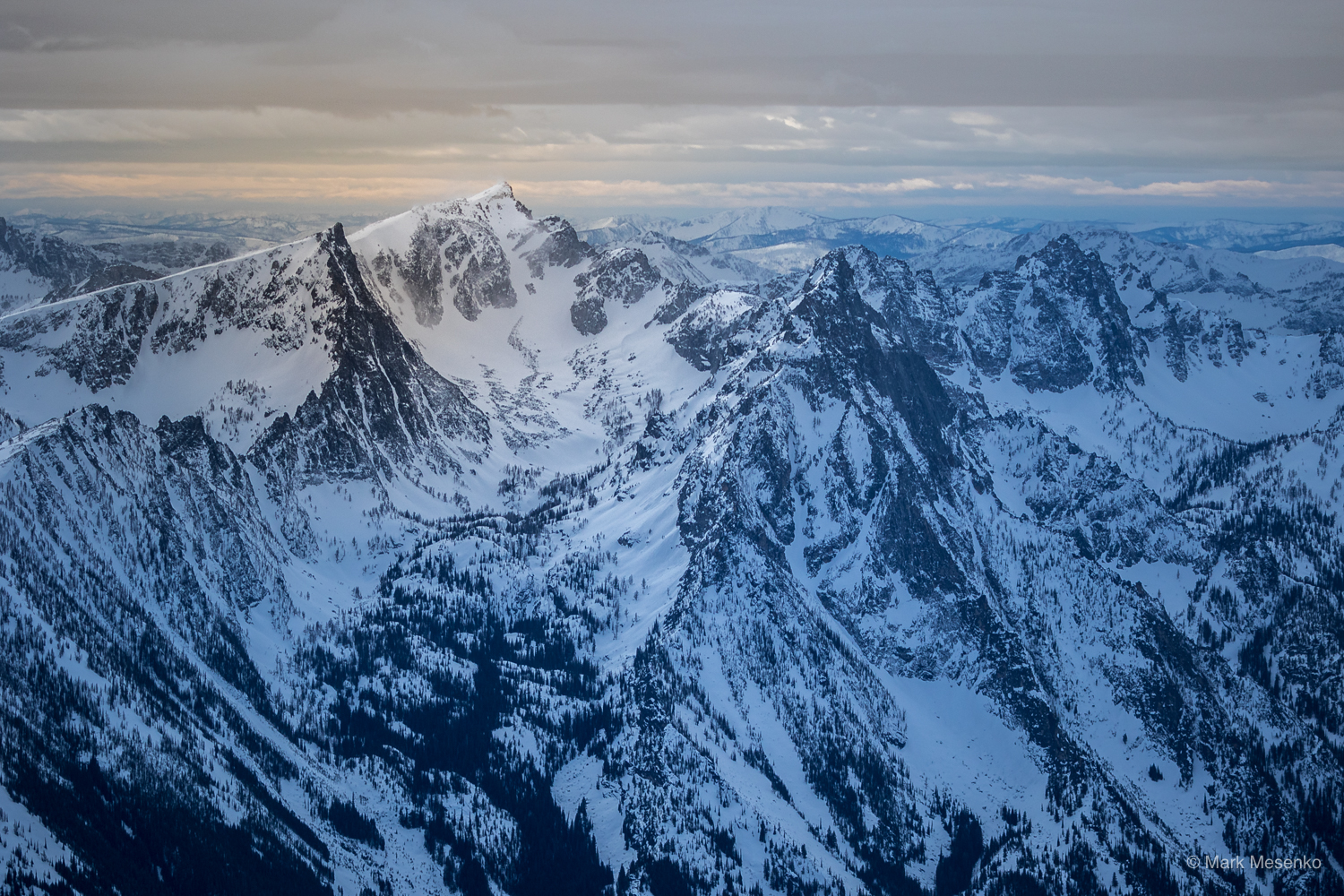
The Shining Mountains
By editor
Ennis, Madison County, Montana
The Madison Range ascends abruptly from the gentle plains of the Madison Valley, a mountain chain born of restless earth and ancient forces. Here, at the eastern edge of the valley, the land itself tells a story written in stone and fault. An active fault threads its way along the base of the range, a scar of tectonic violence that has shaped these mountains for some fifty million years. The uplift of the Madison Range is not a closed chapter of geological history but a continuing saga, as these towering peaks still rise imperceptibly, driven by the slow but inexorable motion of the earth’s crust.
On a summer day in 1959, the restless earth revealed its power with sudden and terrifying clarity. On August 17, a magnitude 7.5 earthquake shook the southern end of the Madison Range near Hebgen Lake, marking the largest seismic event ever recorded in the Rocky Mountains. The ground trembled and cracked, and fault scarps--steep, cliff-like steps in the earth--appeared along the valley floor, some rising as high as 21 feet. This violent upheaval triggered a massive landslide that cascaded into the Madison River, damming its flow and creating what is now known as Earthquake Lake. The landscape was irrevocably altered in moments, a vivid reminder of the dynamic forces still shaping these mountains.
The northern reaches of the Madison Range display some of the most striking peaks--Lone Mountain, Pioneer Mountain, and Fan Mountain--each supported by resistant igneous rock. These rocks are the hardened remains of ancient magma intrusions, forced upward through layers of older sedimentary strata millions of years ago. Over the vast sweep of time, glaciers and landslides have sculpted these peaks into their current forms, carving ridges and cirques with relentless precision. The glaciers, in their slow, grinding passage, left behind polished rock faces and deep valleys, while landslides and rockfalls continue to shape the terrain even today.
One peak, Sphinx Mountain, rises with a peculiar dignity, capped by a thick layer--some 3,000 feet deep--of gravelly conglomerate. These conglomerates are sedimentary rocks formed from the accumulation and cementation of gravel and pebbles eroded from surrounding highlands long ago. These deposits filled an ancient valley, now lifted high above the valley floor, part of the towering summit itself. It is a fascinating geological record, a page in the earth’s chronicle where mountain streams once carried sediments into a basin, gradually filling it in and preserving the memory of ancient landscapes.
The Madison Valley itself bears the fingerprints of time in its broad benches--flat terraces that stretch for miles along the valley. These benches are the remnants of former river channels, traces of the Madison River’s long history of carving and receding. The highest terrace is the oldest, a relic of a time when the river flowed at a higher elevation. Successively lower terraces mark younger channels, each a stage in the river’s gradual incision into the earth as it sought its present course. These terraces are natural monuments to the slow work of erosion and sedimentation, subtle yet enduring markers of the valley’s evolution.
The Madison Range has witnessed not only the slow march of geological epochs but also the swift and fierce dramas of human history in the American West. In the early decades of the nineteenth century, beginning in the 1830s, the rugged streams that feed into the Madison River became hunting grounds for American fur trappers--often called mountain men--who ventured into these wild places in search of beaver pelts. The fur trade was a brutal contest, with companies competing fiercely for control of the rich resources. By the 1840s, the beaver had been largely trapped out, and the Blackfeet, who once roamed freely here, had retreated. Yet the mountain men left an indelible mark upon the land--names they bestowed on rivers, passes, peaks, and valleys remain etched upon maps and in local memory.
The fur trade era was a period of intense human interaction with the landscape, a fleeting moment when the wilderness was entered and altered by those seeking fortune in pelts. As the trapper Jim Bridger, one of the most famous mountain men, once remarked, “The mountains are the place to find yourself, but you must be ready to face their fierce moods.” It was a time when the natural world was both a provider and a peril, demanding respect and resilience from those who entered its domain.
From my own wanderings through these mountains, I have found the Madison Range to be a place of stark contrasts--silent yet turbulent, ancient yet ever-changing. The mountains shimmer in the sun, their snowfields and rock faces catching the light like polished gems, earning the name “Shining Mountains.” Their grandeur is not merely in their height but in their complexity and vitality. Here, the earth continues its restless work, and the mountains rise toward the sky with the slow majesty of geological time.
To stand among these peaks is to witness the power of nature’s processes--tectonic shifts that lift the crust, glaciers that sculpt the stone, rivers that carve the valley, and the human stories etched into the landscape. The Madison Range is a natural archive, preserving the layered history of earth and life, visible to those who take the time to read its rugged pages.
In these shining mountains, one sees not a static monument but a living, breathing landscape--one that challenges the observer to understand the deep forces that have shaped it and to appreciate the enduring beauty wrought by time’s patient hands. As I have often said, “Climb the mountains and get their good tidings. Nature’s peace will flow into you as sunshine flows into trees.” Here, in the enduring presence of the Madison Range, that peace is tempered by the knowledge of the earth’s restless energy, forever shaping the land beneath our feet.
See also
- The Shining Mountains at Ennis, Madison County
- The Night's Peace Was Shattered at West Yellowstone, Gallatin County
- Lone Mountain at Big Sky, Gallatin County
Where to Stay in Montana
Affiliate links help support this site at no extra cost to you