Crow's Nest
By editor
Crow Agency, Big Horn County, Montana, June 1876
Thirteen miles is not a great distance, as distances go in Montana. A man on a good horse can cover it in an hour. A regiment of cavalry, with its pack train and its scouts and its general tendency to stop and argue about things, takes considerably longer. But thirteen miles is far enough that what you see from a hilltop in the Wolf Mountains at first light on June 25, 1876, is not a village. It is a dark smear on the hillsides across the valley, a shimmer of dust where there should be no dust, a smell of smoke rising from the wrong direction. It is, if you know what you are looking at, the largest gathering of Lakota, Cheyenne, and Arapaho people that the northern plains had seen in a generation.
The Crow scouts knew what they were looking at.
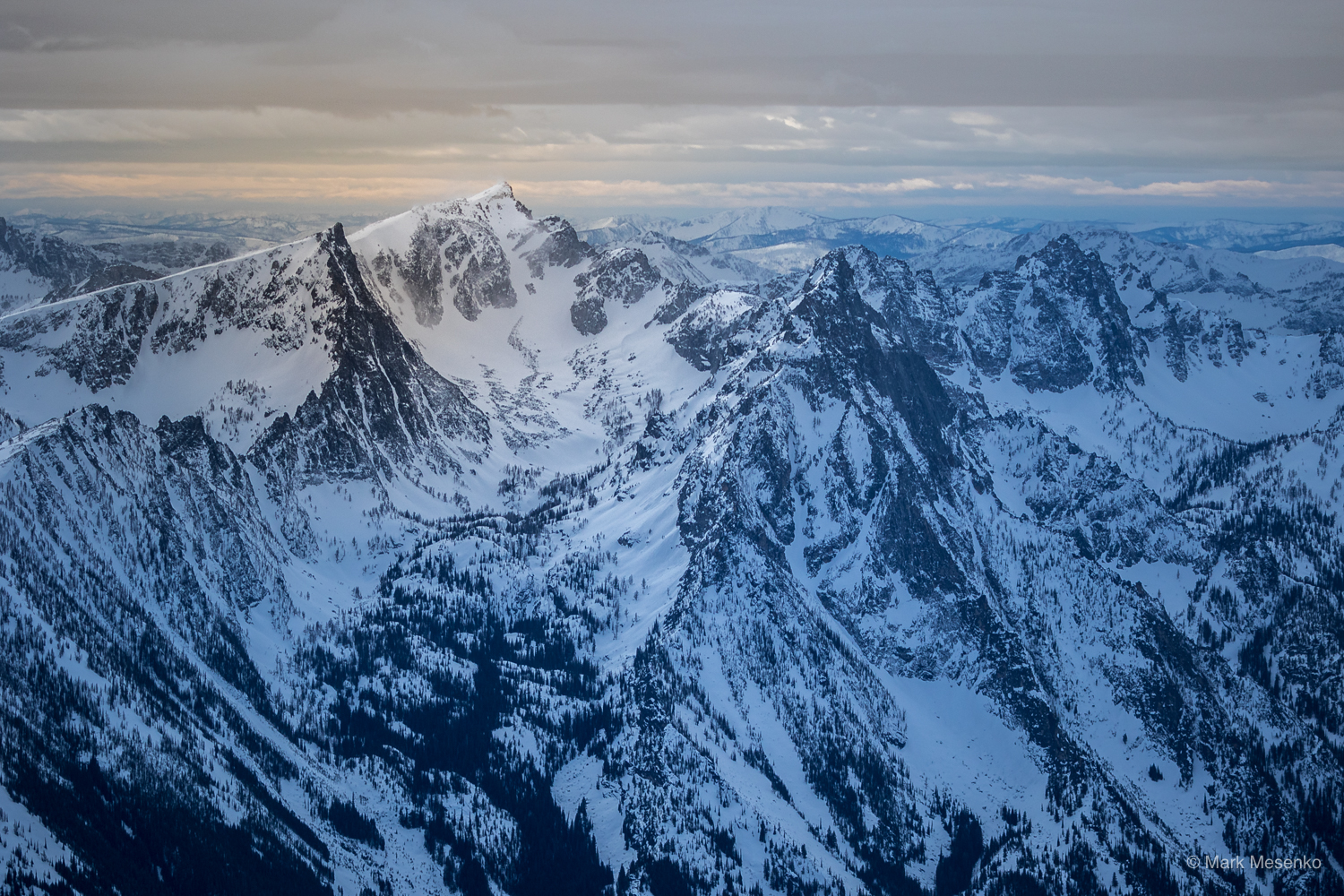
The promontory known as the Crow's Nest sits in the Wolf Mountains, in the divide between the Rosebud and Little Bighorn drainages. Custer's regiment had crossed that divide the night before, moving in darkness to avoid detection, and before dawn on June 25 the scouts climbed to this high point to look down into the valley of the Greasy Grass, the river the soldiers called the Little Bighorn. What they saw in the early gray light stopped them.
Half Yellow Face, the leader of the six Crow scouts attached to the 7th Cavalry, told Custer through his interpreter, the mixed-blood scout Mitch Bouyer, what they had found. The pony herd alone was enormous, a dark mass on the hillsides that the scouts described as worms crawling in the grass. Behind it, in the river bottom, was a village of perhaps 8,000 people, including somewhere between 1,500 and 1,800 warriors. Half Yellow Face, who had been scouting these hills his entire life and knew what a large village looked like from a distance, said to Custer: "You and I are going home today by a road we do not know."
Custer climbed to the Crow's Nest himself and looked. He said he could not see the village. The morning haze was thick, or the sun was in the wrong position, or his eyes were not as good as the scouts' eyes, or he did not want to see it. The accounts differ on this point, as accounts of the Little Bighorn differ on nearly every point. What is not disputed is that Custer told his scouts they were mistaken, that he had been on the plains many years, and that he had never seen a village that could not be taken.
The Arikara scouts, who had their own reasons for fighting the Lakota and no reason at all to exaggerate the danger, agreed with the Crow scouts. The village was real and it was enormous. Bloody Knife, Custer's favorite Arikara scout, told him through signs that there were more Sioux ahead than the soldiers had bullets. Custer reportedly replied that he thought his regiment could handle whatever they found.
The original plan had called for a reconnaissance on June 25, followed by a coordinated attack on June 26 when General Alfred Terry's column and Colonel John Gibbon's infantry would be in position to the north, cutting off any escape. But sometime during the morning of June 25, Custer received word, or believed he had received word, that his regiment had been spotted by Lakota scouts and that the village would scatter before he could attack. Whether this was true, and whether it justified what followed, has been argued about ever since.
Lieutenant Edward Godfrey, who commanded Company K and survived the battle, wrote about the morning in a celebrated account published in Century Magazine in 1892: "From the Crow's Nest, a vantage point 14 miles away in the Wolf Mountains, Custer's Crow and Arikara scouts saw evidence of the massive Lakota, Cheyenne, and Arapaho encampment. Convinced that he was discovered, Custer abandoned plans for a reconnaissance and a delayed attack. He divides his forces into four groups along Reno Creek deciding to strike the village before it could scatter."
Four groups. This is the part that the scouts, and later the historians, found hardest to understand. Custer divided his regiment of roughly 600 men into four columns: Major Marcus Reno with about 175 men to charge the southern end of the village; Captain Frederick Benteen with about 115 men to scout the bluffs to the south and left; the pack train with its escort to follow behind; and Custer himself with five companies, about 225 men, to swing north and strike the village from another direction. The four pieces would be separated by miles of broken country, unable to support each other, attacking a village that the scouts had just told him was the largest they had ever seen.
Half Yellow Face's prediction was not a boast or a figure of speech. It was a professional assessment from a man who understood the terrain, knew the enemy, and had done the arithmetic. He had seen the pony herd. He had counted the lodges as best he could through the morning haze. He knew what 1,500 warriors could do to 225 soldiers on a ridge with no cover and no water and no possibility of retreat.
The Crow scouts, to their credit, did not go with Custer's battalion when it rode north. They had done their job, which was to find the village and report its size. They had done it accurately and completely. What happened next was not their responsibility.
Moving Robe Woman, a Hunkpapa Lakota woman who was in the village that morning, later described the warning that came from the direction of the lone tipi on Reno Creek: "I saw a cloud of dust rise beyond a ridge of bluffs in the east. The morning was hot and sultry. Several of us Indian girls looked towards camp and saw a warrior ride swiftly, shouting that soldiers were only a few miles away, and that the women and children, including old men, should run for the hills in the opposite direction."
So the village knew. Whether it had known before, whether Custer's fear of being discovered was justified or was simply a convenient reason to do what he had already decided to do, is one of the questions that the Crow's Nest cannot answer. The promontory is still there, in the Wolf Mountains, thirteen miles from the valley. On a clear morning, a person with good eyes can see a long way from it.
The scouts saw what they saw. They said what they said. Custer looked out over the valley and made his decision.
See also
- Crow's Nest at Crow Agency, Big Horn County (Erected by National Park Service)
- Little Bighorn Battlefield National Monument near Crow Agency, Big Horn County
Where to Stay in Montana
Affiliate links help support this site at no extra cost to you