Airmen Memorial
By editor
Chinook, Blaine County, Montana
The night of October 26, 1994, was cold and dark in the Bear Paw Mountains, a stretch of rough ridges and dense forest just south of Chinook, Montana. A C-130 Hercules transport plane, a workhorse of the United States Air Force, was on a routine training mission. It had left Ramstein Air Base in Germany, crossed the Atlantic, and now was over the rugged terrain of northern Montana. That night, the mountains claimed thirteen men.
The crash was swift and brutal. There was no time for radio calls or last words. The plane vanished into the blackness, leaving only twisted metal and shattered lives. The thirteen airmen aboard were scattered across the wreckage, their bodies broken but their service undiminished.
These were not strangers to war or the sky. They were from all corners of the continent and beyond, brought together by duty and training. Captain David Sielewiez of Albany, New York, was thirty years old, his eyes set on the horizon like a man who had flown too many miles to count. Captain Jimmy Lee Jenkins hailed from Langdale, Alabama, steady and quiet, a man who understood the weight of responsibility. Captain Mark Eister came from the steel city of Chicago, Illinois, where the wind cuts sharp through the streets. Technical Sergeant David Young, from Grand Rapids, Michigan, carried the Midwest’s hard edges in his frame. Staff Sergeant Terrence Miyoshi, also from Chicago, bore the calm precision of a man who knew the value of every second. Senior Airman Wilbert Brown of Galveston, Texas, had the grit of the Gulf Coast in his voice. Airman First Class George Moreland came from Lodi, California, where the sun hits the earth with a relentless glare. Staff Sergeant Monte Bissett of Myrtle Point, Oregon, knew the silence of the forests. Technical Sergeant Peter Osterfeld was the only Canadian, from Montreal, a stoic figure among Americans. First Lieutenant Edward Hoyle was from Stoughton, Massachusetts, a man shaped by the cold Atlantic winds. Captain Kevin Maguire hailed from Dover, Delaware, steady as the tide. Captain Banks Wilkinson came from Fayetteville, Arkansas, with a voice as low as the Mississippi. Captain Edward Parent was from Hartford, Connecticut, a man who had seen the changing seasons of New England.
Most were in their late twenties or early thirties. Young men with futures, with families, with hopes. They were not on a battlefield. They were training. Flying low, keeping sharp, honing skills that might one day save lives or end them. The Bear Paw Mountains, indifferent to the lives it took, made no distinction between war and peace. The earth was cold, and the night was quiet. The sky was empty.
The community near Harlem, Montana, nine miles north of the crash site, felt the shock like a blow to the chest. The news spread quickly. Locals gathered, trucks loaded with equipment and hands ready for the grim work of recovery. The outpouring was not of grand speeches or official platitudes but of quiet, steady grief and a fierce determination to honor these men who had come from so far away.
On a simple memorial near Harlem, the words of the community are etched into stone: "Those who gave their lives in service to their country are mourned deeply, the community of Harlem and its surrounding area were united in the outpouring of love and generosity to those who came to bring them home with dignity." There is no attempt to explain the crash or to make sense of the loss. The question "Why?" lingers, unanswered, as it does in so many such tragedies.
The memorial also bears the poem "High Flight," written in 1941 by John Gillespie Magee, Jr., a Royal Canadian Air Force pilot who died at nineteen. The poem captures something that no official report can--the raw, soaring experience of flight, the moment when a pilot feels both the infinite and the intimate. Magee’s words end with a quiet reverence: "And, while with silent, lifting mind I've trod / The high untrespassed sanctity of space, / Put out my hand and touched the face of God."
These thirteen men never wrote such words. They left no poem behind. But they flew the same sky. They knew that strange mixture of fear and freedom, the roar of engines and the hush of clouds. One can imagine Captain Sielewiez or Captain Jenkins, in the moments before the crash, thinking of something like Magee’s lines--if only to steady their nerves, to find some peace in the endless dark.
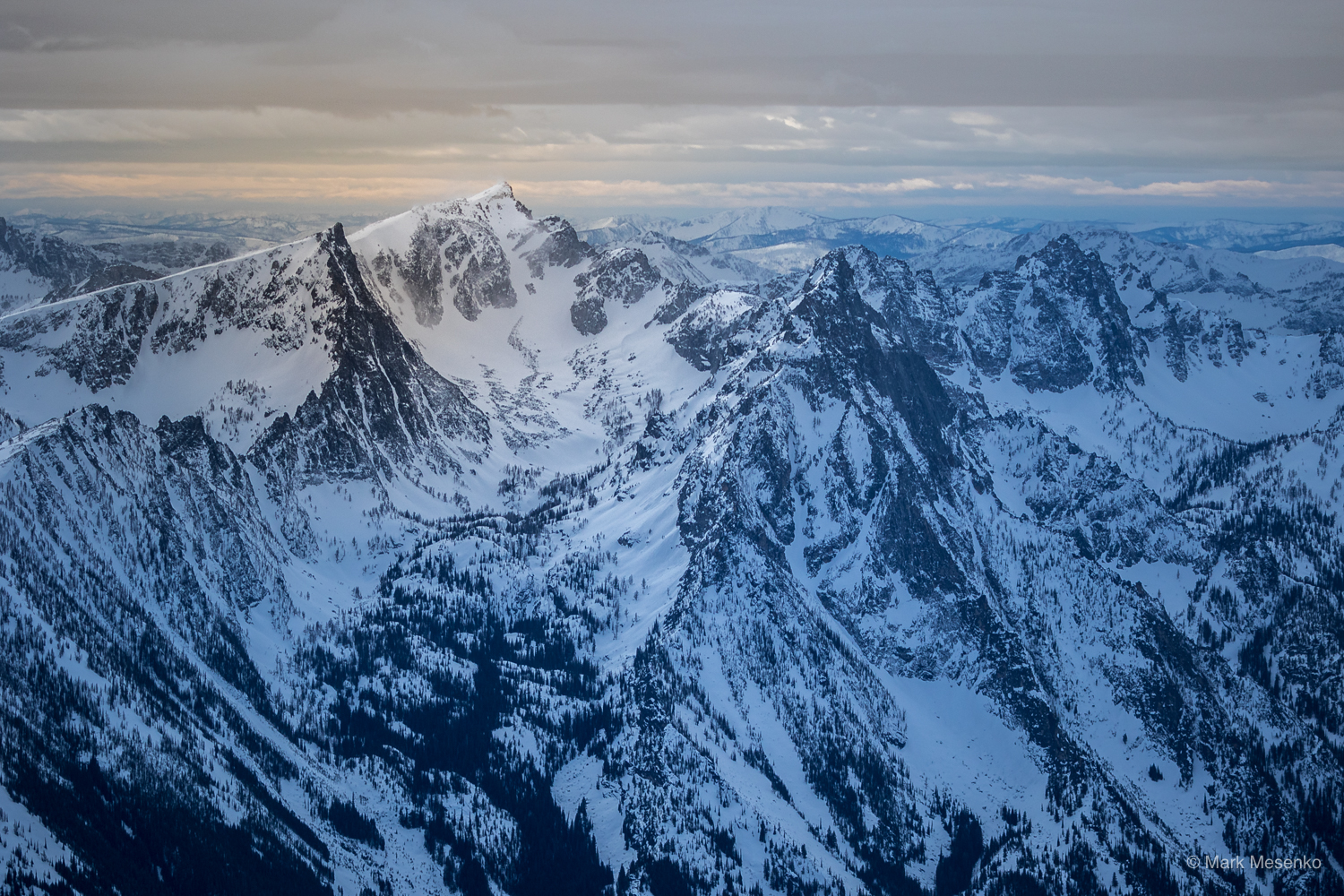
The terrain itself is unforgiving. The Bear Paw Mountains rise sharply, their slopes covered in thick timber and loose rock. The autumn air was cold, hovering near freezing. Visibility at night in such country can be treacherous with no moon and no stars. Pilots on training missions often fly low to simulate combat conditions, and the margin for error is slim. The C-130 Hercules, though rugged and reliable, is not immune to the dangers presented by the earth below.
The official reports offer facts: thirteen dead, the cause likely pilot error or mechanical failure compounded by the darkness and terrain. But those words are thin, unable to carry the weight of grief or the confusion of the families and friends left behind.
Captain Mark Eister’s mother wrote years later in a letter to the base: "We never thought a training mission would take him from us. We live with the silence he left and the questions no one can answer."
In the days after the crash, the people of Harlem and Chinook stepped forward. They provided shelter, food, and support to the military personnel who arrived to recover the bodies. The cold Montana earth swallowed the plane, but not the memory of those who fell. The community’s response was not one of grand ceremony but of quiet respect, the kind that comes from knowing loss is a neighbor who knocks without warning.
The memorial’s inscription closes with a line that feels both defiant and humble: "The question we always ask is 'Why'? We don't have the answer, but we worship the One who does."
This acknowledgment of mystery mirrors the experience of many who have flown and fallen. The sky is vast and indifferent. The mountains hold their secrets. And the men who take to the air do so knowing that the ground is always waiting.
The Airmen Memorial is not a place of victory or celebration. It is a place of mourning and memory. It honors thirteen men who lived and died far from home, who faced the unknown with steady hands and clear eyes. It honors the community that gathered in the cold Montana night to carry them home.
In the words of John Gillespie Magee, Jr., they "have slipped the surly bonds of earth" and touched the face of something beyond. The Bear Paw Mountains claimed them, but they remain part of the Montana sky.
See also
- Airmen Memorial at Chinook, Blaine County
- Bear Paw Battlefield at Chinook, Blaine County
Where to Stay in Montana
Affiliate links help support this site at no extra cost to you